Hollywood just hit the tipping point in its acceptance of artificial intelligence.
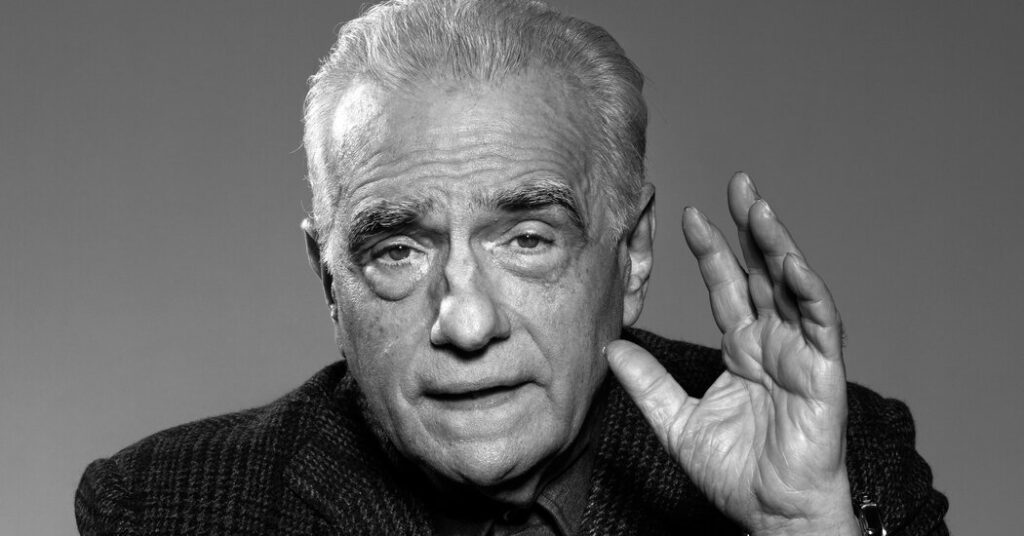
Martin Scorsese, the living embodiment of cinema as high art and a conscience for modern Hollywood, on Tuesday threw his weight behind an A.I. start-up that specializes in image generation. In a statement and an accompanying video made in his New York City office, Mr. Scorsese discussed how he had used technology from Black Forest Labs, a fast-rising A.I. venture, during preproduction for a new film.
“I’m interested in the intersection of technology and storytelling, and seeing how that can push the bounds of creativity to create deeper and richer experiences for audiences,” Mr. Scorsese, 83, said in the statement, which was shared exclusively with The New York Times. “Remember, cinema is a young medium, only around 125 years old, so we have to be open to how it can evolve.”
Black Forest Labs said Mr. Scorsese, a 16-time Academy Award nominee who won best director for “The Departed” in 2007, had signed on last year as a partner and an adviser.
When generative A.I. became widely available in 2022, Hollywood’s creative class mobilized against it as an existential threat. The technology allows people to create text, photorealistic images and videos — in an instant — simply by describing what they want to see. What would prevent studios from substituting software for writers, actors, visual effects artists, animators and others?
The anxiety was so extreme that protections against generative A.I. became a central demand in the 2023 strikes involving more than 170,000 Hollywood workers. Studios began to treat A.I. as a radioactive topic.
But the entertainment industry’s stance has recently softened to a remarkable degree.
Demi Moore, while serving as a juror at the recent Cannes Film Festival, told reporters that fighting A.I. “is a battle that we will lose, so to find ways in which we can work with it, I think, is a more valuable path to take.” Last week, Robert De Niro’s Tribeca Film Festival said it would showcase a film created entirely with A.I. — no actors, no sets, no cameras. Jane Rosenthal, a leading Hollywood producer and Tribeca co-founder, called the film “a powerful example of how emerging technologies like A.I. can be used not simply as tools of innovation, but as vehicles for deeply human storytelling.”
On the same day, Amazon MGM Studios unveiled a slate of A.I.-generated programs: three animated series for children.
And now comes Mr. Scorsese.
“I am super excited about the fact that someone like Martin Scorsese — one of the greatest, most impressive filmmakers to exist — is using our technology and curious about exploring it,” Robin Rombach, the chief executive of Black Forest Labs, said in a Zoom interview. “It’s such a great proof point that this works.”
Generative A.I. still has prominent Hollywood detractors. Seth Rogen and Guillermo del Toro spoke out (colorfully) against the technology at Cannes last month. Amazon’s children’s show endeavor quickly drew criticism, prompting one participant to drop out.
Mr. Scorsese declined an interview request. But it was clear that his A.I. endorsement had limits. His statement and accompanying video were entirely related to storyboarding, which is the process of visually mapping out a film before cameras roll.
“For 70 years, I’ve been creating my own storyboards,” Mr. Scorsese said in the statement. “There’s always been this problem of how do you communicate what you see in your head to your cast and crew. There are some things you have to see and feel.”
“Now with this tool,” he said, “I can share what I’m visualizing more clearly and efficiently to my creative team — the production designer, art designer and cinematographer.”
He added: “I recently tested this out on a scene, and the ability to visualize and immediately share the storyboard was creatively freeing. During the preproduction process, time costs money, and this allowed us to move faster without sacrificing quality or craft.”
Mr. Rombach, 33, co-founded Black Forest Labs in 2024 in Freiburg, Germany, after working at Stability AI, a start-up that counts the Oscar-winning filmmaker James Cameron as a board member; Mr. Rombach helped develop Stability’s popular image generator, Stable Diffusion. Black Forest Labs focuses on open A.I. models called FLUX, which generate imagery from text prompts and allow for advanced video editing.
A spokesman for Mr. Scorsese said the filmmaker’s connection to Black Forest Labs came through BroadLight Capital, an investor in the start-up. BroadLight was co-founded by Rick Yorn, who is Mr. Scorsese’s talent manager. (The firm was also behind Matthew McConaughey’s partnership with the A.I. audio company ElevenLabs.)
Michael Ovitz, the former Creative Artists Agency impresario, also helped the start-up win over Mr. Scorsese, according to Mr. Rombach. Mr. Ovitz, a Black Forest Labs investor, appears in the video the company released on Tuesday featuring Mr. Scorsese.
Brooks Barnes is the chief Hollywood correspondent for The Times. He has reported on the entertainment industry for 25 years.
The post Martin Scorsese Is Embracing A.I. appeared first on New York Times.