Lawyers for the entertainment industry and internet service providers faced off at the Supreme Court Monday in a case over pirated music that could have a major impact on how millions of Americans use the internet.
The justices seemed skeptical of the argument advanced by Cox Communications that internet companies are simply passive participants and largely free of responsibility when their customers violate copyright rules.
But they also asked tough questions aimed at Sony Entertainment’s arguments that internet providers have a duty to cut off internet users suspected of pirating music files and sharing them.
Some justices were concerned that such a rule would force internet providers cut off internet to entire institutions — such as hospitals and universities — when a single user exploited the internet to illegally share files.
“I really don’t see how your position works in that context,” Justice Samuel Alito told Sony’s attorney.
At stake is the future of a case that yielded a $1 billion verdict which a Virginia jury awarded after finding Cox liable for its customers’ violations of more than 10,000 copyrights owned by Sony Music Entertainment, Capitol Records and dozens of other music labels. Songs by Beyoncé, Justin Timberlake and Britney Spears were among the pirated works.
Sony and dozens of other record companies have accused Cox of willfully allowing pirated music to be exchanged through its services and not taking the proper steps to remove offenders. They want internet providers to be held liable when users distribute illegal music files on the internet.
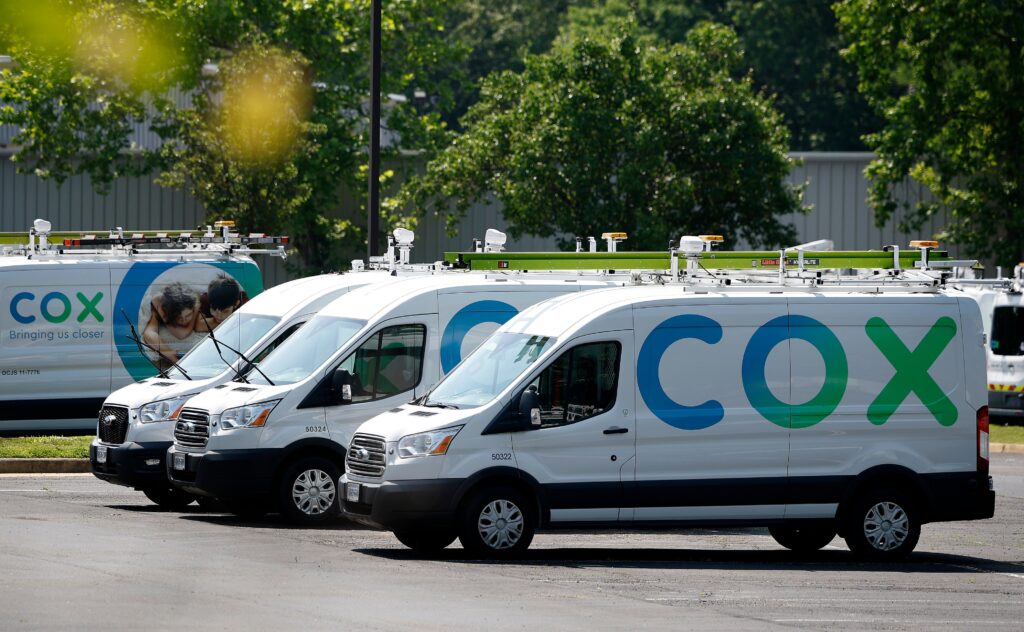
Cox, which serves more than 6 million customers throughout the country, argues that making internet providers responsible for pirated songs would expose them to a barrage of lawsuits. They would be forced to deactivate swaths of internet users based only on accusations about people swapping pirated material, lawyers for Cox say.
Who wins that argument could have big implications for consumers and how the internet is policed, legal experts say.
Record companies and other copyright holders typically notify internet service providers of alleged illegal file sharing by sending infringement notices. Cox argues that those notices are only allegations. Using them as a reason to cut off service to an IP address would be unreasonable, their lawyers say. Imposing liability on internet service providers would force them to shut down internet connections at libraries, hospitals and entire regions just because one person on the IP address has been accused of copyright infringement, they argue.
Josh Rosenkranz, Cox’s attorney, said during arguments on Monday that turning internet providers into the police for criminal behavior on the internet would “wreak havoc” on large numbers of innocent internet users.
“The consequences of plaintiffs’ position are cataclysmic,” he said. “There is no surefire way for an ISP to avoid liability, and the only way it can is to cut off the internet — not just for the accused infringer but for anyone else who happens to use the same connection.”
Free speech advocates agree that expanding liability could lead to over-policing of the internet, which could cut off internet users from information.
In the current case, the U.S. Court of Appeals for the 4th Circuit threw out the $1 billion verdict against Cox, but decided the company knew about the illegal activity and contributed to it by not cutting off those customers. The appeals court sent the case back to a trial court to reconsider how much Cox should have to pay.
Cox wants the Supreme Court to reverse that ruling and hold that it is not liable. On Monday, some justices were skeptical of that argument, pointing to the allegations against Cox during trial.
“You did nothing,” Justice Sonia Sotomayor said, noting Sony’s allegations that Cox allowed internet users to exchange illegal music files on its internet lines without consequences.
Rosenkranz, Cox’s attorney, denied that the company had done nothing. Cox took steps to deter bad actors, he said. It has sent hundreds of warnings a day to internet users it suspects of copyright infringement, he noted.
“That is not nothing, your honor,” Rosenkranz said.
Legally, the case turns on what courts call “secondary liability” — the extent to which a person or company is responsible for facilitating somebody else’s misconduct.
As the internet has expanded, the Supreme Court has weighed in more broadly on how much to hold internet companies responsible for web content. In 2005, for example, a unanimous court held that file sharing companies Grokster and StreamCast had secondary liability because their products encouraged users to swap illegal files. In 2023, on the other hand, a unanimous court ruled that Google, Twitter and Facebook were not responsible for assisting in terrorist attacks even though their algorithms led users to content produced by ISIS.
On Monday justices asked Sony’s attorney, Paul Clement, what would happen to copyright holders if Sony were to lose the case.
“We would be without … recourse,”Clement said.
Without any liability, “Cox could take tens of thousands of copyright notices and throw them in the trash,” he added.
The post Efforts to block internet music piracy hit Supreme Court skepticism appeared first on Washington Post.