Clare McHugh is the author of the historical novel “The Romanov Brides.”
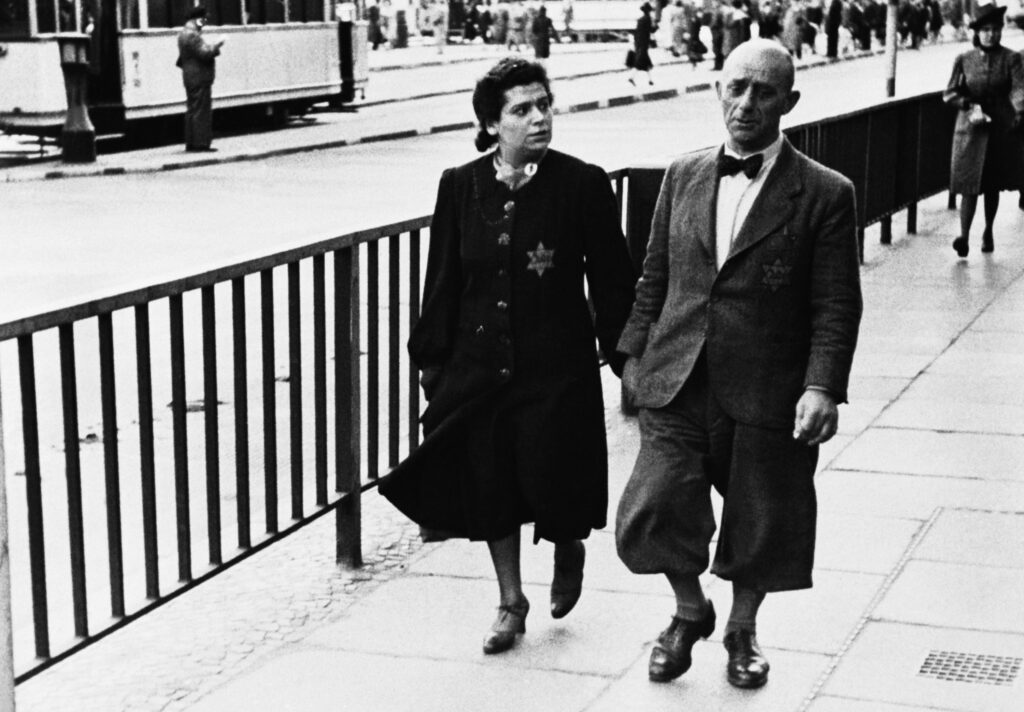
“This is a thing which is unbearable,” Joseph Goebbels wrote in his diary in May 1942. Although the Jewish communities in most other German cities had already been liquidated, more than 30,000 Jews still lived in Berlin — where Goebbels, the Nazis’ chief propagandist, served as Gauleiter, or district leader. Some were married to non-Jews, and more than 10,000 lived with their families in the capital, working armaments jobs considered vital to the war effort. Goebbels wanted them gone.
Albert Speer, the government’s war production minister, insisted that Jewish staff in the Berlin munitions factories remain exempt from deportation owing to their specialized skills. But four months later, at a conference in his East Prussian headquarters, Adolf Hitler objected. Couldn’t the Nazis, thanks to their wartime successes, replace essential Jewish workers with others from elsewhere in Europe? Goebbels was overjoyed when Fritz Sauckel, head of the Third Reich’s forced-labor program, agreed that they could.
For the next half-year, Goebbels pursued the last Jews in Berlin with maniacal zeal, recruiting staff and expertise even while the war turned against the Germans, first in North Africa and then at Stalingrad. Thousands of Berlin Jews went into hiding, some committed suicide, and a small number collaborated with the authorities.
In a new novel, “The Jewish Hospital,” author Jonathan Hammel revisits these dire months, drawing on the experiences of his grandmother Gerda Schild Haas, who was working then as a nurse at the single Berlin hospital that served Jews and Mischlinge, a Nazi term for people with one or more Jewish grandparent.
Hammel calls his protagonist Lena Schild, and makes her, like his grandmother at the time, a 20-year-old Jewish woman from Ansbach, a small city in Bavaria. At the hospital, Lena befriends another nurse, sophisticated Berliner Sophie Gollschmidt, a character clearly modeled on Stella Goldschlag, who became notorious for betraying fellow Jews in exchange for her own safety.
In real life, Gerda apparently never met Stella, but she did encounter SS commander Adolf Eichmann and his brutal deputy, the Austrian Alois Brunner. In the novel, as in life, this infamous pair of mass murderers comes to the Jewish hospital to choose some staff for immediate transportation to concentration camps, and to designate others, primarily nurses, to assist in getting injured and infirm Jews onto the death trains before their own inevitable deportation.
Hammel’s mixing of fact and fiction makes for a chilling and disturbing account, not only of depravity but of stark choices faced by Jews caught in a tightening vise. Key plot points come from his grandmother’s 1982 memoir, “These I Do Remember.” Gerda recounted how Brunner bragged to trembling hospital staff that he’d been brought to Berlin “to show the Prussians how to deal with their Jews!” She described how, during what the Nazis called Fabrikaktion in February 1943, when Jews were seized without warning from factories, she dared to convey notes to children and old people who had been left at home to tell them what had befallen their relatives.
In the novel, this defiance of the Nazis is ascribed to Lena, and as an indirect consequence she ends up not at Auschwitz but in the relative safety of a more privileged camp, Theresienstadt, near Prague. By contrast, her friend Sophie chooses, after her parents are slated for transport, to work for the Nazis as a Greifer, or catcher — of Jews. She begins to spend her days walking around the city, searching for familiar faces who’ve slipped the net. As long as she immediately alerts Gestapo headquarters so these individuals can be arrested, neither she nor her parents will be deported.
Hammel is hardly alone in being intrigued by the life of Goldschlag, who grew up a spoiled only child, dreaming of becoming a jazz singer. A striking blonde woman with Aryan looks, she was discovered in hiding by the Nazis in the spring of 1943, tortured and coerced into systematically betraying other Jews. She continued to work for the Gestapo even after it broke its promise and sent her parents to be gassed at Auschwitz.
American journalist Peter Wyden, who attended school with Goldschlag in Berlin, tracked her down in West Germany in 1988 and wrote a book, “Stella: One Woman’s True Tale of Evil, Betrayal, and Survival in Hitler’s Germany.” The actress Paula Beer starred as Goldschlag in the well-regarded 2023 German movie “Stella: Ein Leben.” (Stella: A Life.) As director and writer Kilian Riedhof said of his subject: “This woman is a perpetrator — but also a victim. She forces us into the dilemma of betrayal. How would we have decided?”
Questions like this, and a desire to understand how the unique evil of the Holocaust could have happened in a time and a place so close to our own, are what account for the continued interest in memoirs and fiction about those persecuted by the Nazis. (The Jewish Book Council lists more than a hundred titles of recent vintage on its website.)
Hammel, while grounding his tale in specifics his grandmother recounted, uses the license accorded the novelist to tell a rich, multi-perspective story of living amid evil. The book suffers only from downplaying how much luck, rather than virtue, often played the decisive role in who survived. His grandmother was immensely fortunate to be included in a single transport of 1,200 prisoners from Theresienstadt to Switzerland in February 1945; it had been organized by Heinrich Himmler in a momentary effort to improve the reputation of the Nazi regime abroad. Goldschlag survived the war and later served 10 years in a Soviet prison camp for her crimes. She died, apparently by suicide, in 1994.
“It’s very hard actually, I think, to describe what is correctly and rightly thought to be the indescribable,” Simon Schama said last month in London, accepting a BAFTA award for his searing documentary “The Road to Auschwitz.” “And yet, it’s all the more important for those of us who are storytellers to convey as vividly, and seriously, without preaching, the intensity and importance of not going near the possibility of that happening again.”
“The Jewish Hospital” earns its place in this body of storytelling work, a collective effort to confront the crimes perpetrated by Hitler and his murderous lieutenants. And the immeasurable suffering they caused? That is the thing that remains unbearable.
The post Inside the lives of the last Jews in Berlin appeared first on Washington Post.