Berkshire Hathaway was long teased as the conglomerate that couldn’t find anything worthwhile to buy. Now, as the cash pile has swelled to $400 billion—it’s highest ever—and with a new CEO in charge, the firm is finally pulling the trigger. Berkshire is buyingthe Taylor Morrison Home Corp., the country’s sixth-largest homebuilder, for $8.5 billion, or $72.50 a share in cash.
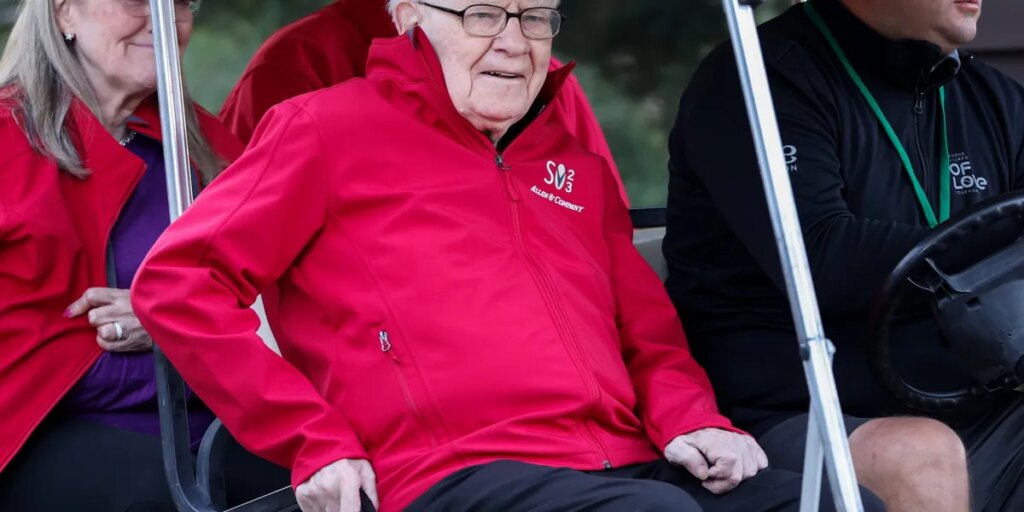
It’s Berkshire’s first major acquisition since Greg Abel became chief executive on Jan. 1, and Warren Buffett, now 95 and a chairman, made a point of standing back from it.
“Greg did that faster than I could have done it, smoother than I could have done it, and I never talked to the CEO,” he told CNBC’s Becky Quick.
While Abel has been at the helm for several months now and presided over the company’s annual shareholders meeting for the first time as CEO last month, Buffett indicated his successor has finally made the job his own.
“He has launched,” he said of Abel.
Yet despite Buffett handing the credit to his new CEO, the deal is still classic Buffett, who led the company for 60 years and has made an indelible mark on its DNA.
For example, Berkshire is paying about 0.9 times Taylor Morrison’s tangible book value, Citizens analyst James McCandless said, meaning the price tag is less than the hard assets are actually worth.
As his longtime friend and Fortune reporter Carol Loomis laid out in this magazinein 1988, Buffett’s acquisition strategy was never very complicated: buy a whole business for no more than its intrinsic value and then just hold it.
Buying a company for less than its assets are worth was how Buffett thought about the job, whether he was acting as an investor or a businessman, Loomis wrote, adding that “he simply will not overpay.”
There are other parts of the Buffett playbook in the deal, too. It’s all cash. Taylor Morrison Chairman and CEO Sheryl Palmer stays on, consistent with another Buffett rule Loomis quoted: “We can’t supply management, and won’t.”
But in other ways, the deal looks riskier than some of Buffett’s classic bets. Homebuilding takes heavy, repeated capital investments, and it rises and falls hard with the economy. Buffett’s definition of a “good business” was much lighter: a strong brand carrying above-average returns and a small need for new capital, so the company stays nimble and throws off cash. Homebuilding is none of that. And Buffet’s got the scars to prove it. The textile mill that gave Berkshire its name was the original bad business, one Buffett nursed for 20 years before finally shutting it down.
But analysts say the scale of the latest deal changes the stakes. Folded in with Clayton Homes—Berkshire’s manufactured-home builder, which it has owned since 2003—Taylor Morrison would make Berkshire roughly the fourth-largest homebuilder in the country by closings, behind only D.R. Horton, Lennar and PulteGroup, former Fortune reporter and housing analyst Lance Lambert calculated.
So the economies of scale might make the deal worth it. Bigger builders can buy land cheaper, handle volatility in materials costs (especially prudent during supply-chain disruptions like tariffs or an oil shock), and offer mortgage-rate buydowns that rivals can’t match.
And the housing industry has slowly consolidated as the market slumps. After years of mortgage rates stuck above 6%, prices for homes just won’t come down and buyers won’t bite, with affordability near its worst in decades. So builders have leaned on incentives for more than a year just to keep homes selling.
The post Buffett says Abel ‘has launched’ with his first big Berkshire deal: an $8.5 billion housing bet appeared first on Fortune.