This interview includes spoilers for the final episode of “Euphoria.”
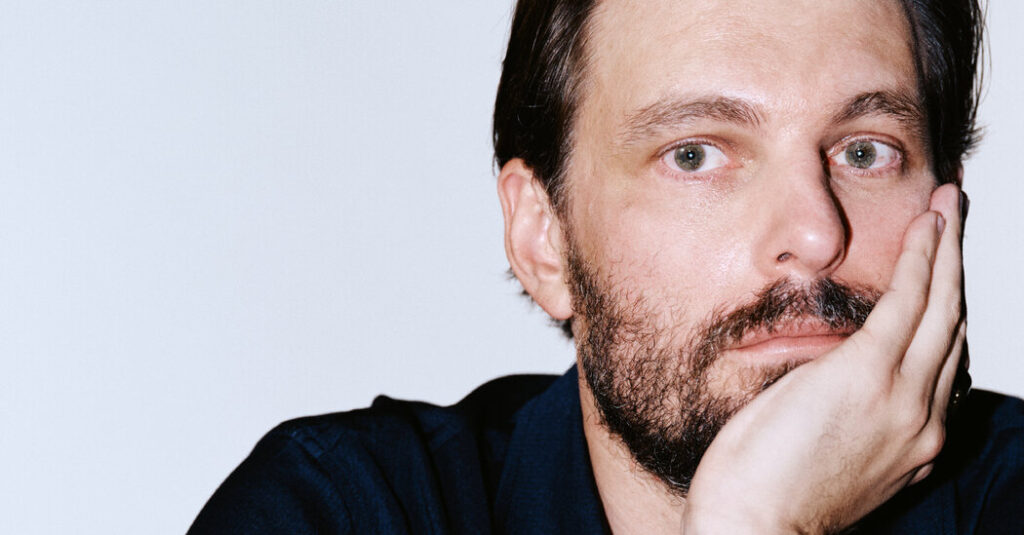
For Sam Levinson, the writer, director and creator of “Euphoria,” the death of a major character at the end of the show’s third season on Sunday was the unavoidable tragedy that lurks all too close to any story of modern addiction.
It also meant that HBO’s buzzy hit was finished — for good — despite the careful language of its mastermind and network, who never referred in advance to the final episode as a “series finale.”
“In terms of the story that we set out to tell, which is a story about addiction and its consequences, this feels like the end to me,” Levinson said, putting to rest any speculation in an exclusive interview on Popcast, The New York Times pop culture show.
With the fatal overdose of Rue Bennett, the rascally opiate addict played by Zendaya since 2019, on fentanyl-laced pills, “Euphoria” is over, HBO confirmed.
The “Euphoria” story is “a tragic one in the end — but it’s also the truth,” Levinson said. “If you are experimenting or taking drugs today, it’s very possible it’ll kill you.”
He called the series finale — which also featured Rue’s longtime sponsor and surrogate father, Ali (Colman Domingo), exacting revenge on her supplier — a tribute to the actor Angus Cloud, who played the cuddly drug dealer Fezco in the show’s first two seasons. Cloud, who struggled with addiction, died in 2023 from a fentanyl-related overdose during the writing of the final season.
“It was a way of honoring Angus and saying a prayer for the future,” Levinson said.
With its third season in seven years, “Euphoria” concluded a thrilling, provocative and tumultuous run that jump-started or accelerated the careers of several of the defining young actors of the 2020s: In addition to Zendaya, who won two Emmys for her portrayal of Rue, the cast featured Sydney Sweeney, Jacob Elordi, Hunter Schafer and others.
But while the core characters remained — despite the added logistical hurdles of superfame for its actors — the show ended a world away from the glittery, montage-heavy stylization of American youth where it began. Season 3 traded high school hallways and house parties for Western frontier expanse, exploring the underworlds of Nazi drug smugglers, strip-club sex traffickers and those aspiring to notoriety by any means.
Early reviews of this season skewed negative, reigniting fierce pushback against Levinson’s hyperdrive depictions of nudity, violence, drug use and race, while questioning the consistency in character development.
In a wide-ranging conversation with Popcast, Levinson, himself a former addict, described staying true to his vision, his approach to shooting sensitive subject matter and the limits of empathy. These are edited excerpts from the conversation, which can be watched below.
JOE COSCARELLI I think we have to start at the end. Rue overdosing on fentanyl and dying closely tracks with the experience that you had in making this show with Angus Cloud. I wonder if you can talk about when you knew “Euphoria” had to end this way.
LEVINSON I had originally written a different trajectory for the character of Rue, during the writers strike [in 2023]. We got the news that Angus passed away [that July]. I’d always been really concerned about the prevalence of fentanyl. It’s something that we’ve dealt with over the seasons and even in my first film [“Another Happy Day” (2011)].
But once he passed away, I had to reconceive the script and I thought, you can’t tell a story about addiction today without the very real consequences. Most people don’t get a second chance. Fentanyl can just take you out in an instant. It wasn’t like when I was growing up; you could literally take pills off the street and you might have a bad trip or something, but you’d be fine. This is something that hits close to home for a lot of people in this country. So it felt like the responsible thing to do.
One of the larger thematic ideas for this season was pulling back the illusions of the world that we live in, whether it’s “likes will fulfill your soul,” whether it’s love, money, fame, drugs will provide an escape. And it felt like if we were really going to be saying something, we needed to put the audience in the position of a family member who loses someone that they love. And I know how much I love Rue and audiences love Rue. I wanted to mirror that feeling.
COSCARELLI Rue’s addiction had been such a big part of the show in Season 1 and 2, and in 3 it really takes a back seat. And then in the last episode, it comes out of nowhere, like a huge smack from on high. Was it intentional that you obscured this idea that Rue could still fall victim to her addiction at any moment, because that’s true to your experience of addiction, whether your own or others?
LEVINSON 100 percent. You can go through different phases of addiction where you’re using every single second of a day to feeling like you kind of have your life together. Maybe you smoke a little weed, you drink, but it’s not the most pressing issue. But that addictive personality is always underneath the surface. And in the end, she’s banged up and her hand got cut. I always thought of it as a window into whatever pain is going on in her psyche. And she feels, “OK, I’ll just take one.” And I always imagine it was the fentanyl that she had smuggled into the country in the first episode [of Season 3].
JON CARAMANICA How do you think the message of what the show has tried to say has changed from season to season?
LEVINSON I think it’s always said a similar thing: Here’s the seduction of drugs, of sex. You know, we shoot it in a very kind of alluring way. And then we show the consequences of it. And we’ve done that in both seasons. But I think those consequences in high school were a little more temporary than the consequences in Season 3. So it’s just about driving that home a little bit more and then specifically dealing with fentanyl. That was a big motivating factor for me.
COSCARELLI I wonder about how far you like to go in terms of making this stuff seem glamorous. Because for a maybe less-experienced viewer, it could be brain scrambling to be like, well, this all looks pretty great, like the first half of “Goodfellas.” Why wouldn’t I want to follow in the footsteps of these characters?
LEVINSON I think that’s a really valid question. And it’s something that I wrestle with and I know our team does, too. Even going back to the Garden of Eden, it’s not like the serpent came to Eve and said, “You know, this is going to be the worst decision you’ve ever made in your life.” We have to portray the seduction of these illicit behaviors. That’s truthful and reflective of their draw in our own lives.
What’s most important to me is showing the consequence of it. I mean, Rue says it, I think in the second episode of the first season, they’re doing drugs under the tent with the glitter stuff and it’s like, drugs are cool in the same way that smoking is cool. Or any of it, until it’s not.
We cut to her and she’s getting wheeled out of her house on a stretcher because she OD’d. And her family is sitting there in the hospital with her and her little sister’s crying. We reveal that it’s not just that she’s hurting herself, but she’s, in fact, destroying the lives of everyone around her. So I think it’s always a fine line. Have we gotten it right 100 percent of the time? I don’t know. But I think we have shown the psychological, physical and spiritual consequences of addiction in all of its forms better than almost anything else out there. And that, I think, helps me sleep at night.
COSCARELLI Then there’s the sexualization. From the very beginning, when these were supposed to be high school characters, there’s been a lot of complaints that there’s nudity when there doesn’t need to be. How do you think about what meaningful consent is for the actors in these scenarios, given that many of them were at the very beginnings of their careers when the show started?
LEVINSON There’s a couple of things. From the script, you get a sense of what the role requires. Even when you go up to audition, let’s use the role of Cassie, you know the role requires a certain amount of nudity. Are you comfortable? If they’re comfortable, they get the role, then the next layer is the intimacy coordinator. I think it’s a SAG [Screen Actors Guild] rule that if an actor then says, after getting cast, actually, I don’t want to do that, we can’t force them to do a scene.
I believe very strongly that the best, most honest performances are when an actor feels free and safe. That’s how you get a great performance. You can’t if there is any tension, the emotion is going to be blocked. And that’s something I’ve known from my days of studying acting. So my job is to create the kind of best, most conducive environment for the actor to play this character.
Look, we deal with tough subjects. It’s always been part of the show, but at the same time, I care most about the emotional honesty of it and the well-being of the people that I work with. It’s a long game — this isn’t some five-day shoot. This is seasons and years of working with people and so you want to make sure that people are protected.
COSCARELLI We’ve seen what you’ve done with Sydney Sweeney this season, especially given how much her star has risen. Can you talk a little bit about what that creative relationship is like, to get to the point where she’s comfortable doing the intro of Episode 5, a montage of her online sex work?
LEVINSON Well, it’s funny, when I first wrote it, I was like, maybe we shoot all of this and we don’t have any nudity, maybe there’s ways to shoot around certain things? And she looked at me and she was like, “Are you kidding? I’m playing an OnlyFans model. You’re telling me you’re going to like, skirt around it?” And I was like, yeah, OK, that’s a fair point.
I think she’s a totally fearless actor. She’s also just wonderfully professional and shows up just game every day. I adore working with her because there’s such a flexibility in terms of the performance. There’s a lot of trust that we have.
And look, we’re tackling this world of OnlyFans where women are being paid to, like, whisper into an ear-shaped microphone. There is a level of absurdity to it that is just fun and we’re always trying to come up with ways to make it feel authentic and humorous and dramatic and also speak to the larger wants and wishes of the character.
COSCARELLI Why were the trappings of sex work the right way to tell so much of the story this season, whether it’s Jules as a sugar baby, Rue working at the strip club or Cassie?
LEVINSON I think it’s in line with a character like Jules, right? She’s very talented, creatively speaking. She goes off to art school and in past seasons, she was doing random hookups in motels. There’s something about not just the economy we’re in, but the fear of making it as an artist and trading that for security and comfort. There is something that’s alluring about it and normalized — sugar baby, sex-work-adjacent stuff. Here’s a way where she can continue to create with all of the freedom but none of the risk.
In terms of Cassie, from Day 1 in this series, she just wants to be loved. She wants to be adored. It feels to me like the natural progression of social media, whether it’s Instagram or any of these things — you’re the product, you’re the brand. It’s based around external validation.
COSCARELLI So you’re saying it’s almost coincidental that they all ended up with mirroring thematic story lines?
LEVINSON Well, I think it’s a byproduct of culture and what’s going on in terms of social media, where it’s headed. I think they’re all light forms of prostitution.
COSCARELLI We’ve talked a lot about these actors becoming stars since you’ve known them. And obviously that became a logistical puzzle in terms of the making of this season with everybody. Did it result in having to sacrifice your creative vision with, say, Nate or Jules?
LEVINSON Logistically, it was very tough. It’s 178 days of shooting. Usually, you’ll shoot scenes from, say, two episodes at a time. This season, we had to shoot scenes from Episode 8 in the morning, a scene from Episode 3 and another scene from Episode 1, just because of schedules. And then at the same time, you have to keep it all on budget. Those were real challenges.
But in terms of the story, I tend to look at it more like a film instead of a television show. Sometimes a character takes a front seat, sometimes they take a back seat, sometimes they’re in an episode, sometimes they’re not.
So in terms of Nate’s role, all of the wheeling and dealing that he does is the engine for Cassie’s story, which becomes the bigger arc of the season, as opposed to each episode we’re going to delve into his specific struggles. I think because audiences know the history of these characters, everything is always a little, like — it gets compared to what you know.
COSCARELLI People are deeply invested in these characters.
LEVINSON Which is a blessing. But I think it comes down to what’s right for the story and what keeps the audience engaged. I don’t think that I had to compromise.
COSCARELLI I want to talk about what happens after Rue’s death. Ali finds Rue having overdosed on his couch and he immediately straps up and goes to work.
LEVINSON Well, he goes to A.A. and talks about how he relapsed and lost faith in everything. And then he saws off a shotgun.
COSCARELLI Were you using Ali’s character to channel the anger you felt after Angus’s death?
LEVINSON I see myself in every single one of these characters, and I have since the beginning. I understand where Ali’s coming from. It’s a place of deep pain. Him talking about empathy and the idea if you can have empathy for the addict, then can’t you have empathy for the dealer? I think it’s a really interesting question and something that I’ve certainly grappled with. I think that empathy, without limits, starts to lose its kind of moral shape. And I think that’s what he’s coming up against. At what point do you just say something is evil? If you’re selling poison to kids and you’re killing them, it’s evil. And what do you do in that situation? How do you confront it? How do you deal with it?
CARAMANICA It ends quite pessimistically.
LEVINSON You think? I don’t think of it as pessimistic. Her at the table in the end, it’s grace.
CARAMANICA I guess I look in Ali’s eyes in that moment, and even if he’s feeling grateful, the hopelessness seems to be hovering a little bit behind his head.
LEVINSON We live in a pretty [expletive] world. It’s what Lexi says in that conversation with Cassie where she read the Bible. She doesn’t really understand it, but she does know people are always dying and you’ve just got to go on. There’s definitely a fragility there. But it’s a renewal of sorts. If we can kind of get our [expletive] together and take care of our loved ones and maybe believe in something a little greater than ourselves, then we can carve out a future.
Credits
Popcast is hosted by Jon Caramanica and Joe Coscarelli and produced by Sophie Erickson and Kate LoPresti. This episode was filmed by Jack Belisle, Dave Mayers and Pat Gunther and edited by Jamie Hefetz. Our theme music is by Elisheba Ittoop. Nick Pitman is our audio engineer and Amanda Webster is our photo editor. Brooke Minters is our executive producer. Header video cinematography is by Tim Schutsky. Special thanks to Rebecca Blandon, Sarah Bonn, Dahlia Haddad, Mike Cordero, Chris Moore, Nicole Huber, Zach Caldwell, Maddy Masiello, Brad Kimbrough, Andrew Wilcox, Sia Michel, Nina Lassam and Sam Dolnick.
Joe Coscarelli is a culture reporter for The Times and a co-host of the Times podcast “Popcast.”
The post Why ‘Euphoria’ Had to End This Way. For Good. appeared first on New York Times.