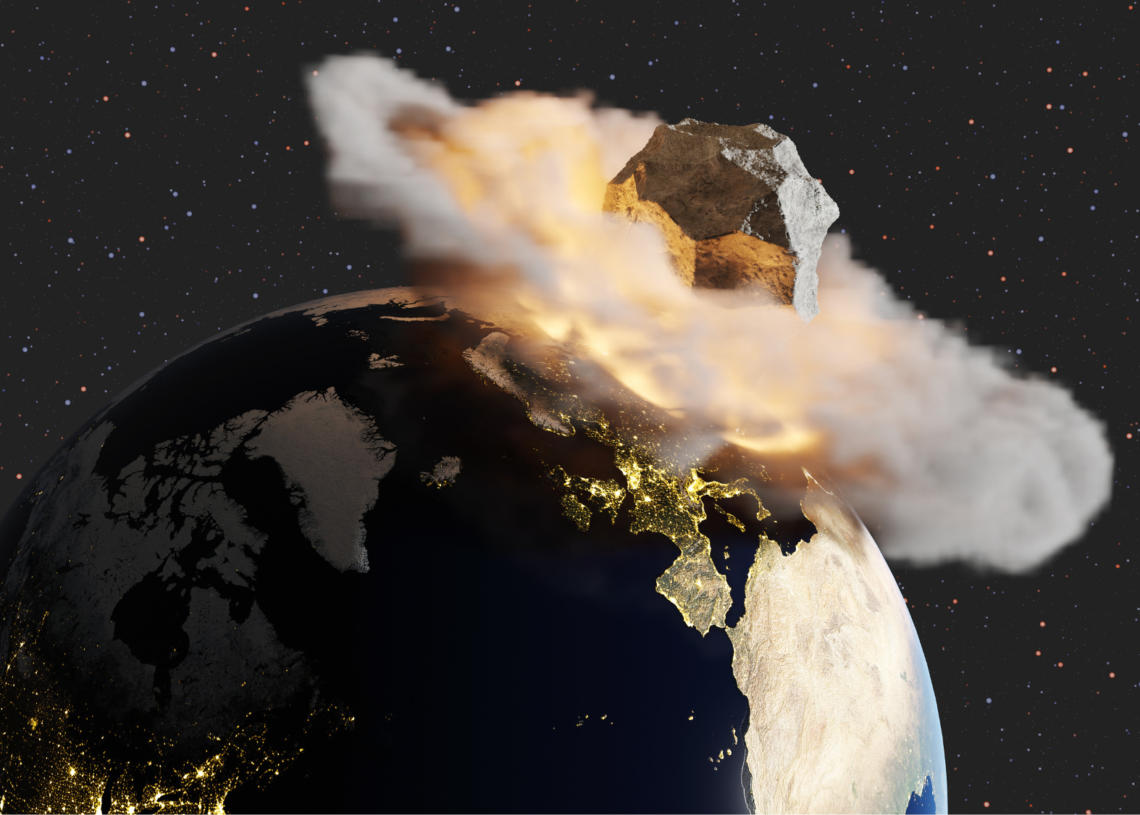
We take oxygen for granted, just like we take breathing for granted. Breathing is such an automatic function of the brain that most of us never stop to think about the oxygen we’re inhaling every second. We’ve become so used to it that we rarely ask one of the most fundamental questions on Earth: where did oxygen even come from? Now, researchers from the Korea Institute of Geoscience and Mineral Resources think they may have found part of the answer hiding at the bottom of an ancient asteroid crater.
In a study published in Communications Earth & Environment, scientists uncovered fossilized stromatolites inside the Hapcheon impact crater in South Korea, the only confirmed asteroid crater on the Korean Peninsula. Stromatolites are structures made of layered rock created by ancient microbes, particularly cyanobacteria, which are some of the earliest organisms that were able to photosynthesize. The weird little microbial mats of rock may have helped create the oxygen-rich atmosphere we now breathe in every minute of our lives without even thinking about it.
The research team thinks the crater formed after a massive asteroid slammed into the Earth 42,000 years ago. They say that the impact was likely so powerful that it shattered the Earth’s crust and generated heat so intense that it created a hydrothermal lake filled with warm, mineral-rich water, the exact kind of geothermal spa bath that microbes love and thrive in.
Those microbes so loved this hot, hot lake, and were so abundant, that they left behind fossilized evidence that this research team was able to analyze tens of thousands of years later.
One Asteroid Didn’t Breathe Life Into Earth, It Took a Lot of Them
The researchers aren’t saying that this single impact crater is the source of all oxygen on Earth. The planet used to get hit with space rocks regularly enough over its lifespan to make us modern humans nervous about it happening again. Researchers think that similar impact craters probably existed all over the planet billions of years ago, and those crater lakes left behind may have acted as hotbeds of oxygen production, where photosynthetic microbes lived the sweet life, all while slowly pumping oxygen into the atmosphere long before oxygen became widespread across the planet during the Great Oxidation Event roughly 2.4 billion years ago.
The research team chemically analyzed the stromatolites; they found traces of hydrothermal activity along with extraterrestrial material, meaning that the microbial structures that started pumping out oxygen were happening directly in the hot, wet environment created by the impact.
It’s an idea that doesn’t just apply to our planet, but since we are now starting to get a clear idea that Mars may have once had a tropical climate, at least in some parts, that a similar impact may have had a similar effect on the red planet. So, if we’re looking for evidence of microbial life on Mars, asteroid impact sites might be one of the best places to look for it.
The post Scientists May Have Found the Key to Ancient Life Hiding at the Bottom of an Asteroid Crater appeared first on VICE.