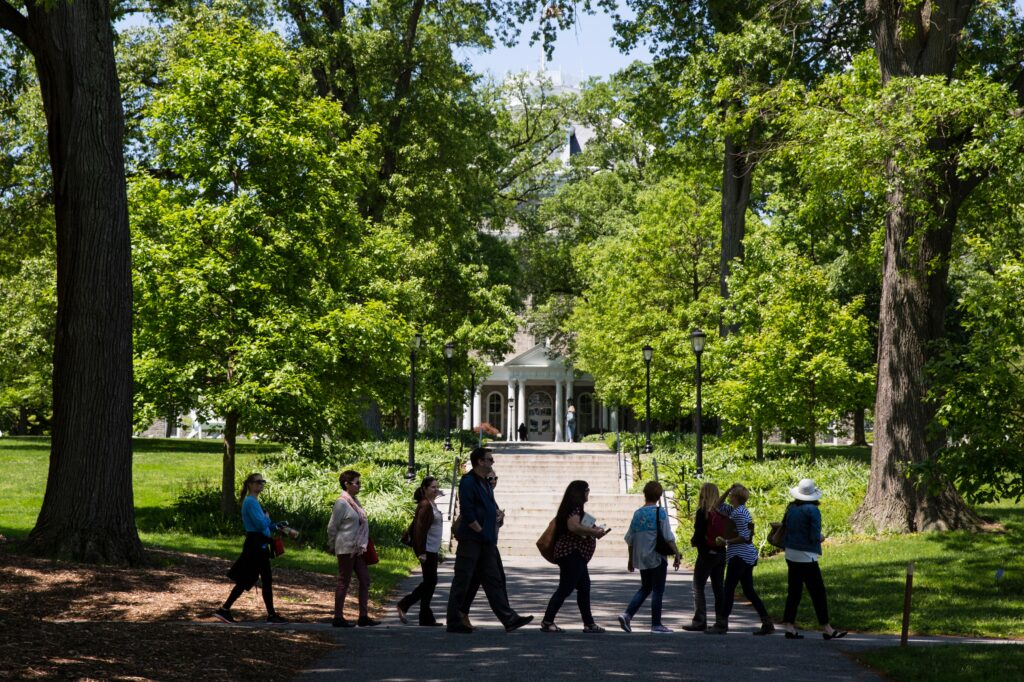
Swarthmore College and other small schools with large endowments caught a tax break last year, courtesy of the One Big Beautiful Bill championed by President Donald Trump.
Now some school leaders plan to apply the expected savings to help students: Swarthmore College announced this week that those from families earning less than $200,000 with typical assets will receive financial aid that meets or exceeds the cost of tuition.
The college, located just outside Philadelphia, is among nearly 40 schools exempted from a tax on earnings from their endowments, a collection of donations and investments that can total tens of billions of dollars for the biggest, wealthiest schools.
Congress imposed the endowment tax for the first time in 2017, during Trump’s first term. Last year, lawmakers increased it more than fourfold, to 8 percent, for the wealthiest schools. But they also agreed, late in the process, to kill the tax for schools that enroll fewer than 3,000 tuition-paying students.
The exemption is an opportunity to apply endowment money to making Swarthmore more affordable, rather than sending it to the federal government, said Rob Goldberg, the school’s vice president of finance and administration. An income of $200,000 is well above the median nationally. But many families with earnings at that level had been telling school officials that they couldn’t afford to consider a place like Swarthmore, where the cost of attendance is $95,770 for the 2026-2027 academic year.
It was a chance, Goldberg said, to “expand our financial aid and simplify the message.”
At least five other exempted schools also have announced new or expanded free tuition plans, including Wellesley College and Smith College in Massachusetts. Both institutions said the tax savings contributed to their new policies, which cover tuition for families earning less than $150,000 a year starting this fall.
Exemption from the endowment tax will make it possible for Colorado College in Colorado Springs to provide at least eight additional tuition-based scholarships for future students, officials there said. The tax break has helped Trinity University in San Antonio increase the minimum wage for on-campus student employees to $10 an hour effective this fall.
Grinnell College in Iowa, meanwhile, created a new scholarship for state residents. The college, with an endowment valued at $2.85 billion as of June 2025, had paid $2.4 million under the original tax and was facing an increase to $21 million before the last-minute exemption, President Anne F. Harris said.
Grinnell banded together with other small colleges and universities to lobby against the tax hike. They argued that unlike larger elite schools with multiple revenue streams, small schools rely on endowment earnings for operations and to provide scholarships and grants.
At Grinnell, nearly 70 percent of endowment spending funds financial aid. That’s well above the national average of 47 percent, according to data from the National Association of College and University Business Officers.
“We are endowment-dependent in a very distinctive way from other institutions of higher education, namely that we don’t have a medical center or a research center. We don’t have the huge amounts of federal grants that come in. We don’t have a D1 athletic team. So our source of revenue really is the endowment,” Grinnell’s Harris said.
Wealthy private colleges have been a target of congressional Republicans since the first Trump administration. The 2017 federal excise tax applied to private nonprofit institutions that enrolled more than 500 students and had endowments of more than $500,000 per student. According to the latest data from the IRS, 56 schools paid a total of $381 million in endowment taxes in 2023.
As part of last year’s reconciliation package, Republicans proposed a tiered tax on college endowments that would have initially raised the rate to as high as 21 percent. It was revised down to a top rate of 8 percent for the largest endowments — one of many modifications.
In the end, around 20 universities will probably be subject to the tax, according to an analysis by the American Enterprise Institute. The Joint Committee on Taxation estimates the tax will bring in $761 million over 10 years. The burden will fall most heavily on a handful of extremely wealthy schools, including Harvard University, which has tangled with the Trump administration over the past 16 months.
Conservative lawmakers say colleges and universities should use more of their resources to keep costs down, but many wealthy schools say they are doing just that, and taxing their endowments only undermines the effort.
Some lawmakers aren’t aware of these schools’ commitment to affordability and how important the endowment is to those efforts, said Michael A. Elliott, the president of Amherst College, which uses grants — not loans — in its financial aid packages.
“That means our students graduate with less debt than most public-university graduates,” Elliott said. “It means that we educate students — because of our endowment — at less cost to the taxpayer than most public universities.”
“We’ve heard the argument that endowments are essentially a bank account for a college, and we’re not spending enough of it,” said Goldberg, of Swarthmore, where 100 percent of financial aid comes from the endowment. “Endowments are probably among the least-understood aspects of a college’s financial structure.”
Swarthmore’s endowment was valued at more than $2.8 billion last summer, and the school has paid about $2 million toward the tax annually. It expects to see the savings in 2028. The new financial aid initiative will take effect in the 2027-2028 academic year. This year, the average aid package is at $75,000 a year, a couple thousand dollars over the tuition price. The school admits students without considering their need for aid and offers financial packages without loans.
“We’ve heard over the years a lot of concern about the cost of higher education,” said financial aid director Varo Duffins, including from parents who think their income is too high to qualify for financial aid. “I think families may be surprised — in a pleasant way.”
The post After escaping a big tax, these colleges are giving the money to students appeared first on Washington Post.