Law enforcement officials on Friday arrested an Immigration and Customs Enforcement agent accused of shooting a Venezuelan immigrant this year and lying about it.
The agent, Christian J. Castro, 52, was caught in Texas after investigators from the Minnesota Bureau of Criminal Apprehension tracked him down, according to the Hennepin County attorney’s office, which had charged him this month with four counts of second-degree assault. He faces an additional charge of filing a false police report.
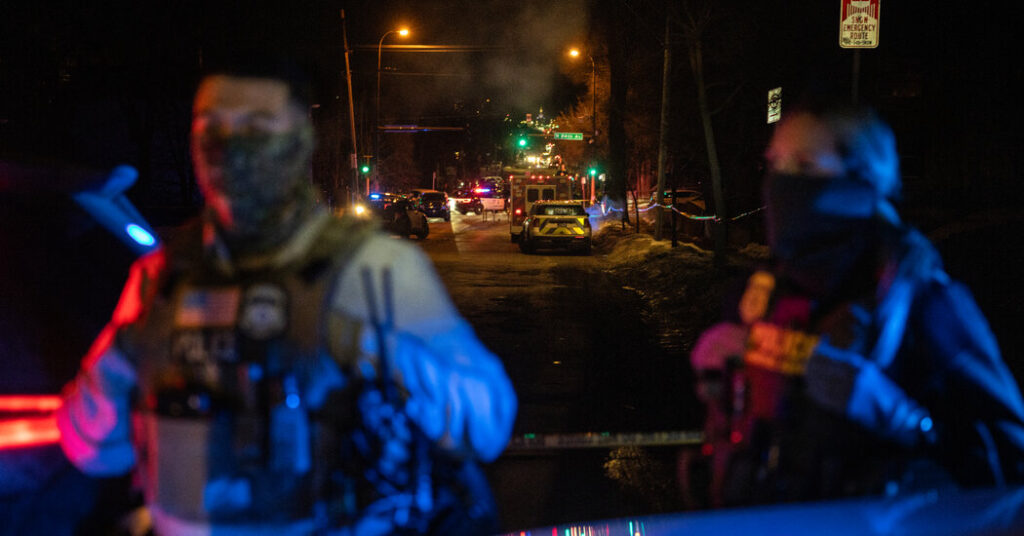
The shooting, on Jan. 14, set off violent protests at the height of the Trump administration’s immigration operation in Minnesota this past winter.
“Today’s arrest is a critical step forward in our prosecution of Mr. Castro,” Mary Moriarty, the attorney in Hennepin County, which includes Minneapolis, said in a statement.
Daniel Borgertpoepping, a spokesman for the office, said investigators from the Department of Homeland Security’s Office of Inspector General and from the Texas Rangers had helped take Mr. Castro into custody.
The inspector general’s office, however, said it had played no role in the arrest.
Mr. Castro has not responded to requests for comment in recent days. It is not clear whether he has hired a lawyer.
On the evening of the shooting, Mr. Castro had a brief scuffle with Alfredo Aljorna, a Venezuelan migrant whom he had been trying to arrest after a car chase, according to court documents.
After Mr. Aljorna broke free and raced into his Minneapolis home, Mr. Castro fired a bullet into the front door, wounding Mr. Aljorna’s roommate, Mr. Julio C. Sosa-Celis, in the leg, according to state prosecutors.
That night, as violent protests erupted, Mr. Castro told investigators that he had opened fire, fearing for his life, as three men bludgeoned him for several minutes using a shovel and a broom. Based on that account, federal prosecutors charged Mr. Sosa-Celis and Mr. Aljorna with assaulting a law enforcement officer.
The case unraveled weeks later after federal prosecutors reviewed footage from a Minneapolis police surveillance camera that belied Mr. Castro’s claim that he had fired after being assaulted. Prosecutors dropped charges against the two Venezuelan men.
Mr. Castro was placed on leave in February, and ICE’s interim director, Todd Lyons, said Mr. Castro was under investigation for appearing to have lied under oath, a federal crime.
But ICE officials described the state charges against Mr. Castro as “unlawful and nothing more than a political stunt” in a statement the day he was charged.
State prosecutors have acknowledged that they face significant practical and legal hurdles because federal officials enjoy broad immunity from prosecutions stemming from conduct in the line of duty.
Mr. Castro was booked into jail in Cameron County, Texas, near the Mexico border, after he was arrested Thursday morning at a house in the city of Harlingen, said Mike Ernster, a spokesman for the Minnesota Bureau of Criminal Apprehension.
If Mr. Castro waives the right to an extradition hearing in Texas, he could be moved to Minnesota to be arraigned quickly. If he fights extradition, Gov. Tim Walz of Minnesota, a Democrat, would need to make a formal request for his extradition to Gov. Greg Abbott of Texas, a Republican.
Mr. Abbott’s office did not respond to a request for comment.
Mr. Castro is the second ICE agent Ms. Moriarty has charged with assault over incidents that occurred during the deployment of thousands of immigration agents to Minnesota last winter.
In April, she charged Gregory Donnell Morgan Jr., an agent based in Maryland, with second-degree assault. According to a charging document, Mr. Morgan, 35, pointed a gun at motorists while driving on a state highway in February.
Mr. Morgan traveled to Minnesota last week to be arraigned and appeared before a judge, who ordered him released after he posted bail.
His lawyer, Ryan Pacyga, told reporters last week that ICE agents in the Minnesota crackdown were the targets of harassment and threats. He described his client as a dedicated officer and said a fuller account of the incident would emerge.
“Human beings under stress can perceive danger differently and make split-second decisions in rapidly evolving situations,” he said.
Mr. Pacyga said he intended to have Mr. Morgan’s case moved to federal court because he is a federal agent, a step state prosecutors have said they expected. If that happens and Mr. Morgan goes on trial, the case would unfold under unusual circumstances. State prosecutors would try the case before a federal judge and a federal jury.
Under Minnesota law, the charges Mr. Morgan and Mr. Castro face — second-degree assault with a dangerous weapon — carry a mandatory minimum sentence of three years in prison if either is convicted.
If found guilty, they could not be pardoned by President Trump for a conviction secured under Minnesota law.
Ms. Moriarty said her office has more than 30 additional open investigations involving federal immigration agents who took part in the Minnesota operation. The inquiries include the fatal shootings of two American citizens, Renee Good and Alex Pretti. Her office is suing the federal government to compel it to turn over evidence gathered in those cases.
Hamed Aleaziz and Lauren McGaughy contributed reporting.
Ernesto Londoño is a Times reporter based in Minnesota, covering news in the Midwest and drug use and counternarcotics policy. He welcomes tips and can be reached at elondono.81 on Signal.
The post ICE Agent Wanted in Minneapolis Shooting Is Captured in Texas appeared first on New York Times.