
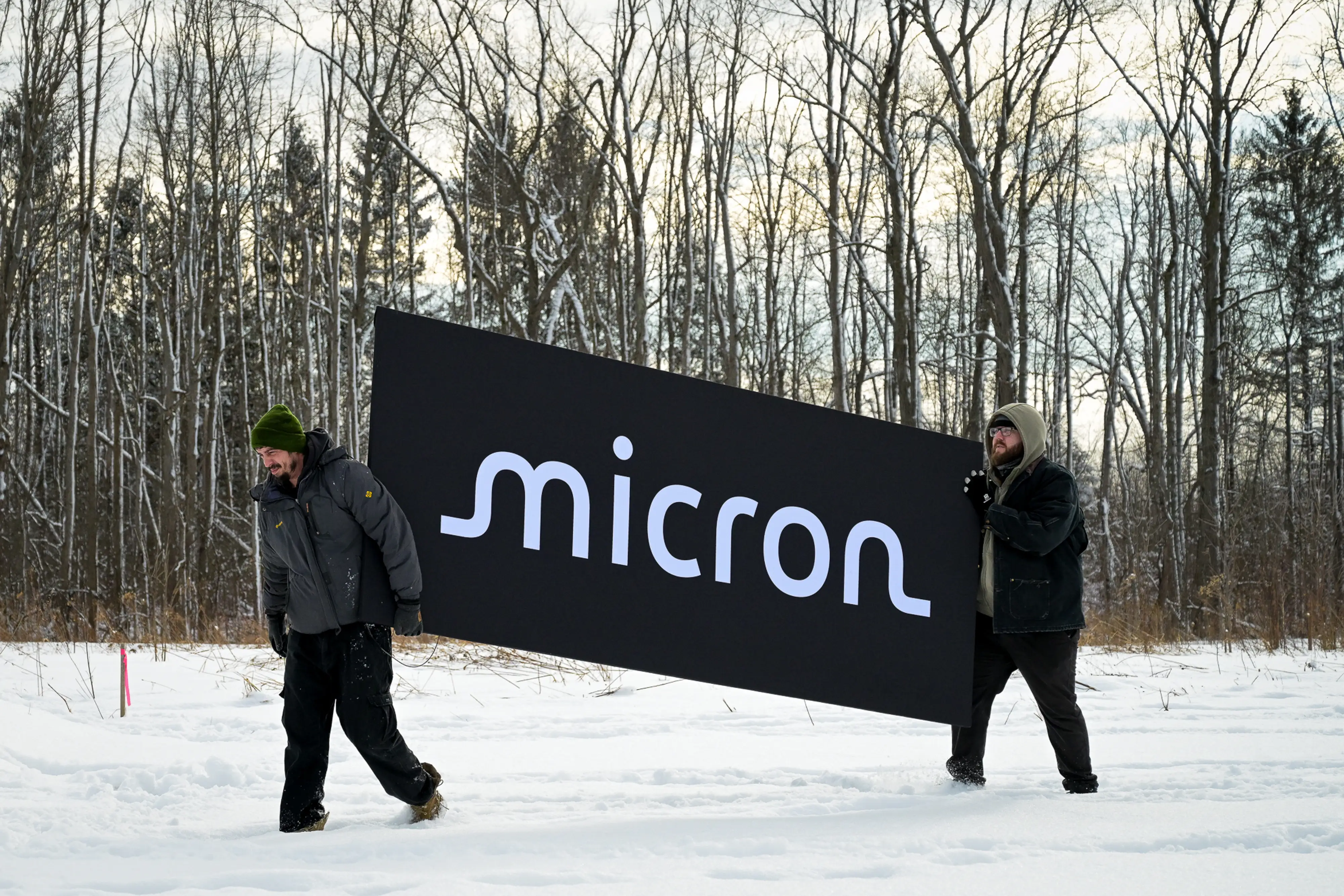
Micron crossed $1 trillion in market value this week, a milestone that would have sounded absurd to most investors even a few years ago. The memory-chip business has long been one of the cruelest corners of tech: brutal booms followed by catastrophic busts.
I’ve covered this story before. Back in 2017, I wrote about Sun Microsystems co-founder Bill Joy arguing that the DRAM market had finally changed for good. His thesis was that fewer suppliers and rising demand from cloud computing and AI would reduce the industry’s historic tendency to destroy itself through overproduction.
That argument turned out to be early, not wrong.
Micron shares have soared roughly twentyfold since then. Samsung crossed the $1 trillion market-cap threshold earlier this month, and SK Hynix joined the party on Tuesday. There are fundamentals behind these moves: Samsung made more than $30 billion in profit during the first quarter alone.
Now investors are asking the most dangerous question in finance: Is this time different?
Maybe.
The first big change is consolidation.
In the early 1990s, there were more than 20 meaningful DRAM makers globally. Today, the industry is effectively controlled by three companies: Samsung, SK Hynix, and Micron.
For decades, memory makers responded to rising demand by flooding the market with new supply. Prices eventually collapsed and profits evaporated. Fewer competitors may mean fewer incentives to repeat that cycle.
The second change is AI demand itself.
Modern AI systems are ravenous consumers of memory because they constantly move and process huge amounts of data inside giant data centers. Even advanced techniques designed to reduce computing bottlenecks still run into memory constraints. Startup Lightmatter is using photonics — essentially light instead of copper — to speed up AI data centers, but CEO Nick Harris told me recently that this does nothing to eliminate the memory bottleneck.
So, rampant AI demand is colliding with constrained supply. UBS analysts noted this week that memory makers are signing multi-year agreements with cloud giants that lock in both volume commitments and partially fixed pricing. That should add another layer of stability. UBS estimates these deals could keep the DRAM market undersupplied into 2028.
Of course, this could still prove to be an unusually large up-cycle that eventually ends. The remaining players could flood the market again. New entrants could emerge. AI demand could cool, or a new technology might reduce the need for memory.
But investors clearly believe the old memory business may finally be becoming something new.
Sign up for BI’s Tech Memo newsletter here. Reach out to me via email at [email protected].
Read the original article on Business Insider
The post Short memory? The most dangerous words in investing are back appeared first on Business Insider.