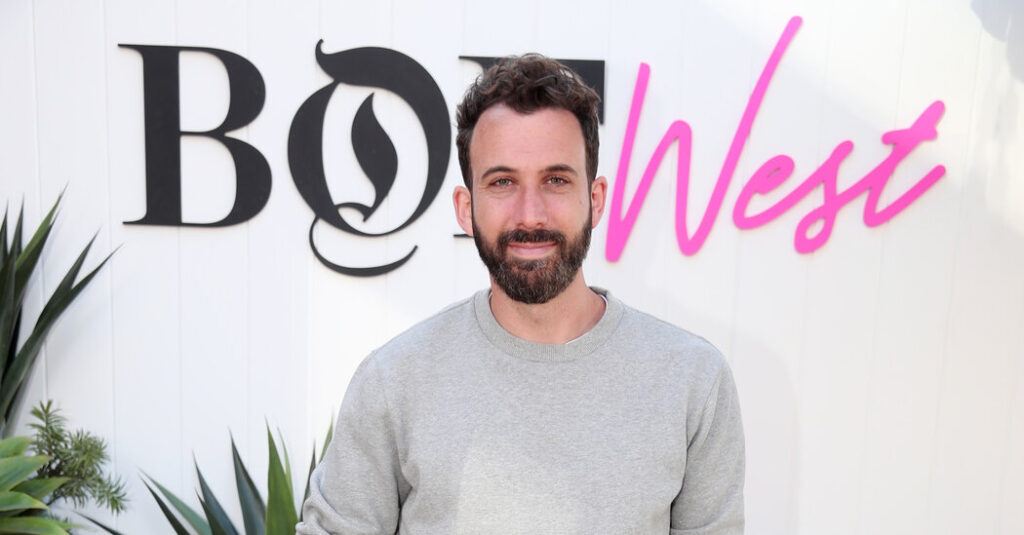
When Michael Preysman, a co-founder of the sustainable clothing retailer Everlane, heard that the brand would be acquired by the fast fashion giant Shein, he was stunned. An early investor called to ask if he had heard the rumor, so he texted the company’s chief executive to confirm.
Yes, a brand built on a commitment to “radical transparency” that offered shoppers a look into the opaque world of garment manufacturing was being bought by one of the key players in fast fashion. Everlane’s majority owner, L Catterton, a private equity firm backed by the luxury conglomerate LVMH, was getting rid of its stake.
“You’re selling to the complete antithesis of what we stand for,” Mr. Preysman said in an interview. “Quite shocking, to be honest, and not a decision that I would ever make.”
Mr. Preysman stepped down as Everlane’s chief executive in 2021 and later left its board because of disagreements. He is among a cohort of founders who have bemoaned the fate of their brands after giving up control, such as Anita Roddick when she took her cosmetics company, the Body Shop, public, and Kevin Plank, who returned as C.E.O. of his sportswear company, Under Armour, after taking a back seat for several years.
A sale to a private equity firm, going public or stepping away from day-to-day operations are some of the many ways management tries to grow a business. But those decisions do not always align with the company’s original mission.
About 70 percent of business owners regret selling their companies, according to a report from the Exit Planning Institute, an education and accreditation firm for business executives.
In a recent high-profile case of founder lamentation, Chip Wilson, the founder of the sportswear maker Lululemon who stepped down from the company’s board of directors over a decade ago, accused management of dismantling the retailer’s business model and said the brand had lost its “soul.” The feud ended this week when Lululemon agreed to appoint two of Mr. Wilson’s nominees to its board.
Shein and L Catterton did not respond to requests for comment.
When Mr. Preysman found out about the Shein deal, he reconsidered his plans. He put away his phone, he said, and sat in silence in a small garden, taking notes. His next company, he decided, would not accept any money from venture capital funds or private equity firms.
This week, Mr. Preysman put up a website for a new apparel company, promising those who signed up that it would have the “same principles” as Everlane, “but a new take.”
Everlane is one of many high-flying retail start-ups from the 2010s that have faded in recent years and ended up with new owners. Others include the mattress retailer Casper, now owned by a polyurethane foams manufacturer, and the sneaker company Allbirds, which is being converted into an artificial intelligence business.
Even Everlane’s customers have been particularly startled by where the brand landed. Shein, founded in China and now based in Singapore, has been plagued by labor scandals and accusations of copyright infringement. It’s also locked in a legal battle with its ultra-fast-fashion rival Temu over trade secrets, intimidation tactics and intellectual property.
Mr. Preysman said he agreed with the shoppers who had voiced their disapproval about the acquisition online.
In 2010, Mr. Preysman, who previously worked at a private equity firm, founded Everlane with Jesse Farmer, a software developer. They wanted to shake up the apparel industry by revealing to shoppers precisely how much it costs to make products, including materials, labor and transportation. Everlane lured customers with its marketing, providing photo tours, names and locations of factories.
The retailer received millions in funding from venture capital investors as it grew. But in 2020, challenged by shutdowns during the Covid-19 pandemic, the company took on an investment from L Catterton.
“There were definitely extreme hesitations, and there were many people saying, ‘be careful,’” Mr. Preysman said, referring to taking L Catterton’s investment. “I always tell people there are very few things you can’t undo. Investments and having kids are two of those things.”
Mr. Preysman declined to share how much he made from the L Catterton agreement, but he said that he was “not sitting here as a very wealthy person.” He said he was not involved in the Shein deal.
Mr. Farmer, the other founder who left more than a decade ago, said that he watched with pride as Everlane became popular while holding fast to the original vision despite pressure to grow faster.
“Everlane’s name will continue under Shein, but there’s no doubt its spirit will live with Michael and the team,” Mr. Farmer said.
Alfred Chang, the chief executive of Everlane, said in a statement that the brand would remain independent and maintain its commitments to sustainability. As public criticism about the acquisition swirled, Mr. Chang told employees that “Everlane remains Everlane,” and that he would stay on as its chief.
“This past week has been a hard one,” he told staff in a memo reviewed by The New York Times. “Seeing our company in the media, and in that light, was painful. Needing to stay silent per standard process in these matters has been ever harder.”
As for Mr. Preysman’s new venture, he said he would release more details about the brand, which has yet to announce a name, in the coming weeks. It will focus on apparel along with other yet-to-be-revealed categories. The product development process has begun, but it will take some time, he added.
The new brand is likely to stay off social media, Mr. Preysman said, because he wants it to be quiet and intimate. The idea, he said, is to create an apparel brand that stands in contrast to the cacophony of TikTok and artificial intelligence.
Mr. Preysman is funding the new business himself and is considering alternative ownership structures, such as a trust, that may include other investors. But the company will stay away from any institutional funds that expect to cash out one day.
“There’s no exit in this,” he said.
Kim Bhasin is a business reporter covering the retail industry for The Times.
The post Everlane Co-founder, Shocked by Shein Acquisition, Wants a Redo appeared first on New York Times.