The Trump administration announced last Friday that US visa holders who want a green card must first return to their home countries and apply from there, “except in extraordinary circumstances.”
On its face, this rule — which was officially promulgated in a memo from US Citizenship and Immigration Services (USCIS) — would upend America’s immigration system and the lives of hundreds of thousands of US residents.
Key takeaways
- The Trump administration’s changes to the green card process could force hundreds of thousands of skilled immigrants to leave the country.
- This policy represents the triumph of MAGA nativists over the tech right, in the battle to define what an “America First” immigration policy looks like.
- Precisely how USCIS will implement the policy remains unclear.
For more than 50 years, through the “adjustment of status” process, visa holders in the United States have been able to remain in the country while applying for permanent residency. This was no small thing. For legal immigrants, the alternative to securing an adjustment of status is not taking a short sojourn abroad while Uncle Sam inspects their paperwork. Rather, due to various quirks of US immigration law, some immigrants must wait more than a decade for their green card applications to be approved.
President Donald Trump’s new rule therefore threatens to exile hundreds of thousands of legal immigrants — including physicians at understaffed rural hospitals, gifted technologists at Silicon Valley firms, the spouses of US citizens, and parents of American children.
Whether this will actually happen is unclear. Both the memo officially laying out the policy — and the administration’s messaging about it — contain ambiguities and apparent contradictions. For example, the administration has said that visa holders can only remain in the United States during the green card application process under “extraordinary circumstances” and that any visa holder who provides an “economic benefit” to America may still do so. Yet more or less all employed visa holders provide some economic benefit to the United States.
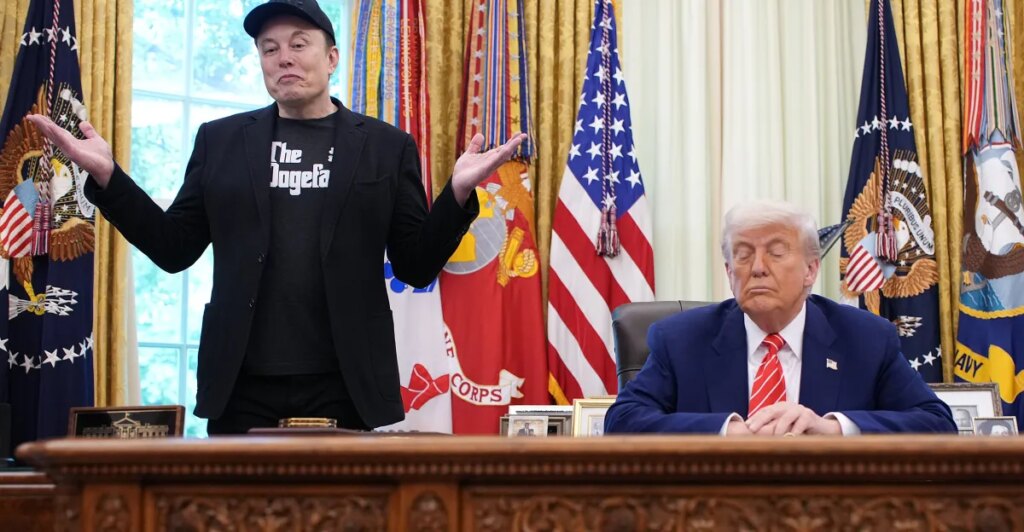
Regardless, the new memo represents a massive escalation in Trump’s crackdown on immigration. It also arguably marks the resolution of a years-long war for the soul of the MAGA movement.
Since Trump retook the presidency in 2024, his coalition’s hardline nativists and Silicon Valley patrons have been fighting over what an “America First” immigration policy actually entails.
America’s tech industry is heavily reliant on global talent. About one-fifth of our nation’s STEM workers in 2021 were foreign-born. For this reason among others, the tech right — a contingent of Silicon Valley luminaries who backed Trump in 2024 — advocate for a meritocratic brand of immigration restrictionism.
In their account, America needs to repel undocumented, low-skill migrants who threaten to burden its safety nets, warp its culture, and empower the Democratic Party. Yet the United States also needs to welcome highly talented, English-speaking, America-loving workers from around the globe in order to sustain its economic competitiveness and dynamism.
“I understand why we don’t want people to come to the US to be criminals, mooch on welfare…and otherwise undermine the country,” Blake Scholl, the Trump-friendly CEO of Boom Supersonic, posted on X after the latest immigration news. “But I don’t understand why we make it harder for motivated, ambitious, hardworking people to come to the land of opportunity.”
The nativist right isn’t so sure about that. In its view, whether immigrants engineer software in Silicon Valley — or deliver food in New York City — they are typically undermining native-born Americans’ interests, at least in their current numbers.
By deterring highly skilled, legal immigrants from seeking green cards, the Trump administration has made its allegiance to the second camp unambiguous.
This wasn’t inevitable
While not entirely surprising, this development wasn’t always certain. Trump erected some obstacles to high-skill immigration during his first term. But these changes had been relatively modest. More critically, after a slew of tech titans lined up behind Trump’s candidacy in 2024, Trump signaled support for their immigration views.
During a June 2024appearance on All-In, a podcast hosted by venture capitalists sympathetic to his campaign, Trump was asked whether he would “promise us you will give us more ability to import the best and brightest around the world to America”?
The candidate replied, “I do promise. But I happen to agree, otherwise I wouldn’t promise. … You graduate from a college, I think you should get automatically — as part of your diploma — a green card to be able to stay in this country and that includes junior colleges too.”
Months later, in the wake of Trump’s victory, his Silicon Valley supporters got into an online feud with hardline nativists over H-1B visas — which give temporary legal status to highly educated immigrant workers employed by American companies. After some MAGA influencers called for restricting such visas (and high-skill immigration more broadly), the tech right rallied to the program’s defense.
“The reason I’m in America along with so many critical people who built SpaceX, Tesla and hundreds of other companies that made America strong is because of H1B,” Elon Musk posted on X in December 2024. “I will go to war on this issue the likes of which you cannot possibly comprehend.”
Once again, Trump appeared to side with Silicon Valley, telling reporters that he supported the H-1B program, since “We need competent people, we need smart people coming into our country…we need a lot of people coming in.”
Why MAGA doesn’t want more “smart” immigrants
Of course, much of the MAGA movement disagreed.
Although the nativist right has tended to dedicate most of its energy to combating undocumented immigration, it has also sought to repel highly skilled legal immigrants in general — and those who work for tech companies in particular.
In fact, two of the original architects of Trump’s immigration vision — Steve Bannon and Stephen Miller — both long lamented the prevalence of foreign-born workers in Silicon Valley.
Notably, Trump himself did not share this view at the outset of his first presidential campaign. During a 2015 podcast appearance, Trump told Bannon that he worried about foreign-born Ivy League graduates being forced to return to their home countries instead of using their skills in the United States, since “we have to keep our talented people.”
Bannon replied, “When two-thirds or three-quarters of the CEOs in Silicon Valley are from South Asia or from Asia, I think…a country is more than an economy. We’re a civic society.”
Likewise, during his time working for then-Sen. Jeff Sessions, White House adviser Stephen Miller co-authored a “handbook” on immigration policy that decried “The Silicon Valley STEM Hoax” — namely, the idea that the United States needed to increase immigration in order to meet its demand for workers with tech skills. The document argued that increasing admissions of foreign-born STEM workers would “deny millions of Americans a shot at a good-paying middle-class job.”
From this perspective, highly skilled immigrants are scarcely more desirable than low-skill ones — and may even be less so. After all, few Americans are eager to perform seasonal agricultural labor. But many covet well-paid tech jobs. And if one believes that the supply of such positions is largely fixed, then every coding gig taken by an immigrant is one denied to a native-born American.
For many nativists, however, the problem with high-skill immigration isn’t purely economic. As Bannon’s comments suggest, the ethnic composition of Silicon Valley’s foreign-born labor-force is also a concern.
Following the Trump administration’s changes to green card policy last week, frank expressions of anti-Indian animus proliferated on right-wing social media. Previously, the far-right influencer — and periodic Trump confidante — Laura Loomer had suggested that “third-world invaders from India” threatened to overrun America, a country “built by white Europeans.”
Some Republican elected officials have played to such anti-Indian resentments. This week, US Rep. Greg Steube (R-Fla.) referenced Indian immigrants’ disproportionate share of H-1B visas while advocating for legislation that would end the program entirely.
India’s government is upset about H-1B delays because their citizens are “stranded” back home? Meanwhile Americans have been stranded out of jobs for years while companies use H-1Bs to replace U.S. workers with foreign labor. My EXILE Act would END the H-1B program entirely!… https://t.co/trS3UhpwAb
— Congressman Greg Steube (@RepGregSteube) May 26, 2026
The nativists won
Before last week, the second Trump administration had already been leaning toward the nativist right’s position on skilled immigration by, among other things, heavily constraining the issuance of new H-1B visas.
But Trump’s ostensible transformation of the green card application process constitutes a far more definitive — and consequential — rebuke of the tech right’s vision for immigration.
Indeed, the policy explicitly aims to chase most international students from the United States as soon as they graduate, the very scenario that Trump had spent years lamenting.
Further, unlike previous restrictions to H-1B visas, the green card memo seeks to reduce the number of foreign-born permanent residents in the United States, rather than merely the number of guest workers. Populists on the right and left have long argued that guest workers are uniquely exploitable — since they need to keep their jobs in order to remain in the country legally — and thus put downward pressure on labor standards in their industries. Yet immigrants applying for green cards are often seeking to escape that very form of dependence and secure the same bargaining power as US citizens.
What’s more, the new rules would hit Silicon Valley’s disproportionately Asian workforce particularly hard. America’s annual green card issuance is capped by country. For this reason, immigrants from highly populous nations with large educated workforces — such as India and China — must wait many years before their green card applications are approved. An Indian tech worker who applies for a green card tomorrow is likely to wait more than 12 years before actually securing permanent residency. Under traditional procedures, that worker could remain legally in the United States while awaiting approval. Under Trump’s new system, they would need to go into exile for a decade.
The full implications of Trump’s policy are uncertain. But the tech right’s defeat is unmistakable.
It remains unclear how USCIS agents will interpret their new marching orders. Although the administration’s memo suggests that adjustment of status should be offered only in extraordinary circumstances, it nonetheless gives USCIS officers discretion to provide such relief as they see fit. And the document also suggests that some categories of immigrants may be partial “exceptions” to the rule.
“We are hearing USCIS examiners are now asking questions like, ‘Why are you applying for adjustment? Why couldn’t you have left and applied abroad?’” Cyrus Mehta, an immigration attorney in New York City, told me. “Different local offices will likely take different positions on how to deal with it. Some will be business as usual. Others may be instructed to get tough.”
It’s possible then that the tech right could persuade the administration to interpret its own memo narrowly — or else, convince a court to strike the policy down.
In any case, the administration’s position is likely to deter many highly skilled visa holders from seeking permanent residency. And it will also provide talented young people abroad with another reason to seek admission to other wealthy countries, instead of the US.
If interpreted literally, meanwhile, the new rules would do far greater harm to the American tech sector than any of the Biden-era antitrust policies or AI regulations that purportedly “red-pilled” so many Silicon Valley billionaires.
In short, red America’s civil war over immigration policy is essentially over. The nativists won, the tech right lost; the latter’s best hope is merely to negotiate favorable terms of surrender.
The post MAGA’s civil war over immigration is over. Silicon Valley lost. appeared first on Vox.