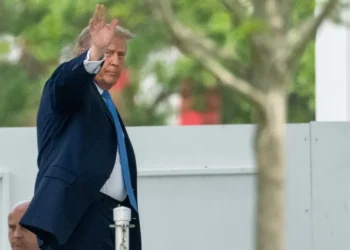
President Donald Trump proved once again that his endorsement is, as Texas Attorney General Ken Paxton put it in his primary runoff victory speech Tuesday night, “the most powerful force in politics.”
One by one, Trump is putting an end to the political careers of lawmakers in his party that he deems, for reasons more personal than policy-oriented, to be apostates. But in doing so, he may also be liberating them as they serve out their remaining seven months in Congress. They now have nothing to lose if they stand up against him.
By giving belated independence to a handful of incumbents he vanquished at the ballot box or forced into retirement, the president is creating a growingly noxious dynamic between the two ends of Pennsylvania Avenue.
“It’s hard for me to see how the president is going to get his agenda through the Senate in the next seven months if he keeps purging Republican senators who support him,” former senator Lamar Alexander (R-Tennessee) told CBS News last week. “… I think Republican senators will find they can say what they think and the country will be better off if they do.”
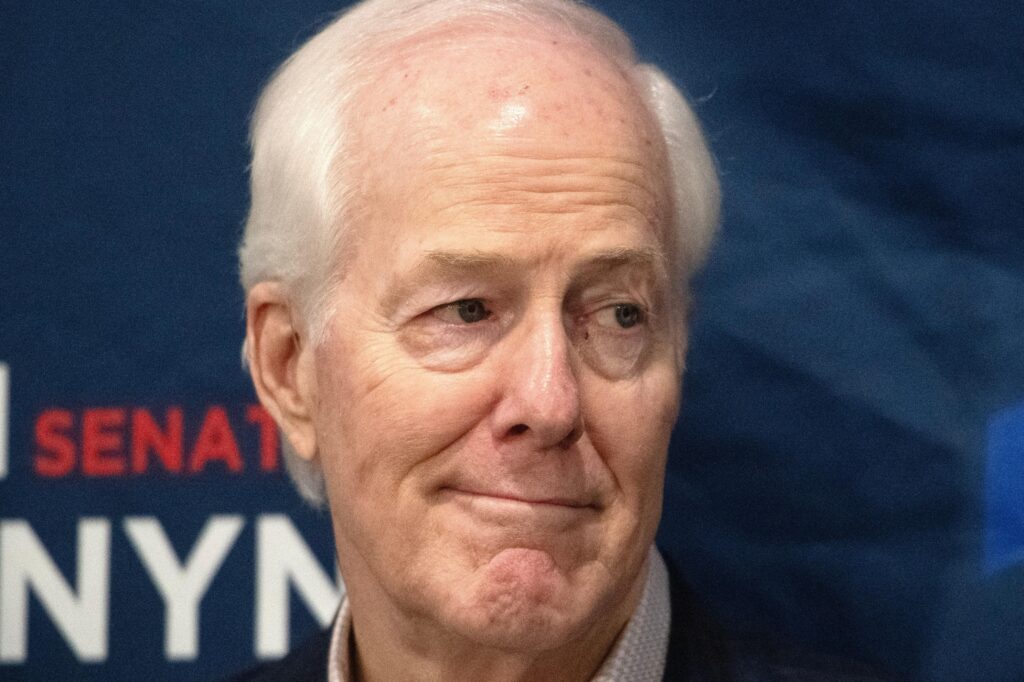
In his Trump-engineered defeat, Sen. John Cornyn joins a club of two other Republicans in the chamber, where their party holds a 53-47 majority. The other two are already expressing resistance to the president’s dictates.
One is Thom Tillis (North Carolina). Under a barrage of Trump attacks for opposing parts of the president’s agenda — including the sprawling One Big Beautiful Bill that was its domestic centerpiece — Tillis announced his retirement last year rather than making what was deemed to be a hopeless bid for a third term.
Tillis has since become a regular Trump critic. He has called the Justice Department’s recently announced “anti-weaponization fund,” which could allow the Trump supporters who attacked the U.S. Capitol on Jan. 6, 2021, to receive taxpayer dollars, as “stupid on stilts” and said: “These people don’t deserve restitution. Many of them deserve to be in prison.”
Bill Cassidy (Louisiana), who failed to even make the runoff in his party’s May 16 primary, voted for the first time a few days later to advance a resolution to block Trump from ordering further strikes on Iran without congressional authorization.
The first elected senator to lose renomination since 2012, Cassidy also told reporters last week that Trump’s request to use federal dollars for the construction of the president’s coveted White House ballroom is “a spit-in-the-eye insult to all my taxpayers in Louisiana to spend a billion on a ballroom when we should be doing something about the high price of gas, groceries and health care.”
The second elected senator in more than a decade to lose a primary was Cornyn, whose defeat followed Cassidy’s by less than two weeks. He has served four terms in a Senate seat first occupied by Texas founding father Sam Houston, and later by Lyndon B. Johnson. Cornyn had also served in the Senate’s GOP leadership and is well-regarded on both sides of the aisle.
In the March 3 Republican primary, Cornyn nosed out scandal-scarred MAGA darling Paxton but did not win by enough to avoid a runoff.
One telling indicator of the effect of Trump’s endorsement, which he bestowed on Paxton last week, was voter turnout. It dropped by more than a third between the primary and the runoff, a possible indicator of how many Republicans assumed the race was over, even though Cornyn continued to swamp the airwaves with ads, far outspending Paxton in what had become the most expensive primary race in history.
But the MAGA die-hards showed up, and Paxton won by nearly 30 percentage points.
Had Cornyn been his party’s nominee in the general election, political handicappers believed that he would win it handily, even though Democrats have put up a dynamic newcomer, state Rep. James Talarico, as their nominee. Now, Republicans are going to have to fight — and spend heavily — to hold the seat.
Paxton carries plenty of baggage. He has faced allegations of corruption and infidelity that led his wife, a state senator, to file for divorce last year on what she said were “biblical grounds.” He was impeached by an overwhelming vote by the GOP-led Texas House in 2023 on 20 articles involving bribery, dereliction of duty, disregard of official duty and obstruction of justice, though he survived his trial in the state Senate. Paxton is also not known to be a strong fundraiser.
Trump doesn’t weigh things in those terms. One person close to him, who spoke on the condition of anonymity to frankly discuss the president’s motivations, suggested that Trump’s pique over Republican senators’ refusal to alter their institutional procedures in obeisance to his wishes was a factor in his endorsement of Paxton over Cornyn, whom Senate leaders were solidly behind.
“Senate leadership still doesn’t know how to deal with the president,” the person said. “This is a case where the old guard sacrificed one of their own for process.”
The president has demanded, for instance, that the Senate end the filibuster, in part so it can pass his high-priority Save America Act, which includes a provision that would require that people prove their citizenship to register to vote. He has also told Senate Majority Leader John Thune (R-South Dakota) to fire the Senate parliamentarian, who is standing in the way of adding hundreds of millions of dollars to pay for the security aspects of his White House ballroom project by way of a bill under consideration that would fund immigration enforcement.
“It’s a fairly toxic cocktail that is brewing in the halls of Congress and across the country,” said former congressman Mark Sanford (R-South Carolina). “Trump just does not care at all about the Republican Party, but then, there is no more Republican Party.”
Sanford knows well the blast force of the president’s rage against those Republicans who dare to criticize him — and the consequences it can have for the party. He blamed his own 2018 GOP primary defeat on a single presidential tweet that landed three hours before the polls closed. The Trump-endorsed first-term state representative who beat Sanford went on to lose what had been considered a safe Republican seat in that year’s general election.
As primary season moves into the rearview mirror, Republicans may become bolder. Trump’s leverage against them will be less, once they have secured their party’s nomination, and the attention of those in the House and the Senate who are in tight races may turn to self-survival in November. And, yes, while the dissenters may amount to only a few in either chamber, the party margins are tight enough that their votes could matter.
True, until now, the Republican-led Congress has largely been supine with respect to Trump, his whims and his wishes. But even as the glare of his power within the party appears greater than ever, it might be worth remembering one of the long-held observations of astronomers: A star gets brighter as it begins to burn out.
The post Trump is liberating his Republican critics in Congress appeared first on Washington Post.