Spring has struggled to exist across Canada’s prairies this year.
Winter held on tight, with chilly temperatures and snow flurries in parts of Alberta, Saskatchewan and Manitoba into mid-May.
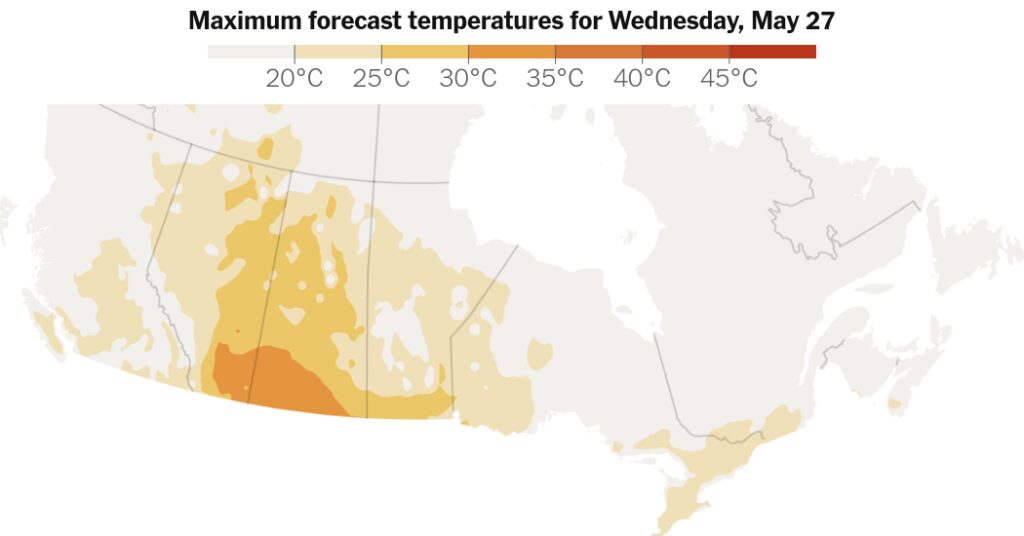
Now, a heat wave is building. On Wednesday, residents faced an onset of warm weather that was expected to continue through the weekend and bring temperatures into the mid-90s.
It’s a scenario that some meteorologists call “weather whiplash.”
The shift was felt in Winnipeg, the Manitoba capital, where a mix of rain and snow fell a little over a week ago, and temperatures had warmed into the 80s by Tuesday and were expected to reach 97 by Sunday.
“Spring was short, and we’re suddenly going into more of a summer pattern,” said Matt Loney, a meteorologist with Environment Canada, the country’s weather service.
The heat on Wednesday was centered over southern Saskatchewan and extended into southeast Alberta and southern Manitoba, with warnings in effect across much of the region.
In the coming days, the heat will spread east and north, easing in Alberta by Friday and becoming anchored over central and southern Saskatchewan and Manitoba, where temperatures are expected to be in the 80s to the mid-90s through at least the weekend and quite likely into early next week.
While the temperatures are expected to be 15 to 20 degrees above normal, Mr. Loney said he would not call them extreme.
Extreme temperatures break monthly records, marking the hottest single day ever recorded within a specific month where the data goes back over 100 years. In this case, temperatures are expected to break records only for particular days in May, Mr. Loney said.
Still, it’s the first significant heat wave in Canada so far this year, and it will last for at least six days. It’s also coming after a notably snowy and cold winter that spilled into spring.
The lack of gradual spring warming could mean some people will have not acclimatized to the heat, especially those who are more sensitive to heat exhaustion and illness. Environment Canada advised that people hydrate and move outdoor activities to cooler hours in the day.
The recent cool weather and a winter of above-normal snowfall in Canada’s prairies have helped lower the wildfire risk this spring, and fewer acres have burned this year compared with this time last year. But the threat was increasing because of the heat wave, and breezy conditions were also expected to dry out vegetation. On Tuesday, officials warned that the fire danger was extreme in southeast Alberta, southern and central Saskatchewan and southern Manitoba.
Amy Graff is a Times reporter covering weather, wildfires and earthquakes.
The post Heat Warnings Are Issued Across Canada’s Prairies appeared first on New York Times.