The American Cancer Society updated its screening guidelines for colorectal cancer Wednesday, expanding the number of methods to include a simple blood test.
The updated guidelines reflect the hope that offering more options will increase screening among adults 45 and older. Colorectal cancer is usually preventable and treatable when caught early, but about a third of adults who are eligible for colorectal cancer screenings are not up to date, according to the American Cancer Society.
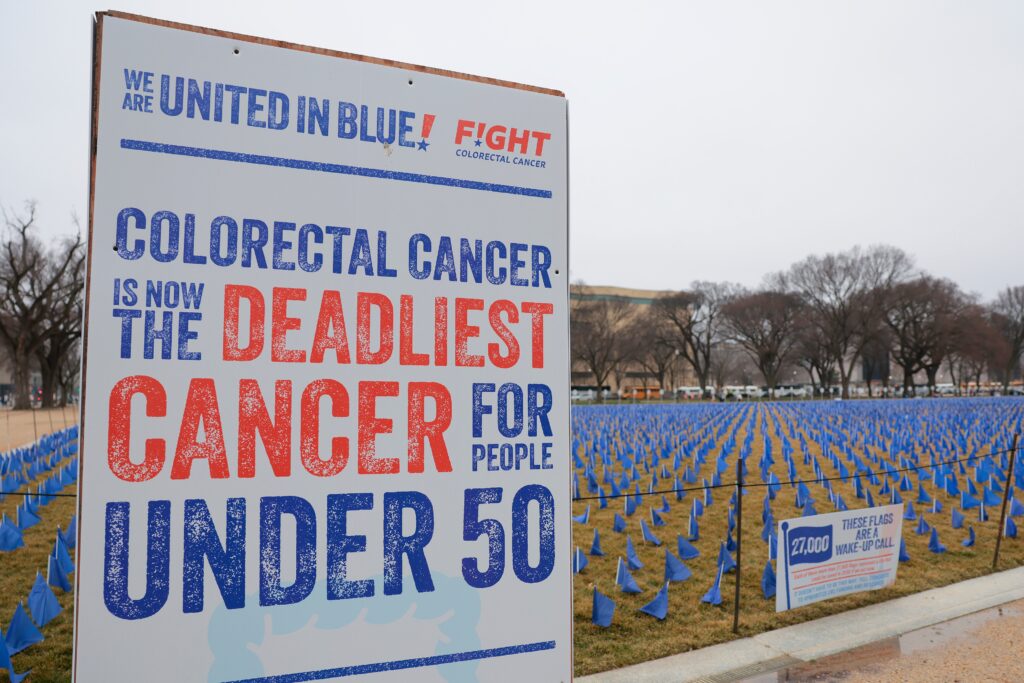
Colorectal cancer is the third most common cancer diagnosis in the U.S., estimated to cause nearly 160,000 new cancer diagnoses and 55,0000 deaths each year. It is the leading cause of cancer death in adults under the age of 50.
The simplicity of a blood test comes with a major caveat that will require nuanced discussions between doctors and patients. Shield, a blood-based colorectal cancer test that detects fragments of tumor DNA, was approved by regulators in 2024. But the test, developed by Guardant Health, misses more precancerous polyps and early-stage cancers than other methods. The new guidelines published in CA: A Cancer Journal for Clinicians recommends it only for people who won’t otherwise get screened.
A colonoscopy is the gold standard for screening and is recommended every 10 years beginning at age 45 until age 75. The guidelines also recommend at-home stool testing, which detects blood or genetic markers of colorectal cancer. A blood test is now a third option, though oncologists stressed it is not the preferred option.
The guidelines from the American Cancer Society are influential but do not determine insurance coverage. Under the Affordable Care Act, the recommendations of the U.S. Preventive Services Task Force shape coverage requirements, and they do not currently recommend blood-based tests for colorectal cancer screenings.
“The most effective screening test is the one that the patient completes,” said William Dahut, chief scientific officer of the American Cancer Society. “If the patient knows that it’s not as good at picking up Stage 1 cancers and precancer, but they are not going to do those other tests, they should go do it.”
In a large clinical trial published in the New England Journal of Medicine, the Shield test made by Guardant Health detected 83 percent case of colon cancer, but only 13 percent of advanced precancerous lesions.
Matt Kalady, director of the James Colorectal Cancer Center at Ohio State University Comprehensive Cancer Center said in an email that adding a blood-based screening test is “fantastic,” but he added that because they are not as sensitive or effective as colonoscopy or stool-based tests, they “should only be used for individuals who decline or cannot do the standard screening tests.”
Ronald Driggers, a 68-year-old retired crane operator from Hephzibah, Georgia, is one of those who could not be persuaded. Driggers describes himself as a “procrastinator when it comes to my health care.” His doctor had been bugging him for years to get a colonoscopy because of his age, but Driggers declined.
He was offered the stool-based test, and three were sent to his home. He threw them out, disgusted by the idea of the sample collection and preparation.
Finally, in late 2024, his doctor mentioned the blood test, and Driggers said okay. The test came back positive, which was the push he needed to finally get a colonoscopy. Driggers had Stage 3 colorectal cancer, which had spread to his lymph nodes.
“I would have gone on and on and on till I developed symptoms,” Driggers said in an interview. “I would have just rolled along with my stupid self till it did move to an organ — and cancer is like rust, it continues to spread until it just eats you up.”
Driggers underwent 28 rounds of chemotherapy and radiation treatments and still has numbness in his feet and hands. But he plans to live a long time — and goes back for follow-up colonoscopies every three months now. (Driggers is a paid spokesperson for Guardant Health.)
Scott Ramsey, a physician and cancer researcher at the Fred Hutch Cancer Center in Seattle, said he agreed the most important thing is people get screened. But he said he does worry about the test’s inferior performance in finding advanced adenomas, precancerous polyps.
“Now we have three different options we can talk patients through, and it’s getting pretty complicated,” Ramsey said. “On one hand, I’m glad there’s another option to present to patients, and on the other hand the conversation is even more complicated.”
He said he also worried that people who opted for either a stool-based test or a blood test and get a positive result may not do the essential follow-up — a colonoscopy.
The post Many people skip colonoscopies. Experts just added a blood test to the options. appeared first on Washington Post.