On the morning of April 16, when the latest cease-fire was announced in Lebanon, I allowed myself — for a moment — to dream that it would lead to a lasting peace and that one day my sons would come home.
Like most Lebanese, I’ve been through this before. Maybe I should have known better. But in Lebanon, we meet each new cease-fire with blind optimism — as if it were the herald of a conflict’s end instead of what it actually is: an admission ticket to the next war.
Since independence in 1943, Lebanon has been a party to at least seven internationally brokered cease-fires. We have lived through numerous armed conflicts: the long civil war of 1975-90 and conflicts between Israel and Hezbollah in 1993, 1996, 2006 and 2024. These wars, interspersed with internal political and financial crises, have inflicted large-scale physical and psychological damage on the Lebanese people and resulted in waves of emigration.
Our cease-fires have lasted days, months and sometimes years. But inevitably, before we know it, we are cast into a state of war, yet again, and are talking of cease-fires, yet again.
A Lebanese cease-fire is neither war nor peace, signed on paper and not in effect, covering selective territory. On the Lebanese side, the parties that sign are often not the parties that instigated the violence. The state binds itself to agreements on behalf of an actor it can neither compel nor control. A Lebanese cease-fire is a document about the cessation of violence that leaves intact every internal mechanism that produced it.
The latest agreement is a case in point. Hezbollah shot rockets into Israel to avenge the killing of Ayatollah Ali Khamenei during the Israeli-U.S. war on Iran, Hezbollah’s main backer. Israel responded with all its might, hitting multiple targets in Beirut, razing to the ground — and eventually occupying — several villages in southern Lebanon and killing hundreds of Lebanese. But it was the Republic of Lebanon that signed a cease-fire brokered by the United States, which called for Lebanon to take “meaningful steps to prevent Hezbollah” from attacking Israel. The Lebanese government had made a similar pledge in 2006, and again in 2024, despite the Lebanese Army’s having little ability to take on Hezbollah.
Empty cease-fires are, of course, not unique to Lebanon. Short-lived truces in Russia’s war on Ukraine, and often-broken ones in the Gaza war and in the U.S.-Israeli war against Iran, have shown how cease-fires get stripped of their meaning. President Trump’s statecraft in his second term has made cease-fires instruments of crisis management, not conflict resolution, according to Gopi Krishna Bhamidipati, at the New Lines Institute for Strategy and Policy in Washington.
But the problem predates the second Trump presidency. A November 2024 cease-fire agreement — which also stipulated that Israel stop offensive operations on Lebanese territory against the Lebanese state and that the Lebanese Army retain sole control of weapons in the country — was negotiated by seasoned diplomats serving under President Biden. That truce officially lasted for 15 months, during which time the United Nations documented more than 7,500 Israeli violations of Lebanon’s airspace and nearly 2,500 ground violations, and the killing of at least 197 civilians. U.N Security Council Resolution 1701, which was signed to end the 33-day war between Hezbollah and Israel in 2006, under the auspices of President George W. Bush, was punctuated with violations for two decades.
When the latest cease-fire was announced, I thought that things would be different. The Lebanese government, after being a bystander in past cease-fires, was finally acting on its own behalf. Hezbollah, the Shiite militant and political organization that wielded great power in Lebanon, was not speaking in our name. We had new leaders, competent, young, technocratic. The Lebanese state, technically still at war with Israel since an armistice was signed in 1949, was openly talking of peace, a taboo subject until now.
It seemed that we finally had a seat at the table, so perhaps we were no longer the meal.
On that morning of April 16, I had hopes of finally existing under a sovereign Lebanese state that would be capable of providing peace, security and, eventually, prosperity for all its citizens — something few previous governments have been able to offer.
I dared to imagine that my three children, studying and working separately in three different countries, would soon find the stability to have careers and decent lives in Lebanon. Their childhoods had been constantly disrupted by random explosions, political assassinations, road and school closures — just as mine had been.
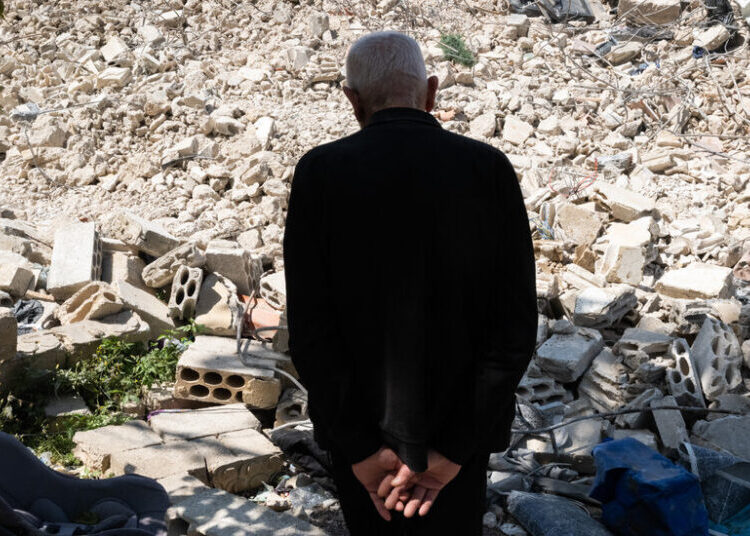
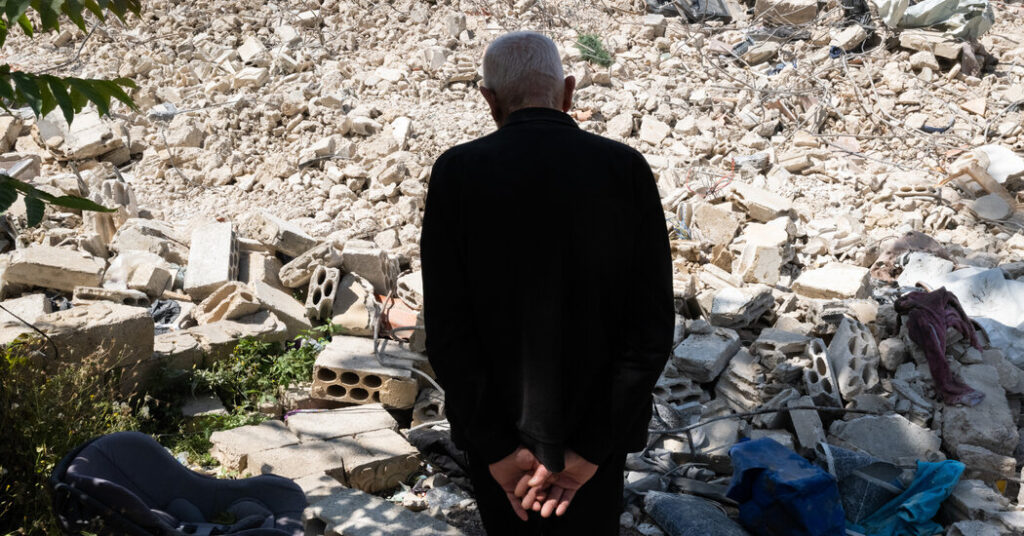
Within hours of the announcement, the roads to the south, which had borne the brunt of Israeli attacks, were clogged. Hundreds of thousands of people, after weeks of living on the streets under the rain and in bitter cold, shared my hope and were returning to their villages, some to just the bits of homes left after this latest round of fighting.
But sure enough, the fighting resumed within days. Since then, more people have been killed as a result of Israeli strikes, including medics and a journalist, and Israel’s destruction of Lebanese villages has continued unabated, the whir of the drones over Beirut incessant. Both Israel and Hezbollah have publicly acknowledged continued operations across, and within, Lebanese borders.
The cease-fire — an order to stop the firing of weapons — has again lost its meaning. Even after an agreement was recently reached to extend the 10-day cease-fire in April, the attacks continue and have now intensified.
We Lebanese are great at hoping, but we are also great deniers. We do not downsize when our children leave the country, because we keep hoping they will return — never mind that the violence and dysfunction in recent years have meant that they rarely do.
We, the Lebanese people, are not absolved from the failure of cease-fires. For years, every internal faction has fought over what it perceives to be its vision of the country: Lubnanuna — our Lebanon. We refuse to face the reality that our divisions are at least as much to blame for the state’s weakness as any external actor, and quietly adapt to every incremental negative change. We are at once the ostrich with its head in the sand and the frog in the water on the stove. We are too traumatized and too divided to imagine a common future together.
I want things to be different. Having lived all my life with war as the backdrop, I am hesitant to believe that things could change. But I need to. A cease-fire in Lebanon that ends the need for future cease-fires would have to happen on two planes. We would have to sign a peace treaty with our neighbors, and we would have to sign another with ourselves. We would have to agree that the country is bigger than any of us: that we are its custodians, not its owners.
Rana Hanna is the author of the novel “Birds in the Rain,” set during the 2006 war in Lebanon between Israel and Hezbollah.
The Times is committed to publishing a diversity of letters to the editor. We’d like to hear what you think about this or any of our articles. Here are some tips. And here’s our email: [email protected].
Follow the New York Times Opinion section on Facebook, Instagram, TikTok, Bluesky, WhatsApp and Threads.
The post Lebanon, Where Cease-Fires Pave the Way to War appeared first on New York Times.