Jennifer Weber is a fellow at the Manhattan Institute.
During the first half of this school year, New York City public school suspension rates dropped. Yet over the same period, assaults inside schools rose.
A spokesperson for the city’s education department pointed to the decline in suspensions as evidence that restorative justice — the school system’s favored disciplinary method, emphasizing reconciliation and communication — is working. But the contradiction suggests that suspension metrics do not capture what is happening in classrooms.
This spring, the city reported that suspensions fell 8.3 percent during the first half of the school year, compared with the same period last year. The most serious suspensions, reserved for the severest offenses, fell by 21.6 percent.
But during that same period, arrests of those under 21 for felony assaults inside city public schools during school hours rose 20 percent, from 28 to 34 incidents, according to data from the New York Police Department’s school safety division. These incidents include standard felony assaults, assaults on children, hate crimes, gang assaults — the term for assaults involving multiple attackers — and strangulation.
That difference is hard to ignore. How can suspensions decline as assaults are on the rise? New York City schools have turned away from traditional disciplinary methods in favor of restorative justice, an approach that emphasizes conversation and mediation over consequences.
Restorative justice began in the juvenile justice system as an alternative to incarceration. It was designed as a supplement to traditional consequences, intended to “repair the harms” caused by a crime and to encourage offenders to make amends for their actions, according to the Office of Juvenile Justice and Delinquency Prevention. The technique prescribes a structured conversation with the offender, the victim and community members — a “nonadversarial and informal process” to conclude in “community-based sanctions” as reparations for the crime.
Schools picked it up for a different reason. Concerns about racial disparities in suspension rates prompted districts to seek ways to keep students in classrooms. The New York City student discipline code now encourages restorative practices as a “cornerstone” of responding to student misbehavior. Los Angeles, Baltimore, Chicago and Oakland have made similar shifts, part of a national movement to reduce school suspensions.
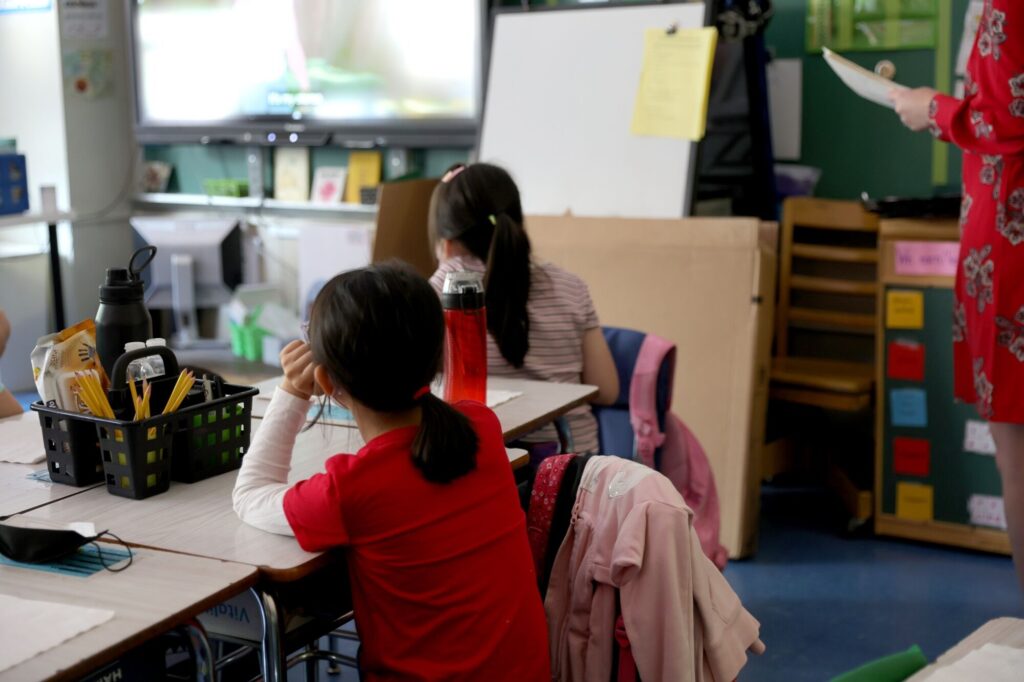
After a fight or disruption, the school convenes a circle: the responsible student, the harmed student and an adult facilitator. The facilitator walks through a set of questions, including what happened, who was hurt and how the responsible student can make it right. Instead of more stringent penalties, that conversation becomes the consequence.
With restorative justice as the disciplinary method of choice, violent incidents still occur. Suspensions, however, may not. The New York City Department of Education publishes how many suspensions it issues, but not what happens to serious incidents that do not end in suspension. The police data captures what discipline data leaves out.
If restorative justice effectively resolved behavioral problems, schools would expect to see fewer serious incidents over time, not more. A falling suspension count is not the same as a safer classroom. It may simply reflect a system that records less of what is going on inside it.
Over the past decade, New York City has steadily restricted principals’ authority to remove disruptive students from classrooms, paving the way for restorative justice to become the preferred disciplinary response. Suspensions for children in kindergarten through second grade require approval from the central office. Schools must document “reasonable effort” to address behavior without removal and, for longer suspensions, obtain a sign-off from the chancellor.
Restorative approaches are supposed to help change student behavior. But the city’s data shows the same students being suspended over and over. During the 2024-25 school year, more than 6,200 students were suspended or removed from class more than once. Nearly half were students with disabilities, who make up only about 22 percent of city enrollment. And despite the school system’s wishes to address racial disparities, Black students accounted for 41 percent of repeat suspensions while representing 19 percent of enrollment. These numbers suggest the same students are returning to the same patterns without meaningful intervention.
The research evidence behind restorative justice in schools remains inconclusive. A 2022 randomized controlled trial in five Brooklyn high schools found no statistically significant improvement in school climate, student behavior or academic outcomes compared with schools without restorative justice programs.
For the 2025-26 school year, restorative justice programs are receiving $12 million through state aid and city funds. New York Mayor Zohran Mamdani’s executive budget does not extend the city’s portion of funding beyond this fiscal year, a shift from his campaign support for restorative justice. Whatever the explanation, cutting funding alone will not fix what is happening inside classrooms. Schools need a clear discipline policy that holds students accountable for serious behavior and backs the adults responsible for enforcing it. The students who can least afford the chaos — the ones already falling behind — pay the highest price when classrooms break down.
New York City was part of a national push to move discipline away from consequences. Its own data shows the cost. Schools work best when expectations are clear, consequences are consistent, and adults can maintain order. Every student deserves a safe classroom.
The post A rise in assaults at school undermines claims about ‘restorative justice’ appeared first on Washington Post.