The United States launched new “self-defense” strikes on Iran, the U.S. military said Monday night, potentially complicating negotiations to end the war that President Donald Trump launched in February.
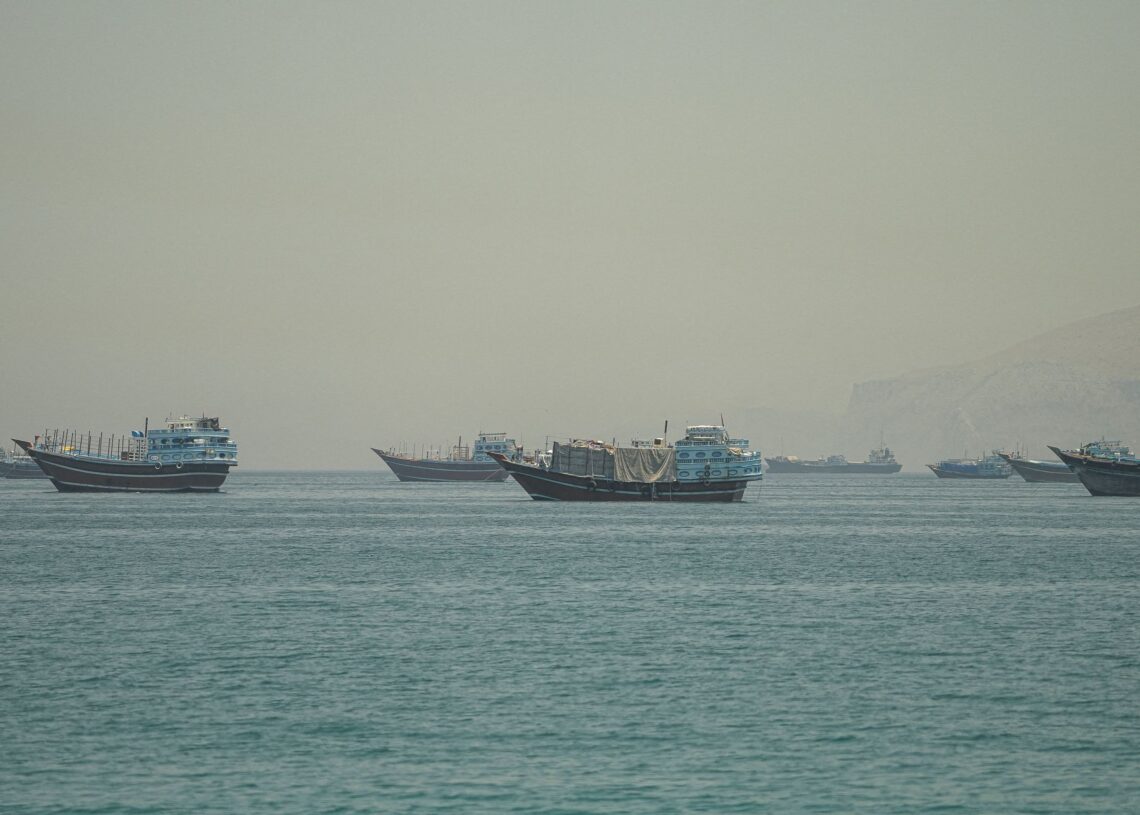
Navy Capt. Tim Hawkins, a military spokesman, said in a statement that the strikes occurred in southern Iran “to protect our troops from threats posed by Iranian forces.” Targets included missile-launch sites and Iranian boats attempting to set mines, the statement said.
Hawkins said U.S. Central Command, which oversees operations in the region, “continues to defend our forces while using restraint during the ongoing ceasefire.”
The strikes occurred after a weekend of negotiations between the Trump administration and the Iranian regime to bring the war to a close. The conflict began Feb. 28 with massive U.S. and Israeli strikes on Iran after months of pressure by Trump to end Tehran’s nuclear program. A tense ceasefire began April 8, though it has been interrupted by sporadic exchanges of fire.
In a statement Tuesday, Iran’s Foreign Ministry condemned the attacks, which it called a “blatant violation” of the ceasefire, and said it would “leave no act of hostility unanswered.”
The U.S. military acknowledged the strikes Monday evening — hours after Trump said on social media that Iran’s enriched uranium “will either be immediately turned over to the United States to be brought home and destroyed” or disposed of elsewhere.
Iran has yet to formally agree to those terms.
When asked about the renewed hostilities, Secretary of State Marco Rubio told reporters that the U.S. would continue to pursue a diplomatic solution, noting that talks were playing out in Qatar on the original framework for ending the war.
“We’ll see if we can make progress,” he said in the western Indian city of Jaipur before boarding a plane to New Delhi. “It’s a lot of talking back and forth going on about specific language in the initial document, so it’ll take a few days.”
Rubio said Trump is committed to either making a “good deal or no deal.” “The straits have to be open,” he said. “They’re going to be open one way or the other.”
On Tuesday morning the price of Brent crude oil, the global benchmark, was up 3 percent to about $99 a barrel.
On Monday, Trump called on the leaders of numerous countries to join the Abraham Accords, a set of treaties aimed at normalizing relations with Israel, as part of the settlement he is attempting to negotiate with Tehran. Trump said on social media that Saudi Arabia and Qatar should sign first, with Pakistan, Turkey, Egypt and Jordan following.
“I am mandatorily requesting that all Countries immediately sign the Abraham Accords, and that, if Iran signs its Agreement with me, as President of the United States of America, it would be an Honor to have them also be part of this unparalleled World Coalition,” Trump wrote.
Trump said Saturday that U.S. and Iranian officials were in the final stages of reaching an agreement to extend the ceasefire as broader negotiations continue on the future of Iran’s nuclear enrichment and control over the Strait of Hormuz.
U.S. officials later said the extension could last 60 days, while the Strait of Hormuz — the narrow Persian Gulf waterway through which 20 percent of the world’s oil supply passes — is demined and reopened.
Senior Trump administration officials have defended the president’s efforts to end the war, with Rubio saying Sunday that no one has been stronger on Iran than the president.
Several Republican hawks, including Sens. Lindsey Graham (South Carolina) and Ted Cruz (Texas), have questioned the wisdom of the apparent plan, with Graham saying that an agreement with Iran now could make Iran “more powerful over time.”
correctionAn earlier version of this story mistakenly said the price of Brent crude oil was up 3 percent to about $99 a gallon. The price is per barrel.
The post Iran threatens retaliation after U.S. strikes in southern Iran appeared first on Washington Post.