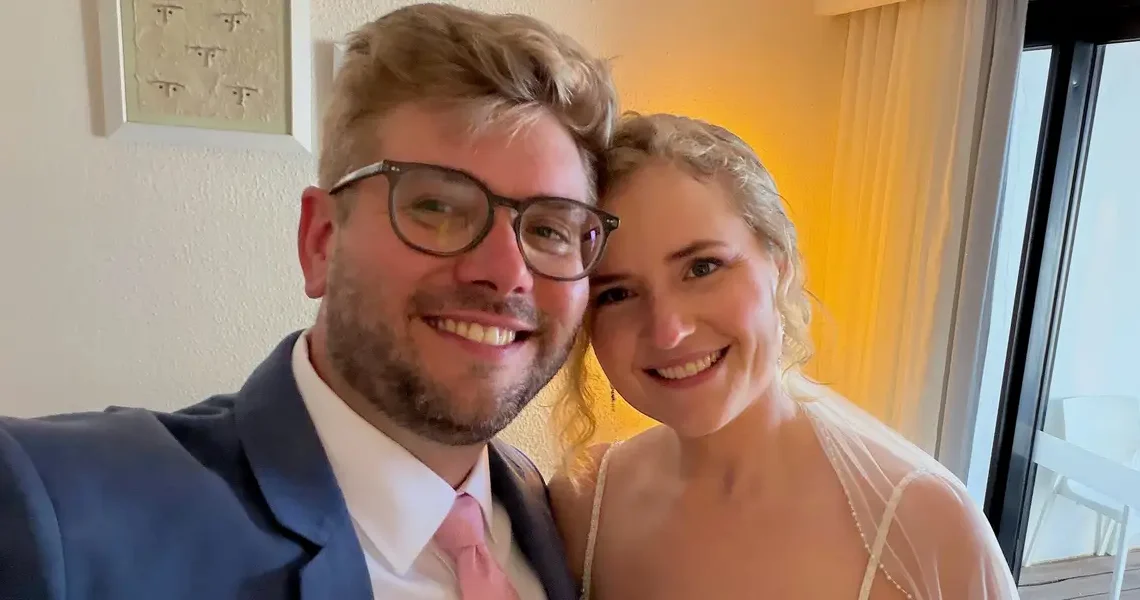
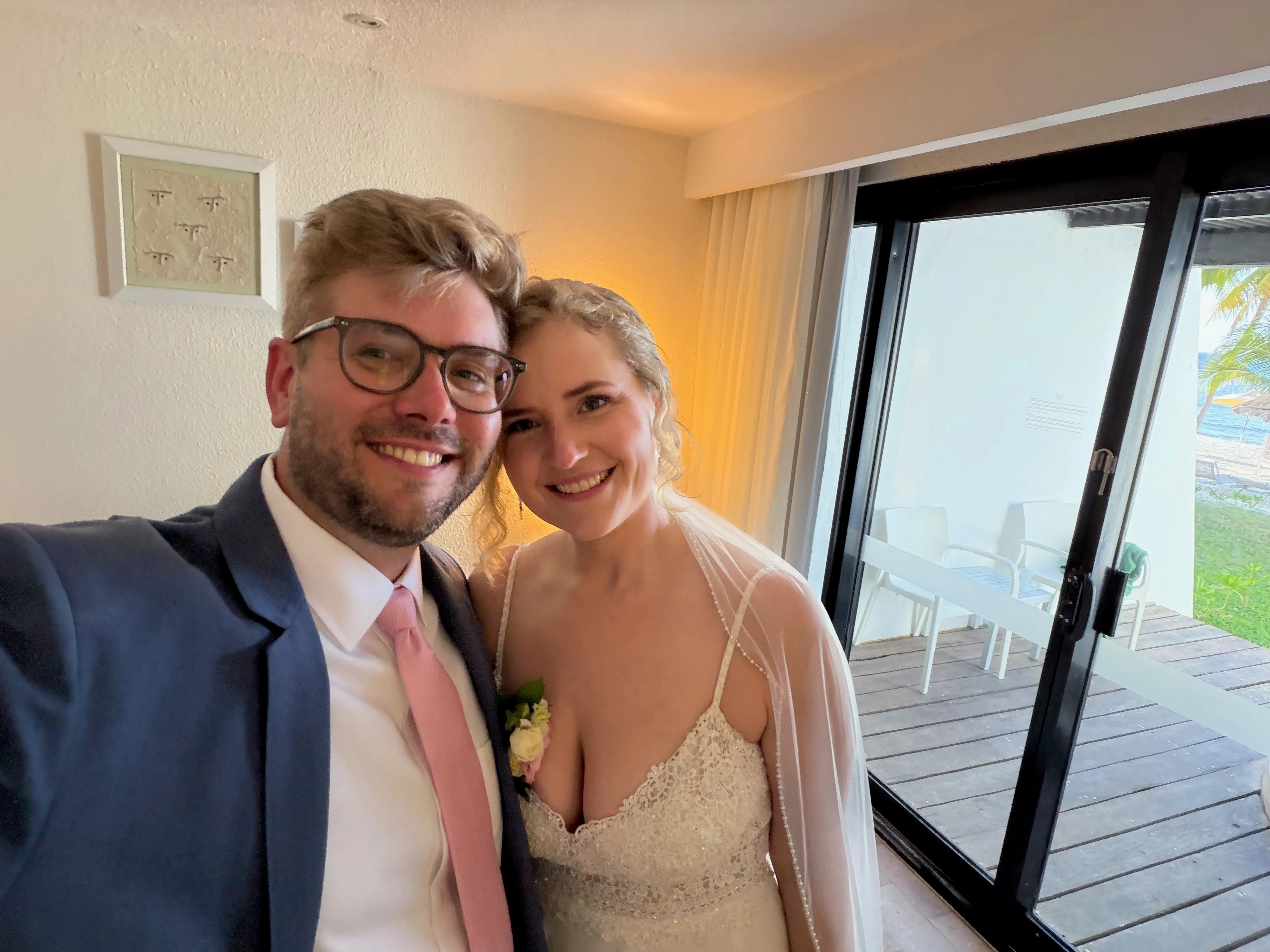
My husband and I were on our blissful honeymoon, beach hopping in Antigua, when a look of horror passed over his face. Amid the splashing and digging for shells, his wedding ring had slipped off.
“It’s gone. My ring is gone!” Panic rose in his voice.
I, despite my dramatic nature, was surprisingly calm. We bought his 14-karat gold ring at Costco for $1,000. If we had to lose a ring, I’d rather his than mine, which is a family heirloom. However, his band was the one I’d slipped on his finger after our vows, so it had sentimental value.
“We’ll find it!” I squeaked. I ran up to a vendor on the beach and asked if we could borrow snorkels. We spent the next hour circling the same 30-square-foot patch of the ocean floor. Nothing.
The sun was setting, so we dragged our dejected, dripping selves into towels and returned the masks. My husband wavered between dead silence and frustrated groans on the drive back.
That night, we looked through pictures and realized we’d lost it at a different beach: Turner’s. We’d been looking in the wrong place.
Facebook to the rescue
My husband’s not alone in his misfortune. Statistics vary, but several reports over the years estimate that between 10% to 40% of men lose their wedding rings at some point. Through many Reddit posts, I realized there’s a solution: a metal detector.
Turns out, people make careers from finding jewelry on the ocean floor. And it’s getting more popular due to surging gold prices.
I came across an article in The Wall Street Journal about a famous man from the island of Mauritius who’d found a Frenchman’s ring in the ocean not once but twice. I wondered if Antigua had its own treasure hunter.
So I posted in a tourists’ Facebook group: “We’re on our honeymoon. My husband lost his ring. Does anyone have a metal detector?”
The first comment completely deflated my confidence: “That’s a bad omen lol.” Another said, “I never wear my good jewelry in the ocean.” Most people suggested we pray to St. Anthony or wished us luck. Finally, the next morning, someone mentioned Winston.
Winston Merchant’s a local guy from St. John. Over a WhatsApp call, he offered: “$50 if I don’t find it. $200 if I do. Cash.” We agreed.
“Do you think it’ll still be there after two days in the ocean?” I asked over the phone, anxiously chewing my lip.
“Ya, man. It’ll be there.” Winston’s quiet confidence raised our hopes.
The day of the hunt
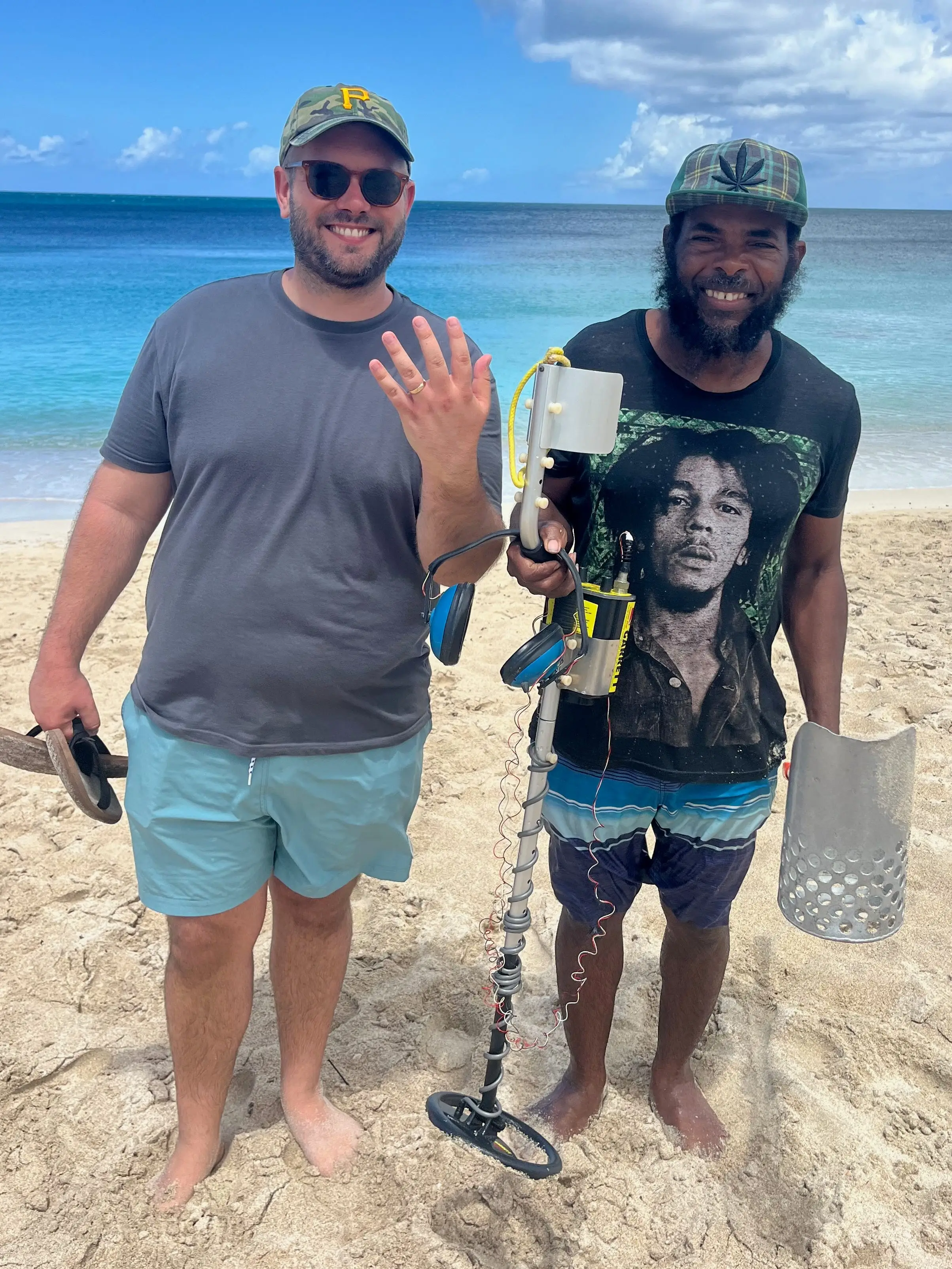
We met Winston the next morning, 44 hours after my husband lost his ring. He radiated calm. I live in New York City, so I can’t grasp the concept of calm, let alone embody it. But this man did. He sported flip flops and a Bob Marley shirt.
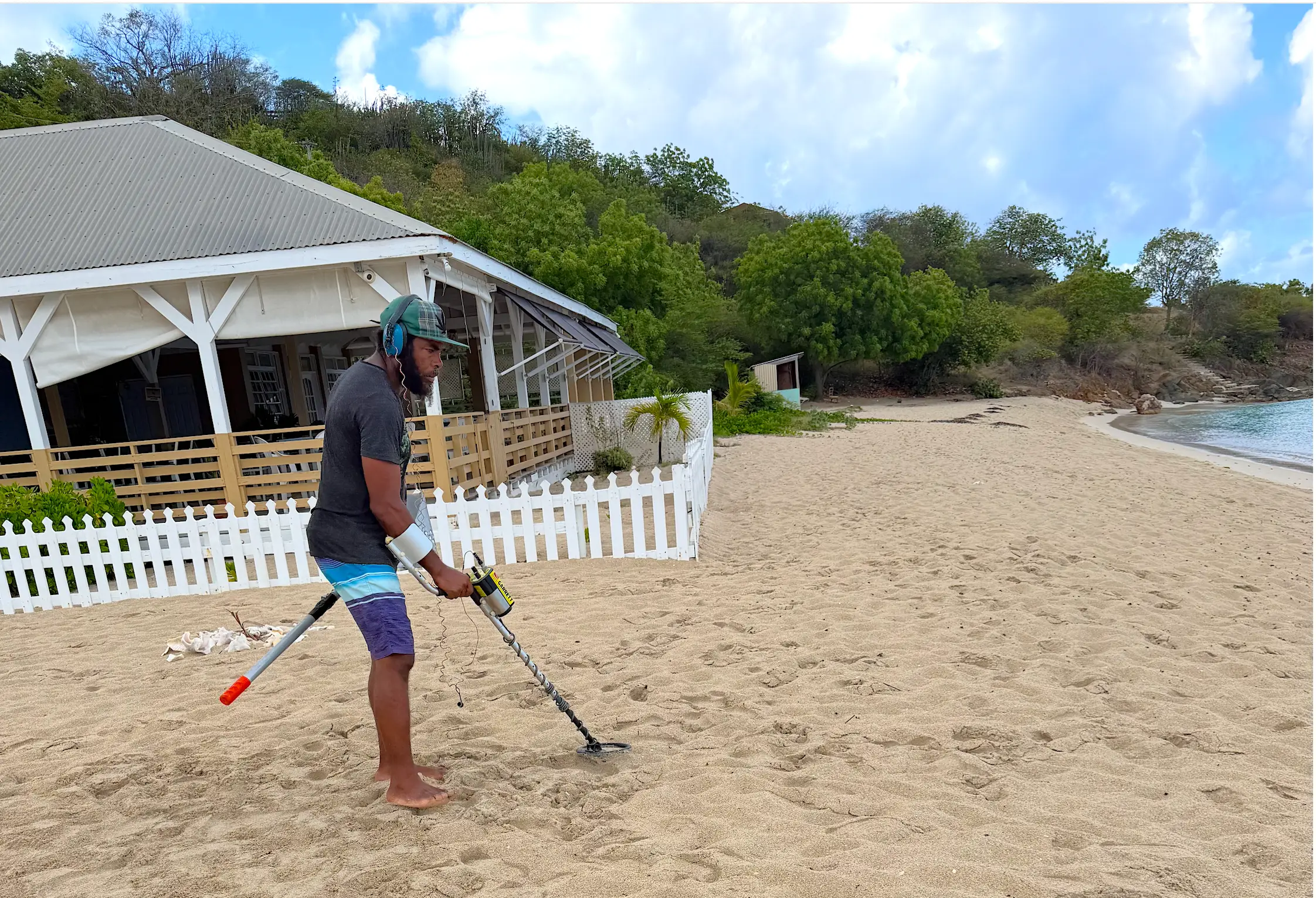
As we got to talking, he estimated he’s unearthed about 1,000 pieces of jewelry.
“But I’ve been doing this a long time, man. Since 1998,” he later said.
He said he’s found rings, chains, and bracelets, mostly for tourists. One time, he said he tracked down a valuable pendant the size of a grain of rice on a resort lawn. Another time, he found a woman’s diamond ring on the Sandals beach and delivered it to the airport moments before she boarded her flight.
Full-time, Winston farms marijuana and black pineapple — a rare, exceptionally sweet variety only found in Antigua. This helps him fund his side gig of metal detecting, which isn’t cheap.
He said his latest detector, a Garrett Sea Hunter Mark II, cost him $800, and a pair of new headphones set him back $140.
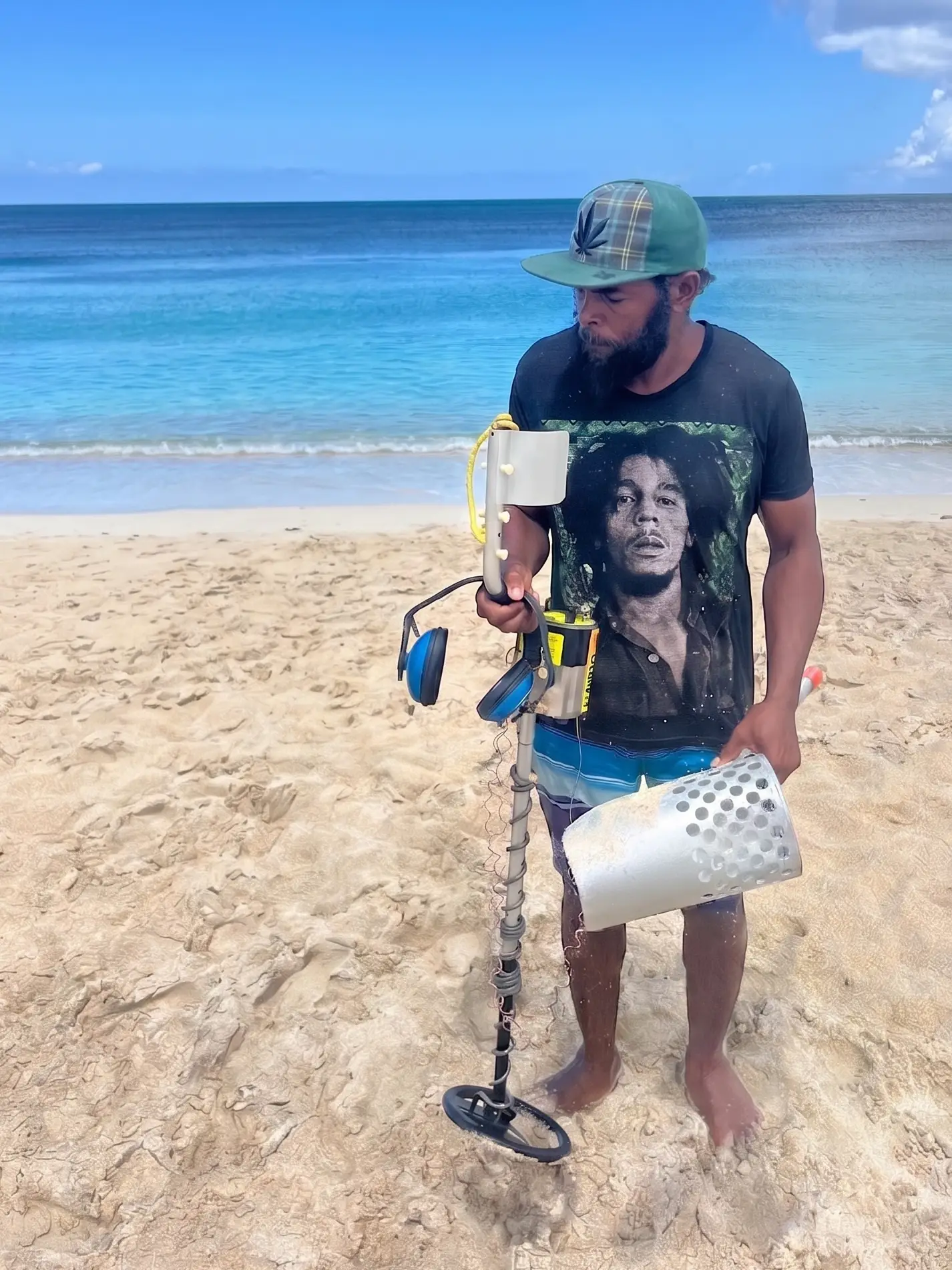
He used my own ring to make sure he was on the right frequency for gold, adjusting the knobs as he floated the sensor over my hand. Then, he set off, scanning the beach.
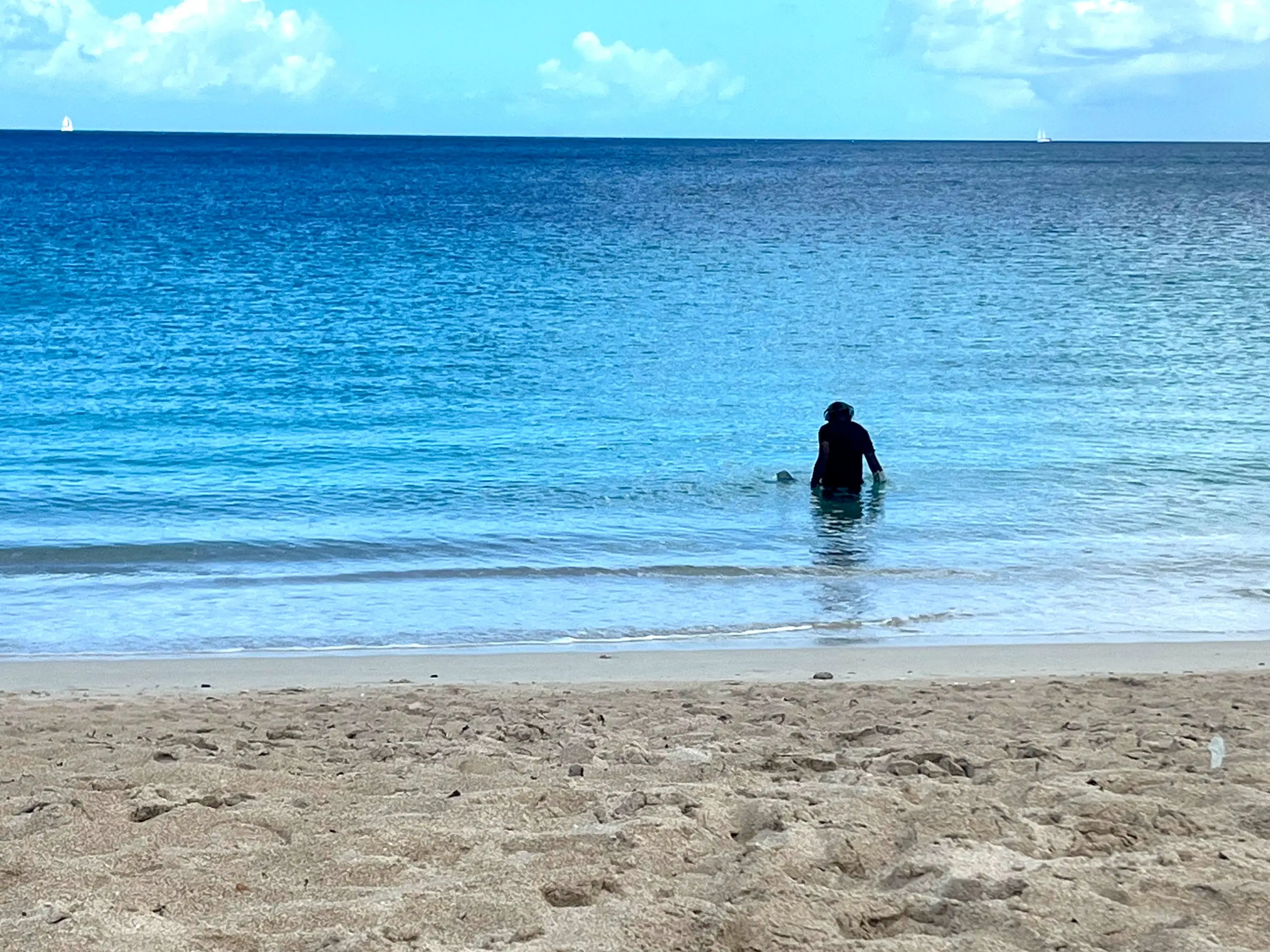
Soon, he was knee deep in the bluest water I’d ever seen. Whenever his sensor beeped in his ears, he’d scoop a pile of sand from the ocean floor and sift it with a second contraption that resembled a pasta colander, but was cylinder-shaped.
He unearthed a quarter. “I’ll keep that,” he cracked. Then a matchbox car. Then one aluminum can lid after another. All of it went deep in his pocket so he wouldn’t come across it again.
At one point, he was neck deep in water, and I was beginning to lose hope.
Striking gold
An hour and a half later, I sat 15 feet from the water’s edge contemplating how we’d afford a new ring when Winston calmly sauntered up.
He held out the pasta-collander tool and said, “You better go surprise him.” I peered inside, and there lay a golden ring. Eyes wide, I screamed an expletive.
“Go put it in a shell or something,” Winston smiled knowingly. Clearly, he’d done this before.
I ran up the beach, grabbed a shell, and tucked it and the ring inside my palm. I bolted up to my husband and said, “Look at this pretty shell I found.” Unfolding my hand, I revealed the ring. Another expletive. My husband’s eyes were gleaming.
The pair of us bounced around, cackling to anyone who’d listen, “Winston found it! In the ocean of all places!”
Collectively, that ring spent more hours in the ocean than I did on my honeymoon.
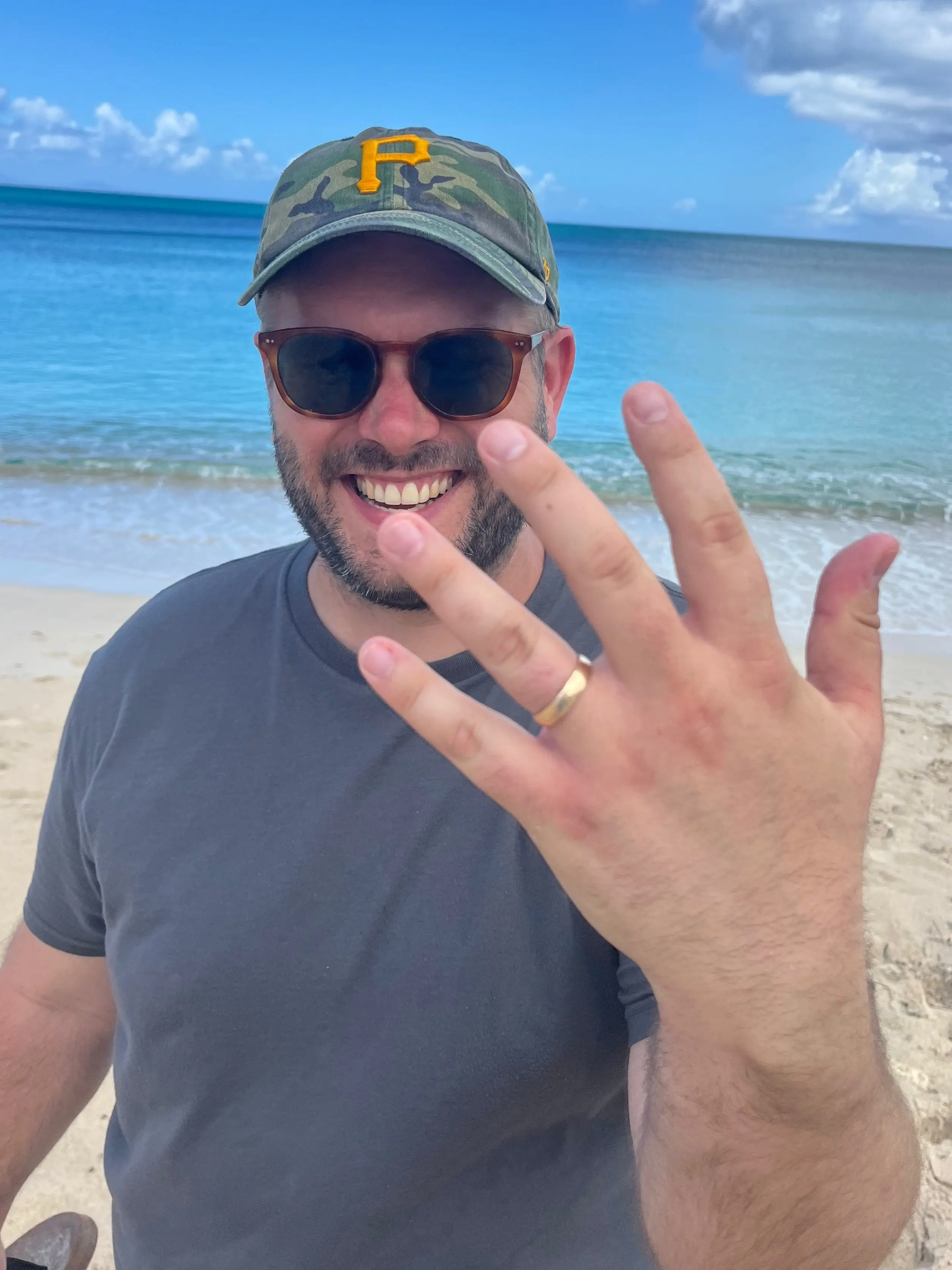
Winston didn’t seem surprised at his success. He estimates his find rate is 95%. Sometimes he ditches the metal detector and searches with his hand by feel. He puts so much effort into his hunts because he knows the feeling of losing something special, he told me.
“It’s not just a ring. A lot of memories flash through your head when you lose it,” he said. “That joy from your vacation gets pushed back, and you leave bitter. I make somebody happy again.”
It seemed fitting that my husband was wearing a Pittsburgh Pirates hat. We’d been searching for lost treasure with Winston, who’d struck gold.
Read the original article on Business Insider
The post My husband lost his wedding ring on our honeymoon. I paid a guy with a metal detector $200 to look for it. appeared first on Business Insider.