They know they are not going to get much sympathy. Who, after all, feels sorry for politicians?
Especially in New York, where members of the Senate and the Assembly pull in $142,000 a year, making them the highest paid state lawmakers in the country.
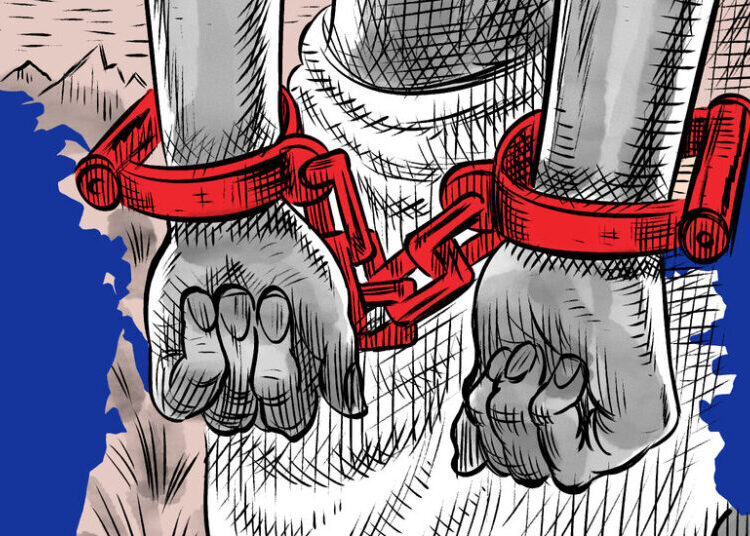
But since April 1, none of the 60 senators and 150 Assembly members have gotten paid — a direct casualty of the delayed state budget, now more than seven weeks late. For some lawmakers, the pay stoppage has brought financial challenges familiar to many New Yorkers who live paycheck to paycheck.
Assemblywoman Emily Gallagher, a democratic socialist representing Greenpoint and South Williamsburg in Brooklyn, has had to defer student loan payments and borrow from family to pay rent. Other lawmakers have traded tips on how to borrow against their pensions.
And instead of swapping songs at karaoke night near the Capitol, lawmakers have been brainstorming ideas on how to stretch the $200 travel per diem as far as rules will allow.
If the budget is officially approved this week as some expect, it will be the latest that has happened in nearly two decades. In practice, that will mean that four pay periods would have come and gone as day care, student loans and grocery bills pile up.
“It’s bizarre,” Ms. Gallagher said, “to go to places and have people treating you with deference and respect — which is amazing and kind — but then to know that you actually have to ask them to buy your coffee.”
Nearly every lawmaker interviewed acknowledged the poor optics of complaining about their own pay when so many New Yorkers were struggling. And it is true that some lawmakers are wealthy thanks to spouses with lucrative private sector jobs, or family money.
But many others — particularly parents, and members living in New York City, where the cost of living is much higher than the rest of the state — have had to tighten their belts.
Those who offered to speak about their circumstances said they did so because they believed the financial pressure undermined the will of voters who had elected them.
Assemblywoman Diana Moreno, who won a special election in February to fill Zohran Mamdani’s vacant seat, is in a particularly tough position. She went without a paycheck from November to February, while she was running for office. Two months later, she was unpaid again, even as she reported to Albany each week.
“I’m sort of back to dipping into savings and relying on my partner which is not something I like to do,” Ms. Moreno said. Apart from rent, she says her biggest expense is day care for her young son, which costs $2,700 a month.
“I think we hesitate to talk about this piece, our missing paychecks because we don’t want it to sound like, ‘Woe is me,’” Ms. Moreno said. “But when you have working-class representatives, this does have an impact.”
The lack of pay is particularly irritating to lawmakers because Gov. Kathy Hochul and her team continue to get paid as long as leaders in Albany pass the budget extenders that allow state government to continue operating.
The delay is part of Ms. Hochul’s not-so-secret strategy to extract as many of her policy priorities from the Legislature in the budget as possible. The approach has roiled lawmakers who see it as a erosion of their power.
“We are an equal branch of government,” Ms. Moreno, who represents Western Queens, said of the process. “The strain of not getting a paycheck and the way this has been dragged out makes me feel like I’m being bullied into passing a budget I’m not fully happy with.”
When she became governor in 2021, Ms. Hochul proclaimed that her tenure would mark a new era of collaboration with lawmakers. Every year since, however, she has used her leverage during budget negotiations to demand major revisions of signature legislative initiatives like the 2019 climate law and criminal justice reforms.
Amid talk that the budget may finally be approved this week, the governor says her strategy gets results.
“Getting the budget done right matters more than getting it done quickly,” said Jen Goodman, a spokeswoman for Ms. Hochul, adding that the governor would “never put legislative convenience ahead of the people she was elected to serve.”
But by inserting these policies into discussions — often in the final weeks before the April 1 deadline — lawmakers say she has essentially held the state budget hostage until her demands are met.
“I’m not doing this process again. I’m not going to wait two months to talk about money,” the Assembly speaker, Carl E. Heastie, told reporters last week.
Lawmakers insist that they have made no concessions because of the missing pay; Senate majority leader Mike Gianaris quantified the effect at “zero.” Still, they are increasingly unhappy with the process.
“People want to be up here, and want to be productive and want to feel like their time away from home and their time away from their family and their time away from their constituents is in a productive service of some public good,” said Senator Andrew Gounardes, who also acknowledged some strain in paying for day care for his three young children.
An added benefit for the governor of using prime legislative weeks for the budget is leaving less time for the Legislature to try to push through policy initiatives that could create political challenges for Ms. Hochul, especially in an election year.
The Legislature could pass a bill that would allow them to continue getting paid — like the governor herself — as budget negotiations continue. Or they could pass legislation requiring the governor also to go unpaid while talks drag on. Any legislation would need the governor’s signature to become law, however.
The most meaningful change would be an amendment to the State Constitution that resets the balance of power between the governor and the Legislature on budgetary issues. Such a change would require approval from voters — not at all a guarantee, given the murky political implications of such a significant change.
Ms. Gallagher said she wants to see changes to the process. But her most immediate concern is her $2,750 rent, which she acknowledges is a bargain in her Brooklyn neighborhood.
“The average price in my district is like $3,400 or higher,” she said. “To be able to have my job, I have to live in my district.”
Grace Ashford covers New York government and politics for The Times.
The post Lawmakers Face a Personal Fiscal Crisis: No Budget, No Paycheck appeared first on New York Times.