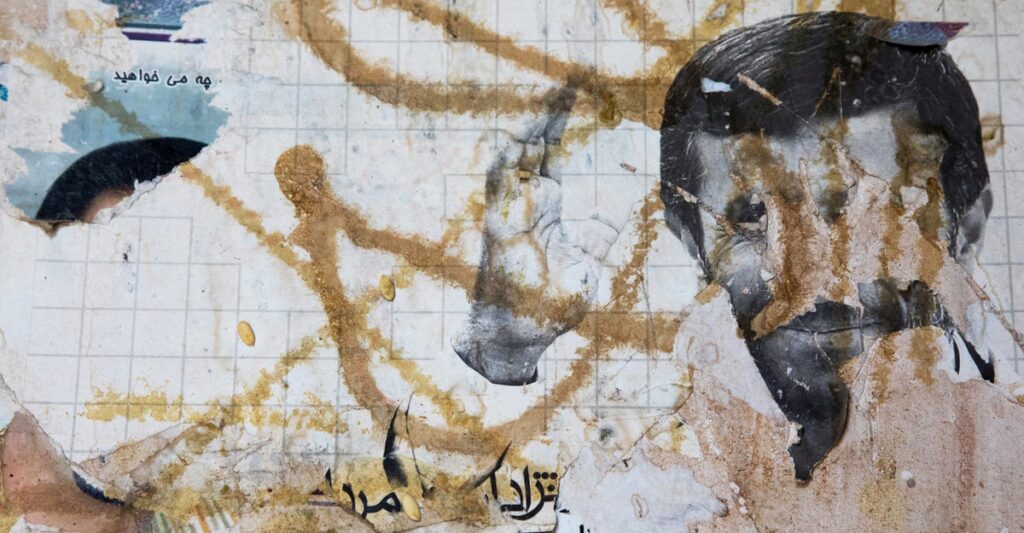
Earlier this week, The New York Times reported that at the outset of the war, the United States and Israel sought to install former President Mahmoud Ahmadinejad as Iran’s leader, after the anticipated fall of the Islamic Republic. The inauspicious first step in this brilliant plan was to blow up part of Ahmadinejad’s compound in an air strike on February 28 in the Narmak district of Tehran. Days later, I noted that the attack—then assumed to be an assassination attempt—may have been intended to free him from house arrest imposed by the Iranian regime. The Times confirms this interpretation. It says that Israel and the United States had “consulted” Ahmadinejad about this plan, but that he “became disillusioned” with it after the strike.
The idea that Israel and the United States might back Ahmadinejad in a coup has drawn guffaws from several different groups. The first is people who stopped paying attention to Ahmadinejad in 2010. Americans and reform-oriented Iranians reviled then-President Ahmadinejad for his Holocaust denial, his backward attitudes about gay people, and his advocacy of a strong, nuclear-armed, expansionist theocratic state. For Israel to support him in 2026 is ironic, even hilarious. But Ahmadinejad began breaking with the hard-liners in 2011, and the government kept him under guard because they knew his dissent was real and potentially significant.
The second group to scoff at this plan is much better informed. Fully aware of Ahmadinejad’s turn, they note instead his irrelevance. Reformists still despise him because he blocked them as president. The regime despises him because of his dissent. He has not held office since 2013. “It is difficult to understand how anyone could have believed that Ahmadinejad might become Iran’s next ruler,” the Iran analyst Raz Zimmt wrote on X, “given his complete lack of an organizational support base upon which he could rely to serve as a genuine alternative to the Islamic regime.”
This second group is correct: Backing Ahmadinejad as a coup leader is like backing a coup against Donald Trump led by Al Gore. If the United States and Israel believed that Ahmadinejad could storm the headquarters of the Islamic Revolutionary Guard Corps and subdue tens of thousands of armed men, then the intelligence directorates of both countries should be closed and replaced by drunken baboons, or the Quincy Institute. But I doubt the plan was as foolish as that.
[Graeme Wood: Why Mahmoud Ahmadinejad is still useful]
Immediately before the war, I spoke with a longtime supporter and associate of Ahmadinejad, Jaber Rajabi, who described two potential outcomes for a regime-change operation, depending on how Iran’s enemies went about it. The method he warned against was wiping out the whole government and handing the country to the former shah’s son, Reza Pahlavi, to oversee the mass imprisonment or even execution of those who worked for the former regime. Rather than acquiesce to this fate, Rajabi told me, the regime would fight to the last man. But he contended that regime change was not only possible but potentially achieved with just a few killings—he suggested the number might be as small as a dozen—using a different approach: amnesty for almost everyone else. Ahmadinejad’s value as a leader depended on which plan Iran’s enemies chose.
Rajabi’s politics are influenced by having fought against the United States in Iraq, and having watched his enemy founder there because it wrecked Saddam Hussein’s government rather than preserving and reforming it. To change the regime in Iran, he said, one would have to leave it basically intact. The new government would need a caretaker figure with broad popular support to declare that the war was over, that the new Iran no longer wants to destroy any other country, that it welcomes investment and relations with most or all of its former enemies, and that it would soon hold internationally monitored elections. Rajabi did not say that Ahmadinejad would be that caretaker, but he did say that networks closely aligned with Ahmadinejad were ready to put such a plan into action.
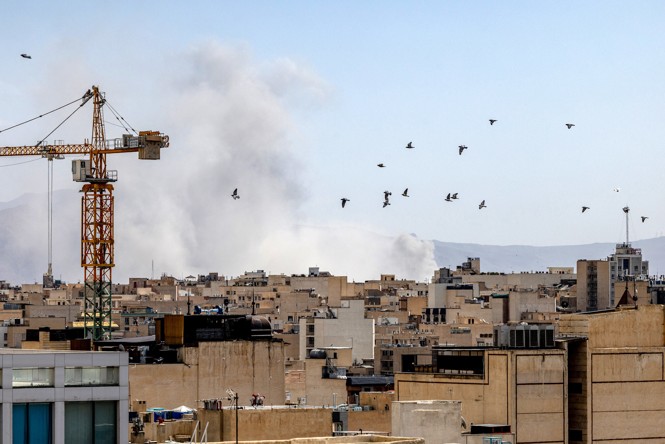
In the early phases of the war, had the regime buckled as some thought it might, Ahmadinejad would indeed have been a handy option for Israel and the United States. But quickly it became clear that the actual strategy would be the devastation of the government and economy on all fronts. Instead of killing a few, Israel and the U.S. killed many. Instead of leaving most of the Iranian government and security forces intact, they aimed for obliteration. Instead of Ahmadinejad being freed so he could preside over a transition like South Africa’s, he was freed in the midst of a war that looked more like an Iraq-style regime change that would leave the state in shambles.
If Ahmadinejad had signed on not as the leader of a coup, nor as the ruler of a dystopian kingdom of rubble, then his disillusionment after the war’s early phases would be expected.
[From the May 2026 issue: Someday in Tehran]
Finally, one should consider the story itself and its confirmation by U.S. officials. If they were once fond of Ahmadinejad, these officials’ attitude must have changed, because the predictable consequence of their reporting will be grim for Ahmadinejad and anyone tied to him. The story says that he recently traveled to Hungary and Guatemala, two countries friendly to Israel. Working with Ahmadinejad was until recently grounds for suspicion by the regime. Now that he is an accused foreign asset, it might become grounds for much worse, possibly even execution.
Whoever leaked or confirmed this report must be at best indifferent to this possibility. The two groups most threatened by Ahmadinejad (or indeed by anyone who might be part of a third way, between total regime change and total regime preservation) are the regime itself—which can now justify the most severe persecution of its opponents—and regime opponents who would be glad to see eliminated a rival who would, if permitted, have let much of a hated regime survive. Life is tough when you have enemies on all sides.
The post The Ahmadinejad Option appeared first on The Atlantic.