When the CEO of a family-owned business hangs up the hat, bad things are likely to happen. According to recent McKinsey research analyzing more than 200 family-owned businesses across 50 countries and 10 sectors, these companies underperform on revenues, shareholder returns, and earnings for five years after a leadership transition, compared with the five years before. On average, returns fall 5.7 points. Revenue growth and earnings margins decline too.
So what makes succession in family-owned businesses so difficult to get right?
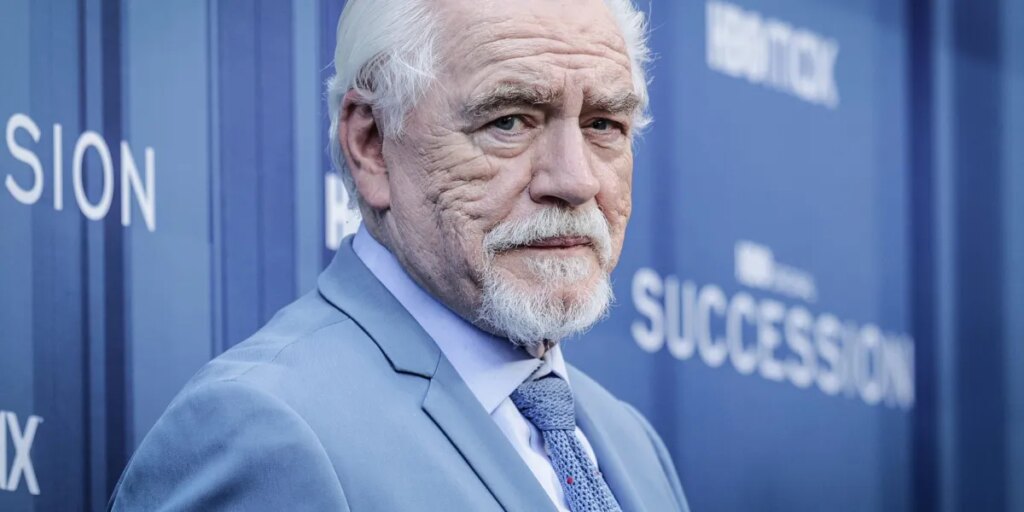
The usual suspect is the heir — the sniping siblings on HBO’s Succession embody the popular fascination with families in business. But the data does not support the stereotype of the underperforming heir. McKinsey’s research shows family-owned businesses decline after a CEO transition regardless of whether the successor is a family member or an outside executive. Indeed, only about one-third of all transitions created any value at all.
If the problem were simply a matter of heir quality, we would expect non-family professional transitions to fare better. They do not. Signs point instead to a different likely culprit: the outgoing CEO.
It is hard for any incumbent to pass the reins. It may be even more difficult for the head of a family-owned business, whose personal and professional lives are perhaps even more deeply entwined than usual. This can play out in two ways. Some CEOs leave too precipitously, handing successors a title and an inherited to-do list — unresolved conflicts, legacy systems that have constrained performance for years, reporting structures built around the CEO’s own authority. Others never fully leave at all, continuing to operate behind the scenes in ways that undercut their successor’s authority and create confusion throughout the organization. Either way, successors frequently spend their early years managing what they inherited rather than executing a vision.
How can outgoing CEOs do better? Here are three differentiating practices the research uncovered.
First, start building the transition architecture well before you give notice. McKinsey’s research suggests CEO succession is an 8-to-15-year journey; most families don’t do not start the clock until the leader is already declining. This is a mistake. The CEO of a multibillion-dollar, 150-year-old European conglomerate — managed by a family that has navigated five prior leadership transitions — describes identifying and preparing successors as the single most important decision the business makes. The families that handle this best do not suppress the outgoing CEO’s instinct for control — they redirect it. Designing the succession architecture, cleaning up operational inefficiencies, streamlining reporting lines, resolving potential conflicts before they become the successor’s problem: these are worthy final acts for a family business CEO, and ones that only they have the institutional authority to execute.
Next, plan the exit as carefully as the transition. A plan for the outgoing CEO’s departure is as important as a transition plan for the incoming one. The best-performing family businesses in the research treated the exit as its own discrete project, with a structured handoff of institutional knowledge, a phased transfer of roles and responsibilities, and clear milestones for both sides. One director at a European telecommunications company reported that a transition council including both family and non-family voices made succession feel less emotional and more institutional. This is exactly what it needs to be.
Finally, have somewhere meaningful to go. CEOs who identify a compelling next chapter — board roles, mentorship, philanthropy, industry leadership — are demonstrably better at transferring operational control. If you remain involved, be rigorous about boundaries: the founder of an Asian consumer goods company who transitioned to chairman described his post-CEO philosophy as “nose in, fingers out.” Others who decide to remain involved make the transfer of power visible and physical, even relocating their offices — a quiet but clear signal to the organization that authority has literally shifted.
Leaders who have devoted a career — sometimes a lifetime — to building an organization understandably struggle with handing responsibility to someone else. There is, however, a financial case for doing it well. The top-performing family businesses in the research increased revenue and earnings margins by approximately four percentage points in the five years following succession. The stakes are highest when the successor is also a family member. Such transitions created value least often — just 29 percent of the time — but when they succeeded, they generated a 23-percentage-point improvement in shareholder returns, nearly double the gain seen in successful transitions to outside executives.
If the upside of getting this right is enormous, so is the cost of getting it wrong. Poorly managed CEO successions destroy an estimated $1 trillion in market value globally every year.
As McKinsey colleagues describe in the 2025 book CEO For All Seasons, the best executives round out their profile with humility. Among the family businesses studied, those that created value through a leadership transition shared a common trait: an outgoing CEO who treated their own exit with the same rigor and discipline they had brought to building the business.
A thoughtful, well-managed transition is not only what is best for the organization. It is what is best for the CEO’s own legacy. If you love what you have built, let it go.
The opinions expressed in Fortune.com commentary pieces are solely the views of their authors and do not necessarily reflect the opinions and beliefs of Fortune.
The post McKinsey studied 200 family business successions. The biggest problem wasn’t the heir — it was the outgoing CEO appeared first on Fortune.