What if I told you that a new Star Wars movie is in theaters this week? One directed by Jon Favreau, the steady hand at the tiller who helped launch the Marvel Cinematic Universe with Iron Man and the current stretch of Disney live-action remakes with The Jungle Book? It’s been seven years since a Star Wars entry was in theaters, and longer still since one earned even a modest positive consensus from fans, so you’d think the release of The Mandalorian and Grogu this Memorial Day weekend would warrant at least a modicum of excitement. Instead, the film lands like a plate of cosmic vegetables to be obediently consumed by diehards and otherwise pushed aside among Hollywood’s buffet of summer blockbusters.
The Mandalorian and Grogu is the big-screen continuation of the Mandalorian TV series, which in 2019 kicked off Disney+’s lineup of Star Wars programs—a few weeks before the incoherent saga-ender Star Wars: The Rise of Skywalker hit theaters. By comparison, The Mandalorian felt sleek and charming, with appreciably human stakes. The show, created by Favreau, follows the eponymous armor-clad bounty hunter (played by Pedro Pascal) as he traverses the more lawless edges of the galaxy. Eventually he takes on a cute, Yoda-shaped baby critter named Grogu as his charge; where Mando is a man of few words, Grogu is a 1-foot-tall magic alien who speaks in squeaks and grunts. The overarching story is smaller than average for Star Wars but appropriately sized for TV—still replete with snazzy visual effects but less concerned with the franchise’s narrative sweep.
[Read: How Disney mismanaged the Star Wars universe]
These days, however, name-brand franchises are cursed with a disease of more. Everything needs to grow—to add characters and spin-offs—with all of the pieces eventually connecting. As The Mandalorian plodded on across three seasons, it got bogged down serving as the center of the Star Wars TV universe; it launched other series and abandoned its core “adventure of the week” formula to prioritize cameos from Luke Skywalker (played by a digitally de-aged Mark Hamill and a body double) and the like. Credit, then, to Favreau and his co-writers, Dave Filoni and Noah Kloor, who have consciously made The Mandalorian and Grogu more self-contained. The problem is that detaching the movie from the bigger mythos makes it feel a lot like an episode of TV, even while you’re watching it on an IMAX screen.
Compared with the most recent Star Wars films, which prompted fierce debate, The Mandalorian and Grogu seems unlikely to truly offend anyone; it is neither a confusing mess nor so offbeat as to divide the fan base. Instead, it’s content to be a nothing burger, two dutiful hours of laser blasts and flat dialogue that will do just enough to keep toys stacked on shelves. The setup is straightforward: The Mandalorian is now in service of the fledgling New Republic, hunting down remnants of the deposed evil Imperial Empire (the story is set after Return of the Jedi, the sixth Star Wars episode). The stern Republic Colonel Ward (Sigourney Weaver) contracts him to liberate Rotta the Hutt (voiced by Jeremy Allen White), a muscular slug alien who is the son of the villainous Jabba, and return him to his family in exchange for some vital information. Things spiral into various side adventures from there, but the plot doesn’t really matter; anytime it seems to be heading for a wider, galaxy-spanning adventure, it ends up taking the simpler path. The idea is to enjoy watching our hero getting into scrapes, and cute little Grogu helping him get out of them.
If they adjust their expectations, Star Wars fans will be basically satisfied by The Mandalorian and Grogu; they should prepare for a low-stakes thrill ride, not a grandiose space opera. It appears most geared toward kids—light on intense action and heavy on roaring monsters and silly little creatures. My heart rate stayed at a comfortable pace throughout, and only two sections really made me lean forward in my seat. The first was during a few scenes in which the director Martin Scorsese voices a squirrelly four-armed alien who mans a food truck; how this casting decision came about, I have no idea, but his character is the only one with something of a personality, which was enough to wake me up for a minute.
[Read: Maybe Star Wars is better without lightsabers]
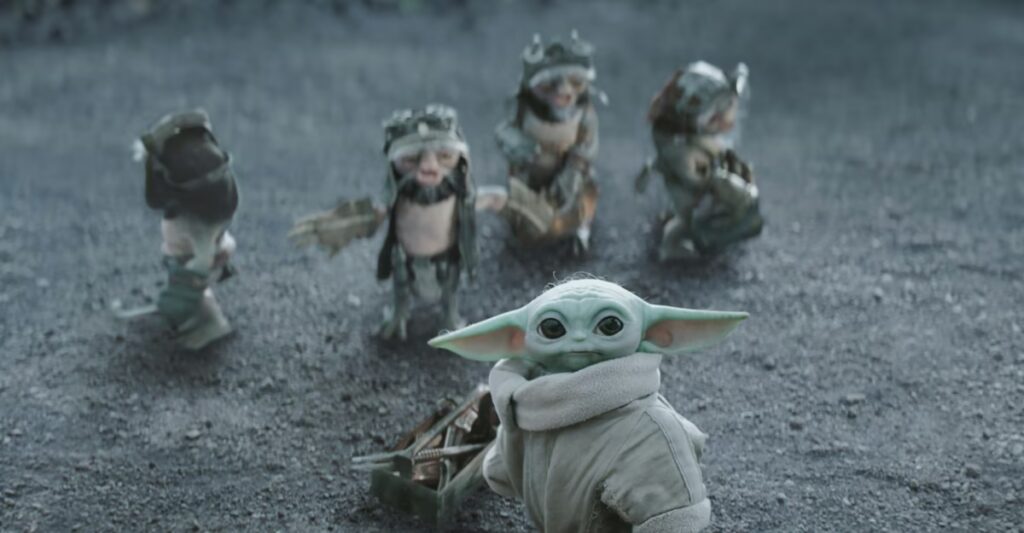
The second moment comes in the third act, when the Mandalorian is sidelined for a while and Grogu becomes the protagonist. Set entirely in a swamp and heavy on inventive puppetry, this chunk evokes the kid-friendly Amblin adventure movies of the ’80s. Favreau’s work is clearly indebted to that lineage, and Grogu’s solo jaunt actually summons a bit of whimsy that was otherwise missing. The segment isn’t enough to make The Mandalorian and Grogu mandatory viewing, though Disney is clearly hoping that the Star Wars name branding will be enough to do that anyway. But it’s evidence that Favreau left a chance at making a far more memorable film on the table.
The post A Star Wars Movie to Fall Asleep To appeared first on The Atlantic.