Since at least 2005, researchers have known that garlic works just okay as a mosquito repellent. Last year, The Washington Post quoted a mosquito expert who called garlic “extremely mild at best” as a deterrent. It’s not a new idea. Plenty of people have learned the hard way that garlic rolls can repel a potential mate on a first date, for instance. But that same idea might be getting applied to mosquitoes, as new research from Yale University, published in Cell, suggests that maybe we shouldn’t think of garlic as a way to repel mosquitoes from us, but as a way to repel mosquitoes from each other.
Researchers led by biologist John Carlson weren’t originally trying to create insect birth control when they put 43 fruits and vegetables pureed into Petri dishes to see whether any boosted insect mating. Garlic did the exact opposite. There was no mating or even egg laying. Garlic is just as much of a turnoff for insects like fruit flies as it is for your Tinder date after you scarf a bowl of Pasta Aglio e Olio.
A New Study Found a Surprisingly Simple Way to Stop Some Mosquitoes From Mating
It’s all the fault of a compound and garlic called diallyl disulfide, and it wasn’t the smell of it that the insects were reacting to, but the taste. The compound activates a taste receptor called TrpA1, which the bugs quickly learn to avoid at all costs. It’s not that it tasted bad to them, but that it triggered a sense of fullness, especially in female insects, which translated into a lack of interest in mating or laying eggs.
There are so many comparisons we can make here. Garlic is mosquito Ozempic! Garlic allows mosquitoes to use the classic “too full for sex” dodge!
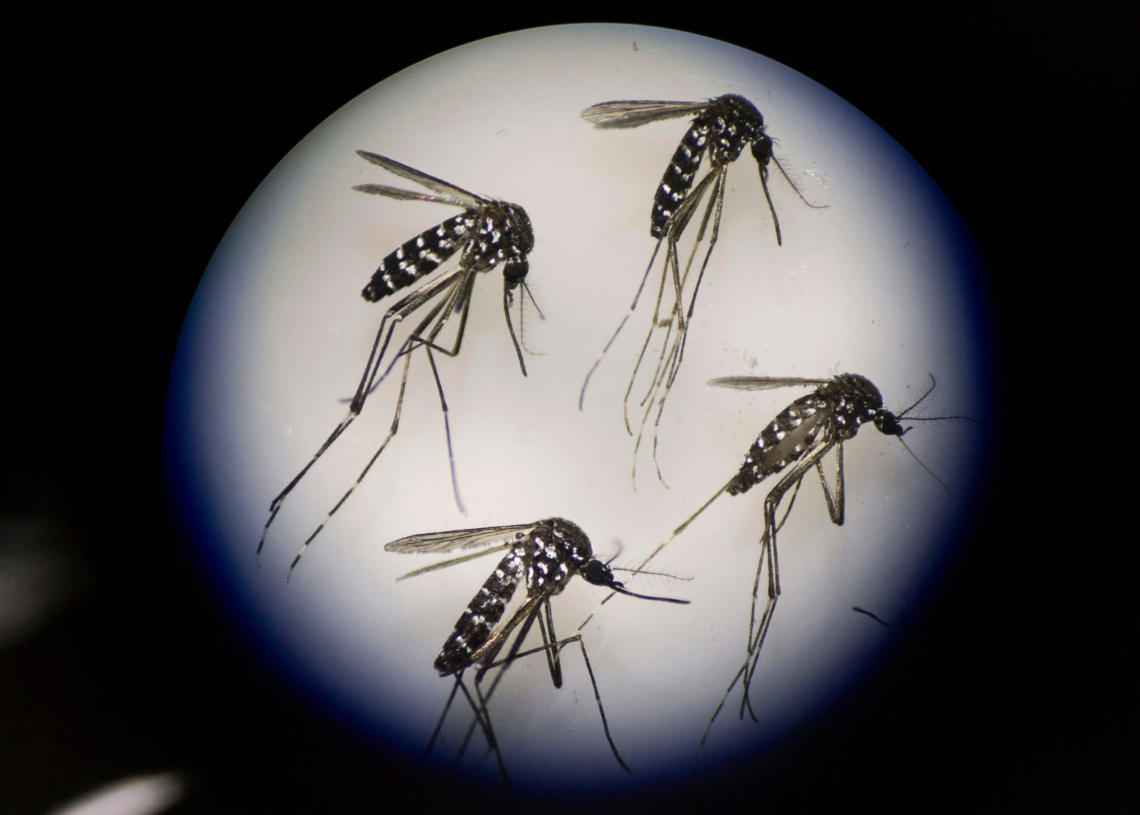
The effect wasn’t just observed in fruit flies. While wasps were unaffected, since they lack the TrpA1 receptor, the team found similar results in tsetse flies and Aedes mosquitoes. The latter of which is an especially fascinating find, since it’s the insect that has been known to carry yellow fever, dengue, and the Zika virus.
The effect extended beyond fruit flies. The Yale team found similar results in tsetse flies and Aedes mosquitoes, the disease-carrying insects linked to yellow fever, dengue, and Zika virus. Wasps, meanwhile, were unaffected because they lack the TrpA1 receptor entirely.
The post Scientists Accidentally Found a Weird New Way to Stop Mosquitoes From Mating appeared first on VICE.