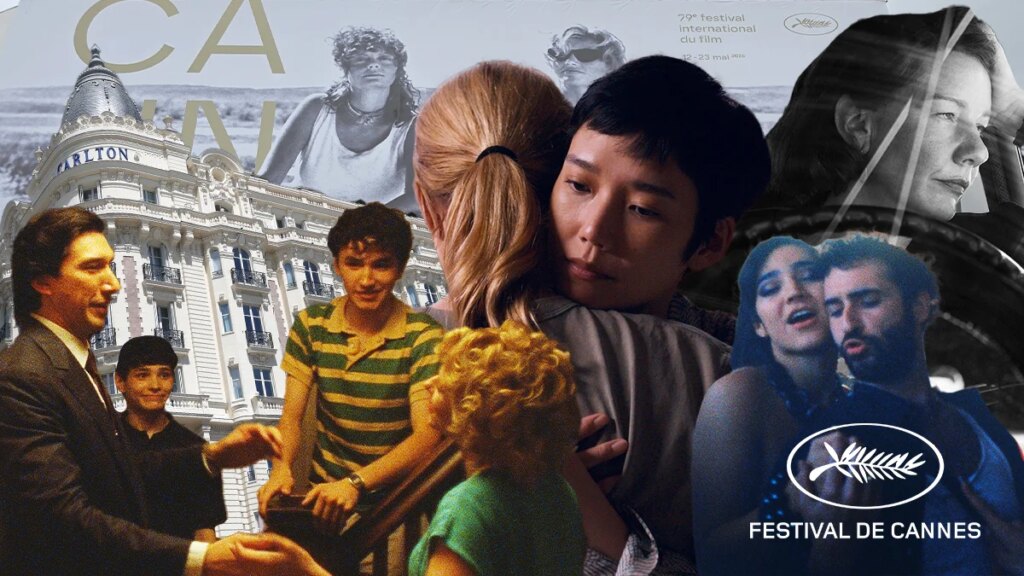
I didn’t think this year’s Cannes Film Festival needed Hollywood movies to be successful. After six days, I’m wondering if I was wrong.
At the halfway mark of a festival that is missing the kind of major-studio premieres that have taken place at most recent Cannes, there’s a distinct lack of excitement. At one point this weekend, I found myself in a conversation with a couple of festival veterans who were speaking nostalgically of how much fun Cannes had been in 2021.
2021! That was the first post-pandemic festival, when you had to fill a test tube with saliva every three days and pass a COVID test to even get into screenings. And then one of the vets suggested, semi-seriously, that they should only hold the festival every other year to bring up the quality of submissions.
Obviously, that’s not going to happen. Just as obviously, we’re going to suffer through some mediocre years, and 2026 is looking like one of those years so far.
But is that Hollywood’s fault?
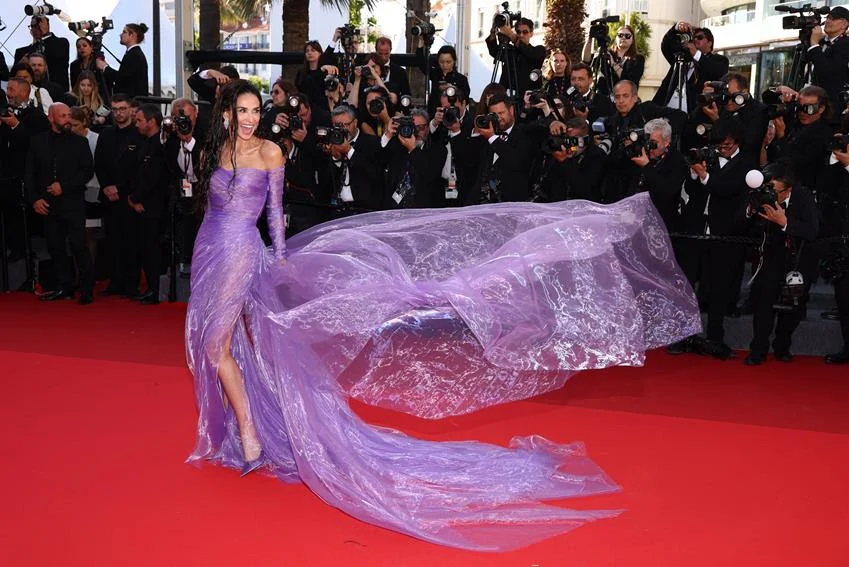
Going in, I figured that it was no big deal that the major studios weren’t premiering their summer blockbusters-to-be on the Croisette, because Christopher Nolan (“The Odyssey”) never sends his movies to festivals, Steven Spielberg (“Disclosure Day”) hasn’t had the best reception at Cannes the last couple of times he’s gone, and Tom Cruise’s next movie is with Alejandro G. Iñárritu and seems to be a lock for Venice.
It was the wrong batch of studio films, it was the wrong filmmakers, and what was the big deal? Cannes had Pedro Almodovar, Andrey Zvyagintsev, James Gray, Pawel Pawlikowski, Asghar Farhadi, Hirokazu Kore-eda, Ryusuke Hamaguchi, Nicolas Winding Refn, Steven Soderbergh – a strong lineup of the kind of great international auteurs that, after all, are the heart of every Cannes. Isn’t that more important than a Hollywood premiere?
Well, yes, it is. And yet, the first few days have been lackluster at best. And maybe some Hollywood movies and big stars would have helped. After all, wouldn’t it have been cool to see Odysseus’ boat parked out there in the Mediterranean between a couple of those huge yachts?
Then again, maybe more Hollywood wouldn’t have made a damn bit of difference, because the most Hollywood-y thing Cannes could muster up was pretty silly.
On Friday night, the festival made a big deal out of premiering John Travolta’s directorial debut, “Propeller One-Way Night Coach.” Cannes chief Thierry Fremaux took to the stage of the Salle Debussy, showed a 10-minute montage of clips from Travolta’s films and then gave him a surprise Honorary Palme d’Or, something a lot of us saw coming a mile away but Travolta swore came as a shock to him. Fremaux also said that “Propeller” was the first movie accepted to this year’s festival, way back in November 2025, the earliest any film had ever been booked in Cannes.
And then they played the movie – which, as TheWrap’s reviewer Chase Hutchinson pointed out, isn’t really a movie at all. It’s an exceedingly slight 60-minute production in which Travolta reads his 29-year-old children’s book and we see sweet but cheesy and amateurish footage re-creating the fabulous cross-country airplane flight Travolta took as a kid.
You can make a thin case for the movie as the gentlest piece of nostalgia ever, and it clearly means a lot to Travolta, more than it ever will to any audience. But the idea that this became the earliest movie ever accepted to Cannes on the basis of quality is laughable. Watching it, you can reach no conclusion other than that Cannes must have really, really wanted to get a big Hollywood star on that stage.
So if this will indeed be recorded as a down year in Cannes, it’s only mildly the fault of the Hollywood studios. It’s more the lack of movies that can galvanize the Cannes audience that’s looking for bold and brilliant international cinema. Remember “Sirat” last year? Or “It Was Just an Accident?” Or “The Secret Agent?” Honestly, nothing that has screened in 2026 has generated the excitement that those films did last year, or even the glee that Tom Cruise and “Mission: Impossible – The Final Reckoning” did.
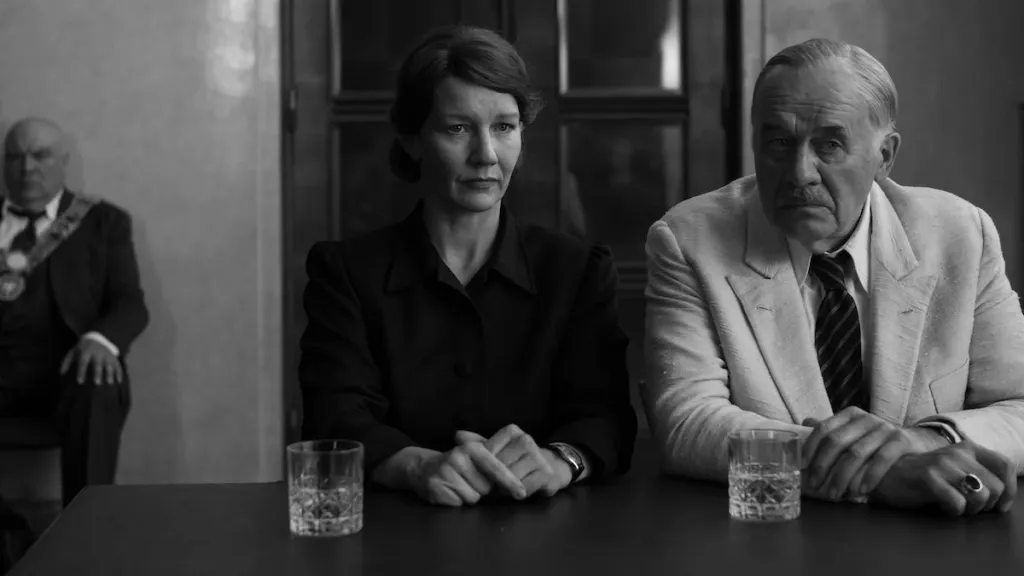
So far this year, the movies that have moved the needle the most include Pawlikowski’s “Fatherland,” a rich and moving journey through post-World War II Germany that can legitimately stand alongside the director’s “Ida” and “Cold War.”
And Jordan Firstman’s “Club Kid,” an entry in the Un Certain Regard section that takes an old premise we’ve seen in “Kramer vs. Kramer,” “Three Men and a Baby” and many others and gives it a shot of adrenaline by transplanting it into the druggy New York LGBTQ+ club scene.
Hamaguchi’s “All of a Sudden” has lots of admirers who could settle into its three-hour-plus running time and who didn’t mind that the middle of those three hours was devoted to one long conversation. And “Paper Tiger,” “Moulin,” “The Beloved,” “Sheep in the Box,” “Gentle Monster” and others scored high with some fans and critics, even if the overall impression seems to be, “What next?”
Certainly, there’s a lot still to come. Monday will bring Cristian Mungiu’s “Fjord,” Arthur Harari’s “The Unknown” and Nicolas Winding Refn’s “Her Private Hell.” Tuesday is time for Zvyagintsev’s “Minotaur” and Almodovar’s “Bitter Christmas”; Wednesday is Ira Sachs’ “The Man I Love”; and so on.
That’s enough to turn this into a great fest if they all come through.
And even if there hasn’t been the amount of excitement you’d like out of the first week in Cannes, there is a true international conversation happening on screens inside the Palais and down the Croisette. In the first half hour of “Fatherland,” Sanda Huller speaks fluently in German, French and English; in “All of a Sudden,” the two lead characters slide back and forth between French and Japanese; in “Diary of a Chambermaid,” Romanian director Radu Jude drops characters from his homeland into France and uses both languages; with “Parallel Stories,” Iranian Asghar Farhadi has made his second movie in French; and with “Butterfly Jam,” Ukrainian Kantemir Balagov made his first in English.
Oh, and with “Teenage Sex and Death at Camp Miasma,” Jane Schoenbrun speaks in fluent grindhouse horror cliches while layering them with a staggering level of academic analysis.
If you look at it that way, Cannes 2026 is a true international melting pot that speaks in every language except Hollywood blockbuster, which shouldn’t be a problem.
But, you know, maybe it is.
The post Cannes So Far: Maybe This Festival Really Does Need Some Hollywood Movies appeared first on TheWrap.