The collapse of a deal last month between the Metropolitan Opera and Saudi Arabia that would have infused up to $200 million into the house is a reminder of the gloomy future for the performing arts in America.
The Met, despite its recent artistic successes, faces the same problems as many of its peers: diminishing box office income, rising costs, multiple unions seeking better contracts and most critically, increasing reliance on a fading class of donors. The Met and its fellow companies desperately need to recruit new ones.
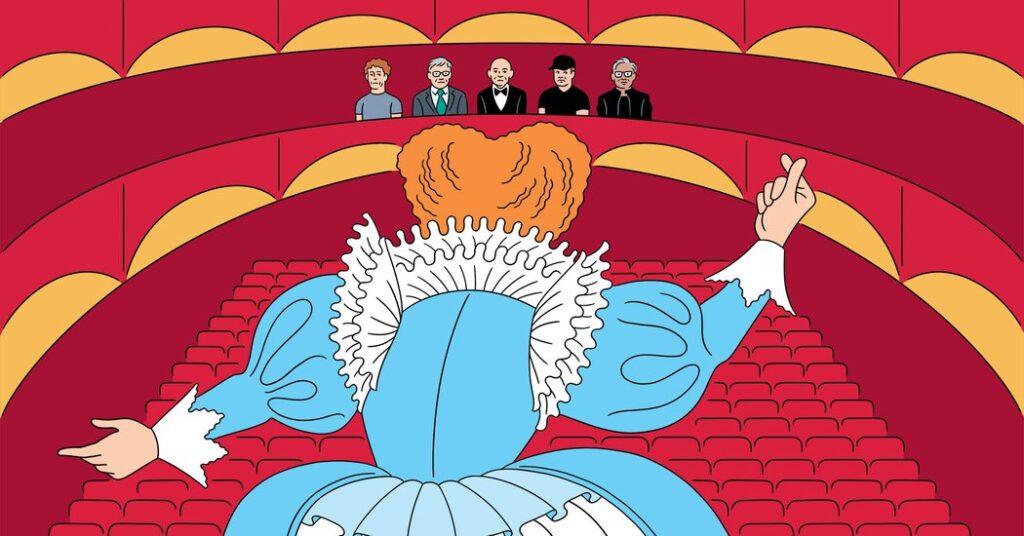
Unfortunately, the new generation of potential philanthropists — tech billionaires — aren’t interested. They’d rather give their money to research in science, medicine, longevity and environmental issues, if they’re philanthropic at all.
Maybe their preferences are not so surprising. Many of today’s super rich came of age in a culture that treated the humanities as mostly decorative. The chief executive of OpenAI, Sam Altman, for example, has praised the “democratization” of art thanks to artificial intelligence. Social cachet comes from social media, not the benefit circuit.
The contemporary art world has done a better job of attracting new money. Jeff Bezos bought Edward Ruscha’s “Hurting the Word Radio #2” at auction for $52.5 million. He and his wife, Lauren Sánchez Bezos, also donated millions to the Metropolitan Museum’s Costume Institute, though that might be more her interest in fashion than any commitment to high culture.
So what can motivate tech barons to give money to opera? How do we convince them that, with their help, they can be a part of imagining a new, mind-blowing, future for opera, just as they have transformed the way we think and live with their innovations? We need to answer those questions if opera is to survive.
If tech billionaires are attracted to disruption, then opera could be a natural collaborator. Opera defies categorization and, for 400 years, has itself been a disrupter of social and political thinking through a unique combination of drama, music, dance and design.
So let’s shatter theater conventions by breaking the fourth wall. It would be an audacious move to create immersive layouts by thrusting the stage into the audience and putting seating onstage. We can adopt the methods of commercial theater productions like the 2024 Broadway revival of “Cabaret” at the invented Kit Kat Club, or the pop opera “Natasha, Pierre & the Great Comet of 1812,” which was staged in a traditional Broadway theater transformed into a tavern.
The San Francisco Opera, not surprisingly given its location, has led the way. Over the past three years, donations by the tech sector have grown significantly and now account for a quarter of the organization’s total philanthropy. Jensen Huang, a billionaire co-founder and the chief executive of Nvidia, and his wife, Lori Huang, have promised $5 million annually for at least three years. The first $5 million backed what the company called an “action-hero” opera, “The Monkey King,” a multimedia show last year about a mythical Chinese character.
Wealthy tech donors may want to work more collaboratively, over longer periods and with greater latitude for involvement with the organization. Immersing them in the art may be effective: observing the process from behind the scenes, or just standing on the incredible stage of the Met or the Park Avenue Armory and gazing into the vast empty auditorium, as if witnessing a private tour of the Colosseum in Rome. Donors could be brought into direct involvement in rehearsals, through online access or in informal working groups.
Tech philanthropists may want to see plans that deliver something meaningful in their own lifetime: measurable public value and social impact, borne out by data. If new productions result in not only a full house but sales to those who haven’t attended an opera before, that’s a data point that can be built on. It happened at the English National Opera when I was artistic director there, with commissions like Damon Albarn’s “Dr. Dee” and Terry Gilliam’s productions of Berlioz operas, and at the Met with Kevin Puts’s “The Hours.”
Many studies, including a 2019 report by the World Health Organization, have shown that singing, attending live performances and participating in the arts in other ways can reduce stress and improve emotional well-being — attractive ideas to tech billionaires.
More board positions should be opened to tech billionaires from abroad. Opera should learn from the tech marketers so skilled at selling their products and the fan communities of popular culture who shape online chatter. The arts have long failed to harness this appetite for belonging, identity and active participation. If that can be changed by the very people whose jobs it is to understand what captures our attention, why wouldn’t we engage with them?
We also need to show tech billionaires that we are building a new audience. In a world where all of us can stream first-rate content in the comfort of our homes, we need to focus on what gives audiences a real reason to get out of the house. The events on offer must be so uniquely dependent on being in a theater together that no streaming service or cinematic experience can compete.
Diversifying what is on offer is essential for the Met, the only major opera house not staging musicals or, regularly, operetta. The Komische Oper Berlin has the luxury of strong state and city funding, yet its musicals program has developed audiences independent of its opera program. Creating more collaborations that bring popular culture and high art together, through working directly with classically inspired musicians with global followings like Mr. Albarn or Rosalía, can bring new audiences. They may also tickle the curiosity of modern philanthropists.
We shouldn’t ask the tech titans to save a struggling art form. In their cultural Darwinism, they may say it deserves to die. But if asked to help invent a new version of it, one that eschews the traditional opera experience, which may well have put them off in the first place, it may at least pique their interest. We need to appeal to their desire to change the world in a way they understand.
Those of us who have spent our lives in the arts know our work has a unique role in exploring moral, spiritual, and other large human questions. But we still struggle with misconceptions of elitism, and we don’t always communicate the social and financial impact of our work convincingly. The performing arts, at their best, have always made people believe in things they could not quite explain. That is still the most powerful argument we have. We should start making it.
John Berry is a former artistic director of the English National Opera and the founder of Opera Ventures Productions.
The Times is committed to publishing a diversity of letters to the editor. We’d like to hear what you think about this or any of our articles. Here are some tips. And here’s our email: [email protected].
Follow the New York Times Opinion section on Facebook, Instagram, TikTok, Bluesky, WhatsApp and Threads.
The post Opera Needs New Plutocrats appeared first on New York Times.