SAN JUAN, Puerto Rico — To Fidel Castro and Cuba’s communist elite, private businesses were totems of capitalist evil.
Now, with the country running out of food and fuel, the regime on the brink and anger spreading in the streets, it’s those private businesses — run by once-persecuted, small-scale capitalists — that hold the key to salvaging what’s left of Cuba’s economy.
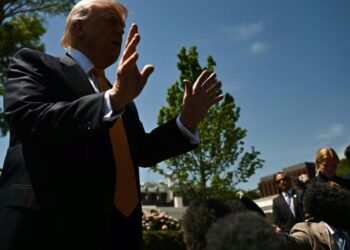
That salvage operation can’t come fast enough for President Trump’s administration, which has imposed a de facto energy blockade on the Caribbean nation.
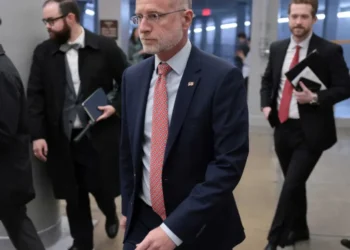
Trump’s spy chief visited Cuba this week, a day after the country said it had completely run out of diesel and fuel oil, to stress that radical change is needed before the administration begins to dial back the pressure. Havana has frustrated the U.S. over a lack of progress in opening its economy and political system.
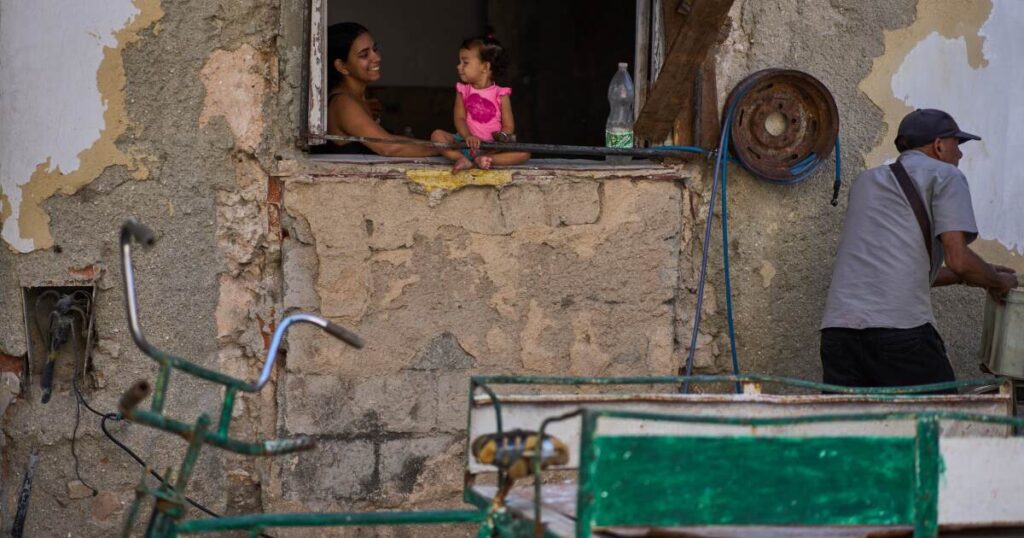
It’s this narrow stretch — between a punitive Washington and a stubborn ruling class that has held power for 67 years — that small-business owners have to navigate. They also have to contend with chronic shortages, whiplash regulatory changes and days-long power outages.
“I’m pretty tired, but I still have some strength to face any new changes,” said Juan Carlos Blain, who runs a restaurant and grocery business in Havana. “I’m focused on business, but the political decisions are in the hands of politicians — they’re the ones who decide.”
Blain, 41, turned a tiny burger operation run out of his mother’s refrigerator in 2012 into a thriving enterprise with four Juanky’s Pan fast-food shops, two KO Mini Mercado grocery stores and more than 100 employees.
Though private enterprise remains strictly controlled, there are now more than 9,200 small and medium businesses in Cuba. In 2024, the private sector overtook state-run companies in retail sales for the first time.
“The economic situation has never been this hard. We’ve never had this many factors against us at the same time. Everything is paralyzed,” said Omar Everleny Pérez, the former director of the Center for Cuban Economic Studies at the University of Havana. “The private sector is the only thing that’s mitigating the crisis.”
As government food rations, once a mainstay of the revolution, run short, people are turning to their local corner shops to buy everything from hot dogs to soap. “Of course those corner shops are privately owned,” Everleny said from the Cuban capital.
It wasn’t until the 1990s, when Cuba was plunged into an economic crisis after the collapse of the Soviet Union, its main benefactor at the time, that it began allowing cuentapropistas — independent contractors. And it wasn’t until 2021 that the government legalized small- and medium-sized businesses.
Cuba’s economy has been in crisis for years, cut off from global commerce by decades of U.S. sanctions, dependent on subsidized fuel from Venezuela, and hollowed out by mismanagement and corruption. When Trump returned to office in 2025, he and Secretary of State Marco Rubio began ratcheting up pressure on the island’s government even further.
In early January of this year, the U.S. captured Venezuelan President Nicolás Maduro and cut off that nation’s oil exports to Cuba. Airlines canceled flights because of the lack of jet fuel, resorts began shutting down, and businesses and distribution networks ground to a halt.
Like many small-business owners, Blain said he long-ago turned to a combination of solar cells, generators and batteries to stay open during the island’s chronic blackouts. The current fuel crunch is more challenging. The U.S. has allowed only one Russian tanker of crude to be delivered to Cuba since the Maduro raid, which is what led to this week’s grim announcement that all reserves have been exhausted.
“There’s no diesel anywhere and if it does show up it’s extremely expensive,” Blain explained. He’s had to mothball his cargo truck due to lack of gasoline, and now picks up fruit and vegetables for his stores on an electric motorcycle. “Every day is a new challenge,” he said.
Trump and Rubio have repeatedly said the increasing economic pressure is designed to force regime change. If it doesn’t, they’ve signaled they may resort to brute force.
On May 1, as 94-year-old revolutionary leader Raúl Castro made a rare public appearance to watch the party faithful parade through the streets of Havana, Trump fired a new economic broadside: a sweeping executive order allowing Washington to sanction virtually any foreign citizen or entity doing business in Cuba.
The order focuses on the defense, mining, finance and security industries, but analysts say it’s so broadly written that it’s tantamount to a loaded economic weapon that can be pointed at Washington’s victim of choice. It’s already having an effect, with Canadian miner Sherritt International deciding a week later to shut down its nickel operations on the island.
Also on May Day, Trump told a gathering in Florida that the USS Abraham Lincoln aircraft carrier might dock off the coast of Cuba when its work is finished in Iran, joking that the Cuban government would simply surrender at its sight. “We will be taking over almost immediately,” Trump said.
Cuban President Miguel Díaz-Canel remains defiant. Though he says there’s room for cooperation with the U.S., he insists the island’s system of government and his leadership aren’t up for discussion.
Even so, Havana has made pro-business concessions that seem designed to appease Washington. At the beginning of March, Cuba agreed to allow the private sector to import fuel to meet its own needs. Two weeks later, the government decreed that Cubans living abroad can invest and own private enterprises on the island.
Hugo Cancio is a serial entrepreneur and chief executive officer of Katapulk, a Florida-based online marketplace that allows the Cuban diaspora to buy anything from groceries to mobile minutes to send to relatives on the island. The site carries 30,000 products and handles between 1,500 and 2,000 transactions a day, he said.
Speaking from his home in Miami, Cancio said sites like his have become a lifeline for small businesses that need products from abroad. Thanks to the recent changes, he’s one of the few people sending fuel to the island’s private sector.
To Cancio, who also has apartments in Havana and Madrid, Cuba’s recent concessions to the diaspora are a good start but just the “tip of the iceberg.”
Cuban exiles “have to be able to return and be part of any political solution in Cuba — not only an economic solution,” he said. “It’s foolish to believe that an economic reformation of the Cuban system of government is not going to lead to a change in the political system.”
That business-reform connection is one that Cuba has long feared.
During President Obama’s administration, Havana and Washington tried to overcome decades of animosity in what was known as the “Cuban Thaw.” Diplomatic relations were re-established and normal travel resumed across the Florida Strait. The longtime foes went from having almost no contact to authorizing 110 direct flights a day. Although only a fraction of those ever took place, tourism hit all-time highs as curious U.S. travelers descended on the once-forbidden island.
Obama, Pope Francis and the Rolling Stones visited. Cuba began liberalizing its economy and the dormant entrepreneurial class exploded, with people turning their homes into hostels and their dining rooms into paladares, as family-run restaurants are known on the island. It was during the lead-up to the thaw that Cuban American businessmen connected to the U.S.-based Cuba Study Group started Cuba Emprende in 2012.
Working with the Catholic Church and Mexico’s Fundación ProEmpleo, the organization hosts business workshops and networking events on the island. Since its inception, more than 13,000 people — including Blain — have completed the course, according to John McIntire, a former partner at Goldman Sachs and chairman of the Cuba Emprende Foundation, which raises funding primarily from the diaspora.
But the growth of a private sector that competed with state-run industries spooked the government, and Havana retrenched. When Trump first took office in 2017, he dismantled many Obama-era reforms as he blasted Cuba’s human rights record, its support of U.S. foes and the government’s glacial pace of change.
The combination of that pressure and the COVID-19 pandemic sent Cuba’s economy into free fall. More than 20% of its population has fled in the years since COVID hit, according to some estimates.
Even so, demand for Cuba Emprende’s training is stronger than ever. “All of our classes are overbooked,” McIntire said. “The desperation people feel makes them desperate for an alternative.”
Emilio Morales, a Florida-based analyst with the Cuba Siglo 21 think tank, said Cuba’s non-state enterprises are so tightly controlled that it’s a misnomer to think of them as the private sector at all. In his view, it’s Grupo de Administración Empresarial S.A. (GAESA) — the massive, opaque military-run business conglomerate — that controls much of the economy.
During the Obama era, as small business was booming, “GAESA, that giant black hole, was what stopped the reforms,” Morales said. “This private-sector movement that was growing like an avalanche was threatening its business.”
And he suspects that some of the most profitable independent businesses are simply government fronts to evade international sanctions.
But Cuba’s private sector continues to thrive despite both internal and external pressure, according to Emily Mendrala, a former deputy secretary of State in Joe Biden’s administration.
“The cards are stacked against them from U.S. and Cuban policy alike,” said Mendrala, now a senior advisor at Washington-based consultancy Dinamica Americas. “They’ve had to be incredibly entrepreneurial, incredibly creative and resilient.”
It could take years for a new Cuban government to overhaul laws and build up the infrastructure needed for large foreign companies to operate on the island, Cancio said. And the U.S. has to unwind decades of punitive sanctions aimed at scaring off international commerce. Until that happens, entrepreneurs will have to be the bridge.
“The private sector right now are the ones moving forward whatever little economy is still left there,” said Cancio, the Katapulk CEO.
Blain, the food impresario, likes to joke that his company was destined to fail. He opened it on Dec. 21, 2012, the day the world was supposed to end in the Mayan calendar. Yet he’s still in business more than a decade later. He says Cuba’s entrepreneurs are forced to be nimble and adapt to the ever-shifting economic and political tides — something that can’t be taught at business school.
“I don’t have the biggest company on the island and I can’t afford to give myself many luxuries. But I do have a solid business and committed employees,” he said. “I’ve learned that if things aren’t working out, the only thing you can do is make drastic changes.”
Wyss writes for Bloomberg News.
The post Communist Cuba is leaning on capitalists after oil runs out appeared first on Los Angeles Times.