A commander of an Iraqi militia has been charged with plotting to attack Jewish sites in the United States, including a synagogue in New York, and carrying out attacks in Europe as part of a broader campaign of retaliation by Iran since the war began in February.
A criminal complaint unsealed on Friday accused the commander, Mohammad Baqer Saad Dawood al-Saadi, of planning at least 20 attacks in Europe and Canada since late February. Mr. al-Saadi was detained in Turkey sometime recently and handed over to U.S. authorities, Mr. al-Saadi’s lawyer said in federal court in Manhattan on Friday.
Mr. al-Saadi, according to the complaint, is a commander of Kataib Hezbollah, an Iraqi militia that is a proxy for Islamic Revolutionary Guards Corp and has helped Tehran project power across the region, including through attacks on American forces and diplomatic targets.
From its inception, the militia has been closely tied to Iran’s Quds Force — the overseas arm of the powerful Revolutionary Guards. It made evicting U.S. forces from Iraq a primary focus. Kataib Hezbollah’s repeated attacks on U.S. Army posts in Iraq and Syria over the years contributed to Washington’s decision in 2009 to designate it as a foreign terrorist organization.
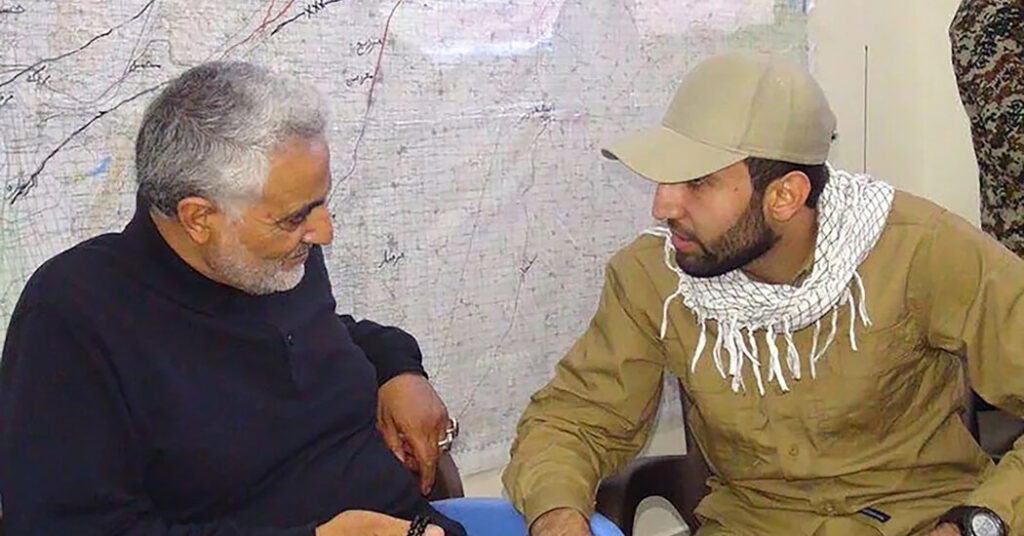
The complaint says that Mr. al-Saadi planned to kill Americans and Jews in Los Angeles and that he had started planning an attack on a synagogue in New York City. As a leader of Kataib Hezbollah, Mr. al-Saadi worked with Maj. Gen. Qassim Suleimani, the head of Iran’s security machinery, according to the complaint. The U.S. military killed Mr. Suleimani in a strike in 2020.
Mr. al-Saadi is one of the highest level figures tied to Iran known to have been arrested by the United States since the war began. For years, and during the current conflict, the United States and Israel have focused on killing Iranian officials.
His case appears to involve the kind of retaliatory act of terrorism that U.S. officials have long both anticipated and feared.
Kataib Hezbollah has been accused of attacks on U.S. Army posts in Iraq and Syria. The group has long been one of the most important groups in Iran’s regional network of armed proxies.
Mr. al-Saadi and his associates have planned, coordinated and claimed responsibility for at least 18 terrorist attacks in Europe and two additional attacks in Canada, the complaint says. It also accuses Mr. al-Saadi of directing others and trying to coordinate attacks in the United States, including in New York City.
The complaint says Mr. al-Saadi, a high-level member of Kataib Hezbollah, worked closely and in person with Mr. Suleimani, who led the Quds Force before he was killed in a 2020 American drone strike near the Baghdad airport. The government said Mr. al-Saadi also worked closely with the Iraqi militant leader who led Kataib Hezbollah, known by the nom de guerre Abu Mahdi al-Muhandis, who was also killed in the 2020 U.S. drone strike.
Kataib Hezbollah, a powerful Iraqi militia that was formed after the U.S. invasion of Iraq in 2003, became a leading faction in the Popular Mobilization Forces, the militia umbrella later folded into Iraq’s security apparatus during the war against the Islamic State.
Its reach beyond the Middle East is less clear, and the Iraqi militant group does not have a well-documented record of global operations. Compared with several of Iran’s other allies, including Hezbollah in Lebanon and Hamas in Gaza, Kataib Hezbollah has emerged largely intact from the past two years of war in the Middle East. In March, Secretary of State Marco Rubio said the group kidnapped and later released Shelly Kittleson, an American journalist, in Baghdad.
Euan Ward contributed reporting.
Benjamin Weiser is a Times reporter covering the federal courts and U.S. attorney’s office in Manhattan, and the justice system more broadly.
The post Militia Commander Tied to Iran Plotted Attacks in U.S., Prosecutors Say appeared first on New York Times.