The Justice Department will prosecute the parents of teenagers who break curfew as part a crackdown on crime in the nation’s capital ahead of celebrations this summer for America’s 250th birthday, the top federal prosecutor in D.C. announced Friday.
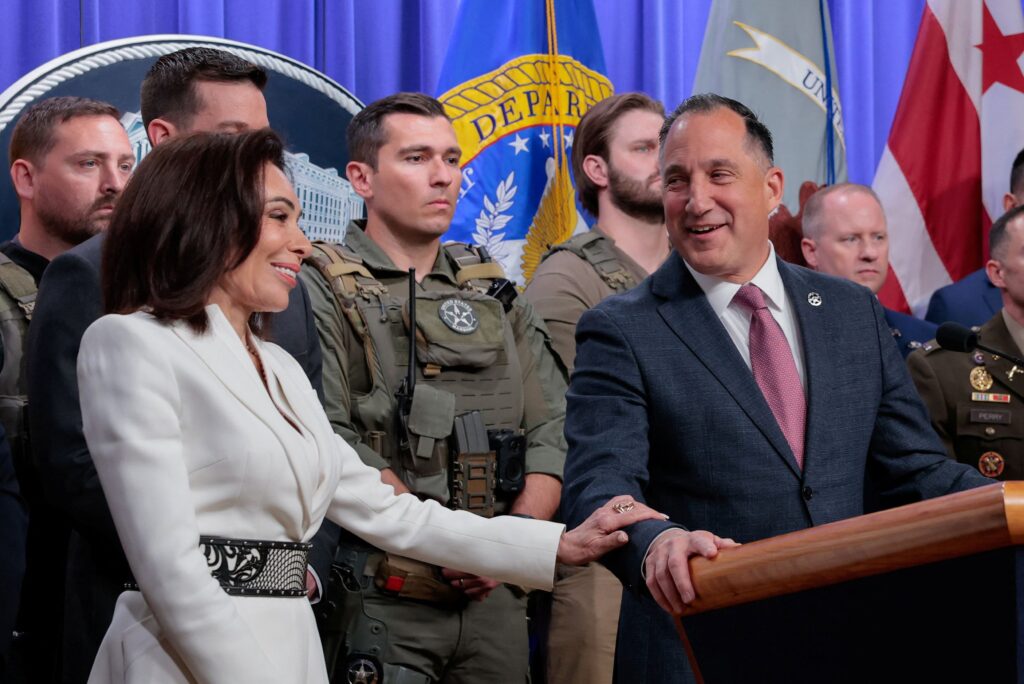
At a news conference at Justice Department headquarters, Jeanine Pirro, the U.S. attorney in D.C., decried “teen takeovers” — a trend in which large crowds of dozens or hundreds of young people meet in buzzy nightlife areas and sometimes cause mayhem. She said these takeovers have terrorized local businesses in neighborhoods such as Navy Yard and NoMa and cost taxpayers money.
Pirro’s office does not have the authority to prosecute juveniles, unless for certain violent crimes in which the teenagers are tried as adults. Most juvenile crime is prosecuted by the local D.C. attorney general.
But Pirro said she could prosecute parents under a D.C. law that makes it illegal to enable a minor to skip school, commit a crime or use drugs. A parent could face fines, mandated parental classes or jail time, according to Pirro.
“Parents do your jobs, or we will do ours,” Pirro said. “Parents if you don’t control your kids, the District will.”
The announcement comes as District lawmakers have stalled over whether to enact an emergency youth curfew to cover the summer months while a longer-term version that passed will need congressional review.
On Friday, Pirro and other Trump administration officials also announced a broader surge in federal law enforcement resources to tackle crime in D.C. this summer.
The officials said they requested to increase the number of National Guard troops — whom President Donald Trump first deployed to the District last August — by about 1,500 guards. That would bring the number of troops to around 5,000. The surge would also involve more resources from the FBI, U.S. Marshals and other agencies, the officials said.
Local D.C. government and police officials did not attend the news conference, though Trump administration officials said they were invited.
“It is about time drug dealers be treated like terrorists since they are terrorizing our nation and D.C. streets,” said U.S. Marshals Director Gadyaces Serralta. “Law and order has been restored to our nation’s capital. D.C. will be the safest city in America for those who live, those who work and those who visit.”
D.C. has a general curfew for minors, 11 p.m. on weeknights and midnight on weekends, that has been in effect since the 1990s. But the new legislation would move the curfew up to 11 p.m. on weekends and extend the police chief’s power to declare special 8 p.m. curfew zones barring young people from gathering in groups of more than eight in designated areas.
Earlier this month, the D.C. Council passed a longer-term version that will be in effect through 2028 with certain guardrails around police enforcement and a requirement that Mayor Muriel E. Bowser (D) host a youth event any time police call a curfew. Still, it is not expected to take effect for months, leaving a gap this summer.
The Bowser administration and some D.C. lawmakers had feared that the Trump administration would step in and crack down harder if the council did not act on the emergency bill. Unlike the permanent bill, an emergency curfew requires a supermajority of nine votes to pass, which the council did not have.
Pirro had been publicly lambasting lawmakers for weeks over inaction on the emergency curfew, accusing the council of “not doing their job” and not taking the issue seriously.
D.C. Council member Brooke Pinto (D-Ward 2), who sponsored the curfew legislation, warned colleagues in a May 5 meeting that she was “absolutely fearful of the response” from the federal government after conversations with Trump administration officials.
“I have said, ‘Please hold off. Please don’t do this. We are on top of it as a body,’” she told colleagues, urging them not to give officials a reason to move forward with a more aggressive approach to the teens.
The post Parents of teens who break curfew in D.C. will be prosecuted, DOJ says appeared first on Washington Post.