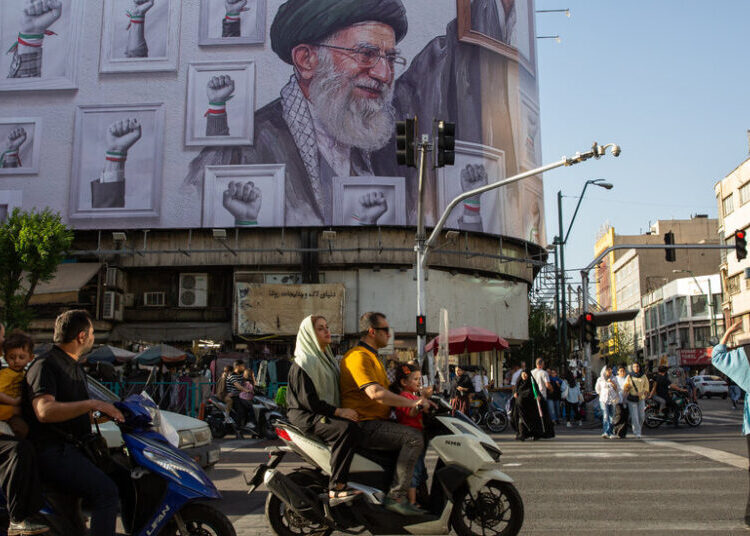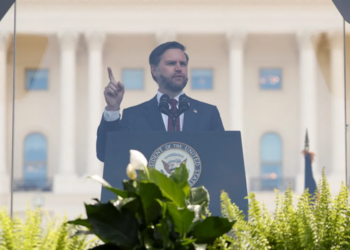
Chancellor Friedrich Merz of Germany, who enraged President Trump last month by saying Iran had “humiliated” the United States, suggested on Friday that he had patched up the relationship in a telephone conversation.
Mr. Merz wrote on social media that the two men shared a “good phone call” as Mr. Trump flew back from meeting with Xi Jinping, the Chinese leader, in Beijing.
The post came soon after Mr. Merz left a stage in central Germany, where he told a group of young people that he would no longer advise his children to work or study in the United States because of the “social climate” and declining job prospects. He also said, “I am a great admirer of America. My admiration is not increasing at the moment,” drawing laughs and applause from the crowd.
Mr. Trump was still traveling on Friday and the White House did not have an immediate comment on the phone call or Mr. Merz’s remarks about the United States.
A German official said the chancellor initiated Friday’s phone call with the president in an effort to clear the air over Mr. Merz’s critical comments about the Iran war late last month. The remarks appeared to spur a surprise Pentagon announcement that it would withdraw 5,000 of America’s 35,000 troops stationed in Germany.
In his summary of the Friday call, Mr. Merz wrote: “We agree: Iran must now come to the negotiating table. The Strait of Hormuz must be opened. Tehran must not have nuclear weapons.” He said he and Mr. Trump had also discussed bringing peace to Ukraine and preparations for an upcoming NATO summit in Turkey.
“The USA and Germany are strong partners in a strong NATO,” Mr. Merz added.
Mr. Merz worked hard to build a relationship with Mr. Trump since taking office last May, including frequent text exchanges and three visits to the White House. Mr. Trump has publicly referred to Mr. Merz as a friend. But the chancellor appeared to jeopardize that bond in last month’s unscripted exchange with German high school students, in which he said Iranian negotiators had humiliated America and that the United States had “no strategy” to end the war.
The Friday comments about the United States were also made in front of a crowd of young people. In this case the chancellor was critical of America — though not the war or, at least directly, Mr. Trump.
Speaking to a large gathering of German Catholics in the town of Würtzburg, Mr. Merz was at times heckled and jeered. Young questioners expressed frustration with rising living costs and other economic struggles, and with Mr. Merz’s frequently expressed belief that Germans need to work longer hours. A questioner said those comments cast younger generations as lazy.
In a lengthy response, Mr. Merz said he was convinced that “there are few countries in the world that have such great opportunities, also and especially for young people, as Germany.”
Then, unprompted, he brought up the United States, a country he has visited almost every year since the early 1980s.
“I would not recommend to my children today to go to the USA, to be educated there and to work there, simply because a social climate has suddenly developed there,” he said.
“By the way,” he added, “the question of what well-educated young people can achieve was answered quite differently in America up until recently than it is today. Today, the best-educated people in America have great difficulties finding a job.”
Mr. Merz did not make clear what he was referencing in regards to America’s “social climate,” though much of the discussion at the event had centered around fraying social cohesion in Germany and other democracies.
Germany has the second-best employment rate for recent graduates in the European Union, according to Eurostat, trailing only the Netherlands.
Jim Tankersley is the Berlin bureau chief for The Times, leading coverage of Germany, Austria and Switzerland.
The post German Chancellor, After Iran Spat With Trump, Reports ‘Good’ Phone Call appeared first on New York Times.