When King Charles III of Britain was crowned in 2023, the Royal Opera House in London sent his office an urgent question: Do we need to get new curtains?
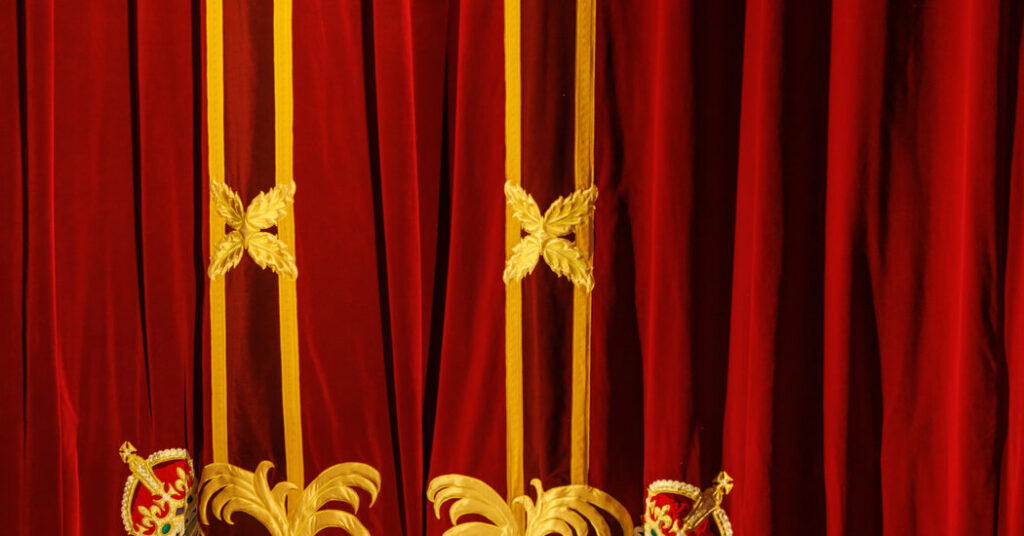
Throughout Queen Elizabeth II’s reign, the opera company’s plush, crimson drapes in mohair velvet displayed her royal cipher “EIIR,” embroidered in golden thread with a crown on top.
With a new king in place, the curtains now looked awkwardly out of date.
Yet not long after raising the query, Alex Beard, the opera company’s chief executive, got a surprising reply: The curtain change could wait. Although the new monarch’s visage, name and insignia were being added to Britain’s stamps and currency, his office said the opera-loving king didn’t want perfectly good curtains thrown away “just because”: It would be best to wait until they were worn out.
Three years later, that moment has come. On Thursday night, Charles attended a gala at the Opera House to unveil a new set of 65-foot-wide, 45-foot-tall curtains decorated with his “CIIIR” logo and a sparkly crown. Those designs, which involved over a million stitches, were the result of weeks of machine and hand embroidery.
≠≠≠≠≠
The unveiling was a fun moment for royalists, showing how the transition from one British monarch to another takes years to complete. But the event has also drawn attention to the role of the house curtains in opera, an often overlooked but key part of the art form.
“When the lights start to dim and the orchestra strikes up, then the curtains rise, it’s absolutely magical,” Beard said. “They’re such an essential part of opera ritual.”
Curtains have hung in front of opera stages since the early 1600s, according to Gundula Kreuzer, the chair of Yale’s music department and author of a book with a 54-page chapter on the history of opera curtains. Companies at the time wanted drapes to hide elaborate stage sets from incoming audience members to create a sense of anticipation, she said.
Kreuzer said that curtains in early opera houses would drop suddenly to the floor and then fall through a crack in the stage, or rise rapidly to the ceiling, rather than parting as they often do now. To get the heavy curtains to soar upward, stage hands would leap onto a rope to act as a counterweight, she said.
In 19th century, composers realized that the curtain’s rise and fall could be used to enhance the onstage drama and started writing instructions for their use in their scores, Kreuzer said.
Puccini sometimes added rising chromatic scales into his opening music at the moment the curtain rose. Along with Berlioz and Verdi, Puccini also used slow curtains falls to close acts that ended with tender scenes.
Wagner’s engagement with curtains included commissioning a new design for the drapes at his Bayreuth opera house. Whereas curtains had previously opened sideways or upward, Wagner wanted them to open diagonally, revealing the stage more naturally. That style of opening is now called “the Wagner Curtain.”
Opera houses have curtains of many colors, and Kreuzer said the use of deep red velvet, like at the Royal Opera, became popular in the 19th century.
Some contemporary composers are still innovating with curtains, Kreuzer said, including Mark-Anthony Turnage, whose “Anna Nicole,” about the real-life tragic bombshell Anna Nicole Smith, debuted at the Royal Opera House in 2011. For that production, the company dropped the red velvet entirely and installed bright pink curtains, appropriate for an opera about a former Playboy model.
The Royal Opera’s new curtains were about a year in the making. Beard said he had commissioned them after learning that the old curtains had only about 100 more performances left before they’d start to tear. Up close, he said, the fraying was visible, and on one side the color had faded slightly where sweaty ballet dancers had brushed against the fabric during curtain calls.
Making the new curtains was a Europe-wide endeavor. The opera house hired the German manufacturer Gerriets to make the drapes and Britain’s Royal School of Needlework to embroider the insignia.
Anne Butcher, who led the project for the Royal School of Needlework, said that a team of eight embroiders had worked on the designs. Because the Royal Opera now streams its productions in movie theaters, Butcher said, the team put extra effort into the embroidery so that viewers could see details like the jewel settings in the crown up close.
In late April, Gerriets technicians installed the finished curtains at the back of the opera house’s stage, in special overnight operations after performances had finished. Then this month, they lifted the curtains into place before the grand reveal.
Beard said he had never considered changing up the curtain design by, say, using a color other than crimson. He wanted them to look as similar to the old curtains as possible. This was a house of tradition, after all.
So will visitors notice the difference? One regular opera goer definitely would, Beard said. “King Charles will. It’s got his cipher on!”
Alex Marshall is a Times reporter covering European culture. He is based in London.
The post Replacing a Royal Hand-Me-Down That Finally Frayed appeared first on New York Times.