MEXICO CITY — Federico Crespo was tired of President Trump’s bullying. Of his punishing tariffs, his threat to bomb cartels in Mexico and his ruthless campaign against immigrants in the United States.
Crespo was also tired of the American tourists and remote workers who had flooded his native Mexico City, driving up rents, displacing locals and altering everything from the city’s nightlife to its culinary scene.
The owner of a popular dance club, Crespo, 39, wanted to call attention to what he saw as a multitude of U.S.-related woes.
So he started charging Americans nearly $300 to enter his bar.
Mexicans and other Latin Americans pay $14. Customers from Canada, China and anywhere else pay $20.
The door policy at Japan nightclub has gone viral, triggering anger and even death threats, while also earning Crespo widespread praise.
The controversy spotlights mounting geopolitical tensions between the U.S. and Mexico as well as growing backlash against what some see as an invasion of Americans and other foreigners in Mexico City.
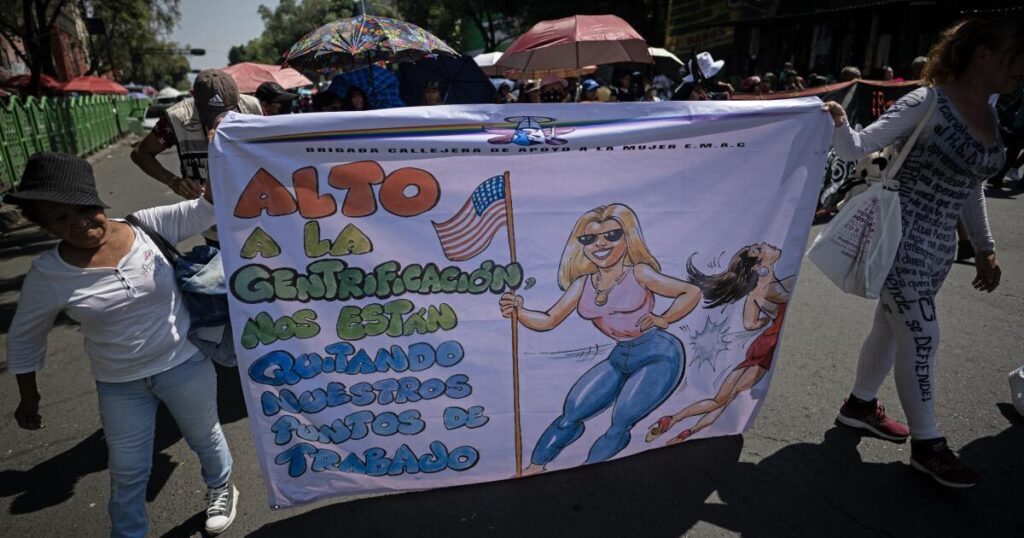
A July 4 protest last year against “American imperialism” drew hundreds of marchers, some of whom turned to vandalism, smashing windows of more than a dozen storefronts, including a bank and a Starbucks. Some chanted “gringo go home” in English and scrawled “Kill a gringo” graffiti on walls.
The march echoed demonstrations against mass tourism and high housing costs in other cities across the globe, including Barcelona and Berlin.
Crespo said he didn’t support the xenophobia on display at last year’s demonstration, and said his surcharge on Americans is not a condemnation of individuals but a critique of broader systems such as colonialism and gentrification.
“It is not discrimination and it has nothing to do with hate,” he said. “It’s a protest.”
He was eating chilaquiles and drinking black coffee at Café La Habana, a longtime bohemian haunt in the Juárez neighborhood, a onetime working-class area that is now home to a members-only SoHo house, shops that purvey $600 dresses and restaurants that serve caviar.
Crespo, a jazz musician by training, has long been a critic of the North America free trade pact that flooded Mexico with U.S. products and chain stores.
But like many here, he has been alarmed by the rapid pace of change that has accelerated since the COVID-19 pandemic, when Mexico City became a hub for “digital nomads” — remote workers who move abroad in part to take advantage of the lower cost of living.
Many of the deejays at his club can no longer afford to live in the city and have moved to neighboring states. Same goes for bartenders, security guards and the cleaning staff.
Crespo first hiked the cover charge for Americans a year ago, when Trump reentered the White House and slapped tariffs on Mexican imports. He bumped the fee from $50 to nearly $300 in January after U.S. special forces invaded Venezuela and seized President Nicolás Maduro. (“It was a kidnapping,” Crespo said.)
Most Americans who learn of the surcharge storm away. A small number pay. “They support what we are doing,” Crespo said, noting that the payments are split among the staff.
The club’s policy made international headlines after the Guardian newspaper wrote about it this month.
Some Americans applauded Crespo. Others flagged him on social media for Secretary of State Marco Rubio and requested that Cespo’s U.S. visa be revoked. A few people messaged on Instagram saying they hope the U.S. bombs Japan club.
But many Mexicans support him, said Crespo, who wore a “Make America Latina Again” hat. “Many of us feel we have our backs against the wall,” he said. Anger at Americans is palpable, but many also feel betrayed by the Mexican government.
Many ask why President Claudia Sheinbaum, who served as mayor of Mexico City, didn’t do more to protect residents as landlords rented out properties to digital nomads, tourists and other foreigners. She famously supported a marketing campaign for Airbnb, which offers more than 35,000 short-term rentals in Mexico City.
Many have criticized the government for its actions ahead of next month’s World Cup games here, including booting sex workers off the street and — briefly — proposing that the school year be cut short to improve traffic.
Some analysts say home prices are rising across Mexico, including in states with few tourists, and insist they have more to do with high construction and lending costs than with foreigners.
Still, it’s undeniable that expatriates are transforming some of Mexico City’s most beloved neighborhoods, with tortillerías, corner stores and barber shops replaced by wine bars, cafes and Pilates studios, many of which advertise in English. Locals gripe that restaurants give preference to foreigners, and that taquerías now make their salsa less spicy.
Then there are Trump’s attacks.
His urge to bomb cartel targets in Mexico and his frequent belittling of Sheinbaum have sparked a wave of nationalism, with some here pushing a boycott of American products.
Crespo has American friends and loves parts of American culture, especially disco, house music and other dance genres born in the U.S. He doesn’t fault Americans for fleeing south.
“It’s difficult to live with Trump as a neighbor,” he said. “Experiencing him as your own president must be truly terrible.”
He said he hope that “eventually, we can all dance together in harmony.” He vows to lower the surcharge on Americans as soon as Trump’s policies improve.
Special correspondent Cecilia Sánchez Vidal contributed to this report.
The post Why this Mexico City nightclub charges Americans $300 just to enter appeared first on Los Angeles Times.