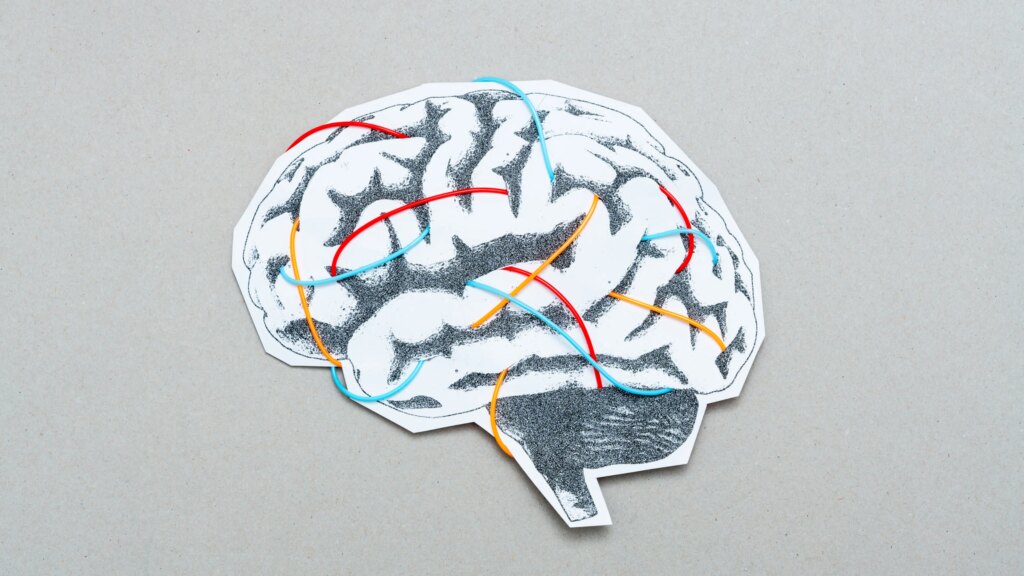
Nestled in the core of the brain is the hippocampus, a little curve of tissue central to memory and learning. It serves as a processing center for our experiences, helping organize information as it comes in. The hippocampus does that when we’re awake—and, a new study suggests, even when we’re unconscious.
The small study, published recently in the journal Nature, drew on data from seven people who had surgery to remove portions of their brains as a treatment for epilepsy. It found surprising evidence that under general anesthesia, the hippocampus is still performing some of the language-processing tasks it does in the conscious brain. When doctors played episodes of a podcast in the operating room, neurons in the hippocampus seemed to be anticipating the next words in a sentence and processing information about parts of speech.
It’s further proof that even fairly complex neural processes are not the same as consciousness.
Are you making memories even when you’re unconscious?
The study was inspired by earlier work on the concept of memory formation during anesthesia, says Dr. Sameer Sheth, a professor of neurosurgery at Baylor College of Medicine and an author of the new paper. There is some evidence that while surgical patients will not remember, on waking, a list of words doctors played for them in the operating room, there might still be some traces left by the experience. “Given a list of words, they’re more likely to pick the ones that were presented to them while asleep, versus not,” Sheth says.
Studies with rats have already demonstrated that neurons in the hippocampus will still respond to sounds played nearby during anesthesia, says Benjamin Hayden, also a professor of neurosurgery at Baylor College of Medicine and one of the paper’s authors. Play a series of tones to an unconscious rat where one sound is different—an “oddball,” as scientists term it—and the hippocampal neurons spike differently, as the brain scrambles to interpret this out-of-the-ordinary sound.
Neurons may also respond to the meaning of words, even under anesthesia
In the new study, the researchers confirmed that hippocampal neurons in the unconscious patients responded to oddballs (as they do in rats). As the recording went on, however, the data started to show a change. Over the course of ten minutes, the neurons responded more to the oddballs, suggesting that some kind of learning process was taking place, even under anesthesia.
“We said, ‘OK, if the brain can do this during anesthesia…let’s play some language. Let’s play some speech,” says Hayden. The surgeons began to play episodes of the Moth Radio Hour, a storytelling podcast.
When they analyzed the neural data afterwards, “we were really surprised,” says Hayden. The neurons in the hippocampus were responding to the spoken language in a way that looked very similar to what the team would have expected from waking humans. The cells were firing in a pattern that suggested they were performing calculations about what kind of word would come next—verb, noun, and so on—which, to the researchers, was a startling degree of complexity.
“The findings are surprising,” says Dr. Kirill Nourski, a professor of neurosurgery at the University of Iowa. The fact that there is still sophisticated processing of sound signals happening under anesthesia in the hippocampus is not something he, or others in the field, would have predicted, he says.
Does that mean we can understand what’s being said around us during surgery?
The paper “gives you a new perspective on how much the brain can process when no conscious awareness is involved,” says Leon Deouell, a professor of neuroscience at the Hebrew University of Jerusalem.
But this doesn’t mean that someone under anesthesia is able to understand what doctors are saying to one another in the OR, says Deouell. Rather, it implies that certain complex processes surrounding language happen unconsciously.
It’s something we should keep in mind as we interact with AI, he says. “There’s something confusing about how we treat language,” says Deouell—as if structured, natural language is a sign of consciousness. “These models speak so well…we think, ‘If they can produce beautiful sentences, they must have understanding.’ But we know that they don’t.”
The post The Brain Processes Language Even Under Anesthesia, a New Study Finds appeared first on TIME.