As summer draws nearer and the temperature creeps up, many kinds of leisure beckon: swinging in a shaded hammock; tending a smoky grill; swimming in cold, clear water on a hot, humid day. None, to our minds, surpasses the pleasure of reading just the right book in just the right spot. And while in just the right mood: Yours might call for an engrossing vacation page-turner, for instance, or a book that teaches you something completely new. You may crave a cult classic, vetted by generations of fans, or perhaps something that will make you lose yourself in your emotions. And because it’s only May, you have plenty of time to start that one great book you’ll be reading all summer long. Below are 25 recommendations to enjoy while the weather is balmy and spirits are high.
Bring a Page-Turner on Vacation
Go Gentle
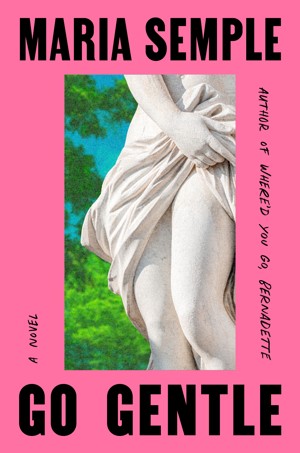
by Maria Semple
Adora Hazzard, Go Gentle’s heroine, lives on the Upper West Side of Manhattan among a carefully selected group of female friends who plan to “grow old in curated company,” the kind of dreamy setup that one character describes irreverently as a coven with a waitlist. But that’s just the prelude to this crackling mystery-romance: Adora is a former TV writer and a professional Stoic philosopher who gets drawn into both spirited art-world intrigue and an amorous entanglement with an enigmatic man named Digby. Semple’s writing is warm and absurdly funny but also occasionally devastating—as when, roughly midway through the book, Adora digresses into recalling her experiences writing for a comedy show in the 1990s. The interlude is a sharp account of gender dynamics in a boys’-club environment. But Go Gentle remains dedicated, like Adora, to positivity and joy, and Semple makes it hard to resist either quality. — Sophie Gilbert
How to End a Love Story
by Yulin Kuang
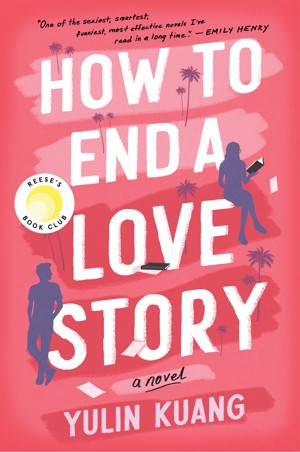
The cover may look like it was colored with Barbie’s nail-polish stash, but Kuang’s debut novel is far from predictable, chipper romance fare. It starts with a tragedy: A high-school girl ends her life by stepping out onto a highway, and the school’s homecoming king, Grant Shepard, is driving the car that hits her. The story begins in earnest years later, when Grant and the girl’s older sister, the dorky Helen Zhang, coincidentally end up in the same TV-writer’s room. They fall in love, of course, but the shadows of Helen’s grief and Grant’s self-loathing loom over every step. Still, Kuang, who has also written for the film adaptations of Emily Henry’s People We Meet on Vacation and Beach Read, knows the hallmarks of romance well. Her book never dips into trauma for shock value alone. Sharply drawn side characters and punchy dialogue imbue the characters’ world with warmth and lightness, and the many sexy moments are tender and, well, sexy. This is ultimately a love story about the challenges of expressing vulnerability after loss, and the possibility of moving forward by confronting the past. — Serena Dai
The Silver Bone
by Andrey Kurkov
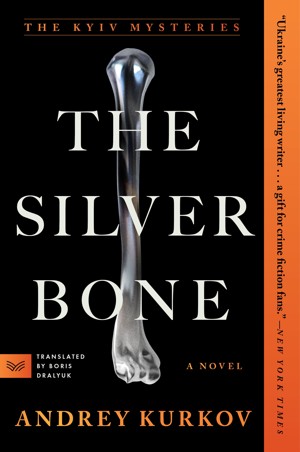
This historical detective novel introduces readers to 1919 Kyiv with a hard-to-forget scene: Cossack bandits lop off our hero’s right ear. Thanks to the anarchic Russian civil war, no one is entirely clear on who really controls the city, and the only constant is the threat of violence. Against this backdrop, the slightly pathetic detective Samson Kolechko stumbles into his new police job armed with a strange superpower: He can hear out of his severed ear. This new ability to eavesdrop on criminal activity helps him investigate his first case, a double murder involving soldiers and a strangely tailored suit. If Nikolai Gogol and Raymond Chandler had collaborated, this might have been the result—absurdist Slavic magical realism grafted onto an entertaining whodunit. Beyond its pleasures as a noir, the chronicle of Kolechko’s fight against nascent Soviet power easily reminds one of present-day Ukraine’s struggle to preserve its dignity in the face of oppressive forces. — Gal Beckerman
Magic’s Pawn
by Mercedes Lackey
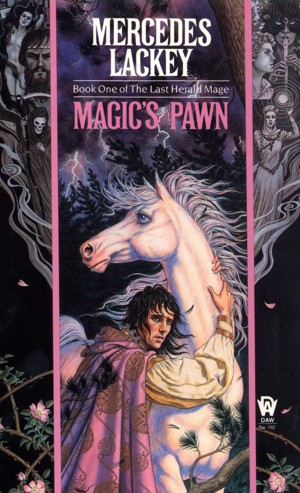
Magic’s Pawn is widely considered one of the best of Lackey’s many novels set in Valdemar, a kingdom where Heralds with magical gifts serve the crown and protect the country. Vanyel Ashkevron is not one of the gifted—not when the book starts, anyway. He doesn’t fit in on his cruel father’s rural estate, so he’s sent away to live in Valdemar’s capital, where Heralds live and train. After he arrives, his life changes dramatically: He realizes he’s gay (this is the rare 1980s fantasy novel with an LGBTQ protagonist), falls in love, and suffers a tremendous loss, which awakens within him a dormant store of Herald magic that he doesn’t know how to control. Lackey’s characters are intricately wrought and deeply human; their emotions propel the book as strongly as any of its many plot twists do. Magic’s Pawn explores the depths of grief and love while offering all the pleasures of the very best fantasy: epic magic, dangerous politics, fated romance, found family, and superintelligent magical-horse companions that can read your mind. What more could you possibly want? Another book, you say? Well, you’re in luck, because this is just the first of an excellent trilogy. — Julie Beck
Reading Lolita in Tehran
by Azar Nafisi
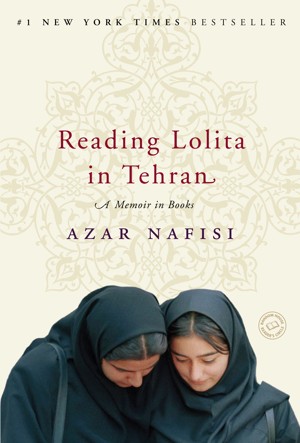
When I first plucked Nafisi’s memoir from a Little Free Library, I was feeling buried by new motherhood and alienated from my intellectual life—perhaps perfectly primed to be riveted by a story of women willing their way to liberation through literature. As this memoir opens, Iran’s morality police stalk the university where Nafisi works, censuring her female students. Exasperated, Nafisi resigns, but she does not give up on teaching. Instead, she invites a select group of girls to meet at her home and discuss the great works that the mullahs have deemed repugnant. As the women pore over these books, they find release in small acts—shaking their hair free of scarves, listening to banned music—as well as in allegories that help them make sense of their world. In Vladimir Nabokov’s scandalous novel, Nafisi sees the predatory narrator Humbert Humbert’s “confiscation of Lolita’s life” as an analog to the oppressions of the real-life men who brutalize, jail, and trap women, denying them their humanity. The clandestine nature of Nafisi’s gatherings evokes an ever-present peril. But most engrossing is Nafisi’s narration of her students’ political and moral awakening, as they discover the passion, humor, and strength required to persevere under totalitarianism. — Jen Balderama
Learn Something Completely New
Inside of a Dog
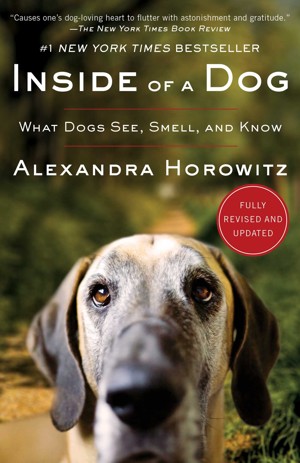
by Alexandra Horowitz
My dog was smarter than me: He was halfway to certification as a service animal when he flunked out of training because he puked too much in cars, which is why I got to take him home. He didn’t boss me around too much. He just had to train me to make my commands clearer and more consistent. Then we got along so well that when a friend recommended this classic work on dog psychology, I didn’t read it. That was a mistake. I wasted a great deal of time not knowing the difference between a Let’s play bark, a Warning! Stranger! bark, and a high-pitched, lonely bark. I hovered unnecessarily over his dog-park romping, oblivious to the subtleties of the canine pas de deux—the fake aggression, the well-timed hop backward. In personable prose free of scientific jargon, Horowitz makes it possible to imagine the richness of an inner life full of information gleaned from attentive ears and hundreds of millions more olfactory receptors than we have. Dogs are miracles in fur, and Inside of a Dog is the gospel. — Judith Shulevitz
Dad Brain
by Darby Saxbe
Saxbe, a clinical psychologist and professor, has been “endlessly curious about how fathers tick” since she was in elementary school, when her parents’ divorce—and equal custody split—turned her detached dad into a terrific parent. Now she’s one of the only scientists in the world who researches the neurological effects of fatherhood. Some of her collaborators have already shown that pregnancy alters a mom’s hormones and brain structure in ways that are good for bonding and child-rearing. Saxbe’s work demonstrates that tending to infants triggers similar neurological changes in other parents—and that the more time they spend on child care, the larger these shifts tend to be. She explains her discoveries in chatty, accessible language, mixing in social science that often contains useful tips; for example, greater paternal involvement at bedtime is correlated with better baby and toddler sleep. (Maybe that’s why my 2-year-old always demands, “Go with Daddy tonight?”) But the most thrilling part of Dad Brain is its overall conclusion: that “great parents are made, not born.” — Lily Meyer
The Zorg
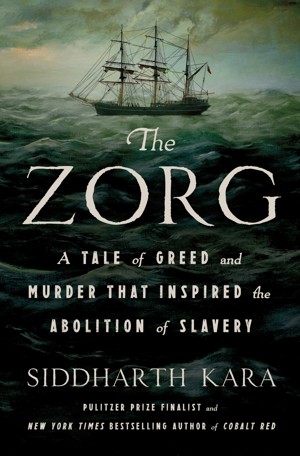
by Siddharth Kara
Kara’s investigation of a 1781 atrocity on a British slave ship begins by correcting the most basic information: Contrary to public records, the ship was not called the Zong. The fateful trip of the Zorg, one of more than 35,000 voyages that carried enslaved Africans to the New World, is remembered for a massacre that was exposed in a public trial. The abysmal conditions of this and every other journey on the Middle Passage stemmed from brutal cost-benefit calculations, which tolerated, say, a 15 percent death rate among the tightly packed humans shipped as cargo. These incentives led the Zorg’s commanders to toss at least 120 captives into the shark-infested Caribbean, likely in a scheme to maximize profit. After the ship’s owner sued for insurance money, the resulting case—hinging on whether a water shortage onboard justified the murders—gave English citizens an idea of what was being done in their name. Through indefatigable research, Kara fixes poorly remembered facts and makes a decent case that the publicity galvanized the movement to abolish British slavery a half century later. The barbarity of the institution, meanwhile, is self-evident—but rarely does an author present its abuses so powerfully and vividly. — Boris Kachka
The War Within a War
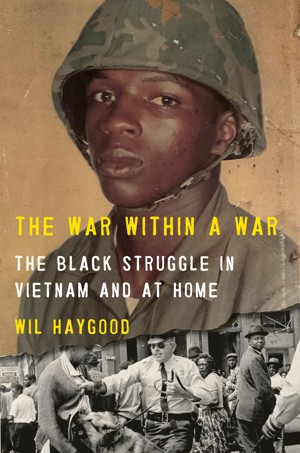
by Wil Haygood
Although I am an avid fan of books about history, I admit that reading even a well-researched, breakthrough work can sometimes feel a bit like eating your vegetables. Not so with Haygood’s The War Within a War, an account of the Black American experience during the Vietnam War, both on the front lines and at home. His telling of the conflict as a companion to the country’s civil-rights era is stocked with a cast whose stories and recollections are compelling in themselves: We meet Elbert Nelson, a trained physician who is drafted out of Meharry Medical School, and Philippa Schuyler, a piano prodigy turned journalist whose mission to save children and combat racism ends in a tragic helicopter crash. Even for the readers who know roughly where the history is going, the context and analysis that Haygood packs in, and the tautness of his prose, offer new depths of understanding. — Vann R. Newkirk II
Silk Roads: A Flavor Odyssey With Recipes From Baku to Beijing
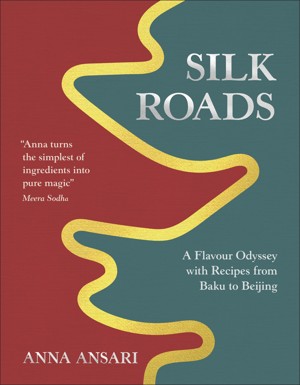
by Anna Ansari
Maybe you love to cook and want a bigger challenge than what is found in The New York Times’ Cooking app, where every night is Wednesday night and all recipes fit on a sheet pan. Or maybe you just like to page through pictures of lush Central Asian spice markets, which is one way I deal with insomnia. In either case, Silk Roads is for you. Its premise—that you are cooking and eating along the legendary trading routes that once linked Europe and East Asia—takes you through dozens of cuisines. Ansari, whose father is Iranian, has childhood memories of many of the dishes and recounts her dad’s; she also did years of research, which she serves up in knowledgeable essays. Given the elaborate literary apparatus, the surprise is that the recipes mostly work, yielding cumin-y plovs with crispy-rice bottoms and rich Uyghur lamb noodles. My husband and I are eager to try the Azeri warm-yogurt soup and watermelon-rind jam. Warning: Ansari’s cooking times can seem a little optimistic, especially when it comes to meat. There is nothing fast about this food. — Judith Shulevitz
Obsess Over a Cult Classic
His Master’s Voice

by Stanisław Lem
What would happen if humanity received a signal from outer space? In science fiction, the answer is usually something spectacularly bad, such as an alien invasion—or, more rarely, spectacularly good, such as a technological quantum leap. But when the scientists in Lem’s strange and thought-provoking novel detect a constantly repeating cosmic message, they’re left to solve a baffling mystery. Reading like a hybrid of Nabokov and Asimov, this book takes the form of a memoir by a mathematician who is recruited for a Manhattan Project–scale effort to decipher the signal. The premise allows Lem, the Polish sci-fi master, to reflect on questions that are just as challenging today as they were when the novel was published, in 1968: Are we alone in the universe? Would we recognize nonhuman minds even if we found them? And could any alien be more dangerous to humanity than we are to ourselves? — Adam Kirsch
The Three Christs of Ypsilanti
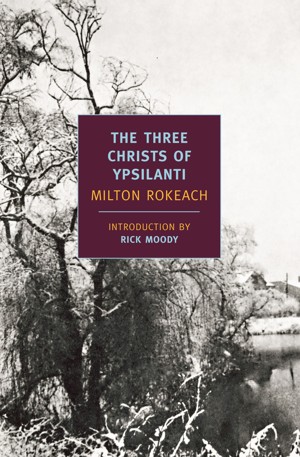
by Milton Rokeach
Lovers of Oliver Sacks will be enthralled by this early example of the literature of psychoanalysis, originally released in 1964. In the book, Rokeach, a social psychologist, describes his efforts to cure three long-term residents at Michigan psychiatric institutions, each of whom thought that he was Jesus Christ, by bringing them together at Ypsilanti State Hospital. Rokeach’s motives in “confronting the three Christs with one another” were undeniably good: He thought that the resultant conflict would help them. Yet he was also, as one of the Christs put it, “using one patient against another, trying to brainwash” them out of ideas that he eventually realized they’d developed “for good reasons,” whether he understood them or not. Over the course of this detailed, empathetic book, Rokeach’s respect for his patients—palpable from the beginning—grows and grows. By the end, he has not only given up the experiment but also come to align himself with its subjects. In a remarkably humble afterword published 17 years later, he writes that he, too, had delusions of grandeur, of which the three Christs healed him: “I was cured,” Rokeach admits, “when I was able to leave them in peace.” — Lily Meyer
Wicked Enchantment
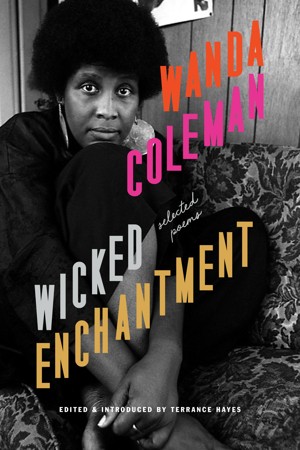
by Wanda Coleman
Coleman has the sterling reputation of being a poet’s poet—admired and imitated by those in the loop—but her status shouldn’t lead you to think that her concerns are narrow or obscure. The poems collected in this posthumous volume are aimed at anyone who has grieved, loved, lusted, worked, or sat down at the end of the day after “carrying groceries home in the rain in shoes / twice resoled and feverish with flu.” Coleman was deeply concerned with contemporary life and frequently inspired by her home in Los Angeles: Turn to her sequence of American sonnets to see how she tailors this renaissance form to fit her “ruined curbless urban psyche”; flip to “The First Day of Spring 1985” or “February 11th 1990” for poems that respond directly to events in apartheid-era South Africa. Some of the works I like best are those that speak to irrevocable losses: of her departed older sister, to whom she writes a sequence of letters, or her son Anthony, who died from AIDS complications. In “Thiefheart,” Coleman makes a song out of her losses and imagines taking the sting from them: “were I the queen of sleight of hand / i’d steal the poison from this muthaland.” — Walt Hunter
The Suicides
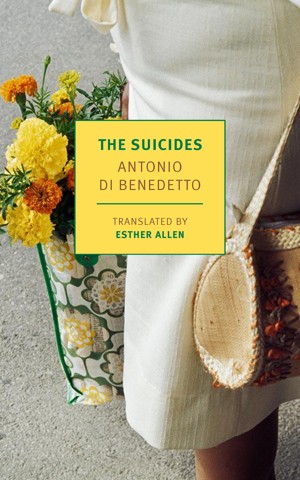
by Antonio Di Benedetto
The plot of Di Benedetto’s 1969 novel sounds like a classic hard-boiled mystery: A reporter attempts to find the connection among three seemingly unrelated suicides. But his slipshod investigation yields no tidy conclusions. This book is preoccupied with self-inquiry; its protagonist takes plenty of procedural detours to cross-examine his fascination with death and his troubled relationships with women. I realize that “moody narrator obsesses over own mortality and the opposite sex” may not seem so original to some people, but the prose here—exacting, unsentimental, and ideas-rich—is worth the dip into familiar waters. Di Benedetto’s writing lingers in the brain; to a receptive reader, it can feel like a secret handshake between dryly mordant minds. Years later, in Roberto Bolaño’s novel The Savage Detectives, the Chilean writer would name an obscure, unforgettable brand of mezcal after The Suicides—the ultimate “if you know, you know” for those familiar with the value of loving a book that nobody else does. — Jeremy Gordon
You Too Can Have a Body Like Mine
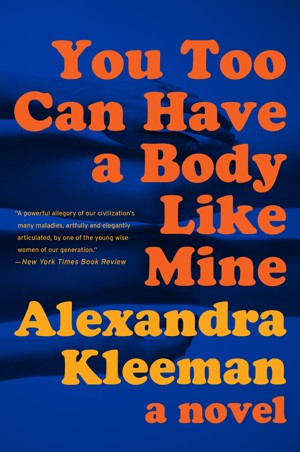
by Alexandra Kleeman
This acid-tongued parable of what consumerism does to us (to our brains, our outsides, our insides) hit a nerve when it was first published, in 2015. Its heightened portrayal of suburbia—big-box stores with constantly shifting layouts, sinister cartoon ads for wholly synthetic confections—wryly captures the fake thrills and gaping disaffection of modern life. The central characters are unnamed (the narrator is merely A, her roommate is B, and her boyfriend is C), and their aimless existence seethes with unease: A is obsessed with an ultra-processed snack called Kandy Kakes; C seems benumbed from too much TV and porn; B mirrors A’s grooming and eating habits and appears to be, slowly, turning herself into A’s doppelgänger. The novel’s main concern, illustrated brilliantly, is the eroding sense of self that occurs in a world that’s becoming more artificial and spiritually hollow by the moment. — Jane Yong Kim
Lose Yourself in Your Feelings
Fat Swim
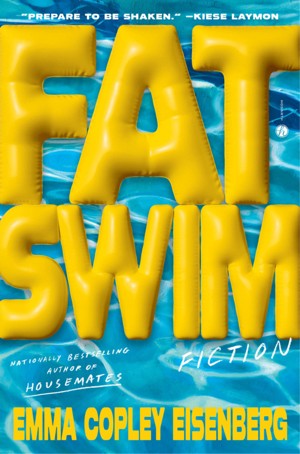
by Emma Copley Eisenberg
In the story that gives this collection its title, 8-year-old Alice watches a band of women gather to swim at a Philadelphia community pool. The bathers, resplendent in colorful swimsuits and fashionable vests, are listening to music and dancing together. And they are fat: “Slight rolls of flesh puff out just below the elastic of their bras and gather on their backs like wings,” she notices. “If they ease themselves in, their breasts are the first to float.” Alice wants to know them, maybe be them, maybe possess them. Mostly she thinks, They are like me. Few other people in this book have such an uncomplicated, straightforward relationship with flesh. But for all of them, physical sensations provoke intense emotions of many kinds, so Eisenberg packs her stories with eating, drinking, sweating, performing, and hooking up. Each of her characters, no matter how alienated or hedonistic, is made to reconsider the ways their body touches the outside world—and they learn to focus less on how that looks and more on how it feels. — Emma Sarappo
Philoctetes

by Sophocles
One of the most moving moments in Sophocles’s Philoctetes—among his last plays, first produced in 409 B.C.E.—happens early in the tragedy. After nine years of seclusion on a deserted island, the titular soldier, destined to help the Greeks secure victory at Troy, meets a group of his fellow countrymen. But the first thing Philoctetes asks them for isn’t food or drink or shelter or rescue. He asks them for words. “May I hear your voice?” he pleads. “Take pity on me; speak to me, if indeed you come as friends.” Like all encounters with antiquity, reading Philoctetes can feel familiar and foreign at once. War is ubiquitous, honor imperative. Yet the play also meditates on the relatable experience of loneliness and makes tangible the aspects of company that we long for in its absence: the timbre of a voice, the recognition of a common tongue. For Philoctetes, storytelling fosters a bond that can unveil true friends. — Luis Parrales
In the Body of the World
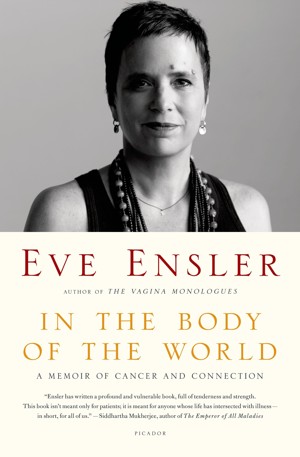
by V (formerly Eve Ensler)
As a child, V evacuated her body, she writes; after her father sexually abused her, she lost the “reference point” for her own flesh. This led her to ask women about how they felt inside their own skin—work that culminated in the play she’s best known for, The Vagina Monologues. In this book, V returns to the subject of her body while writing in moving detail about receiving a late-stage-uterine-cancer diagnosis in her 50s. She zooms in to examine the infections, surgeries, and leaks that come with her treatment plan, then toggles to a broader view, reflecting on what she describes as our carcinogenic culture of “formaldehydeasbestospesticideshairdyecigarettescellphonesnow.” In its rousing final chapters, the book becomes a quasi-manifesto about the human species’ self-destructive violence that urges readers to “step off the wheel of winning and losing.” This memoir is written with the clarity and compassion won by touching death’s door and turning back. — Valerie Trapp
Bliss

by Katherine Mansfield
When Virginia Woolf had dinner with the New Zealand–born writer Mansfield in 1917, the Bloomsbury doyenne pronounced her guest “intelligent and inscrutable.” This would also neatly describe Mansfield’s addictive 1920 collection, originally released as Bliss and Other Stories, which is filled with startlingly realistic descriptions and populated by elusive, near-impenetrable characters. I wouldn’t describe these bourgeois family dramas as page-turners, but the tales hide a little pulp pleasure within their high art, as in the title story’s perfectly devastating account of a marital affair, or the late reveal of a shocking flirtation in “Prelude.” The stories take unexpected turns because their characters, like us, have painfully incomplete views of their own world—yet they all exhibit the exquisite, thwarted desire to accurately describe what they cannot understand. — Walt Hunter
No God but Us
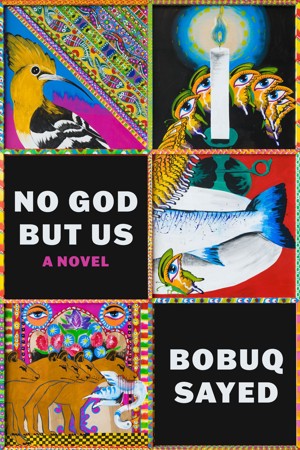
by Bobuq Sayed
After Delbar, a luckless college graduate and wannabe drag queen, is outed in front of his mother and every Afghan auntie he knows, he makes a split-second decision to leave his life in America behind. An ocean away in Istanbul, he plans mostly to lick his wounds and sulk, but his aunt Yosra insists that he do something useful. Volunteering with an aid group for queer and transgender refugees, Delbar is naive and out of his element; he puts his foot in his mouth in ways both funny and frustrating. Then he meets another gay Afghan, Mansur. Delbar is immediately drawn to him, in part because of their shared background. But Mansur was born in (and driven out of) Afghanistan, not America; he and the other refugees dream of the kind of stability—and the kind of passport—that Delbar takes for granted. As Delbar gets to know Mansur and his boyfriend better, the reader comes to understand Mansur’s caution in opening his heart; when it cracks wide, the emotional effect is stunning. No life is ever perfect, the book acknowledges, but much can be made from what we already have. — Emma Sarappo
Start the Book You’ll Read All Summer
The Transit of Venus
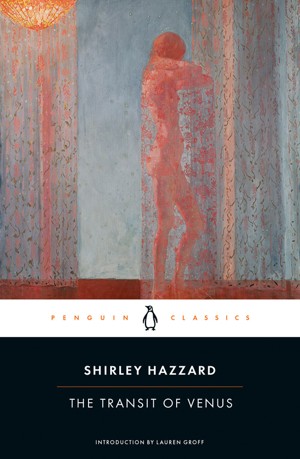
by Shirley Hazzard
My first thought when I started Hazzard’s 1980 novel was: I am too brain rotted for this. It follows two sisters, Caro and Grace, as well as Caro’s friend and romantic pursuer, Ted Tice, through decades of marriages, affairs, and misunderstandings. But Hazzard’s prose demands that you move through her paragraphs slowly, like a traveler with one hand on the wall of a labyrinth, following a winding and intricate path to some essential truth. Key plot details are revealed in clauses so brief that a TikTok-addled mind could miss them; the end of the book hinges on the reader remembering a single sentence many chapters earlier. But I hear people are friction-maxxing now, and this is a friction-maxxing sort of book. It helped me think in a slower, deeper register, and it repaid patience with revelations. “What an atrocious sustained effort is required, I find, to learn or do anything thoroughly—especially if it’s what you love,” Hazzard writes in this book, which is itself a reward for such loving effort. — Julie Beck
The Complex
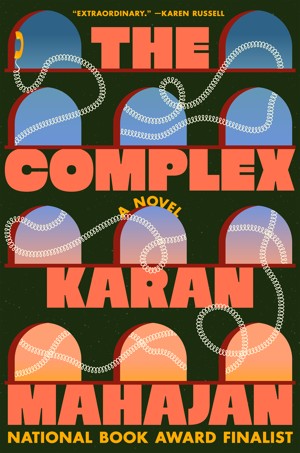
by Karan Mahajan
As the axiom goes, the Chopras are unhappy in their own way. In Mahajan’s third novel, the many children and grandchildren of S. P. Chopra, a (fictional) forefather of the Indian state, live crammed into two multistory buildings in suburban Delhi. All of them exist under the patriarch’s long, stifling shadow, but none embodies its atmosphere of moral decay more than Laxman, a brutish opportunist and budding politician whom one relative calls “the worst person in the family.” Mahajan’s homage to the Russian masters extends beyond the family tree that he includes; he finely depicts tragic flaws and doomed relationships while espousing the occasional aphorism—as when a niece wonders why “power accrued to the person with the most energy, regardless of whether that energy was good or evil.” Yet this update of Tolstoy and Chekhov is firmly rooted in India, where family obligations and religious divisions set the novel’s course as fatefully as S.P.’s cold paternalism does. Mahajan packs 19th-century pleasures into a very contemporary tale about the rise of ethno-nationalism and the insidious damage of corruption, and includes one enduring truth: A gun introduced in the first act will eventually come in handy. — Boris Kachka
London Falling
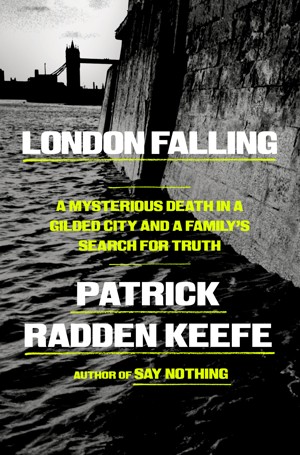
by Patrick Radden Keefe
I admit, the story of Rachelle and Matthew Brettler’s search to uncover the truth about their son Zac’s mysterious death may not take “all summer” to finish. As the president of my local PRK fan club, I find his latest to be the most propulsive, quick-reading book that he has written; you might find yourself willing to forego scrolling, eating, or sleeping to race to its end. With zero distractions, a devoted reader could finish in a day or two. But London Falling is a book that rewards steady attention and sustained consideration. For any parent, including myself, Zac’s sudden adolescent transformation into a fast-talking, wealth-chasing bro—and the Brettlers’ struggle to come to grips with those rapid changes—will be unsettlingly relevant. The alternately seedy and posh vistas of the United Kingdom’s capital, the slow building of suspense, and the weaving together of coming-of-age, post-Soviet, and true-crime storylines give the book a novelistic sense. In the Brettlers, who grow steeled and skeptical as a result of their dogged inquiry, Keefe offers us two protagonists whose brush with the criminal underworld feels like a parable for our age of corruption. — Vann R. Newkirk II
The Circle
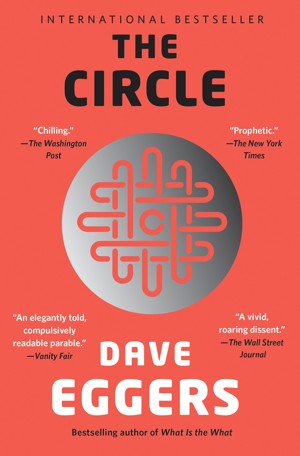
by Dave Eggers
I sense that Eggers’s 2013 novel, about an altruistic-seeming social-media company that turns out to be profoundly evil, might hit differently in 2026 than it did on publication. Over more than 500 pages, The Circle follows an idealistic young graduate named Mae who takes a job at a technology behemoth that wants to make the whole world “transparent,” encouraging the total eradication of privacy. Back in the 2010s, Eggers was criticized for acknowledging how little practical research he’d done on the tech world, but he seems to have anticipated something more crucial—namely the moral rot among the boy-kings of the internet, and how quickly their utopian promises would dissolve when they were granted unprecedented power. What’s most brought The Circle to mind over the past few months is the rise of wearable AI-powered devices that turn daily life into reams of data for their parent companies to harvest—a futuristic horror right out of Eggers’s imagination. — Sophie Gilbert
Fear City: New York’s Fiscal Crisis and the Rise of Austerity Politics
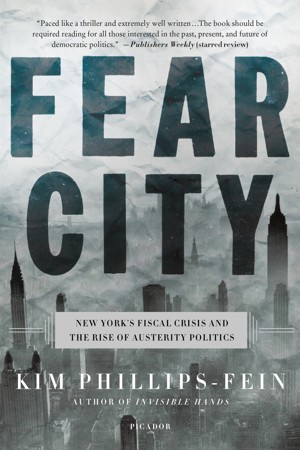
by Kim Phillips-Fein
The West Side elevated highway was a miracle: lanes snaking down the edge of Manhattan, a symbol of New Deal–era infrastructure investment in the United States’ biggest city. In 1973, it collapsed. The cause was not a natural disaster or an act of God but simple rust and erosion, unaddressed by a city government that was itself close to disaster. The resulting hole covered 2,000 square feet. New York would soon come close to bankruptcy, embrace austerity, dismantle social programs, and enter an era of inequality from which Phillips-Fein, an NYU historian, argues it never emerged. Crises are clarifying events, and New York’s fiscal emergency forced questions about what cities are for and what they owe their residents. Phillips-Fein is deeply interested in these questions, but the book isn’t a polemic so much as a coroner’s report—a careful, almost forensic work of historical scholarship that earned her a Pulitzer Prize nomination in 2018. Fear City is not an incredibly long book, but it is a dense one, thick with proper nouns and big ideas, full of prospective Wikipedia rabbit holes and eminently ponderable ethical riddles. — Ellen Cushing
The post The 2026 Summer Reading Guide appeared first on The Atlantic.