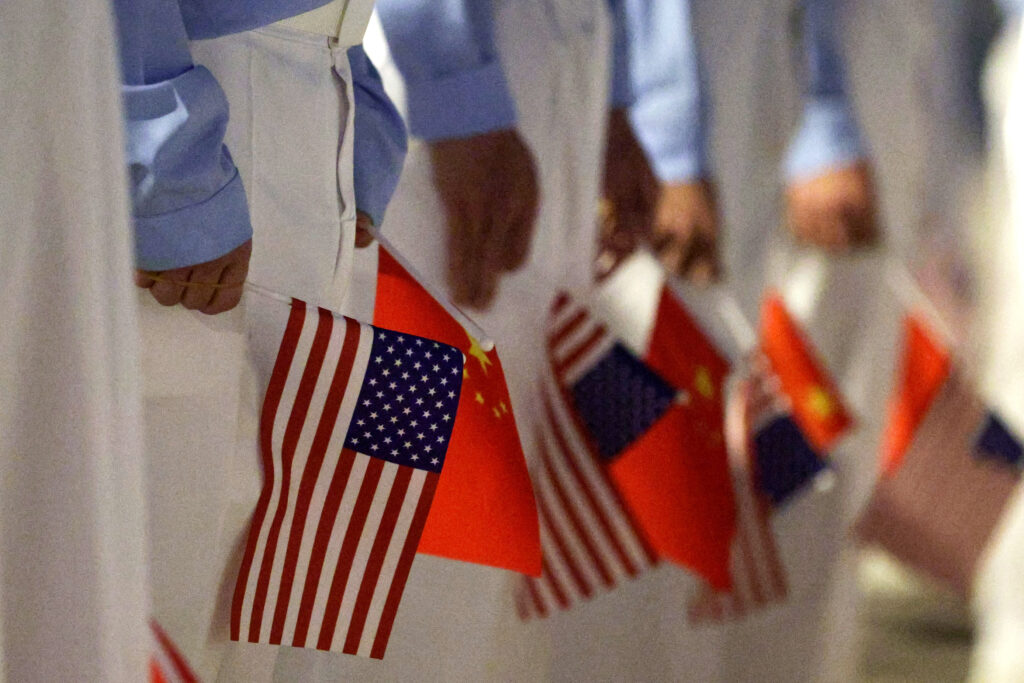
A confidential U.S. intelligence analysis details how China is exploiting the war in Iran to maximize its advantage over the United States across military, economic, diplomatic and other fields, said two U.S. officials who have read the report.
The assessment, the officials said, was produced this week for the chairman of the Joint Chiefs of Staff, Gen. Dan Caine, and has raised alarm within the Pentagon about the geopolitical costs of Washington’s standoff with Tehran as President Donald Trump enters high-stakes talks with Chinese President Xi Jinping in Beijing.
The report, produced by the Joint Staff’s intelligence directorate, uses what’s known as a “DIME” framework — a reference to four key instruments of state power — to assess China’s response to the Iran conflict: diplomatic, informational, military and economic.
Officials talked about the finding, which has not previously been reported, on the condition of anonymity to discuss U.S. intelligence matters.
Since the U.S. and Israel initiated the Iran war on Feb. 28, China has sold weapons to Persian Gulf allies of the U.S. as they struggled to defend their military bases and oil infrastructure from Iranian missile and drone attacks, the report says.
Beijing has also assisted countries around the world struggling to meet their energy needs after the U.S.-Israeli attacks prompted Iran to close the Strait of Hormuz, a corridor for the transport of one-fifth of the world’s oil and gas.
The war has also drained the U.S. of massive stocks of munitions that would be critical in a potential standoff with China over the fate of Taiwan, the report notes. The Iran conflict, which has resulted in the damage or destruction of U.S. military hardware and facilities throughout the Middle East, has allowed Beijing to observe how the U.S. fights wars and learn how to plan its own future operations.
The report notes that Beijing has incorporated popular criticisms of the war into its public messaging, labeling the conflict “illegal.” China has long sought to undermine the image of the U.S. as a responsible steward of the rules-based international order, and it views the Iran conflict as emblematic of Washington’s cavalier approach to military hostilities.
When asked about the finding, the Pentagon’s chief spokesman, Sean Parnell, said, “Assertions claiming the global balance of power have shifted towards any nation other than the United States of America are fundamentally false.”
White House spokeswoman Olivia Wales said the U.S. “decimated the Iranian regime’s military capabilities in 38 short days and is now strangling what’s left of their economy with one of the most successful naval blockades in history.”
“The United States military is the greatest fighting force on the globe with unmatched power on display for the entire world to see,” she added.
The Chinese Embassy in Washington did not respond to a request for comment.
Experts said the finding provides new insights on China’s reaction to the war, such as its provision of weapons to U.S. allies, while reinforcing the growing consensus that the conflict is tilting the balance of power in Beijing’s favor.
“On balance, the war in Iran is massively improving China’s geopolitical position,” said Jacob Stokes, a senior fellow at the Center for a New American Security.
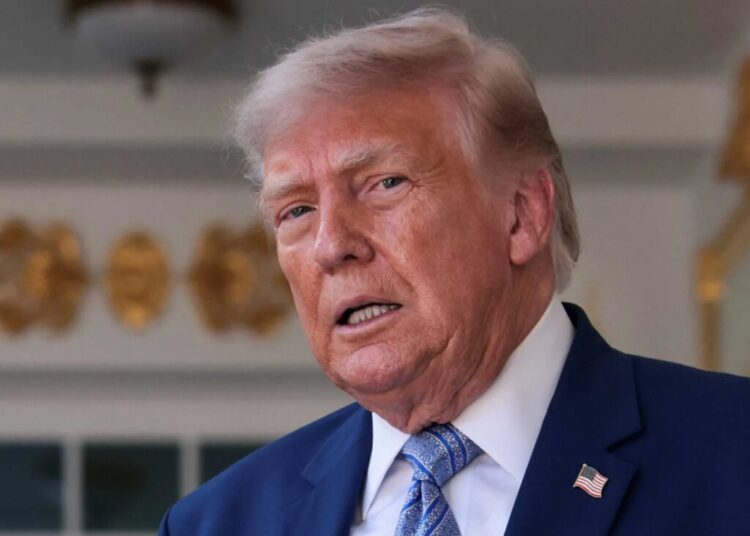
The timing of the report is particularly sensitive as Trump begins multiple days of meetings in Beijing aimed at rebalancing the relationship between the world’s two largest economies.
The summit, which was postponed in March because of the Iran war, comes as Trump’s envoys struggle to find a resolution that will reopen the strait and resolve U.S. concerns about Iran’s nuclear program.
Trump’s standing, domestically and worldwide, has been weakened because of the public’s dissatisfaction with the conflict and the significant damage it has done to the global economy.
Trump has rejected the idea that he is under pressure or needs Beijing’s help to bring the war to an end. “I don’t think we need any help with Iran. We’ll win it one way or the other, peacefully or otherwise,” he told reporters before leaving for Beijing.
Trump has said the closure of the strait is a major problem for China given its reliance on Gulf oil, but the intelligence report notes that China has weathered the shortages because of its development of renewable energy and its vast oil reserves.
“China is the second-most-insulated country in the world to the energy crisis, after only the United States,” said Ryan Hass, a China expert at the Brookings Institution.
That is allowing Beijing to win friends abroad, Hass said.
“China is presenting itself as a solutions provider in providing access to jet fuel and other products that are in short supply as a bridge for the short term,” he said.
Since the war started, Beijing has reached out to Thailand, Australia, the Philippines and other countries to help them manage their energy needs and is offering access to Chinese-produced green energy technology as a longer-term solution.
“This is not altruism,” Hass said. “It is Beijing seizing on an opportunity to drive wedges between America and its traditional partners.”
During past energy crises, Washington has dispatched officials around the world and convened emergency meetings to address the shortage. But the Trump administration has not shown interest in such an effort.
“This has created an opening that Beijing is working to fill,” Hass said.
Munition shortages are another major dynamic of the war. The U.S. has expended huge numbers of missiles, bombs and interceptors, many of which are expensive and require a long time to produce, to defend Israel and Gulf allies from Iranian counterattacks and destroy Tehran’s arsenal.
As The Washington Post and other media outlets have reported previously, there has been a particularly notable impact on the limited supplies of Patriot air defense weapons and Terminal High Altitude Area Defense (THAAD) interceptors, as well as Tomahawk cruise missiles.
The situation has left Taiwan, Japan, South Korea and other allies worried about U.S. military readiness and Washington’s ability to intervene in the event of a Chinese attack.
“This prompts questions about the U.S. defense industrial base’s ability to rapidly restock munitions and adds to already existing concerns about slow deliveries,” Stokes said.
It also gives Beijing-friendly voices in Taiwan a reason to “slow or block funding for Taiwan’s military buildup,” said Stokes. Taiwan’s backers view the buildup as critical for deterring Beijing.
The war has also allowed Beijing to claim moral high ground against Washington and distract from its own considerable human rights abuses and coercive behavior in Asia.
“China has an opening to portray the United States as an aggressive, unilateralist power in decline because Washington cannot stop itself from getting embroiled in bloody and costly Middle East wars,” Stokes said.
The post China gains major edge on U.S. amid Iran war, intelligence report finds appeared first on Washington Post.