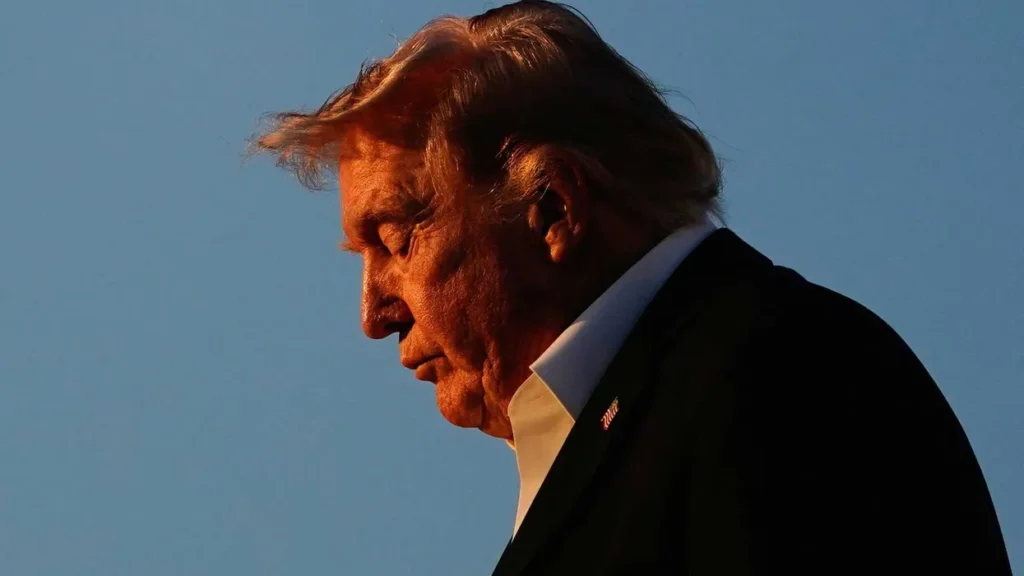
Donald Trump prepared for his summit meeting in Beijing by catching up on his sleep on Monday behind the Resolute Desk, since he spends his nights frantically posting on Truth Social.
And while many Americans have become numb to Trump’s online behavior, what must China’s President Xi Jinping think as he watches the president of the United States spiral publiclyin real time?
Between 10:14 p.m. Monday and just after 1:12 a.m. Tuesday morning, Trump posted 55 times, roughly once every three minutes, in a frenzy that included accusing Barack Obama of plotting a coup, calling him “the most DEMONIC force in American politics,” and sharing calls for the arrest of Obama, Hillary Clinton, former FBI Director James Comey, and special prosecutor Jack Smith.
Xi has also undoubtedly studied all of Trump’s previous overnight posting binges, including that horrific AI-generated image portraying Trump as Jesus Christ. It bears repeating, what must the intellectual and shrewd Xi think about that depiction?
The pattern is impossible to miss. A Daily Beast analysis found that during a recent month marked by tensions with Iran and rising gas prices, Trump managed at least eight hours of sleep on only five nights.
Meanwhile, Xi sleeps soundly. He does not personally use social media. He has no X account. His communications are filtered through state mediaand tightly controlled government messaging.
If you want to understand the difference between Trump and Xi, and why Beijing believes the balance of power is shifting, start there.
That contrast explains nearly everything about the summit this week. Trump arrived badly needing a foreign policy victory while facing domestic dissatisfaction over inflation, rising energy costs, and an increasingly unpopular conflict with Iran.
He also badly needs a good night’s sleep. He is no doubt jet lagged. And Xi will surely do his best to wear Trump down.
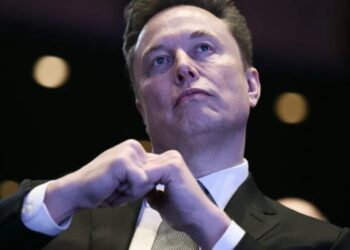
Trump brought a delegation of billionaire CEOs, including Elon Musk, Tim Cook, Larry Fink, and Kelly Ortberg, as though corporate sycophants can compensate for Trump’s weaknesses.
Xi is not impressed by Trump’s entourage, because Xi has his own billionaire set. He is only impressed by how much leverage he has over Trump.
Since the leaders’ last meeting, the center of gravity in U.S.-China relations has shifted away from tariffs toward something far more consequential: China’s almost total controlover rare earth minerals and magnet supply chains essential to modern military and industrial production.
When Beijing threatened to restrict those exports last year, Trump backed down. Xi won. Again.
From Beijing’s perspective, Trump has been a gift. His decisions have handed China advantages it could scarcely have imagined a decade ago.
As is well known by now, Trump scrapped Biden-era clean energy subsidies, allowing China to widen its technological lead. He imposed tariffs on U.S. allies, including Vietnam and India, pushing them closer to Beijing.
He repeatedly bashes NATO while lavishing praise toward Russia and China. Vladimir Putin and Xi must have quite a time laughing and trading stories about Trump’s stupidity.
And now with this quagmire in Iran, which risks draining American military resources for years, Xi is fully aware of yet another American vulnerability.
Xi has spent years telling Communist Party officials that “the East is rising and the West is declining.” Trump’s presidency has only reinforced that belief.
Now add the image of an American president visibly struggling to stay awake in public while repeatedly flinging nonsense onTruth Social in the middle of the night.
Xi sees a sleep-deprived president posting conspiracy theories late into the night, then struggling to stay alert during daytime events right before he boarded Air Force One Tuesday for the meeting with Xi.
Do you think this is how Xi prepared for his summit with Trump?
Chinese intelligence services do not ignore these details. They catalogue them. And instead of one-page memos that Trump only reads, officials provide Xi with all the details because he’s smart enough to digest the dirt on Donald.
Xi’s goal at this summit is not necessarily to strike a historic agreement. It is to reinforce Beijing’s narrative that China represents stability while the United States projects chaos. Trump will no doubt be busy posting about the “love” between him and Xi.
As for Xi, he will roll his eyes while plotting how to keep rolling over Trump.
That contrast will only gain traction worldwide. It will strengthen Xi’s reputation as a disciplined statesman standing opposite an erratic America.
Beijing’s strategy is simple: avoid major concessions, preserve stability, and buy time to strengthen China’s economy and supply chains while reducing dependence on the United States.
Back home, most Americans are focused on inflation, immigration raids, political warfare, redistricting, gas prices, and the midterm election.
But while America looks inward, the larger strategic contest shaping the global order is unfolding in Beijing between a Chinese leader who thinks in decades and an American president eager to wail about his supposed triumphs on Truth Social.
Chinese officials increasingly describe the United States as an exhausted superpowerweakened by debt, polarization, fractured alliances, and endless military entanglements.
Xi will smile for the cameras and offer symbolic agreements while carefully observing the man seated, predictably on the edge of his seat, across from him.
When the summit ends, Xi will return to the long-term project he has pursued for years, positioning China to replace the United States as the world’s dominant power.
And Trump will go back to sleepless nights and erratic outbursts on Truth Social.
The post Xi knows something about Trump most Americans don’t — and he smells blood in the water appeared first on Raw Story.