Subscribe here: Apple Podcasts | Spotify | YouTube
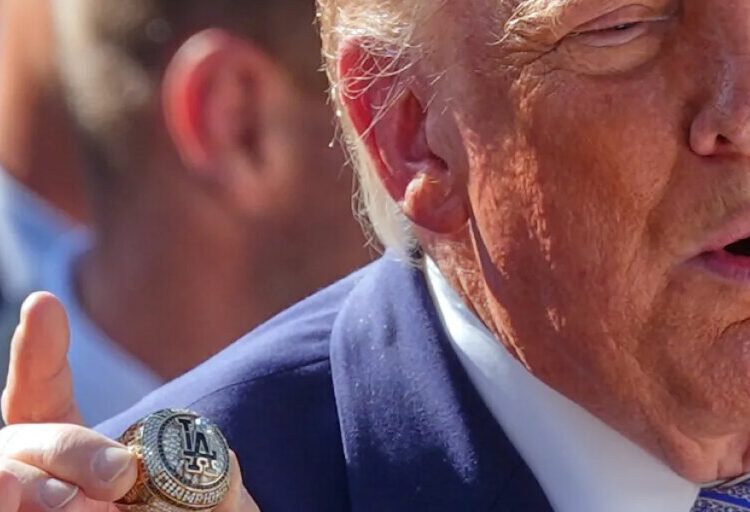
In this episode of The David Frum Show, The Atlantic’s David Frum opens with his reaction to recent reporting surrounding the Trump family’s “patriotic,” Trump-branded cellphones. David explains how this is yet another instance of the most powerful sowing doubt about the fairness of American business and destroying confidence in the ideals of American enterprise.
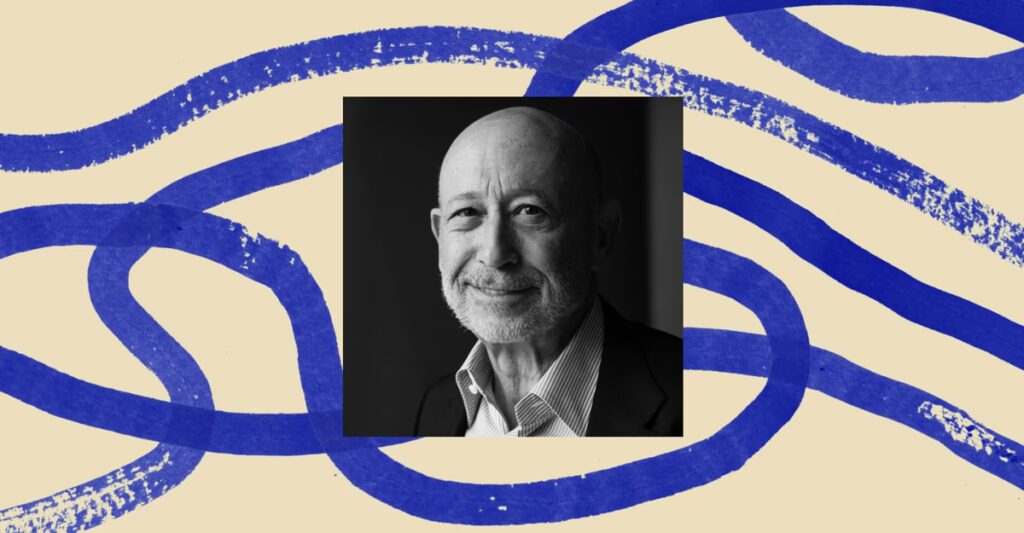
Then, David is joined by Lloyd Blankfein, a former chairman and CEO of Goldman Sachs, for a wide-ranging conversation about the current state of the American economy. They discuss Blankfein’s new memoir, Streetwise; the expanding American debt; the American people’s faith in the economy; and the challenges that lie ahead.
The following is a transcript of the episode:
David Frum: Hello, and welcome to The David Frum Show. My guest this week will be Lloyd Blankfein, the former CEO of Goldman Sachs. We, as an experiment, recorded the program face-to-face in New York City, and I’m speaking to you, as you will see, not from my usual set, but from The Atlantic offices in New York City.
Because we will be discussing at some length Lloyd Blankfein’s memoir, Streetwise, there will be no other book segment this week. Instead, I’ll open with some preliminary thoughts about American business and American government as it relates to the conversation I had with Lloyd Blankfein.
Last year, the Trump Organization licensed a Florida company to sell a Trump-branded mobile phone. The promised phone would be encased in gold and carry an American flag on the back. The sellers advertised that the phone would be proudly made in the United States of America, a patriotic alternative to Apple phones and Samsung phones. Some 590,000 [President] Trump believers are reported to have paid $100 each to secure their Trump phones, according to the International Business Times.
Things rapidly went wrong. The phone delivery date was pushed back and pushed back and pushed back again, from the original late summer 2025 to December 2025, then to 2026. The “Made in U.S.A.” commitment vanished from company promotional materials. One reporter from 404 Media noticed recurring charges from the company on his credit-card statements. In April 2026, the Trump phone company updated its terms and conditions: The $100 deposit was now redefined as a “conditional opportunity,” meaning not a binding sales contract. Fifty-nine million dollars was collected from trusting Trump supporters. Will they ever receive anything in return? Will deposits be refunded, if not? Will the Trump Organization retain its licensing fee?
These kinds of events raise doubts about American business. And we have seen so many of those doubts raised through the Trump years by people around, near, and including the president of the United States himself: crypto schemes, the ballroom, the reflecting pool, so many. And all of this [feeds] into a moment of doubt about the worth and value of what American business does.
Now, I need to make clear here, I’m a very old-fashioned [President Ronald] Reagan–[former Senator Mitt] Romney Republican who believes in the value of what businesspeople produce. Most people in business are seeking to meet the needs and wants of their customers, and are looking to benefit themselves by benefiting others and to get rich in the way that American business leaders have so often gotten rich: by giving people what they want, cheaper, better than they had it before. Socialism, in my opinion, means poverty and oppression. The reason socialists in politics so often have to insert the adjective democratic before the noun socialism is because they know well that socialism, as it has really been practiced in the real world, socialism just as such means tyranny and oppression and worse.
I am on, in this regard, completely on the side of the business leaders like those we’ll be hearing from today. But there is no mistaking that the pessimism and discontent out there in the world are bringing into question these values that I share with America’s business leaders, and that these feelings, if they are to be prevented from doing real harm to the American political economy, these feelings need to be recognized, acknowledged, and in some way redressed, either by timely action against those who in some way take advantage of customers, or by sharing benefits more broadly through the American spectrum of incomes and opportunities so that all people feel that it doesn’t matter what your neighbor has—what you have is enough. Your health care is secure; your opportunities to rise according to your talents and your efforts, those are open to you; and a better life awaits for your children and grandchildren.
One of the places where the question of capitalism, American capitalism, has become more intense is with the accumulation of public debt. Now, again, I’ll declare my view here: I’m with Alexander Hamilton, that under the right conditions, a public debt is a public blessing. Public debt creates safe assets that can be used to back all kinds of enterprises. If you’ve ever bought a life-insurance policy, you know you pay in your money at regular intervals, expecting that your heirs, your loved ones, will at some point in the future get a benefit from the money you have paid in. You need to know that the people who are taking your money have a safe place to store and increase the value of the premiums you pay. And the foundation of any such scheme, and many other schemes, to move economic activity from the present into the future, to offer the trust of the future to the activity of the present, is through abundant supplies of safe assets, of which public debt—American public debt above all—is the foundation.
So a public debt, under the right conditions, a public blessing. But under the wrong conditions, the public debt ceases to be a safe asset. If there’s so much public debt that people begin to question whether it can ever be repaid, or at least repaid in noninflated dollars, then the public debt becomes a public curse.
Now, under the Trump administration, we have seen an extraordinary accumulation of public debt. And this is not like the last two bursts of public-debt increase. There was a big burst of public debt during the financial crisis of 2008, 2009. Well, no surprise that in the middle of a terrible recession, government revenues go down, government spending goes up, and the government borrows. That’s normal. And nor is it a shock that during a terrible pandemic like that of 2020, again, government revenues collapse; government expenditures rise; there’s a big increase in the public debt. But in times of reasonable prosperity, like those which prevailed from the end of the financial crisis in 2010-ish to the pandemic and that have prevailed since the end of the pandemic, that’s a time to reduce the burden of public debt and stabilize the public finances so that the value of the currency in the future will be protected.
Instead, the Trump administration has been running deficits of nearly $2 trillion a year, and rising, in times of reasonable prosperity because they don’t tax properly and because they spend recklessly—in good times. So that became one of the foundations of my conversation with Lloyd Blankfein, and that is the reason why it was such a first question that I asked: How does a stable commercial-enterprise society maintain the trust of its people if it cannot bring its public expenditures into some kind of balance with its public revenues? From that springs inflation. From inflation springs a sense of rip-off and cheat and uncertainty that demoralizes everyone, and especially the young, who look at a longer-term future where they say, “How do I buy a house? How do I form a family? How do I rely on anything if even the money itself can’t be trusted?”
There are other instances too where we discussed how it is that an enterprise society that has done so well by so many people, but that is now in so much question in a way that threatens to discredit the traditional big parties, each of which is committed in its own way to the defense of the American free-enterprise system, how do you sustain that kind of public confidence if so many people think that the benefits accrue only to a few? They are wrong in that belief; the benefits accrue broadly. But beliefs don’t have to be true to motivate action. False beliefs can be as destructive as true beliefs. False beliefs can be more destructive than true beliefs. If enough people believe they’re being ripped off, the consequences are just the same as if they’re being ripped off in reality.
So those are the things I wanted to discuss with one of the most visible and formidable representatives of American financial capitalism. You’ll decide for yourself how well I did. And now my discussion with Lloyd Blankfein.
[Music]
Frum: Lloyd Craig Blankfein headed the investment bank Goldman Sachs from 2006 until the end of 2018. Blankfein led Goldman through the financial crisis of 2008, 2009, when Goldman received $10 billion from the United States Treasury’s TARP bailout program. Goldman repaid the $10 billion just eight months later, returning $1.41 billion in profit to taxpayers.
Blankfein was born and raised in the public-housing projects of East New York, Brooklyn. His father worked as a postal clerk and his mother in a department store. He got his first chance when accepted at Harvard at age 16. He is also a graduate of the Harvard Law School. In 2026, Blankfein published his memoir, Streetwise: Getting to and Through Goldman Sachs, which became a New York Times best seller. And I’m very grateful he joins me in person today—this is The David Frum Show’s first in-person conversation, so.
Lloyd Blankfein: I know if I was gonna show someone on TV live, I would pick me. Thank you very much, David.
Frum: (Laughs.) There’s a glow, an inner beauty.
Blankfein: (Laughs.) Yes, normally, somebody would say I had a face for radio and not necessarily live video, but I’m happy to be here.
Frum: Well, it’s a democratic medium. All are welcome.
Blankfein: Yeah, that’s small-d democratic, I assume.
Frum: (Laughs.) So let me start with some general observations about the state of the American economy as we speak in late spring, heading towards summer 2026. It would seem that the United States is doing everything wrong. Public debt is crazy. We have tariffs that come and go like the Hokey Pokey—you put your left foot in; you take your left foot out. Government is acting in arbitrary and capricious ways. The United States is at war in the Persian Gulf. Oil shipments are interrupted, and a big chunk of oil that the world relied on is missing from world markets. Prices are rising. And yet job reports aren’t bad. Wall Street seems happy. Was everybody wrong about everything we thought we knew?
Blankfein: I’m not sure we’re doing everything wrong. And also, let me just start with, the basic system of ours is right at the core, is correct at the core. And we have a system where we don’t have centralized planning, and I know we don’t generally have state capitalism, although I think, based upon some of what I’ve read of your writings, maybe in some way we’re veering towards it, at least the incremental steps, because when the government takes little pieces of companies, maybe it sort of feels like that, but it’s really not like that. Millions of decision makers at the coalface. And also a system that, if it isn’t better at identifying the best opportunities, it’s the best and most ruthless at getting rid of bad decisions that have been made.
Now, that’s the operating system. If we’re looking at the software part of it, like, “Where are we today?,” there’s a lot of very big positives to the system, where we’d like growth to be a little higher, but it’s pretty good. We’d like inflation a little lower, but it’s certainly not off the rails. Those things are generally good.
And into this generally very good mix, we have the stimulus of the bill. Part of that bill is giving people greater tax—
Frum: The big Republican fiscal bill of last year.
Blankfein: Yes, exactly. People are getting more money back from the government because of their overpayments. You have the hyper-scalers collectively investing in research—countries don’t do this—collectively in research close to three-quarters of a trillion dollars, all of which is stimulative for the economy. Now, it may beg the question of how much of this spending will have to be written off because it’s in the wrong direction; that’s still an open question that people are debating now. But nevertheless, the stimulus is there.
So you could find things wrong, but I will tell you, certainly in the short term and in now, there’s a lot of stimulus going into an economy that’s pretty good. And by the way, you can’t really talk about the good economy without acknowledging the K-ness of it—K has a leg going up and a leg going down. Because I’d say the economic system has done a very, very good job of creating the wealth, and maybe you could debate whether it’s done a very good job at distributing it, because part of the polarization that we see in society writ large is the polarization in the outcomes of the economy because you have people with assets and people who have positions in the stock market are getting richer because of the inflating of those asset prices, and if you don’t have asset prices, you’re not getting richer and you’re contending with the accumulation of prior inflation. So if you say the economy’s going really, really well, you have to take into account that a lot of people listening may not think it’s going so well, because it’s not going well for them.
Frum: Well, you got your start in finance as a trader in physical metals.
Blankfein: Yes.
Frum: On the phones all the time, as you describe. Right now your fellow traders seem to be shrugging off what looks like a crisis in the oil market. There’s a lot of oil missing that was there just a few weeks ago. And the stock market—and to a lesser degree, the bond market—they seem to be saying, “We don’t miss it.”
Blankfein: I wouldn’t say “shrug off,” or don’t miss it. I would say that part of it is the effect of the war on energy and other things too, like fertilizer, other things that we’ve come to rely on that come through here, are so bad in a lot of ways that I think the market is assuming it can’t last for a long time and therefore it won’t last for a long time, that something will be resolved. It may be resolved the way one would like it resolved—in other words, a capitulation by Iran, where they’ll throw in—or it may be resolved because somebody decides to blink on our side. But in other words—
Frum: So wait, this is new information—so are you telling people in business that the way the markets will react is, if your company does something really, really stupid, the markets won’t get upset, because they’ll say, “You can’t keep doing the stupid thing for very long, and so we’re going to dismiss it”?
Blankfein: Well, I’m not characterizing it as stupid. I’m just saying, if something is really, really bad and can’t be lived with, it won’t be lived with, if it’s in somebody’s power; if a meteor comes down or an act of God, there’s nothing you could do about it. But it seems to me, in this situation, you can control your participation in this, and again, I don’t adopt the characterization that this is stupid or not stupid; I’m just saying that the consequences, the second-order consequences, of what’s being attempted here are so bad that the market is making a bet or is looking through the moment—by the way, as it does many times when you’re dealing with geopolitical circumstances like the earlier Gulf Wars, where it’s a very, very big disruption and the disruption ebbs quickly. How much of your activities do you just completely revamp because something that you regard as temporary? I’m tempted to say transitional, but that word has been overused in the past with respect to other inflationary problems that we’ve had.
But the basic thing that’s going on is, there’s a lot of positives for certainly the markets, probably the economy, and then you have the issue of “Whose economy?” in this bifurcated, kind of polarized moment.
Frum: Well, you talked about all the stimulus that is coming from what was labeled as the One Big Beautiful Bill [Act]—bills used to have more grown-up names than that. But the effect of that is, the United States is taking in about $5 trillion a year in revenue; it’s spending about $7 trillion a year.
Blankfein: Right. I wish it wouldn’t do that.
Frum: It’s a gap in the current year. In the last fiscal year, that was about $1.8 trillion. In the current year, it’s on its way to being $2 trillion. It’s growing and growing and growing. Even before the Iran war, we were at $2 trillion; it will certainly be above that. And no one in Washington seems to regard this as any problem worth getting out of bed five minutes earlier to think about.
Blankfein: Yeah, well, I don’t know how other people are thinking about it. I think it’s very worrisome. You know that expression—who said it: How did so-and-so go bankrupt? Slowly, then all at once. We’re in a position where this bad behavior on our part, having an increasing and a widening deficit at a time when tax revenue should be pretty high ’cause people are earning money and, up until this moment, we haven’t been in a big war. There’s no crisis moment that’s compelling us to spend more than we have; it should be the opposite. This would be the time when we should be harvesting grain and putting it in a silo for a rainy day, and somehow we’re behaving more irresponsibly than [on] the worst rainy day we’ve ever had. And so it’s a very bad situation. And yet people are willing to finance our debt for us, the dollar being a reserve currency. And so I’m reminded of that quote, How did something happen bad? Slowly, then all at once. At one point, somebody may decide that we’re too irresponsible, that they’re not gonna finance our debt, that the U.S. may default. And I’ll explain what that means.
Frum: Well, I try to make a private vow when talking about debt issues to use as few numbers as possible because it just—millions, billions, trillions, and is it six or is it seven? It’s hard to keep track. So let me start with a simple story for people who don’t want to be burdened with all these numbers. I think you know the story.
The United States borrowed an enormous amount of money to fight and win World War II and was left with an unprecedented level of debt in the American economy at the end of that war. And then over the next 40 years, or nearly 40 years, to 1980, that debt was paid down more rapidly, partly because the economy grew bigger, so the debt seemed smaller in contrast; partly because there was genuine repayment; partly because there was inflation that devalued the debt that there was. And the level of debt relative to the economy hit its basement in about the year 1980.
Blankfein: Well, I remember the Clinton administration, when I was a bond trader running a fixed-income department and we were all wringing our hands, worried that since we had balanced the budget, we weren’t gonna have to issue debt. What would we do for a living if there was no U.S. debt?
Frum: So just imagine a toboggan run that starts at this very high peak in 1945, slopes down 1980, rises fairly rapidly with the Reagan defense buildup and tax cuts in the middle ’80s, slides down a little bit during the Clinton years, and then picks up after 9/11, picks up a lot after the financial crisis, picks up enormously after the pandemic. But now we’re in, as you say, pretty steady times—no external shocks, nothing except what the United States is doing to itself. And yet it is running deficits as big as during the global financial crisis, not as big as during the pandemic, and pushing its debt to a level that is nearly equivalent to the level that we saw last during the pandemic, and no one seems to be doing anything about this or caring. And as we move into the current election cycle, we just hear more plans to spend more and have selective tax cuts for each party’s favorite interest groups: no tax on tips, no tax on seniors. Pretty soon, there’ll be, like, a handful of W-2 earners paying all the tax.
Blankfein: Do you have a point of view on this, David? Do you think that’s good?
Frum: What do you think?
Blankfein: No, of course it’s not good.
Frum: What do you think of the thesis?
Blankfein: Well, I don’t know what the thesis is. If you’re telling me it’s bad, everybody knows it’s bad; it’s just a question of how bad, how soon, how proximate. And the reason why we’re in this situation, we’re sitting here, having a perfectly good conversation, as opposed to being curled up in a fetal position in the corner, is that we’re the reserve currency in the world; other countries keep most of their reserves in dollars, thereby financing our bad behavior, our undisciplined behavior, and that’s why I say slowly, then all at once. How does this go wrong?
Frum: Well, you offered to tell us what a default looks like.
Blankfein: Well, a default looks like, since we borrow in dollars and we print dollars, it’s hard to have a technical default when we can print as many dollars as we need to pay back the dollars that we owe. The question for our creditors is, what will those dollars be worth? So the way the U.S. defaults on its debt is not by saying, I’m not gonna pay you back those dollars. Just leave the printing presses on for a little longer. I’ll pay you back your dollars. The question is, what will those dollars be worth? And so that’s how we default: We default by inflating the currency and paying dollars back that don’t carry the purchasing power that they had when you lent us the money. If people start to see that, if our creditors—and we’re a debtor nation—when our creditors [see] that, they either won’t lend or they will lend only by exacting a very, very high yield. Like, if you were lending money to your dissolute brother-in-law, you’d prefer not to lend him anything in the first place, but guess what? You might do it at a very high interest rate, which he probably won’t pay anyway.
And so that’s how the U.S. defaults, which by the way—this is not what you asked—one of the many reasons why you need an independent Federal Reserve is because our creditors are relying on the Federal Reserve to preserve the integrity of the dollars that they lend to us.
Frum: Well, you’ve been in markets for a long time, and you’ve seen a lot of those creditors close up. Why do they do it?
Blankfein: Well, first of all, where else would you put your money? Where are you gonna preserve value? You gonna preserve value, put it into bitcoin, Chinese yuan? Believe me, if our creditors could find something that would preserve value in the same way, be liquid and be big enough for their reserves, they would do it. The world has tried to design systems, SARS—I can think of things that were done in the past. The dollar is the reserve currency because our economy is the biggest—and by the way, in some ways, the size of our debt is creating the liquidity in our debt, and so people are going along. People are anxious about it, but so far, so good.
Frum: So you’re saying they might want Swiss francs, but there aren’t enough. They might wanna buy physical goods, but those can be hard to sell.
Blankfein: Or you can buy art; you can keep your reserves in art.
Frum: Well, you can go buy farmland or gold or something physical and tangible.
Blankfein: You want liquid reserves that you can liquidate and use and spend when you need to spend it. And so what currency are your debt instruments going to be in? You could borrow from the Chinese. I’m not sure that the central-command economy of China—I wouldn’t be subject to their reserves. It’s a managed currency to begin with; maybe they’ll make a decision to manage it down or up. Not quite the same thing as the dollar. Euro, again, not big enough, has its own issues.
So I think the dollar is with us for a long time to come. But still, at what price do people lend to us? Because if people saw an inflationary run at the dollar, that would be very adverse to our interests and, by the way, create higher deficits. One of these things—there are virtuous cycles and vicious cycles. If people thought that we’re inflating the currency, interest rates would go up, and what does that mean? It means the deficit gets bigger.
Frum: Well, most of your career was conducted in a period in which interest rates steadily trended downward, not every single day, not every single week, but by the end of your career, interest rates were a lot lower than they had been at the start of your career. And for people who belong to that generation, we got very used to only good surprises, or mostly good surprises, predictable interest rates, and now we’re on this upward tilt, and that’s one of the things that is squeezing the ability of younger people to buy homes, because who cares what the house costs? What you wanna know is, “What do I pay every month?” And that becomes more and more as interest rates rise higher. Do you think we’re in a period where that’s gonna just be as big a trend up as it was a trend down during your active life?
Blankfein: You know why interest rates could go down? ’Cause things are very great and there’s no inflation. Or they can go down because we’re in a recession and things are bad and so interest rates go down. Interest rates sometimes are not the cause of things; they’re the outcome from things that happen. So a lot of times in this period, interest rates were low because times were bad, not because times were good. If you wanna look at an interest rate that the market sets, as opposed to what the Fed sets, you have to look at longer-term interest rates, 10-year interest rates. And something in the scheme of things in my lifetime, given that I got out of school in the late ’70s and hit the market when short-term interest rates were in the teens—and not even the low teens, necessarily—and longer-term rates are much higher, a 10-year bond at 4.30 [percent] or 4.25 [percent] as we sit here and look at it doesn’t seem crazy. But that’s what I mean: It’s slowly, then all at once. We’re spending so much time focused on it, and it’s very important, and you’d want people to deal with it, but it’s not top of mind, because like a lot of other problems, it’s clear, but it’s not present.
Frum: Yeah. Well, it is clear and present in one way, which is the housing cost. That’s how most people experience interest rates, is mortgages are more expensive; monthly payments are higher. Younger people—
Blankfein: When you hit the market, what was your first mortgage?
Frum: Well, I didn’t buy a house until 1996, so I didn’t do it when I was younger. If I’d been buying when I came out of college, it would’ve been, what, as you say, in the mid-teens.
Blankfein: Okay. Well, guess what? It’s like 5 [percent] or 6 [percent]. In other words, we’re not there yet.
Now, it sounds crazy when I hear myself say it, and he said, But the point is not to get it to a place where it’s crazy high, but it’s just not hypercritical now. One of the problems in our system is that it’s very hard to get people to do painful things preemptively to avoid more pain down the road. It’s very hard to get politicians, or even human beings in general, if I can include politicians in the general rubric of human beings, it’s very hard to get people to act and sacrifice to avoid a bigger sacrifice in the future. It’s just not in our genes. I wish we weren’t tilting at windmills to say this, but it feels a little bit like getting people all popped up on this. At some point, when we have a kind of a debt crisis and people are unwilling to fund the debt, except at back to super-high interest rates, then, of course, we will deal with it.
Frum: Where would a crisis like that start? Who would pull the starting pistol?
Blankfein: I’d say if you had a series of bad auctions of U.S. Treasuries and people aren’t buying—
Frum: Who’s on the other side of that auction? Who would be—
Blankfein: Countries. Nations. People—
Frum: Who would be the first to panic?
Blankfein: Not a question of panic. People make an assessment and say, What kind of interest rate do I need to get to justify the risk of getting back with dollars that don’t have the same purchasing powers of the dollars that I’m lending? And so they make an assessment, and they want higher and higher. There was a spike in inflation when they put tariffs because tariffs were perceived to be inflationary. When oil went up, it went—but again, not that much. The market isn’t as concerned about it as you would like the market to be at the moment.
Frum: Well, there were moments during the early parts of the Trump tariff plan in April of last year where there were auctions where suddenly there were no buyers, at least very briefly. And the Japanese in particular panicked, and other people just said, We are so worried about the outcome for the U.S. economy; we just don’t want your bonds at all. Now, that didn’t last that long, and it looked scary; it was alleviated within days. But is that what something could look like?
Blankfein: I would say that that wasn’t that scary and it didn’t last that long.
Look, the way to solve the problem is through inflating the currency, and other things are happening external for—you can get to a point where that’s the only thing that people think about. When I started in the markets—I started in the late ’70s, early ’80s, during the hyperinflationary period. All people thought about at that period was inflation. This was during the early days of [former Federal Reserve Chairman Paul] Volcker and before he had his effect. And by the way, the belt-tightening that went on killed a lot of people, and it just was really terrible, raising rates to the point of choking ’em, because it was a stagflationary moment. We decided, I think appropriately for the moment, to deal with the inflationary part of it, not the stagnation part of it. So rates were being brought up at a time that we wished growth was higher, so it had the effect of closing off—the growth we weren’t having was even taken down even a notch because of raising rates, and that discipline was opposed.
That’s a long time ago now. For a long time after that, the memory of that was so seared that we avoided a lot of these inflationary pressures ’cause nobody wanted to live through that again. Now it’s lost to the memory of man how bad, really, hyperinflation could be on the country. I hope we don’t relearn it. But chances are, in order to deal with it, we may find ourselves in that kind of a moment, or maybe some responsible political—look, whatever you wanna say, Bill Clinton kind of raised taxes, did what he have to—everybody wants to spend money, ’cause you wanna heap largesse on the population when you’re in charge; you want them to be happy, or not sad. Belt-tightening makes people sad; giving them money makes them feel happy. It takes a lot of discipline. Bill Clinton wasn’t the most disciplined politician in a lot of ways, but he was very disciplined with respect to managing the economy.
Frum: Bill Clinton had an advantage that the next president won’t have, which is he was president during a time of a very benign international environment. The spending he reduced was often defense spending, and from the perspective of 1995, that didn’t look like a crazy thing to do, maybe. But we live in a time where the international situation is getting worse. We’ve all discovered that we’re shooting off missiles at a rate that overwhelms the stockpiles, and the United States is going to have to replenish. The Trump administration is on its way to an unprecedented peacetime military budget. And even the next president is probably gonna say the cost of protecting all the people whom the United States has promised to protect, and not to shrug that off, as the Trump people sometimes do, that’s going to be expensive.
Blankfein: I’m not sure the world is that bad. We’re living with the anxiety of it going off the rails and getting a lot worse, and of course, something in the past can’t get worse, because it’s resolved and on the shelf. But I would say, we started the conversation by pointing out that we’re running these massive deficits at a time when you wouldn’t think there was a reason to have deficits; you’d think this would be a time we’d otherwise be closing the deficits. That’s not because the world is in a bad place; it’s because the world is a relatively good place—with us having a lot of anxiety. And I could tell you, when I was living through the Clinton years, it may not be in hindsight that bad when you look back, but on any given day, I was as nervous as anybody.
Frum: Yeah. Well, let me ask you about the things that the politicians you see do. I think you pointed out you were one of the few, maybe the only Goldman CEO who did not go to Washington afterward.
Blankfein: Well, most of my predecessors went into—they were public service–oriented. They went into government. My immediate predecessors were Hank Paulson; Jon Corzine, he didn’t go into Washington—he became a senator; Steve Friedman, national economic adviser; [John C.] Whitehead, deputy secretary of state; Bob Rubin, obviously, secretary of Treasury. So yes, a lot of people went into the government.
Frum: So you see politicians close up and personal.
Blankfein: Yeah, and sometimes friendly, like all those people, and sometimes in an adverse situation.
Frum: All right, so the current crop of politicians—Republicans, as you would expect; Democrats too—have decided that what the situation calls for is more tax relief—that is the big idea stalking both parties. But not the general kind of tax relief that Ronald Reagan proposed or George W. Bush or even Paul Ryan and Donald Trump in 2017, but highly targeted, highly specific forms of relief for very specific groups. And that’s obviously not very popular, but politically, that’s super efficient because it doesn’t cost so much fiscally to give a remit or a respite to a particular, targeted group of people. They really appreciate it. But you end up with a tax code that makes decreasing sense, and it makes it harder and harder to pay the bills. So we see that politicians have discovered that it’s much more politically efficient, rather than offering a big—
Blankfein: Yeah, yeah. I don’t know why we’re—who likes this stuff? Of course it’s bad. These are—
Frum: I’m trying to gauge your state of mind.
Blankfein: They’re called tax expenditures. Tax expenditures shouldn’t be good. It should be a neutral tax, whatever neutral is, and then people will fight over that. But to me, giving somebody tax relief is the same thing as writing a check to them out of tax revenue.
I was a tax lawyer in my prior life. I went to law school, and I practiced tax law. And I remember I got out of school and, in the early 1980s, we were doing—it was called “the Tax Code of 1954, as amended.” It’s very hard to revise the tax code. It happens religiously, like, almost every 40 years or so ’cause that’s how long it takes for people to get up the gumption to go attack the Leviathan and all the people who’ve invested it.
Don’t get me wrong: When I say these things—look, I’m in the markets. I ran a very big firm through stressful moments in this. If I seem to act serene to you about the deficit, it’s just because I have to deal with the world as it is all the time, every day. I don’t get overelated, and I don’t get overmiserable. I know why we’re going through what we’re going through. I know where the stimulus is coming from. And if I were king of the world, I might have a different set of policies. But I’m grappling [with] this, and I try to explain why we are where we are, even what I might do to get out. I would like to see the budget more come into balance, and one of the things I would say about it to anybody is say, What are you gonna do when we have a problem, when we have to spend to solve problems? What if we had another COVID or another global financial [crisis], where something really had to take out? What if we had a war of real principles that was more global than just a fairly localized moment like the one we’re in? Look, it’s very severe, it’s very extreme, but it’s not World War II. What if we had any of those things? We should be putting grain into the silo, not not taking the reserve grain out of the silo.
Frum: Well, you say you have to take the world as it is, accept the world as it is, and of course, we all must do that because it’s a big world and we’re just small individuals. But if individuals are collectively going to try to change the world, they need to have an accurate sense of how urgently the world needs changing and how far the world deviates from the state it should be in—
Blankfein: My guess is that you’re a top-decile person concerned with the deficit, based on this.
Frum: Yes.
Blankfein: Okay, you got it.
Frum: Are you not?
Blankfein: I’m not sure. It’s not the tippy, tippy toppest of my mind just because—I would say a bigger problem in the country today is the polarization and how people poll in terms of people who think the economy is spectacular and people who think it’s terrible, and the consequences to our political system as a result of that. I think that’s a bigger problem at the moment.
But that’s okay. People have different impressions of things.
Frum: Yes, well, we’re measuring on two scales now, so not what is our single-biggest problem, but of those who are—as you said, if you were to take 100 people and divide them according to who’s in the top 10 of the most worried about the deficit, and the debt, especially, yes, I probably would be in that top 10.
I agree with you: That may not be the most urgent problem. But why is polarization bad? And one important reason that it’s bad is it makes it harder for people to get together to debate in an open way and to agree in a consensual way on solutions to problems that, at a different time in the nation’s life, more people would’ve agreed to recognize as problems.
Blankfein: Yeah, and it generates extremism on the left and extremism on the right. There’s a lot of bad things that come out of it. I could agree with everything you say about the deficit. I just—so far, this has been 100 percent of our conversation, and so it wouldn’t be normally 100 percent of my conversation, as an observer of the markets and the economy and things that, if I were king of the forest, I’d like to sort out first.
Frum: All right, so be king of the forest; sort ’em out.
Blankfein: No, no, I just gave you another example. There’s a lot of things. But don’t think from this that I am serene, that I really am enjoying these deficits. We’re taking a lot of risk with the deficit because, like I said, there’ll be a tipping point. They don’t advertise it in advance. They don’t give you—like we do when you do a podcast: “I’ll give you 10 minutes’ notice when it has to”—they don’t give you 10 minutes’ notice before it gets to the tipping point. And so I agree: It’s a very big problem, and I wish it was the highest priority of at least a portion of our government.
Frum: Yes. All right, well, let’s talk about other things that are worrying you. We’re meeting in New York City, the center of American financial activity, historically a great center of concentrated wealth. There now is a mood in this city and elsewhere in the country of fear and resentment of that concentrated wealth. Goldman Sachs often becomes a symbol of that. You became a symbol. How were—
Blankfein: Which is pretty funny for a guy who grew up in the projects.
Frum: Yeah, well, yes, that’s one of your great lines to your Twitter friend Bernie Sanders.
Blankfein: Oh, yeah, when we went back and forth, and he was talking to me like I was the fattest of the fat cats, and he grew up in a much nicer neighborhood than I grew up in in New York City. My dad worked nights at the post office, and we lived in public housing with my sister, her baby, my grandmother, all in a two-bedroom apartment. In the humblebrag competition of who was more humble, I thought it wasn’t good, but I had the better of the worse situation.
Frum: But that mood that you saw in those exchanges—and I guess that’s now a decade ago—it’s now much more intense.
Blankfein: Yes.
Frum: We have a mayor of New York who’s actually doing media events in front of the dwelling places of individual business leaders and sort of stoking—
Blankfein: Doxxing.
Frum: Doxxing. And we have seen the head of a health-care company be assassinated, the head of a family, leaving behind a wife and children. Now, look, social media invites all kinds of bad responses, but there seems to be a not-inconsiderable number of people who took some pleasure, or at least excused that terrible crime. Is that mood on your list of things to worry about?
Blankfein: There’s a lot of different ways that people express the polarization: It’s rigged. Society is rigged. What does it mean, “rigged”? It means it favors some people, not favors others. That’s polarization by a different name.
When I grew up, I’d say what I thought was one of the geniuses of the American culture was that I thought I was middle class. It was later that I found out I wasn’t middle class, but I thought I was middle class. I think 85 percent of the country thought they were middle class. And that’s part of the thing. Part of it is because even people at the bottom of the economic system had a lot of stuff. There was public housing to move into. And there was also opportunity. People perceived there was mobility. And a lot of people today still perceive that there’s a lot of mobility, and some people perceive that there’s none. And the answer is, in my opinion, they’re both right, that, again, it goes to the K shape of things. If you’re a middle-class kid and you went to college and you can figure out the system, it’s never been easier to start a business. You can be an entrepreneur. In the old days, think of how much money you’d have to borrow. Where would you get it from? Think of what it cost for technology and your rent. Today, you can get your office at WeWork. You can get your technology from Amazon. There’s a whole venture community that’s dying to give kids wearing jeans and looking scraggly all sorts of money—if you’re in that category. But if you’re growing up in the projects and you didn’t go to college and you don’t have access to the venture community or this or that, or you don’t know your way around, it seems hopeless to them.
Frum: Well, a lot of people who did go to college, it feels hopeless. I don’t know whether this is just what we hear and we don’t hear from the people who are doing the things you say, starting enterprises and so on, but among those who seem politically fluent, politically active, whose words carry across the media that exists today, when you listen to people under 35 and especially under 30, you hear a pervasive despair, even from those with college degrees, who will say, I can’t buy a house. I can’t get married. I can’t form a family. I’m not sure I want to form a family in this uncertain world. And I fear we’re all about to be replaced by robots anyway. And at least the approved style of public rhetoric in 2026 is pessimistic and fearful in a way that is very different from the dominant forms of public rhetoric that prevailed 10 years, 20 years, and certainly 30 and 40 years ago.
Blankfein: Just a slight challenge, just because I think it’s just important, ’cause sentiment changes, and when sentiment shifts, it erases your memory. I graduated from college in ’75, so that was in the run-up. What was going on in the world then? It was still the Vietnam era. While I was in school, kids were getting shot on the campus of Kent State and Jackson State. Kids, to avoid the draft, were going to Canada. And again, in the late ’60s, early ’70s, you had political assassination.
Frum: But that’s a different—
Blankfein: Those were bad times too.
Frum: Yes.
Blankfein: We always had challenges.
Frum: Of course that’s true, and I would agree objectively that some of the challenges of the past, especially that period—
Blankfein: That’s all I’m saying. It wasn’t like those were halcyon times and today we have challenges.
Frum: No, I’m not making that point; I’m making this point: You tell in your book the story of a time when you didn’t have a lot of money. You saved up what you had to go see the sailing ships at regatta in New York Harbor for the bicentennial in 1976. And America had been through a lot: Vietnam, Watergate, what was at that point the worst recession the country had had since World War II, urban riots not so far behind, crime, inflation—
Blankfein: Was the country more polarized during the Vietnam era or today?
Frum: Oh, today.
Blankfein: Really?
Frum: Yeah, for sure.
Blankfein: Okay. I’m not sure.
Frum: I’ll give you a data point.
Blankfein: [President Richard] Nixon and all those Doonesbury cartoons with the gun emplacements in front of the White House and all that kind of stuff?
Frum: So in 1964, the country votes 60–40 for [President] Lyndon B. Johnson, and in 1972, the country votes 60–40 for Richard Nixon. So now, there are a lot of new voters coming in, but that kind of massive swing, where that many people can vote one way in 1964 and, eight years later, vote the exact opposite way, that doesn’t happen anymore. That’s what I mean by polarization. People then were fearful and anxious, but the idea of saying, I’m branded as a believer in such and such a point of view, that’s, I think—
Blankfein: See, I remember construction workers beating up kids who were protesting the Vietnam War. That, to me, is polarization.
Frum: Yeah, but those people had voted Democratic 60, 80 years ago—
Blankfein: Okay, well, I don’t wanna—the only point I’m making here is the predicate of your question seems to be, this is a much more challenging time—
Frum: No, that is not the predicate—
Blankfein: —than anything we’ve lived with previously.
Frum: Sorry, I haven’t expressed myself well. The predicate of my [question] is, it is, in many ways, a less challenging time, but when you listen to young people today, as compared to then, as objectively challenging as the times were then, that you could go to the regatta and believe in the 200th anniversary of the country. We’re now at the 250th, and the signature event to mark the 250th is going to be a mixed martial arts fight on the White House lawn. There are no events that speak to a broad sense of national purpose. And again, when you talk to young people, including those with, objectively, a lot of advantages, you hear a mood of gloom that you did not feel when you were saving your money to go see the big ships in 1976.
Blankfein: By the way, I didn’t save it; my employer in Kansas City sent me there. I barely remember what I thought at the time, but you remember what I thought at the time. (Laughs.)
Frum: No, you wrote—I read it (Laughs.)—
Blankfein: No, but I wasn’t expressing a view of the mood. Just like anything else, I had my anxiety, and also, I’m in a different place. Maybe I was more anxious then because I was a kid trying to make my rent, and today, I’m not trying to make my rent. It’s easy for me to make my rent today—I don’t have rent today; I own where I live. So people are different things at different [times]. And again, I don’t wanna keep going on about this. So you’re making your point; I’m making my point. We have challenges today. They’re not the same, but they rhyme. At different times, we were worried about different things, but today, we may be worried about militant Islamicists, and when I was growing up, we were literally getting under desks because we were worried about the Communists nuking New York City. Literally, we had dog tags in public school and getting under desks to take air-raid drills. That was a source of anxiety for me when I was growing up that we seem not to have today. I’m just saying there’s always challenges in every era.
Now, the only point in saying this is not to say we should all go to sleep; we have to wrestle with our challenges. And I think one of the biggest challenges today is that, in a society where everybody is gonna be across a spectrum, we have, the way I’m using the term polarization, where there are people who are clear winners, and other people who are losers are not happy, cheerful losers. They just think that the deck was stacked against them, and it’s rigged, and that’s a bad way to have a country.
Frum: Well, let me ask you this comparative. The beginning of your leadership role in 2006, when you became one of the most visible faces of representing American financial engineering, American capitalism, did you feel that the person who was in that role in 2006 has equal respect in the society as the person who has that role in 2026? Or has there been a deterioration of how many Americans feel about the leaders of their economy, especially the leaders of financial—
Blankfein: Well, I think, in tougher economic times, just like you lose a war, the military is gonna be in ill-repute because you’re supposed to win wars, not lose them, and if we have a global financial crisis, the people who are managing the economy are not gonna look good to the general public. And if we have a situation now where you talk about the deficits and you talk about people can’t buy homes and you talk about price of oil, the financial sector is not gonna be in as good repute. And if things were halcyon and wonderful, they would be.
Frum: Well, the financial markets are doing well. I’m just trying to imagine—
Blankfein: But again, only doing well for people who are participating in the financial markets.
Frum: Okay, I will end here, with this final word. As you look forward and assess reasons for hope and reasons for apprehension about the American project, which mood is uppermost in your mind, and can you explain why?
Blankfein: Well, look, I’m a markets guy, so I had to deal with the realpolitik of things and the real thing. But I also went to work every day, no matter what it said in the newspaper. So I’m an optimistic person who has to deal with reality. So my basic mood about the American project is that sometimes it looks chaotic. Sometimes it’s horrible. We have show trials. Congress will cross-examine someone who I think doesn’t deserve that kind of treatment and respond and blah, blah, blah, blah. You can go on and see this stuff. But we generally deal with our problems. They’re exposed. It looks terrible. The economy of the America, because of that, even when we’re ground zero for the problems that are in the world ’cause we cause them, we are the ones who get out of it the quickest. We deal with our problems and move on.
There are a lot of problems today. I think we’re gonna deal with it and move on, and certainly better than any other developed country or any other system that’s around. And again, if I could push buttons and change things, there’s a lot of things I’d change. But if you ask me, would I take our system today versus another one, hands down, I take our system. If you ask me a different question and go in a different direction, would I take these times versus other times that I’ve lived through and read about, very hard to make those. It’s like trying to decide who was better, Wilt Chamberlain or Michael Jordan. You’re comparing athletes from different eras and different [generations]. The past is the past. It’s resolved. You can never be as afraid of the past, because the past has ended. It’s the present that generates anxiety. So of course everybody’s visualizing it, sentimentalizes the past, but one shouldn’t. And the fact is that whatever challenges we’re facing today, we have faced the equivalent and gotten through them before, and we’ll get through these ones—with our system.
Frum: Your memoir is Streetwise. You published it this very year. It has received great acclaim, great reception, and thank you for joining me today on The David Frum Show.
Blankfein: Okay. Thank you very much, David.
[Music]
Frum: Thanks so much to Lloyd Blankfein for joining me on The David Frum Show this week in person, from New York City. I wish to speak a word of personal thanks to all those viewers and listeners who reached out either to me or to my wife, Danielle, to share your solidarity and your sympathy after our discussion last week of her new memoir, Dispatches From Grief: A Mother’s Journey Through the Unthinkable. Your words of kindness truly touched both our hearts, and we are grateful.
Thank you so much for watching or listening to this week’s David Frum [Show]. As ever, the best way to support the work of this program, if you’re minded to, and to support the work of all of us at The Atlantic is by subscribing to The Atlantic, and by liking and sharing this program and other Atlantic video programs through social media to your friends, anyone you think might be interested. Again, thank you for watching and listening this week to The David Frum Show. See you next week. Bye-bye.
[Music]
The post What Happens if the U.S. Defaults? appeared first on The Atlantic.