Christopher Davison was sure to spend the rest of his life in a Maryland prison for murdering a transit police officer three decades ago. Then a local prosecutor helped get his case in front of a judge for a second chance.
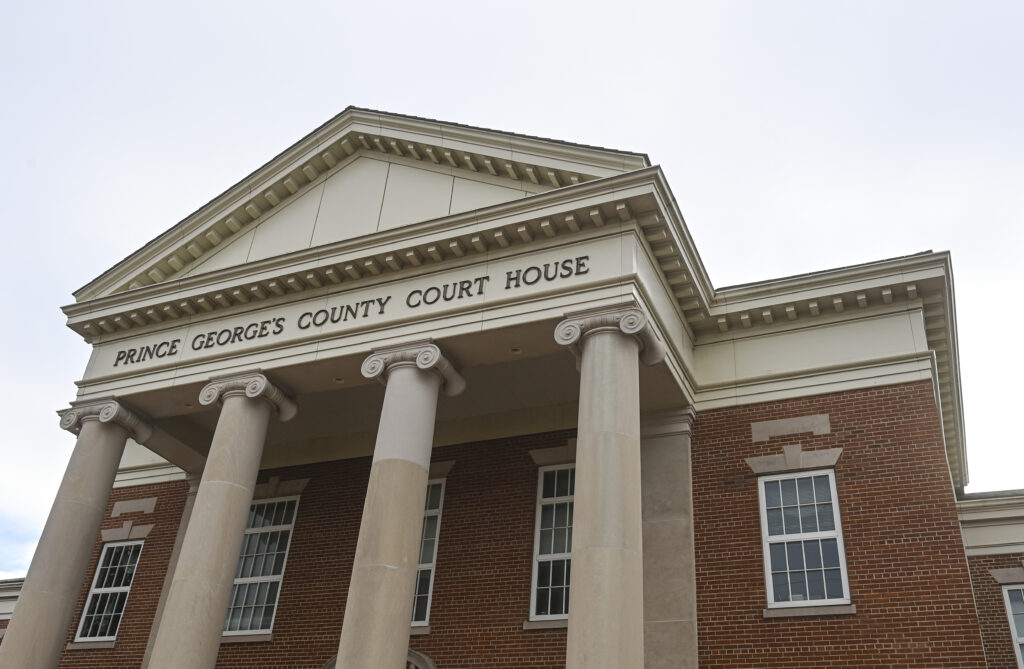
As chief of the Conviction and Sentencing Integrity Unit within the Prince George’s County State’s Attorney’s Office, Brianna Ford led the effort to review — and decide whether to support — cases of incarcerated people seeking reductions in their sentences. Defendants must show they have been rehabilitated while in prison.
About 100 times, judges decided a defendant shouldn’t remain in prison, Ford said, and none have committed a crime since their release.
In October, a judge chose to set Davison free. But days after the hearing, Ford said she was forced to resign by her new boss amid opposition from police officers and the victim’s family over his release.
Since then, Ford and reentry advocates say, people in prisons are finding it harder to get their cases reviewed by the Prince George’s unit and, in a state with one of the highest rates of Black people incarcerated, some who had previously been given hope that they would receive support for a sentence reduction have seen their cases opposed. The concern over the sentencing integrity unit comes after a similar initiative closed in Baltimore following new leadership in its state’s attorney’s office.
The state’s attorney’s office disagrees with Ford’s assertions of her separation, but it is prohibited by law to comment on personnel matters, an agency spokesperson said in a statement.
Prince George’s County State’s Attorney Tara H. Jackson said in an interview that the unit is not universally opposing cases. The unit has hired a new chief, she said, and will soon partner with the Mid-Atlantic Innocence Project, which specializes in reviewing wrongful-conviction cases.
“I want the unit to be one that is fair and gives fair opportunity to those who deserve the opportunity,” Jackson said.
The unit
The same month Davison was sentenced, the Senate approved former president Bill Clinton’s now-contested 1994 crime bill, which imposed life imprisonment for repeat offenders.
Miriam Krinsky, a former federal prosecutor and founder of Fair and Just Prosecution, said she witnessed firsthand an uptick of mandatory minimums and lengthy sentences.
But in later decades, prosecutors and leaders began looking for ways to address public safety differently after recognizing that most people age out of criminal behavior. Often, those approaches sought to remedy underlying struggles in communities, Krinsky said.
In the past, Krinsky said, “We were destroying communities, especially poor communities and communities of color, creating generations of damage done from excessive sentences that had no equal around the world.”
The creation of units to reassess past cases, particularly addressing the racial disparities of excessive sentences, were among the ideas that emerged. Supporters believe the units help rebuild public trust in the criminal justice system.
Sentence review units are active in some prosecutor offices in about 1 in 5 states, according to For The People, a nonprofit that supports prosecutors.
In Maryland, at least two emerged — one in Prince George’s County and the other in Baltimore — largely designed to reexamine cases of those who committed crimes as young people and were sentenced to life in prison.
Prince George’s County Executive Aisha N. Braveboy, who formed the unit in 2019 as state’s attorney, said she believed that people could be redeemed, guided by her faith in God.
“These are people who paid their debt to society,” Braveboy said. “They’re not, ‘getting away with anything.’ … The adult justice system is built on a model of punishment, justice for our victims, but that third prong is rehabilitation.”
The work of the unit was twofold: to review whether a conviction was wrongful and to review lengthy sentences, many of which were the latter. People seeking relief applied to the office, and their defense attorneys filed legal motions to appear before a judge.
Doyle Niemann, a former Maryland state delegate and valued prosecutor, first ran the unit under Braveboy. But after his sudden death in 2024, Ford, his deputy and a former defense attorney specializing in post-conviction, took the helm.
Her role was hardly envied. Ford surveyed convictions and sentences that prosecutors in the same office, decades before her, often argued for. She said she sought to balance accountability with rehabilitation and redemption.
Almost all cases Ford reviewed involved murder charges. Ford said she juggled up to 500 applications, often on her own, some of which remained open for years.
Ford looked at applicants’ likelihood of risk and required comprehensive home plans, including vetted reentry programs. She analyzed volumes of their history while incarcerated and also interviewed some defendants and visited prisons. She met with victims, too.
Not all sentencing changes resulted in a defendant’s release. Ford could recommend removing the “without parole” portion of a sentence, modifying the length slightly or agreeing to a program placement.
“The goal is to get in front of a judge and to give them all of the information that we think they should have to make the decision,” Ford said. “The goal is not [to] spring everybody from prison.”
Elizabeth Franzoso, a Maryland defense attorney who practices regularly in Prince George’s, said it usually took about a year for Ford to work through a case.
“She really, actually rejected most people,” Franzoso said. “Sometimes she did what I hoped she would do, and other times she didn’t, but that’s okay. That was her job.”
Warren Hynson’s case was reviewed by the unit.
A judge reduced his sentence after Johnnell Branch, the daughter of a man killed in 1991, forgave Hynson in open court for his role in her father’s murder. Branch and Hynson had met after Ford set up a Zoom call with the pair months prior.
Without that call, “I don’t think that I would have had the opportunity to meet with Ms. Branch and have that healing,” Hynson said. “No matter what the changes I made in my life, the judge really gave a lot of weight to Ms. Branch forgiving me.”
Not everyone has positive memories of the unit.
Joyce Conyers’s 23-year-old son, Willie Herman Baskerville Jr., was murdered in 2001 in Prince George’s County. Her son’s killer was sentenced to life plus 15 years, too. But a court granted a new trial, and he was released after a plea deal handled by the Conviction and Sentencing Integrity Unit, according to Ford.
“It’s almost like the justice system now is for the criminals period and not for the victims,” Conyers said.
Defendants are afforded services to aid in their reentry to society, said Conyers, 66, a board member of the Maryland Crime Victims’ Resource Center. But she said victims’ families are left behind without many resources and robbed of their loved one’s life.
Ford said she made sure to contact victims and that “none of this is in an effort to hurt them or to diminish the life of their loved one that they lost.” However, she said, their position should be only “a part of the equation.”
“Decades ago, we did not do a good enough job of explaining to victims that when you take away someone’s liberty, when you incarcerate them, they are going to always have the right to challenge that,” Ford said.
Jackson, the current state’s attorney, sees the role of victims differently.
“While I agree that … the state needs to address the over incarceration of Black and Brown males, it’s important to me to make sure that we don’t forget the Black and Brown victims,” Jackson said. “Don’t forget the accountability piece, because accountability really is the difference between calm and chaos.”
The case
Davison, now 52, fatally shot Metro Transit police officer Harry Davisduring a traffic stop in 1993. He described the shooting as a panic response after the officer told him the car was connected to a crime in another state. He said he was aiming for Davis’s bulletproof vest to create enough time to flee the scene.
Handed a sentence of life without the possibility of parole, plus 15 years, Davison, spent decades trying to atone for the killing the officer, the father of two teenage sons. He took rehabilitative classes and studied conflict resolution. Still, as Maryland began to adopt legislation for some people to petition the court for a sentence reduction, Davison was ineligible because he was too old when he committed his crime and his victim was a first responder.
In 2024, Ford began working on Davison’s case. After her review, she signed on to get a hearing before a judge to consider a change in his sentence.
At the fall hearing, the officer’s widow said her 40-year-old husband was also a volunteer firefighter and was part of Operation Desert Storm, according to an audio recording of the proceeding.
“What hurts the most is I didn’t get the chance to say goodbye,” she said.
She had a message for Davison: “I believe since you took a life, you deserve to give up your life and stay in confinement.”
Dozens of police officers and other law enforcement lined the courtroom, also to oppose Davison’s release.
Ford said she hadn’t quite made up her mind what to recommend to the judge. She considered the length of his original sentence, that a police officer had been killed and the opposition of Davis’s next of kin to any release.
She also knew Davison had been evaluated by a psychologist as low-risk for future violence and had spent his years in prison maintaining a good record.
Davison apologized through tears to Davis’s family members, one by one, according to the recording of the hearing.
“I’ve turned my entire life around 180 degrees,” Davison said, “striving to be the most productive I can at every given moment, continually seeking to atone and make amends to the Davises for all that I’ve subjected them to.”
Ford decided to defer to what the judge thought was best.
After three decades in prison, Davison would be going home.
“You’re going to get your second chance,” Prince George’s County Senior Judge Leo E. Green Jr. said. “But you’re not going to get a third.”
Jackson, who was appointed the county’s top prosecutor in June, said the victims in the Davison case weren’t “fairly notified” of what the state was going to recommend.
“Transparency is important to me,” Jackson said. “I don’t want anybody going into a courtroom, especially a victim or stakeholders, and not understanding how it is that the state is going to proceed.”
According to emails reviewed by The Washington Post, Ford emailed the judge ahead of the court hearing saying she “was able to talk extensively with the next-of-kin.” The emails showed she also communicated with her direct supervisor about the case, with a Metro Transit Police officer included on the thread. At the hearing, she introduced the officer’s wife in court.
“Prosecutors have such an innate power, and with that power comes a responsibility to do what is right outside of what you think that people will agree with,” Ford said.
Jackson, while saying she could not comment on Ford’s departure, said, “Prosecutors are hired for their discretion and the decisions that they make, and I have to always evaluate whether or not the prosecutors in this office are using their discretion appropriately.”
Ford now works as deputy director of the county’s Office of Human Rights under Braveboy, who initially hired her for the sentencing integrity unit.
Before her last day in the state’s attorney’s office, Ford said she submitted a list of about 30 active cases where she had already reached sentencing agreements with defense counsel.
Ford said prosecutors have changed the position in nearly every case she left behind.
The new chapter
Word of the changes in Prince George’s spread quickly among people incarcerated across Maryland, said Willie Hamilton, one of the first people released through the sentencing review unit in 2022, and Curtis Alston, who works in reentry. It has crushed the hopes of people who have been trying to better themselves while serving life sentences, the pair said, and disillusioned advocates who have worked for years for reforms.
“The opportunity to see people that deserve a second chance are not being acknowledged or held up,” Alston said. “No one is getting any responses.”
Franzoso, the defense attorney, said she had back-to-back hearings in Prince George’s in which the unit has not honored agreements made under Ford.
Since January, the Conviction and Sentencing Integrity Unit has handled 10 sentence modification hearings, a spokesperson for the state’s attorney’s office said in a statement. Of those, the office did not oppose a reduction in sentence in two cases “after a thorough evaluation of each case, including victim input, legal requirements, evidence of rehabilitation, and establishing a stable re-entry plan,” the spokesperson said.
Jackson said the unit is particularly focused on cases where people were given lengthy sentences while juveniles.
People who are incarcerated and are seeking a sentence modification have legal pathways to file, which the office is required by law to review, the spokesperson said. Among those avenues is Maryland’s latest Second Look Act, which gives certain people who have served at least 20 years a chance at release.
But Hamilton worries the unit could leave out people like Davison, who relied on a broader application process under Ford to request the state’s support.
In the Baltimore state’s attorney’s office, which disbanded its sentence review unit, cases that qualify for those legal pathways are now evaluated by its post-conviction units, a spokesperson confirmed. However, Becky Feldman, the prosecutor who led the sentencing review unit, said in a statement its demise hurt an effort to bring “concepts of redemption into a prosecutor’s office.”
Questions over the direction of Prince George’s unit come as residents will vote for a state’s attorney in June — a showdown between Jackson, Prince George’s County Council member Wanika B. Fisher and prosecutor Karen Piper Mitchell.
“My primary job is always going to be public safety,” Jackson said. “And public safety will mean different things. So sometimes, as it relates to this unit, that will mean recommending that a person not be released and in other instances that will mean taking a chance on somebody’s release in a structured way into the community.”
Davison hopes that others who are incarcerated will have the same opportunity at redemption that he did. He recently completed a six-month reentry and substance abuse program, and now he works at FedEx and as security for events at Northwest Stadium.
“She fell on the sword for me,” Davison said of Ford. “I did something terribly wrong, but that’s not all that I am.”
The post This team gave prisoners a second chance. Some question its future. appeared first on Washington Post.