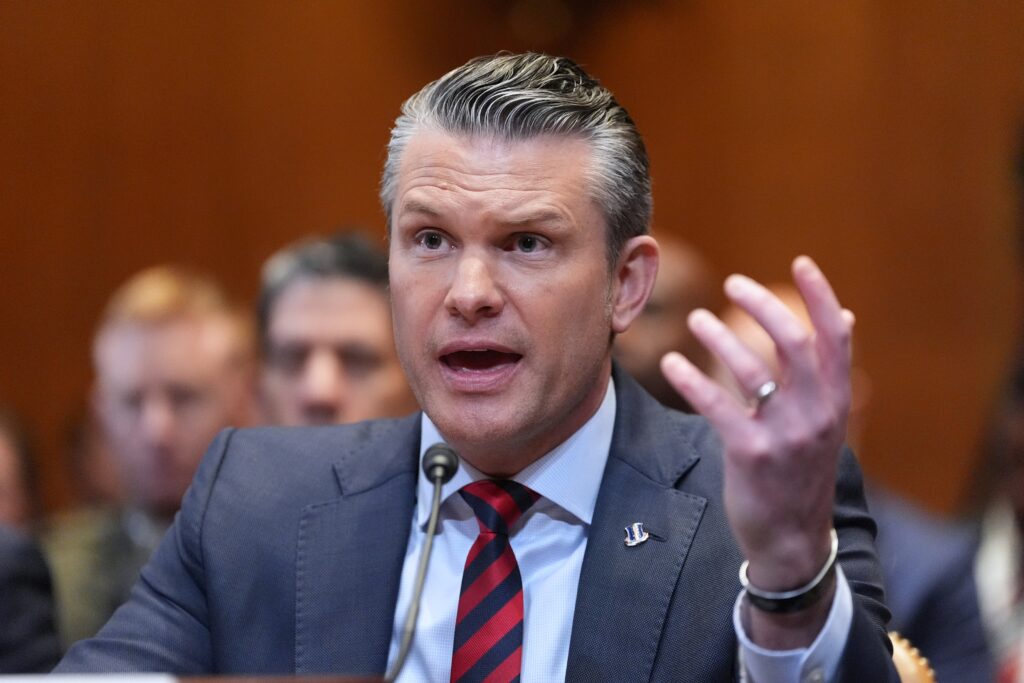
Defense Secretary Pete Hegseth faced intense scrutiny from members of Congress on Tuesday over the Trump administration’s handling of the Iran war, as lawmakers from both parties pressed him to clarify the Pentagon’s plan to cover the conflict’s rising costs and reopen the Strait of Hormuz.
His testimony alongside Gen. Dan Caine, chairman of the Joint Chiefs of Staff, marks the senior Pentagon officials’ last scheduled appearance before Congress to defend the administration’s record $1.45 trillion defense budget proposal. They spoke first with the House panel on defense spending before meeting with Senate appropriators.
Both sessions proved more courteous overall than Hegseth’s appearances late last month before the House and Senate Armed Services committees, where he lashed out at lawmakers skeptical of the Iran war, calling them America’s “biggest adversary.”
But Hegseth and Caine encountered rare public criticism from some Republicans, who alongside many Democrats, expressed frustration with the administration’s delay in assessing the costs of the conflict and lack of strategy for ending the war.
“No wonder this damn thing is going nowhere,” Sen. Lindsey Graham (R-South Carolina) said, objecting to Pakistan’s involvement in a faltering process to negotiate a permanent peace deal between Washington and Tehran.
Sen. Susan Collins (Maine), the Republican chair of the Senate Appropriations Committee, aired similar concerns about the administration’s plan to reopen the Strait of Hormuz. Iran has closed the strait to most commercial shipping since the start of the war in late February.
“It seems to me that there’s been a different plan, almost daily, with dealing with this problem,” she said, echoing a criticism often voiced by Democrats about the war’s financial impact on the American public.
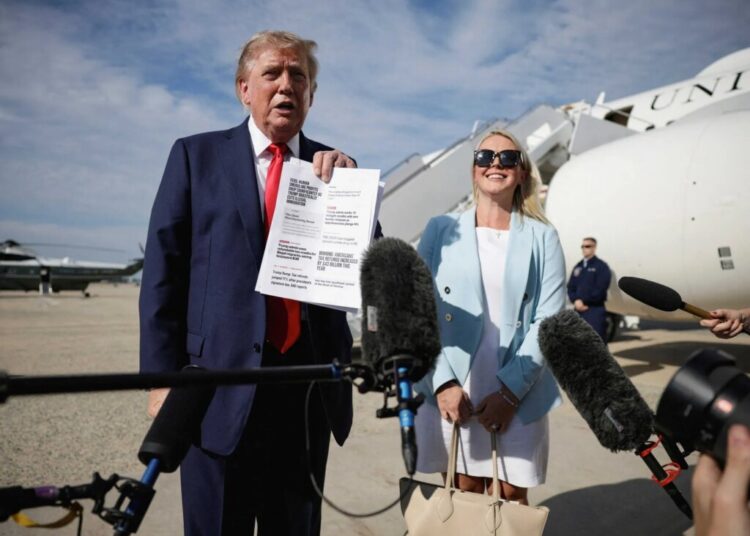
The strait’s closure has dramatically disrupted the movement of Middle Eastern oil through the Persian Gulf, causing global energy prices to soar. President Donald Trump, who launched a naval blockade of Iranian ports in response to the waterway’s closure, indicated Monday that would seek to pause the federal gas tax in order to lower the burden of higher gas prices.
Caine, during later questioning before the Senate panel, declined to say whether the administration had achieved “victory” as it related to the strait.
“Only political leaders decide victory or defeat,” the general said.
Earlier in the House, Rep. Harold Rogers (R-Kentucky) said that the war had “confirmed what defense planners had long warned about: Iran doesn’t need a peer military to cause serious problems.”
“Even with overwhelming firepower, the side that runs out of munitions or air defenses first loses,” Rogers said. “Are we secure in that point?”
Hegseth repeatedly objected to lawmakers’ assertions that U.S. weapons stockpiles were “depleted,” despite the use of thousands of munitions to attack more than 13,000 targets during the Iran campaign. He said that the Pentagon’s inventories were “absolutely” secure and that the military had “won every component of what we’ve fought in this conflict.”
Rep. Ken Calvert (R-California), head of the House committee’s panel on defense spending, urged Hegseth to send Congress a final request for supplemental funding to cover the costs incurred by the war in Iran — estimated now to be in excess of $29 billion. His question came amid many critiques Tuesday about the Pentagon’s responsiveness to Congress.
“It would be helpful to get the supplemental sooner rather than later,” Calvert said after Hegseth didn’t provide a timeline for the proposal.
Rep. Betty McCollum (Minnesota), the House panel’s top Democrat, said that lawmakers needed a comprehensive accounting of estimated losses, including to aircraft and other military equipment by June 11, given the panel’s schedule to markup its annual defense bill.
The $29 billion total cost of the operation to date does not account for the damage Iran has caused to American bases, said the Pentagon’s acting comptroller, Jules W. Hurst III.
An analysis published last week by The Washington Post showed that Iranian forces had damaged or destroyed at least 228 U.S. structures or pieces of equipment since the war began Feb. 28, including aircraft and hangars, barracks, fuel depots, radar and air defense equipment.
Hegseth’s last hearing, April 30, occurred a day before the conflict reached the deadline by which the Trump administration was required under the law to seek Congress’s approval to continue the war. He argued then that the 60-day threshold had paused during a ceasefire between Washington and Tehran.
The administration later asserted that the hostilities had “terminated,” in a letter sent to Capitol Hill.
“It doesn’t appear that hostilities have ended,” said Sen. Lisa Murkowski (R-Alaska) on Tuesday, referring to the sustained military buildup in the region and the ongoing blockade.
“Our view is that he has all the authorities he needs,” Hegseth said after Murkowski asked whether Trump would benefit from having Congress authorize the war.
The ceasefire showed signs of fragility last week as U.S. warships intercepted Iranian attacks while transiting the Strait of Hormuz, leading to retaliatory strikes on a handful of Iran’s military facilities. President Donald Trump attempted to downplay the attacks at the time, but on Monday he told reporters the ceasefire was on “life support.”
It remains unclear whether enough Republicans will accept the administration’s argument or if some may break ranks and support the next round of Democrat-led resolutions intended to halt the fighting without lawmakers’ explicit approval. All of the measures so far have failed.
While GOP lawmakers again praised the administration’s proposed increase in defense spending in Tuesday’s hearings, many also argued that the use of a party-line process known as reconciliation presented additional risks for $350 billion in Pentagon priorities, including efforts to recharge America’s sluggish defense industry.
On Tuesday, the nonpartisan Congressional Budget Office estimated that a missile defense system that would meet the vision of Trump’s call to build a “Golden Dome” shield to protect the U.S. homeland could cost about $1.2 trillion — far above the administration’s estimate of $185 billion.
Multiple lawmakers raised the Trump administration’s harsh treatment of long-standing American allies, with Sen. Chris Coons (D-Delaware), chastising officials for “berating them and bullying them for not coming along in a war they were not consulted about.”
Sen. Mitch McConnell (R-Kentucky), who chairs the Senate defense spending panel, has also publicly called on the Pentagon to explain why it hasn’t spent $400 million in security assistance to Ukraine that Congress passed earlier this year — a line of questioning he continued Tuesday.
Coons, his Democratic counterpart, pressed Hegseth to provide a detailed plan for that funding. The secretary committed to spend the money but didn’t provide a timeline.
“Dragging our feet on this small investment in Ukraine’s defense sends exactly the wrong signal,” Coons said.
Tara Copp contributed to this report.
The post Hegseth, Caine encounter intense bipartisan frustration with Iran war appeared first on Washington Post.