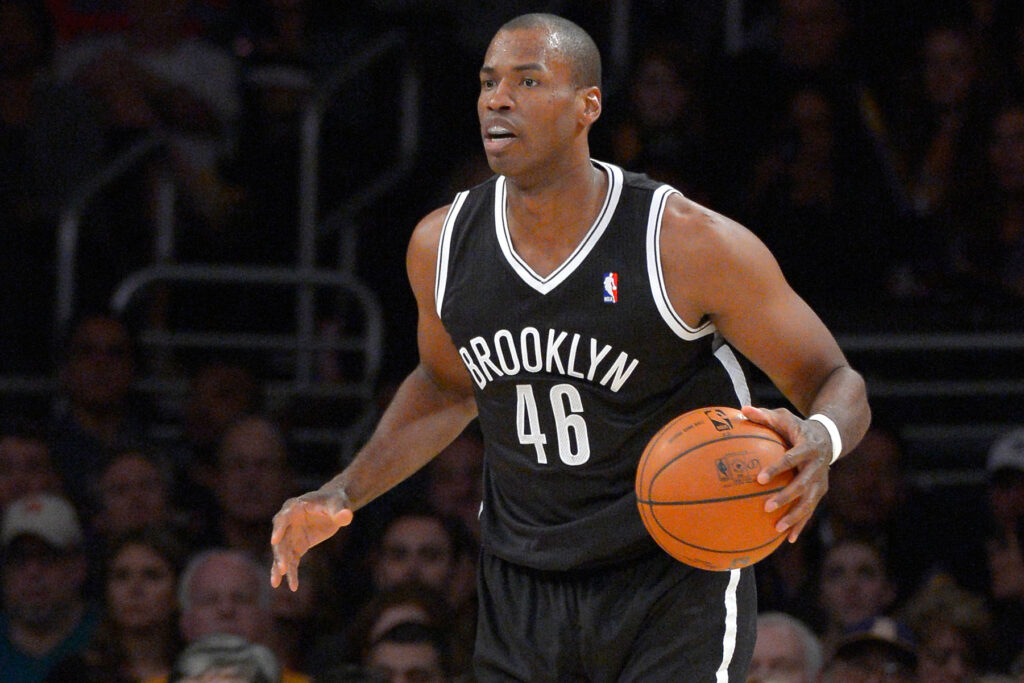
For most of his 13 seasons in the National Basketball Association, Jason Collins was known as the sort of player contenders always seemed to need and casual fans often overlooked — a broad-shouldered, 7-foot center who defended, rebounded, set punishing picks and accepted the game’s less glamorous assignments without complaint.
Then, near the end of his career, he said something out loud that changed American sports.
“I’m a 34-year-old NBA center,” Mr. Collins wrote in April 2013. “I’m black. And I’m gay.”
The statement was both unsentimental and seismic. In a sports culture that had long treated homosexuality in male locker rooms as taboo, Mr. Collins became the first openly gay man in a major professional American team sport. In breaking a barrier that had stood for generations, he transformed from a largely anonymous role player into a historic figure.
Mr. Collins, who opened the door for other gay athletes and became a prominent advocate for inclusion in sports, has died at 47, months after he revealed he had been diagnosed with glioblastoma, an aggressive brain cancer.
His family announced his death Tuesday in a statement shared by the NBA. They did not say where Mr. Collins died.
“To call Jason Collins a groundbreaking figure for our community is simply inadequate. We truly lost a giant today,” said Kelley Robinson, the president of the Human Rights Campaign, one of the country’s largest LGBTQ+ advocacy groups.
Mr. Collins’s 2013 announcement, written in a first-person piece for Sports Illustrated, came two years before the Supreme Court legalized same-sex marriage nationwide — and in a sports world where openly gay athletes remained exceedingly rare.
Such a moment had long been considered unthinkable, and there was uncertainty — and some apprehension — about how it would be received. But support came quickly from across the league and beyond. President Barack Obama and TV host Oprah Winfrey called Mr. Collins to express support, and NBA Commissioner David Stern issued a statement praising his leadership.
“Now that Jason Collins has come out, he is the proverbial ‘game-changer,’” wrote tennis great Martina Navratilova, who came out publicly in 1981. “One of the last bastions of homophobia has been challenged. How many LGBT kids, once closeted, are now more likely to pursue a team sport and won’t be scared away by a straight culture?”
For decades, openly gay male athletes were virtually nonexistent in American team sports. Some players came out only in retirement, and others were outed against their will. But no NBA, NFL, NHL, MLS or MLB player had publicly come out while still competing.
Mr. Collins said he had not set out to become a pioneer.
“I’m happy to start the conversation,” he wrote in his essay. “I wish I wasn’t the kid in the classroom raising his hand and saying, ‘I’m different.’ If I had my way, someone else would have already done this. Nobody has, which is why I’m raising my hand.”
Mr. Collins’s decision to come out carried professional risk. He was a free agent at the time, after a short stint with the Washington Wizards, and did not know whether any team would sign him again. But months after publishing the essay, he returned to the court when the Brooklyn Nets offered him a 10-day contract in February 2014. He finished out the season with the Nets before retiring that November.
Long before he became a central figure in a cultural shift, Mr. Collins built a steady NBA career as a defense-first center whose contributions weren’t always reflected in the nightly box score — the kind of player teammates relied on even if fans rarely noticed.
Over 13 seasons, he appeared in 735 regular season games and 95 playoff games with six franchises: the Nets, Wizards, Memphis Grizzlies, Minnesota Timberwolves, Atlanta Hawks and Boston Celtics.
His most prominent role came early in his career in New Jersey, where the Nets were based before moving to Brooklyn. He helped the franchise reach the NBA Finals in 2002 and 2003, on teams led by point guard Jason Kidd.
Mr. Collins was never known for scoring — he averaged 3.6 points and 3.7 rebounds per game for his career — but coaches valued his physical defense, communication and willingness to perform the sport’s unglamorous work: boxing out, setting screens and anchoring defensive schemes.
In interviews, he said he began to consider coming out publicly in 2011, during an NBA lockout that gave him time to think. The secrecy surrounding his sexuality had weighed on him for years — “I had never been out on a date because I was afraid,” he later told the New York Times — and he gradually began telling family and friends.
Then came his Sports Illustrated announcement, inspired in part by his learning that Rep. Joe Kennedy (D-Massachusetts), his roommate at Stanford University, marched in Boston’s Pride parade in 2012. Mr. Collins, proud but envious of his friend, decided he wanted to march, too.
“Life is so much better for me,” he said during an introductory news conference with the Nets, looking back on his coming out. “I don’t have to hide who I am. I can just be my normal self.”
Jason Paul Collins was born Dec. 2, 1978, in Los Angeles, eight minutes before his identical twin brother, Jarron Collins, who also went on to play in the NBA. Their parents, Paul and Portia Collins, owned an insurance agency, according to the Los Angeles Times.
The brothers grew up in the city’s Northridge neighborhood and graduated from the private Harvard-Westlake School. Mr. Collins helped lead the basketball team to two state championships and a 123-10 record over four seasons, setting a state career rebounding record with 1,500.
He and Jarron went on to play basketball at Stanford, where Mr. Collins developed into one of the Pac-10 conference’s top defensive big men, earning third-team all-American honors in 2001. Later that year, the Houston Rockets selected him with the 18th pick in the NBA draft. He was traded that night to the Nets.
His announcement 12 years later gave new meaning to a quiet gesture he had made for years. Mr. Collins wore jersey No. 98 in honor of Matthew Shepard, the gay college student murdered in Wyoming in 1998 in a hate crime that became a watershed moment in the fight for LGBTQ+ rights.
“When I put on my jersey,” Mr. Collins wrote, “I was making a statement to myself, my family and my friends.”
Mr. Collins later befriended Shepard’s family. His No. 98 jersey quickly became the top seller in the NBA’s online store, and the league said proceeds from sales and auctions of his jerseys would benefit the Matthew Shepard Foundation and GLSEN, organizations that advocate for LGBTQ+ equality and safety in schools.
“Some kids are still living hidden lives, living in fear, and the more you see Jason and Michael Sam and others encouraging them to be themselves, they’ll understand they can get to the top of whatever ladder they’re climbing,” Shepard’s father, Dennis, told ESPN in 2014. (Sam, an all-American defensive lineman at the University of Missouri, had come out as gay that year.)
Though Mr. Collins broke a barrier, openly gay male athletes in American team sports remain rare. No other active NBA player has come out, and only a handful of active male athletes from other sports — including NFL defensive end Carl Nassib and soccer player Robbie Rogers — have come out publicly.
After retiring from the NBA in 2014, Mr. Collins remained active in advocacy and community programs. He served as an ambassador with the NBA Cares initiative, met annually with NBA rookies, and spoke with young athletes about inclusion, teamwork and resilience.
Mr. Collins married film producer Brunson Green in May 2025. In December, he revealed his cancer diagnosis in a first-person essay for ESPN.
“I got to tell my own story, the way I wanted to,” he wrote. “And now I can honestly say, the past 12 years since have been the best of my life. Your life is so much better when you just show up as your true self, unafraid to be your true self, in public or private. This is me. This is what I’m dealing with.”
Information on survivors was not immediately available.
Long after his last NBA game, Mr. Collins kept returning to the language that had always made the most sense to him — not the language of celebrity or symbolism, but of teams and responsibility.
Interviewed by The Washington Post last year, when he was leading a first-of-its-kind basketball clinic for LGBTQ+ youth and their allies, he said he tried to view setbacks as opportunities — to take a challenge and see it “as a way to uplift, a way to say, ‘Okay, I’m going to use this to change something either in myself, something in my community, something in my country, in the world.’”
“I can be a good teammate,” he added. “I can always try.”
The post Jason Collins, a gay trailblazer in the NBA, dies of brain cancer at 47 appeared first on Washington Post.