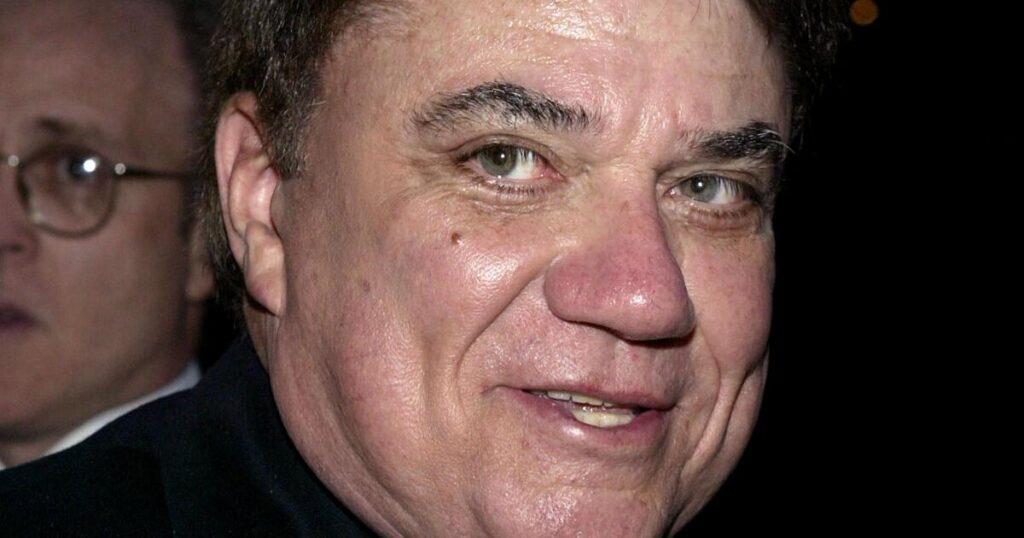
Growing up in New York, I remember watching Rex Reed on television as a kid. He was a regular on “Midday Live With Bill Boggs” and something of a specter for me. He was not only one of the few evidently gay men on TV (Charles Nelson Reilly and Paul Lynde were the other prominent presumed homosexuals.) But he was also the acerbic embodiment of The Critic. Watching Rex Reed from my father’s off-limits black leather chair in the living room as my mother ironed was an uncomfortable experience for me. It was like getting a fugitive glimpse of a future I wasn’t sure I wanted and certainly didn’t have the capacity to understand.
I did indeed grow up to be a gay man and a critic, but I never came close to achieving Reed’s cultural prominence. In truth, I never aspired to the spotlight in the way he did. I prefer entering the world as a byline, operating under the cover of sentences. But I came to admire him more with age, even as our critical temperaments only further diverged.
Reed, who died at his home in New York Tuesday at 87, was a provocateur, a bomb thrower. He didn’t mince words or allow nuance or second thoughts to stand in the way of a zingy phrase or a colorful wisecrack. Unbridled opinion was his stock-in-trade. There’s an element of sadistic, John Simonesque glee to his attacks on the personal appearances of actors. He faced intense and deserved backlash for his fat-shaming comments about Melissa McCarthy in his savage pan of the 2013 film “Identity Thief.”
Covering not just movies and television but also theater and cabaret, Reed, a Southerner who seemed as much a part of Manhattan as the skyline, lorded over the arts with a homogenizing mainstream peremptoriness. Anything avant-garde could induce a migraine. For someone with such a sensationalizing prose style, he had little tolerance for the shock of the new.
But what he loved, he loved with an all-consuming passion. And chief among these were those actors who bravely communicated what it’s really like to live a life. Recently I was asked to write the preface for Angelica Page’s “Bountiful: Growing Up With Geraldine Page: A Daughter’s Memoir.” Geraldine Page being one of my acting heroes, I immediately said yes. And when it came time to sit down to write the piece, I turned to Reed for inspiration.
In a collection of his reviews, “Big Screen, Little Screen,” I was struck by the way he elucidates the alchemy of Page’s acting. He was reviewing the 1968 television movie “The Thanksgiving Visitor,” an adaptation of the Truman Capote short story. A parenthetical observation of Page’s Emmy-winning performance reveals his eye for acting detail: “(When Miss Page pulls the turkey wishbone, she pulls little pieces of meat from the bone as she contemplates her wish. It’s a moment out of time, but it adds years of intimacy to our knowledge of who she is when she hasn’t actually told us much of anything in terms of explanatory self-description.)”
Later, he elaborates more fully on the genius of her portrayal. “Miss Page is so amazingly old — a sensitive, shy fern-like lady in her sixties, a recluse who wanders out beyond the county boundaries only in her daydreams, a child-lady who gets her energy from the smiles of flowers and small children, who wears flour-sack aprons and coarse peasant stockings. Munching raisins and cooking 5 a.m. Sunday morning flapjacks. Trying to read a thermometer with bad eyesight. Smelling lemon wax. Laughing at pictures of Fu Manchu. Preparing the table with the boy and talking about the eighty-year-old patched linen when she should really be encouraging him to play baseball. Stalking with the child through the chrysanthemums as though they were lions and only the biggest ones would do to kill for the Thanksgiving table.”
In this piece, he elevated a television review into literary art. Reed was capable of this kind of transformation whenever he was inspired by greatness, which was often, though as any reviewer can attest, not often enough. He had no patience for what he didn’t like, but when he was in the presence of something he adored, he lavished his attention and could rise to his own level of greatness.
The post Critic Rex Reed had a savage streak, but when he loved something, his writing could reach greatness appeared first on Los Angeles Times.