They arrived around 2:30 in the morning on Monday, their government plane stopping on the pavement at the Omaha airport. One by one, they shuffled out, wearing masks and carrying plastic bags holding a small set of their belongings.
They were quickly assessed by a team of doctors, loaded onto shuttle buses — with adequate distance kept between them — and driven to the National Quarantine Unit, the only federal center of its kind in the country.
For 15 of the 18 American arrivals who had been on the cruise ship MV Hondius and were possibly exposed to the hantavirus — a pathogen that can be deadly and for which there is no widely available vaccine — this was now their home, at least for a while.
Three of the roughly 150 passengers from various countries on their ship, which departed Argentina in April with a destination of the Canary Islands, died from the virus, and several others became ill or tested positive, officials said.
Dr. Michael Wadman, the medical director of the National Quarantine Unit, was one of the doctors who greeted the Americans at the airport. “They were really pleasant, in good spirits and grateful to be home,” he said. But he also said, “They were very tired.”
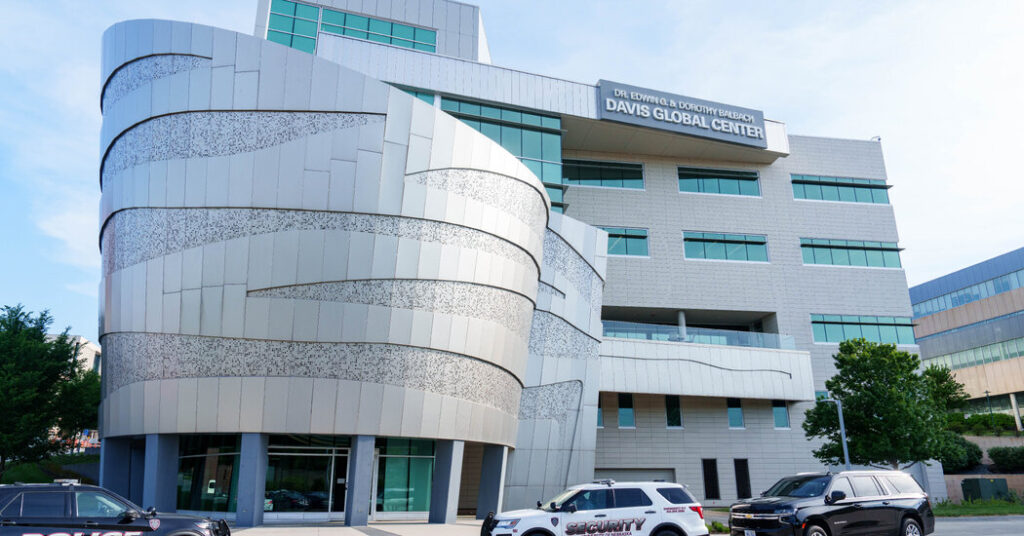
The National Quarantine Unit, part of the University of Nebraska Medical Center in Omaha, was designed to safely isolate and monitor people who have been exposed to infectious diseases. It opened in 2020, when it hosted around a dozen Americans who tested positive or had been exposed to the coronavirus on the Diamond Princess cruise ship in Japan.
The unit consists of two hallways with 20 single-occupancy rooms, each with a specialized air pressure system designed to prevent contaminated air from flowing out. Every 300-square-foot room has a full bed, exercise equipment, a window, Wi-Fi and video technology. It also has an autoclave, a machine designed to sterilize waste. The unit is staffed by Dr. Wadman and a team of more than 100 doctors and nurses, who slept very little this weekend as they prepared for the passengers’ arrival.
A building across the street houses the biocontainment unit, designed to care for patients who might have serious infectious diseases. That unit, which can fit a maximum of 10 people, was activated in 2014 to treat patients who had come from West Africa with Ebola.
The biocontainment unit, which is designed to treat people with symptoms of a disease or who have an actual illness, is one of 13 such centers in the country. And it is hosting one of the Americans from the cruise ship who tested positive for the hantavirus. The other two U.S. passengers who arrived on Monday, one person experiencing mild symptoms and that person’s partner, were transferred to a hospital in Atlanta, in case more people in the quarantine unit begin to show symptoms.
The patients are not wearing masks, but the doctors interacting with them are wearing full personal protective equipment, covered head to toe — including air-purifying respirators, full coveralls and shoe covers, said Dr. Angela Hewlett, director of the biocontainment unit.
As of Monday afternoon, all the patients in the Omaha units were doing well, their doctors said. The group, ranging in age from late 20s to 80s, had been assessed for any immediate medical needs and were recovering from the long journey. None were showing symptoms of the hantavirus, which can include headache, nausea, coughing and congestion. The one person in the biocontainment unit had been tested again and was awaiting results.
Their quarantine period could last up to 42 days, but health officials said at a Monday news conference that, once the passengers had been fully assessed, it was likely that they could choose to leave early and quarantine at home if they wanted. But it was unclear when exactly they would be allowed to make that choice.
For now, they are not allowed visitors, aside from the doctors and nurses monitoring them. A psychologist will facilitate virtual meetings with the group so people can talk about what they have experienced; the first one is scheduled for Tuesday afternoon.
One thing that Dr. Wadman has noticed about these individuals, he said, is their adventurous spirit. The MV Hondius was a less traditional cruise than most, he said, with passengers looking to be involved in birding or other wilderness activities. The passengers he has spoken to so far have told him they were craving physical activity after being cooped up on the cruise ship for so long.
“They’re an active group,” he said.
And one of them, at least, is pleased with the accommodations. Angie Vasa, the director of isolation and quarantine for special pathogens at Nebraska Medicine, a health care network that helps operate the units, said that one man who was in quarantine expressed surprise at the quality of his quarters.
“‘I’m so glad that these rooms are so nice,’” she recalled him saying.
Her response: “Welcome to Nebraska.”
Sonia A. Rao reports on disability issues as a member of the 2025-26 Times Fellowship class, a program for early-career journalists.
The post Inside the Hantavirus Isolation Unit Where 15 Americans Wait appeared first on New York Times.