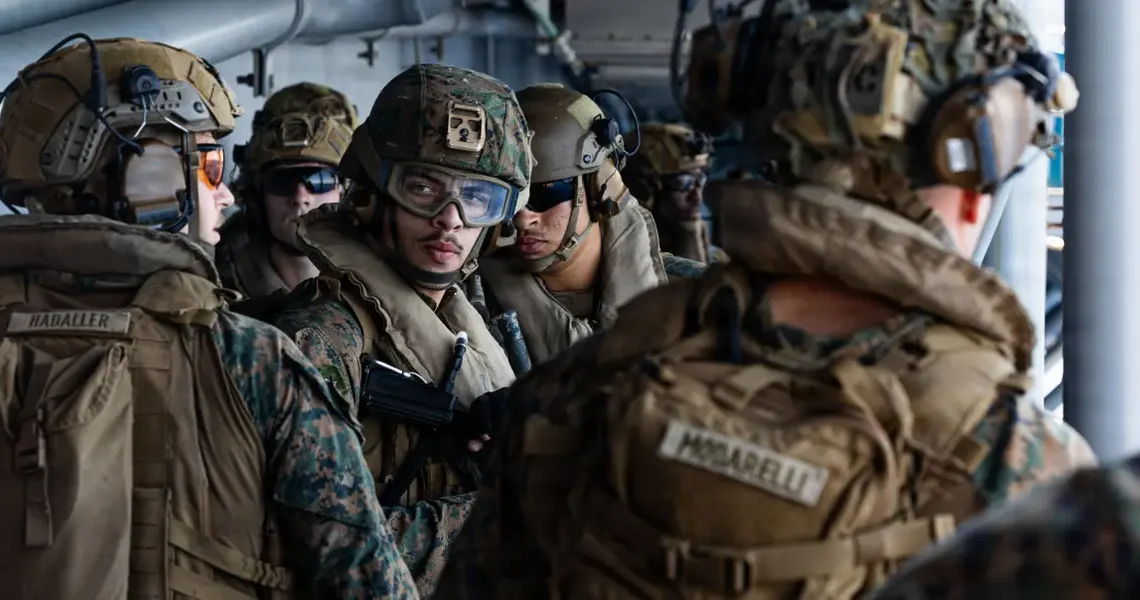
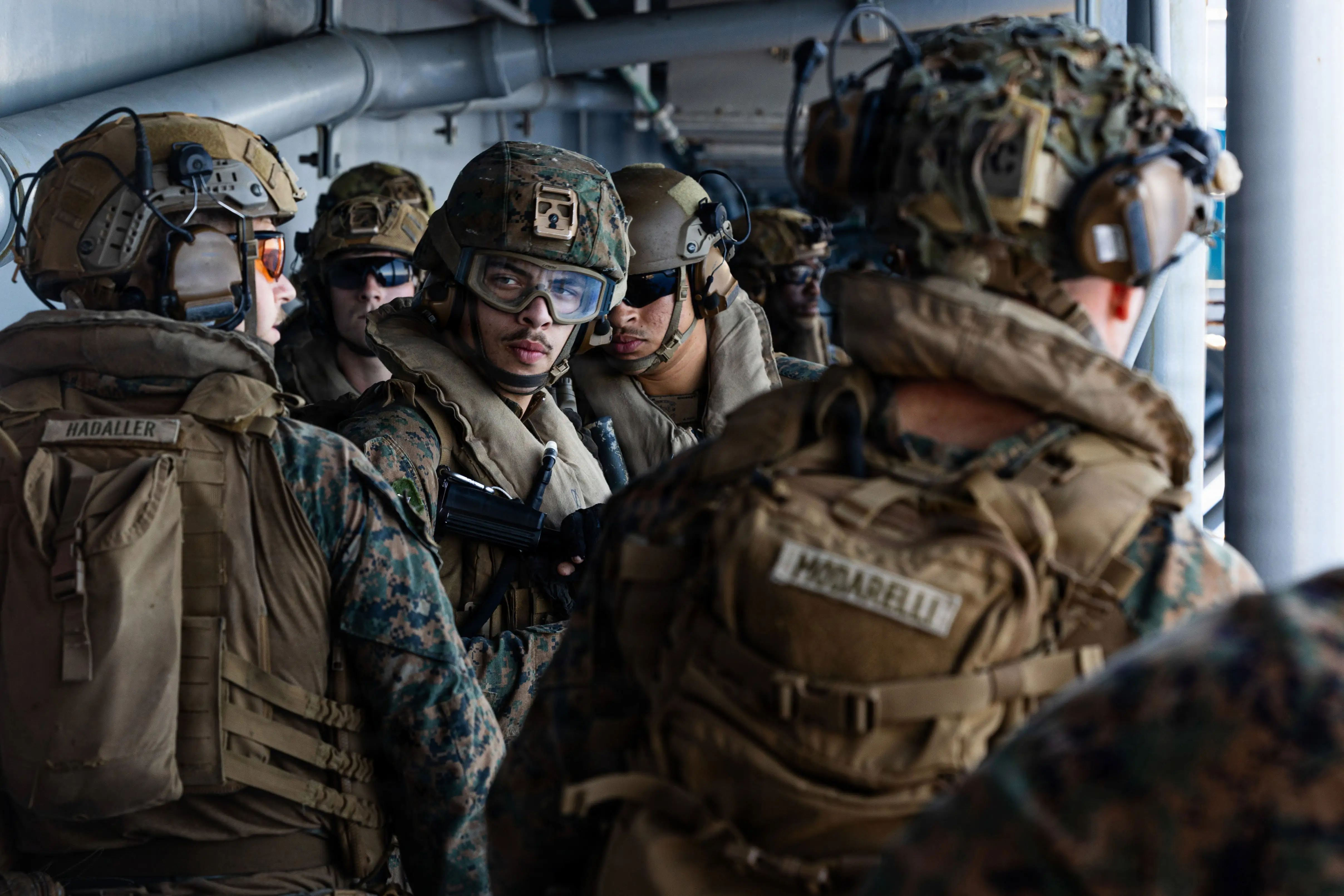
The US Marines believe future wars will require fundamentally new skills and ways of fighting, but commanders worry that current demands are consuming precious time needed to prepare for tomorrow’s battlefields, likely to punish even small shortcomings.
Getting ready for potential future fights defined by drones, constant surveillance, and electronic vulnerability requires time, predictability, and repetition — all increasingly hard to sustain. Marine division commanders say the small force known for its scrappiness is coming under strain as it reinvents itself for the next major war.
“The fact you’re always being watched, always being hunted, and if you can be seen, you can be targeted, you can be killed, that punishes a lack of proficiency or a lack of endurance or character in a way we probably have never seen,” said Lt. Gen. Benjamin Watson, the Corps’ training head, at the recent Modern Day Marine symposium in Washington, DC.
Unlike the Global War on Terror, Marines in future conflicts might not be able to rely on electronic warfare and signals intelligence specialists to “save the day” when it comes to managing electronic signatures, a new lethal concern for troops, Maj. Gen. Farrell Sullivan, commander of the North Carolina-based 2nd Marine Division, said at the event.
Instead, Sullivan said, those skills need to be deeply embedded across the force and introduced early, understanding that on the battlefield, your cellphone “gets you killed.”
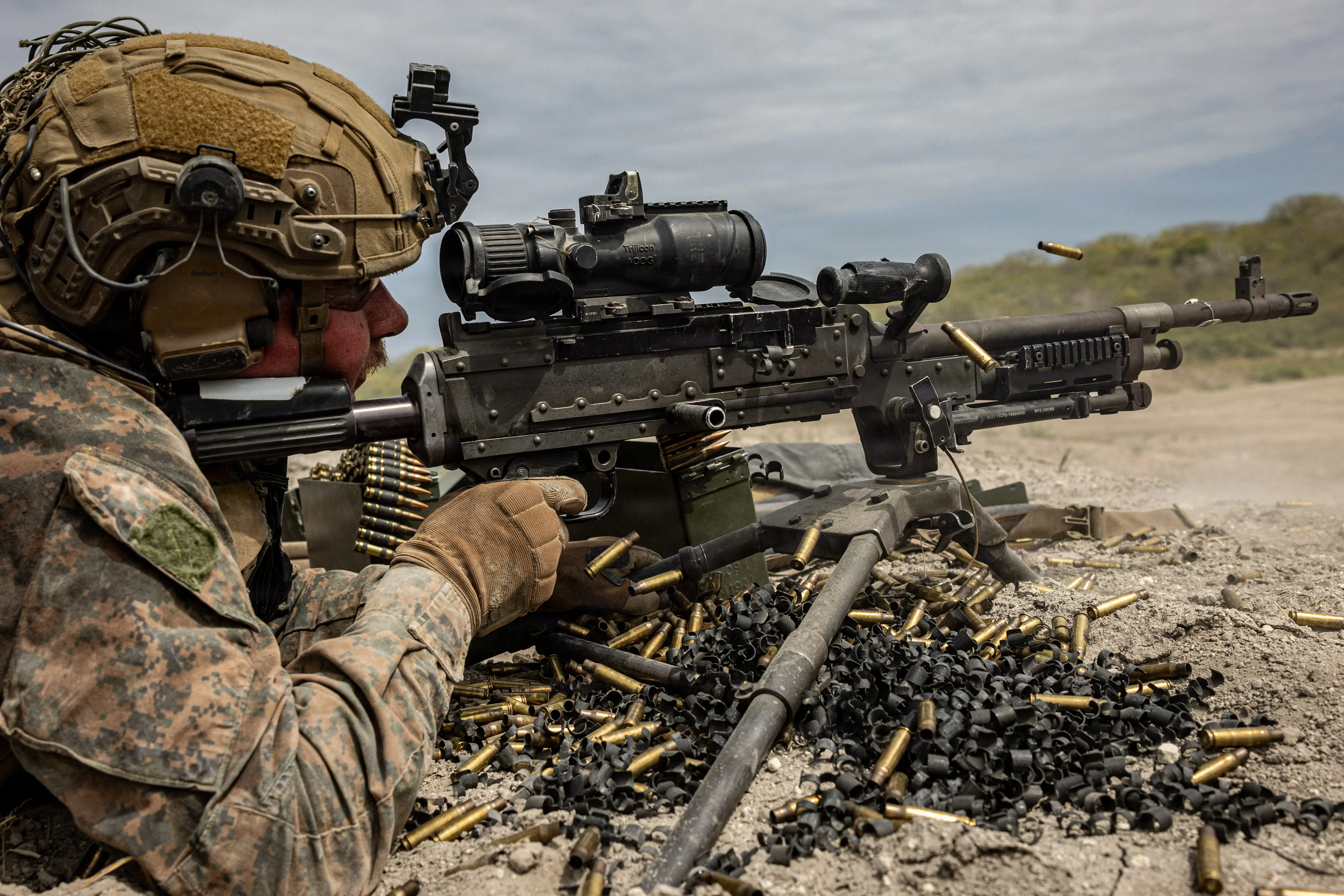
Such emerging threats, from the electromagnetic spectrum to drones and AI, are expected to become more pervasive and dangerous, demanding a substantial mindset shift for troops. But as the Corps pushes to adapt to that kind of warfare, the service is facing mounting stress.
Part of that challenge boils down to the numbers — the Corps has about 172,300 Marines in its ranks, around 30,000 fewer than at the height of the Global War on Terror, Sullivan said.
“When you take a look at what we’re doing today with the deployments that some would remember, and all the emergent deployments,” including the Territorial Integrity of the United States mission and other taskings for Northern Command and Southern Command, “I would say, at least in 2nd Marine Division, we’re busier today than we’ve ever been,” he explained.
And that tempo is not isolated to a single division.
The Marine Corps has personnel deployed to the US-Mexico border to support Homeland Security and to the Middle East for Pentagon operations. Others are supporting counter-narcotics efforts in the Caribbean or spread across Panama, Korea, the Philippines, Australia, Sweden, Morocco, and elsewhere for training exercises and rotational deployments.
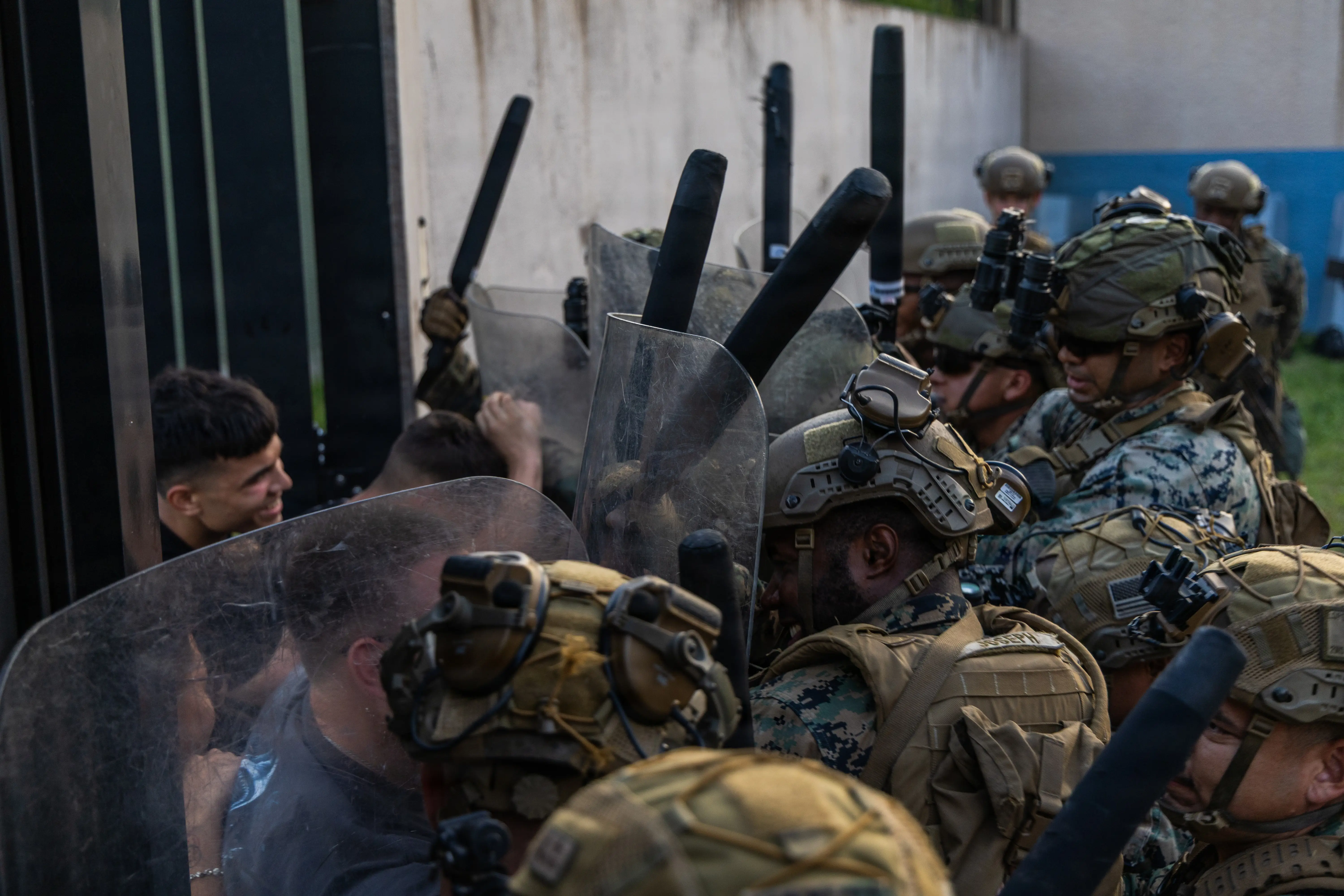
At any given time, Marines are preparing for the deployment of two Marine Expeditionary Units, a robust naval crisis response force, said Mark Cancian, a senior adviser at the Center for Strategic and International Studies and retired Marine colonel.
Three such MEUs are currently deployed, and combatant commanders want more.
“I won’t say how many of the ARG-MEUs our combat commanders asked for, but it is well north of three,” said the Marine Corps commandant, Gen. Eric Smith, during remarks at the recent symposium, referring to the Amphibious Ready Groups, which are warship groups carrying Marines. It’s “like double that,” he said.
The Navy lacks the ships to meet such a request — but it’s also unclear whether the Marines can meet such a demand consistently. Having three MEUs deployed at once is “more than unusual,” Cancian said. “They are in an unusually demanding environment.”
“We have to pay close attention to unit life cycles and have adult conversations about risk,” Sullivan, the 2nd Marine Division commander, said.
“We’re not going to take our foot off the gas when it comes to modernization,” he explained. “But I have to look deep to make sure that we’re not going to drop any glass balls and put Marines in a position where we’re deploying them and they’re not ready to meet the mission that they have been tasked with,” including putting Marines in the field with insufficient training and unfamiliar equipment.
Bringing infantry, artillery, mortars, and other capabilities together safely and effectively into what the US military calls “combined arms” requires extensive, coordinated training, and integrating newer tools, such as drones and emerging technology, only adds to the complexity.
“That’s where the tension lies,” Sullivan said.
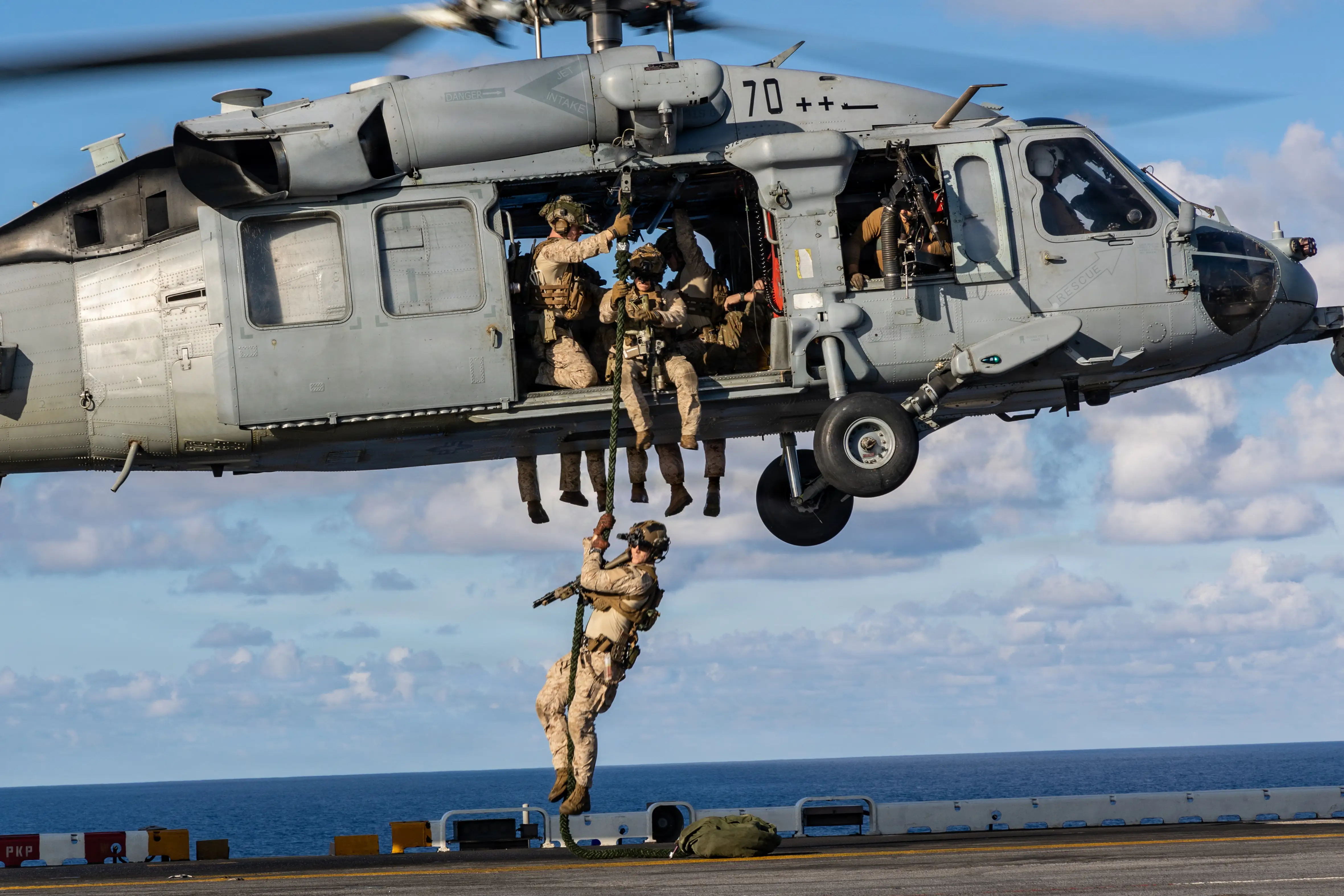
“I’m in the same boat,” said Maj. Gen. Kyle Ellison, who leads the Corps’ Japan-based 3rd Marine Division, home to the still-experimental 12th Marine Littoral Regiment. The unit was formed as part of the Corps’ effort to shed a Global War on Terror-era force structure and focus on preparations for possible war in the Pacific; though, it’s still working to reach operational maturity.
Unlike other long-standing units in the Marine divisions, the 12th MLR is a mix of infantry, logistics, and anti-air Marines, a new design tailored for Pacific warfare.
Ellison worries about Marines deploying while they’re still “on their journey,” saying it “could put them ten steps backward in their modernization” and mean “they aren’t ready when you need them to be ready.”
The challenge between preparing for future fights and meeting current demands across the globe and at home is playing out across the force.
Last week, the service announced new recurring deployments to Alaska as part of its preparations for possible Arctic warfare. A Marine familiar with the plans described the effort as another source of “strain,” saying the Corps is still sorting out how to provide that manpower alongside competing priorities.
More broadly, division commanders describe a force stretched by overlapping missions and modernization demands.
“I feel like the division is stretched a little thin,” Maj. Gen. Thomas Savage, the 1st Marine Division commander,” said to Business Insider during a recent visit to Camp Pendleton, California.
“We are busy, and we’re making mission, and we’re getting the things done we need to get done. But you just run out of people to do things,” he said. “And I sometimes feel like we’re getting close to that bubble when something else pops up and then something’s got to give.”
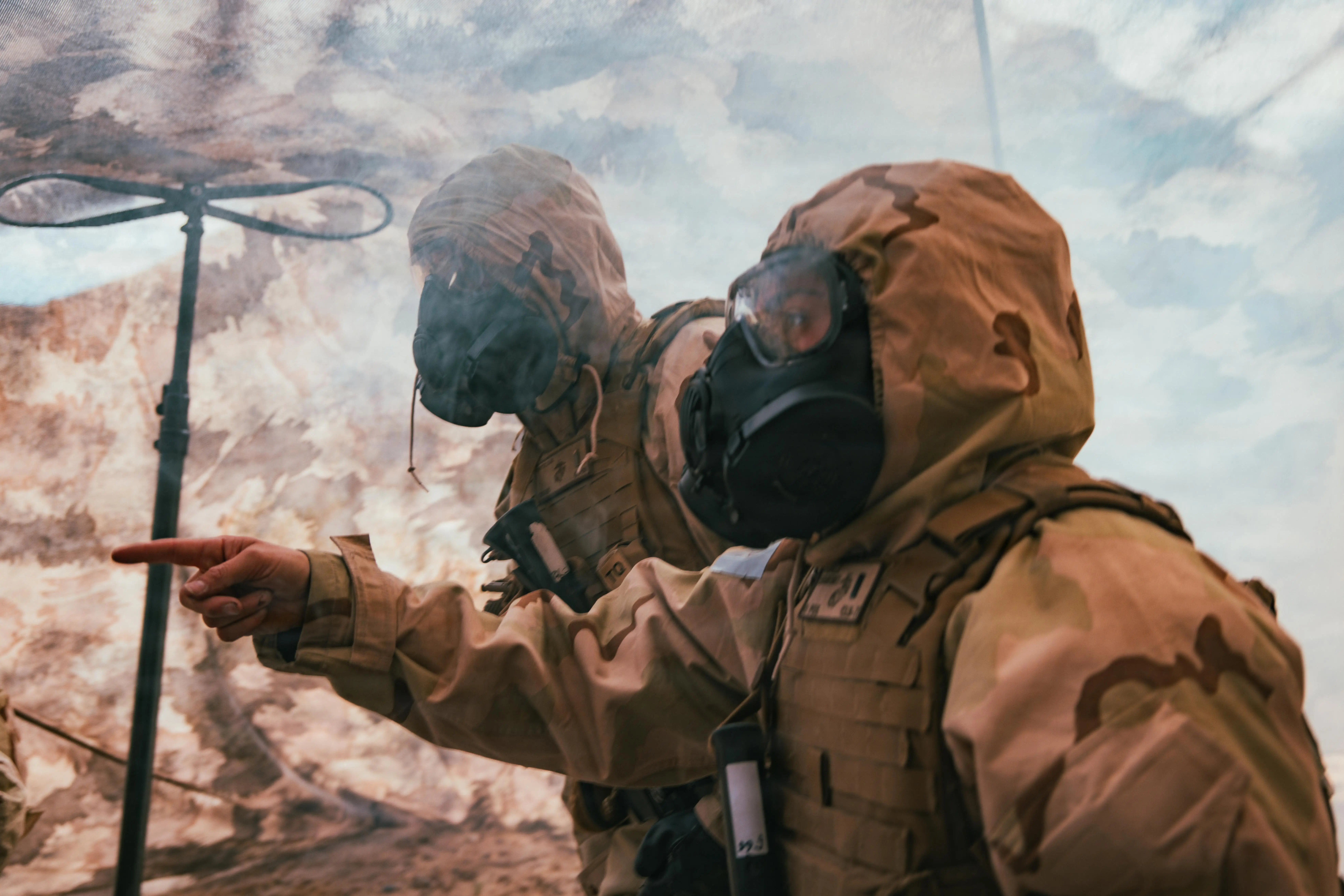
Most Marines enlist eager to deploy abroad, retired Marine Lt. Gen. Lori Reynolds, who previously led the service’s Cyber Command, told Business Insider. However, increased demand can create stress behind the scenes.
Issues can appear when exercises and deployments arise suddenly or lack clear ends, affecting predictability. Those demands can “consume readiness,” Reynolds said, taxing equipment, disrupting important skill-sharpening courses, or straining families.
“You can keep them motivated for a long time if they just know what the calendar looks like,” she said.
If suddenly faced with a major contingency, Savage said his division could still respond, as it has for decades. But a new crisis amid existing demands could force him to call upon units “that aren’t quite ready to go yet, not quite fully manned, not quite fully trained to be able to meet that requirement.”
“We’ve got to be ready to do a major warfight, and we’ve got to maintain our responsibilities with what we’ve got going on,” he said. “That is a concern for me.”
Read the original article on Business Insider
The post Marines are trying to get ready for punishing future fights, but commanders say they’re stretched thin and short on time appeared first on Business Insider.