My wife and I recently found a rat in our garden. Normally I would have called an exterminator, but instead, I turned to ChatGPT, which suggested that I set up a cage trap baited with meat. I did and felt a small surge of satisfaction — the satisfaction of handling something yourself, without paying a professional and without waiting for one to show up. (It didn’t work; the rat ignored the trap.)
The lived experience of an Oxford academic does not usually generalize well, but I know I’m not the only one who has recently become my own exterminator, repairman or accountant. Roughly one in four Americans used artificial intelligence to help file their taxes. A study of 1.1 million ChatGPT conversations found that nearly three-quarters of messages were not work related. People turned to ChatGPT most frequently for practical guidance — on health, household repairs, financial decisions and other matters a professional might once have weighed in on or handled.
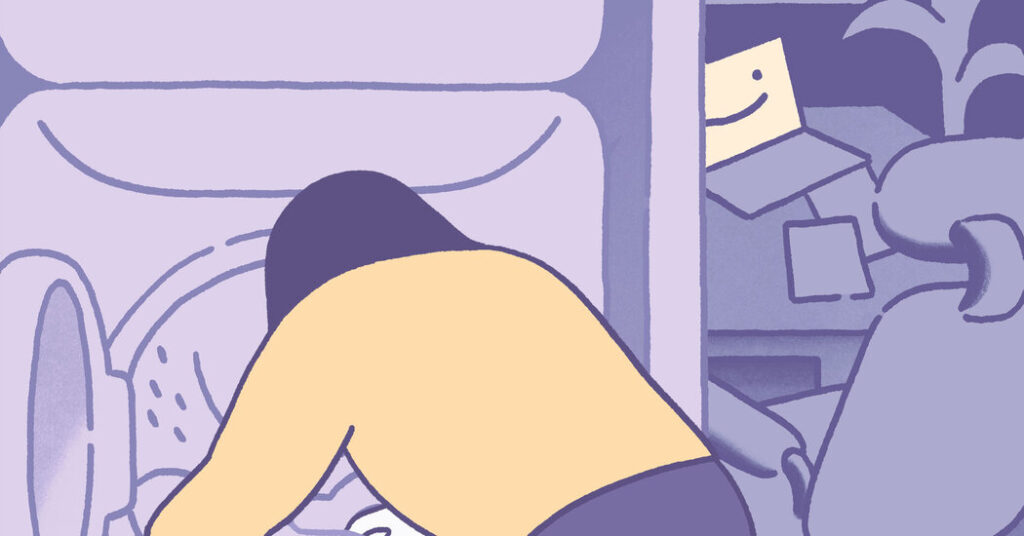
We have been told that A.I. will take people’s jobs. What no one mentions is that many of those jobs are landing on us. The A.I. revolution involves a massive transfer of labor — not from worker to machine, but from worker to consumer. The ability to do everything ourselves may be satisfying, but it can gradually overload us with busywork without our noticing. Tasks that we used to delegate will still be done. They will simply move out of the work force and into the household as new forms of invisible, unpaid labor.
The movement toward self-service is one of the most powerful and least appreciated forces in the history of work. Consider the washing machine. In many 19th-century cities, laundering was a major urban service occupation, and one of the hardest. The work meant hauling water, chopping fuel, boiling linens in lye, scrubbing each garment by hand against a washboard, wringing, drying, starching and ironing with heavy flat irons heated on a stove. It consumed the better part of a week. Laundresses worked everywhere: Even families who did their own cooking and sewing paid someone else to wash their clothes. In the 1880s, when Black laundresses in Atlanta organized a strike, linen piled up and the city ground to a halt.
The washing machine, together with the infrastructure that made it possible — running water, electricity, synthetic detergents — gradually ended this world. But it did not end the work. Customers bought machines and did the laundering themselves. The laundress was displaced by her former clients.
The historian Ruth Schwartz Cowan documented a further irony. The housewife ended up doing more household work, more frequently, at higher standards — unpaid. Men stopped wearing detachable collars and cuffs, which meant entire shirts had to be laundered. Children’s clothes were changed daily rather than weekly. The laundress lost her job. The housewife gained a chore.
That pattern has been repeating ever since. Self-checkout makes scanning and bagging the shopper’s job. The internet gives travelers direct access to the flight schedules and hotel reviews that agents once controlled. Online brokerages put a trading terminal in every pocket. And the smartphone replaced the bank teller with you.
We’re used to being our own checkout assistants, travel agents and tellers. Handling these tasks ourselves often makes our lives more efficient. But A.I. is now extending the chore economy into territory that once required years of training, such as law and medicine. As of January, more than 40 million people worldwide were using ChatGPT daily for health questions — from symptoms to decoding bills and fighting insurers.
There are tangible benefits. One man said his family used Claude to cut a hospital bill from $195,000 to under $33,000 by identifying duplicative charges and coding errors. A chatbot gave them accounting services they may not have had access to otherwise. When the washing machine became cheap enough for the middle class, it was a democratizing force. Millions of families gained access to clean clothes on a regular schedule. The same is true today.
However, self-service does not automatically reproduce a professional’s judgment. The billing specialist notices the code the patient didn’t think to question. The accountant points out the deduction the taxpayer didn’t know existed. The tool answers what you ask, whereas the expert tells you what to ask. That is the A.I. trade-off: greater access, but thinner expertise.
Second, no single act of self-service feels like a major burden. We notice the accountant’s fee we didn’t pay. We rarely notice the evening we spent doing her job. There is a name for this: opportunity cost neglect — the well-documented tendency to overlook the value of what we give up when the cost is time rather than money.
As more consumers turn to A.I., professionals may become harder to find; it is hard to find a staffed checkout lane or a bank branch with a teller.
When the work shifts to the consumer, it disappears from the labor statistics. A company can replace an employee with a machine or hand the task to the customer; in both cases, a paid job has disappeared. If you do the work at home, no one is measuring your hours. That’s why the digital revolution improves labor productivity — and boosts corporate profits — but leaves people feeling overburdened.
The laundress disappeared from the statistics long before she disappeared from memory. Many more trades and professions are on the verge of the same shift. The A.I. revolution may not have taken your job yet. But it has already put you to work.
Carl Benedikt Frey is an associate professor at the Oxford Internet Institute at the University of Oxford, and he directs the Oxford Martin School’s Future of Work program. His most recent book is “How Progress Ends: Technology, Innovation and the Fate of Nations.”
The Times is committed to publishing a diversity of letters to the editor. We’d like to hear what you think about this or any of our articles. Here are some tips. And here’s our email: [email protected].
Follow the New York Times Opinion section on Facebook, Instagram, TikTok, Bluesky, WhatsApp and Threads.
The post This Is Why You’re Drowning in Busywork appeared first on New York Times.