Iran has responded to the latest U.S. proposal to end the war, its state media reported Sunday, after an exchange of hostilities around the Strait of Hormuz in recent days highlighted the fragility of a ceasefire the two sides reached more than a month ago.
Details of Iran’s response, submitted through Pakistani mediators working with both sides, were not immediately clear. “I can’t go into more details,” Pakistani Prime Minister Shehbaz Sharif said Sunday.
President Donald Trump and administration officials have said in recent days that they were expecting a response. The White House did not immediately respond to requests for comment Sunday.
Trump, in a Truth Social post on Sunday, did not reference the reported response but accused Iran of “playing games with the United States” and of “laughing at our now GREAT AGAIN Country. They will be laughing no longer!”
During a visit to Italy on Friday, Secretary of State Marco Rubio said he hoped Tehran would present a “serious offer for a ceasefire.”
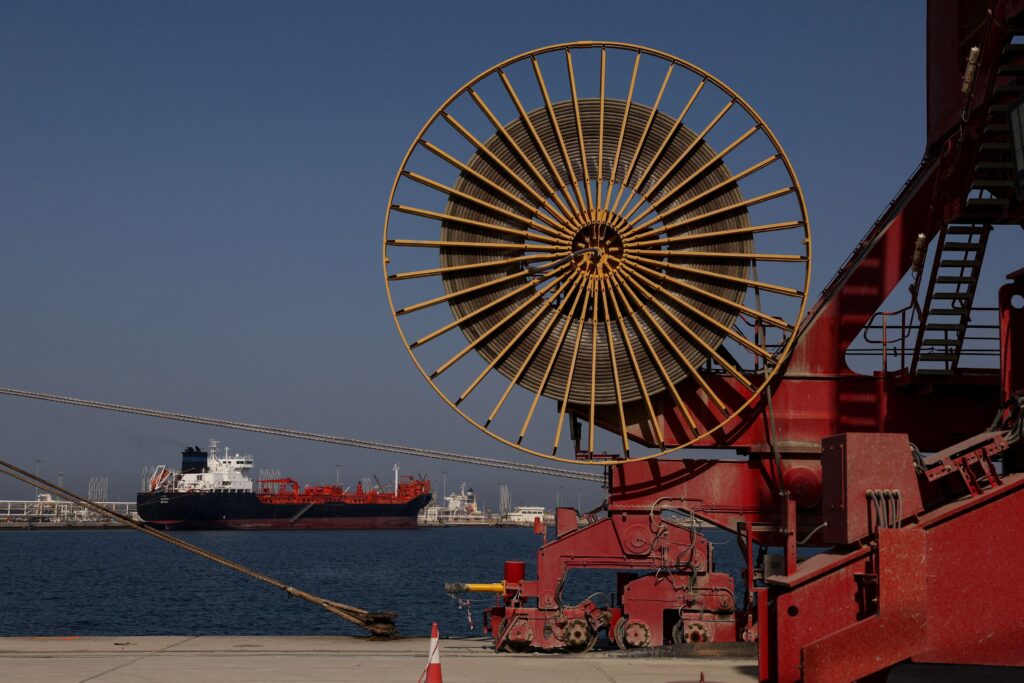
Rubio’s comments came as U.S. warplanes struck two Iranian-flagged tankers that U.S. Central Command said were attempting to violate its naval blockade by entering an Iranian port along the Gulf of Oman — one in a series of recent clashes in the region even as Trump and military officials said the ceasefire was still in place.
On Saturday, Rubio and Steve Witkoff, the White House’s special envoy to the Middle East, met with Qatari Prime Minister Mohammed bin Abdulrahman Al Thani to discuss the efforts to end the Iran war, according to a statement from Mohammed’s office.
The group also talked about the Pakistani mediation “aimed at reducing escalation that contributes to enhancing security and stability in the region,” according to the Qatari leader’s statement. The State Department said in a statement that Rubio and Mohammed discussed “the importance of continued close coordination to deter threats and promote stability and security across the Middle East.”
Speaking to CBS News’s “Face the Nation” on Sunday, Energy Secretary Chris Wright said he expected Washington to receive Tehran’s proposal “very soon,” adding that “things are tough for the leaders of Iran right now, and I think they’ve got growing motivation to make a deal.”
“We know where this is going to end,” Wright said. “We don’t know the route to there, but at the end of the day, we’ll have free flow of traffic through the Straits of Hormuz, and we will have an end to the Iranian nuclear program.”
Wright, in a Sunday interview with NBC News’s “Meet the Press,” said that he is “avoiding price predictions” on whether gas prices could rise to $5 a gallon. But when asked whether he supports suspending the federal gas tax, Wright said the administration is “open to all ideas.”
“Everything has trade-offs, all ideas to lower prices for American consumers and American businesses,” he said.
Tehran’s response to the U.S. ceasefire proposal comes as a Washington Post-ABC News-Ipsos pollfound that Trump’s war in Iran is as unpopular among Americans as the Iraq War was during peak violence in 2006 and the Vietnam War in the early 1970s.
In the poll, 60 percent of Americans say the U.S. military action has increased the risk of the economy going into a recession. More than 4 in 10 say gas prices are causing them to drive less and cut household expenses, while more than 3 in 10 say they have changed travel or vacation plans. Six in 10 Americans report at least one of these impacts.
Shaiq Hussain in Islamabad, Pakistan, contributed to this report.
The post Iran responds to U.S. peace proposal after clashes test ceasefire appeared first on Washington Post.