I was raised in Norway, but my academic career brought me to the middle of America — Chicago, Minneapolis, Kansas City, then Cincinnati — where I’ve lived and taught for over a decade. The historian Eric Hobsbawm noted that, in the postwar era, everyone inhabited two countries: his own and the United States. This was certainly the case in my family. In the depths of one Norwegian winter in the 1960s, a Mormon missionary gifted my father the Doors’ debut album mere weeks after its U.S. release. That gift revolutionized the local music scene. My uncle, a committed Maoist who detested American capitalism, postponed his university education to work his way to New York City on an ocean liner. Later in life, he maintained a staggering collection of classic western films. Despite his politics, he was a tireless accumulator of American cultural capital, typical of the generation the filmmaker Jean-Luc Godard called “the children of Marx and Coca-Cola.”
This was a form of strategic ambivalence that encouraged cultural consumption while keeping a distance from American empire. In the 1980s and ’90s, U.S. cultural exports continued to flow overseas, but American influence was becoming divorced from physical goods as Reaganomics and free trade dissolved postwar manufacturing in America. Today, the material pathways that sustained the American century have been replaced by digital ones less tethered to any national culture. For a teenager overseas, what’s left of America is social media; U.S. hard power has been disconnected from a cultural hegemony once guaranteed by recognizable material and cultural artifacts. The American political might remains, but the physical culture that once accompanied it is gone.
When I came to the United States (and eventually became a citizen), the global war on terror and the Great Recession framed anti-American sentiment abroad and unrest at home. Stylistically, the country began to embrace a more redemptive, innocent aesthetic that also reflected the real experience of downward mobility: the urban lumberjack look, with its checked flannel, raw denim and work boots. The heritage moment was mostly nostalgia, a search for blue-collar valor among people who had never been very near any kind of manual labor, but whose professional-class certainties receded as Silicon Valley venture capital expanded.
This moment also sparked my personal interest in vintage clothing. I became American by sifting through the Midwest’s vintage markets, antique malls and thrift stores, one item at a time: an old denim coverall jacket in Marquette, a 1940s U.S. Army ski parka from a St. Louis strip mall, a century-old pair of chinos from a thrift store on the Nebraska plains. Americans often speak about their identity by invoking abstract notions of liberty and democracy. For an immigrant raised on American culture abroad, belonging in America was concrete. I undertook a kind of private archaeology through the objects and artifacts that American culture produced.
It has turned into a lifelong pursuit.
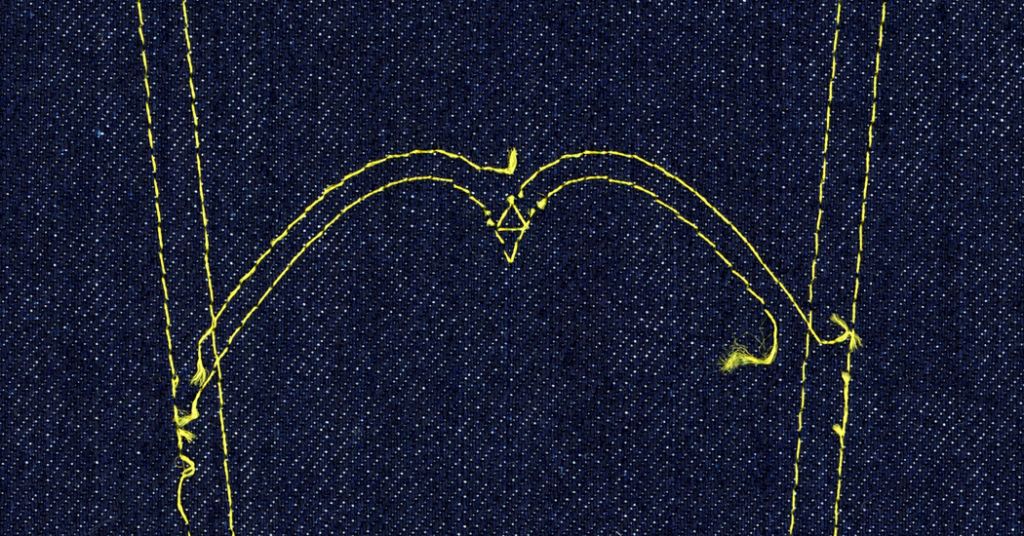
In December, while traveling in Milan, I visited the vintage clothing store Union Fade. It’s a place for people like me: Europeans with an encyclopedic passion for vintage American style. Similar stores throughout Europe sell iconic 20th-century American clothes: Levi’s “big E” denim; midcentury work- and sportswear by Carhartt and Champion; and military apparel, from World War II-era uniforms to tropical jackets of the Vietnam period. These classics of American style arrived around the world alongside American military presence, but the clothes always transcended the political power behind them. This duality underwrote cultural hegemony in the American century: The United States’ cultural and stylistic output was not just omnipresent but cool, even countercultural — even among those who despised the country’s role in global affairs.
This tension is becoming far harder for non-Americans to sustain. American garment manufacturing is barely present; the quality it once suggested has mostly vanished. American policy has become more alienating to many Europeans, too, even to those who were once able to square that circle. While the clothes at stores like Union Fade — and their high prices — testify to the enduring appeal of American style, they are now historical artifacts more than part of a living present: deposits of the material culture of American empire, disseminated along the geopolitical pathways of the postwar world order. This material sediment is set to outlast the American century.
Material culture becomes digital content, in which nationality is often harder to discern. When that happens, the unpredictability of real-world aspirations gives way to the smoothness of the social media feed. Platform-driven phenomena — cryptocurrency speculation or sports betting — take over, their cycles drawing users in. These platforms may be in American hands, but what they are exporting is not a way of life.
Instead, style has become a search for lost meaning and for an authenticity that only the pre-internet age can convincingly provide. Social media has inflated desires for all things vintage; if you are selling old Levi’s or Carhartt, demand is at an all-time high. But the world that made these clothes is gone. From the collector’s point of view, the American century expired decades ago, and it is not coming back. In the fate of American clothing, we discover a harder truth about American decline, an impasse felt for some time in political crisis. To the materially and culturally dispossessed, the Make America Great Again movement was from its inception a collective vintage fever dream, but in reality it is clueless about American style and cultural history.
Can anyone halt the destruction of a lifetime of American cool? If there is hope for American style to survive the end of the American century, it will be with the help of outsiders. As W. David Marx has written, the manufacture of classic American garments survived in Japan after American production shut down in the 1990s. The vintage looms like the ones that made American denim during its golden age are still operating in Okayama. The work of preserving American style might fall to non-Americans, or to recently minted Americans like me.
Should we fail, then the world of my father, where everyone, even in political dissent, inhabited American culture, will not be around for much longer. We will miss it when it is gone.
Henrik Sunde Wilberg is a Norwegian American writer and critic. He has taught at Northwestern University, the University of Minnesota, Morris, and Miami University in Ohio. He writes the newsletter “Why We Remain in the Provinces.”
The Times is committed to publishing a diversity of letters to the editor. We’d like to hear what you think about this or any of our articles. Here are some tips. And here’s our email: [email protected].
Follow the New York Times Opinion section on Facebook, Instagram, TikTok, Bluesky, WhatsApp and Threads.
The post How American Cool Dies appeared first on New York Times.