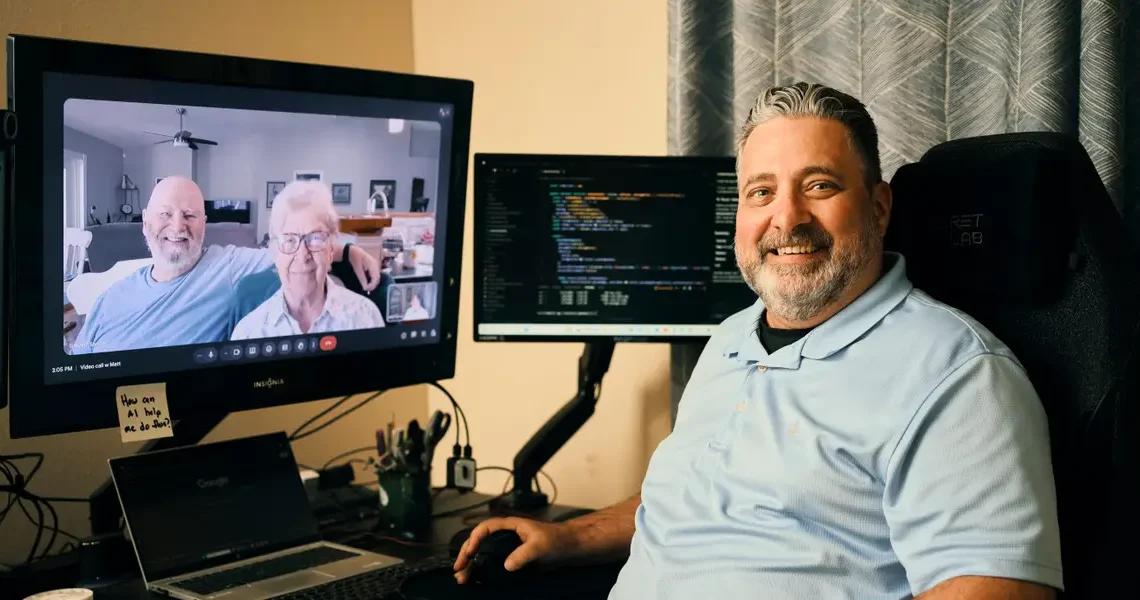
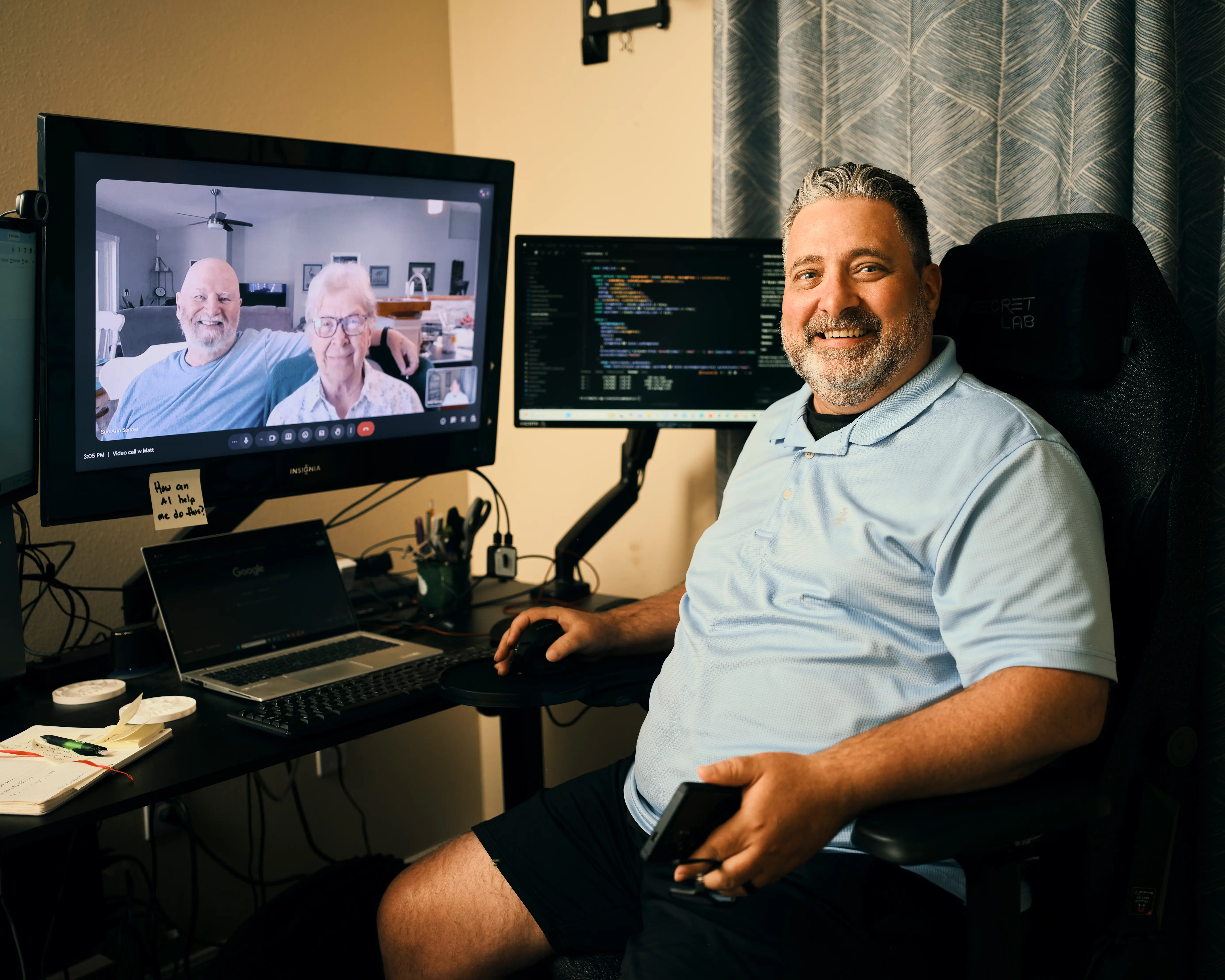
This as-told-to essay is based on a conversation with Matt Sanner, 54, a data manager for a bank in Tampa. Sanner vibe coded an app called ScamSkeptic for his aging family, who had fallen victim to scams. Business Insider also spoke with Sanner’s parents, Sue, 79, and Bob, 83, about how they’ve used the app. This interview has been edited for length and clarity.
MATT: I’ve been in banking for 25 years, mainly in data management. I was around software development in that space, so I had some Python knowledge, but I’m not proficient.
On a quarterly call with the bank where I work, I heard about the huge amount of money our fraud department protected. It made me wonder how much fraud happens nationwide. I wanted to do something that made the older folks I know, like my parents, pause for a minute and be more skeptical.
SUE: My husband and I live in Melbourne, Florida, and have been married for 60 years. We’ve been together our entire lives — we were childhood sweethearts. I was a stay-at-home mom, then I got my registered nursing degree. I also volunteered as a master gardener.
Our son Matt has always been busy thinking of something to do next. He has his 3D printer, which he’s always working on.
BOB: I worked for the government for a while before teaching management and sales skills with an international training corporation. I retired in 2010, and when my sons decided to go south with our grandkids, we followed them.
Our family has dealt with online scams
MATT: No matter where I’ve worked, we’ve received mandatory cybersecurity training, including detecting phishing, smishing, vishing, and quishing. I feel like I can pick out a scam a mile away.
BOB: Matt told us last year that he wanted to develop an app because we were potential victims of scams. I do think I’m more prone to falling for one than Sue, who’s more cautious. I spend more time on the computer than she does, and because of that, there’s a bigger window for people to perhaps take advantage of me.
One of my debit card numbers was acquired, and someone had attempted to use it. Now, I use a lot of protective measures like double authentication and keeping my credit lines locked.
.vertical-pair__images {
display: flex;/*Remove to avoid stacking on mobile*/
flex-direction: column;
gap: 4px; /*Adjust to change space between the images on mobile*/
}
.vertical-pair__images .figure {
width: 100%;
}
@media (min-width: 768px) {
.vertical-pair__images {
flex-direction: row;/*Remove to avoid stacking on mobile*/
align-items: flex-start;
gap: 8px; /*Adjust to change space between the images on desktop*/
}
.vertical-pair__images .figure {
flex: 1;
min-width: 0;
}
/* OPTIONAL: Make the pair wider than the text column on desktop.
Remove or comment out this block to revert to default width.
Adjust the percentage to control how wide it extends —
margin-left should always be half the extra width to keep it centered.
Examples:
width: 110% → margin-left: -5%
width: 120% → margin-left: -10%
width: 130% → margin-left: -15% */
}
}
Zack Wittman for BI
MATT: My mother-in-law received a call from what she thought was her grandson, claiming to be in trouble and needing her to wire $5,000 immediately. She was at the bank preparing the wire when a well-trained bank teller asked probing questions about the unusual behavior. The teller identified it as a scam and asked her to call her grandson directly, who was safe.
My father clicked on a link in an email he thought was from his insurance company, and his computer was hacked. My aunt is always filling out online quizzes that subtly collect sensitive information, not realizing how scammers can use it to crack passwords or in a call to prove their authenticity.
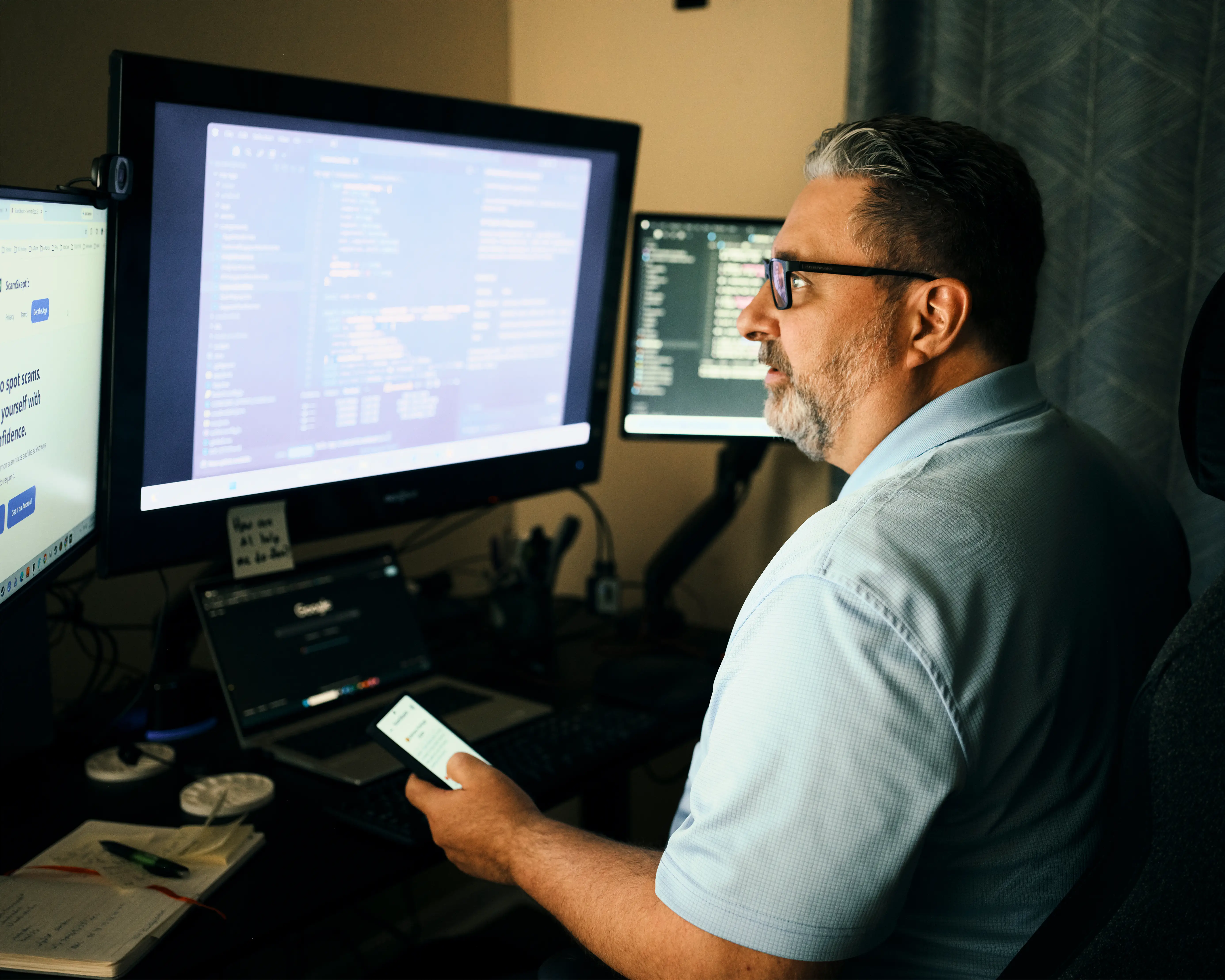
I decided to build an app to protect people from potential scams
MATT: I wanted to learn to vibe code a mobile app because I’d never done it. I want to make sure I’m “keeping up with the times” as AI and vibe coding change the software development industry.
My first idea for the app was to intercept the call or put up a screen when a potential scammer calls, showing a message that says, “Be aware.” The technicalities of doing that on both iPhone and Android were challenging, so I had to pivot.
I started with using ChatGPT and Perplexity. I wanted to create the app without paying for fancy software. I told the chatbots I was interested in developing a mobile app, but don’t know how to code, so I asked for a breakdown of the steps and systems I would need for the frontend and backend.
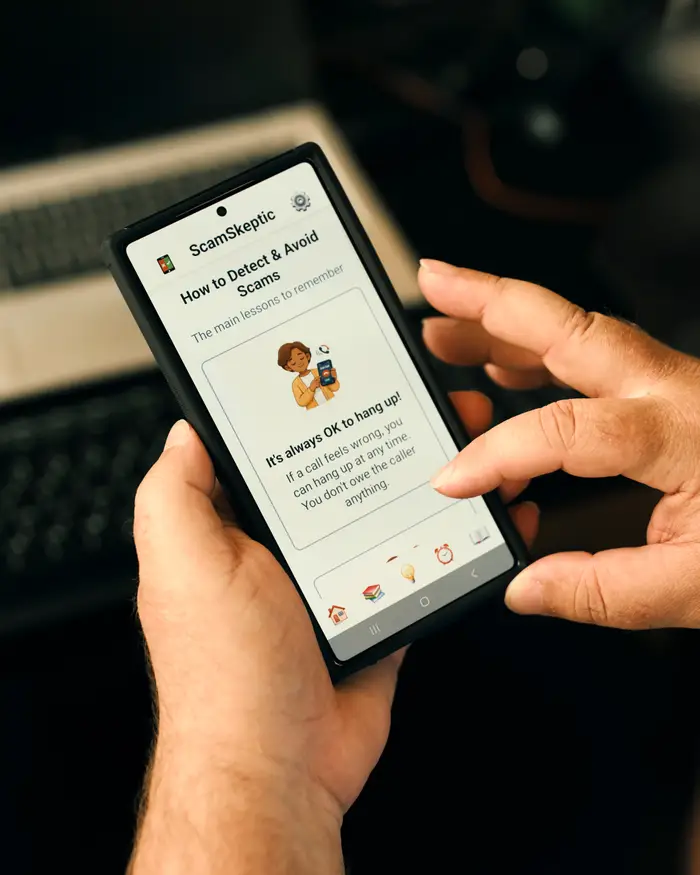
After some trial and error, I switched to building the app with Cursor and paid for the $20 a month subscription to get through the queries. I didn’t want the app to have ads or capture anybody’s information, so I went with a simple setup. I gave Cursor a plain-language command to make everything on the app accessible, with a light background, dark text, big buttons, and adjustable font size.
Reddit helped me figure out how to vibe code my app
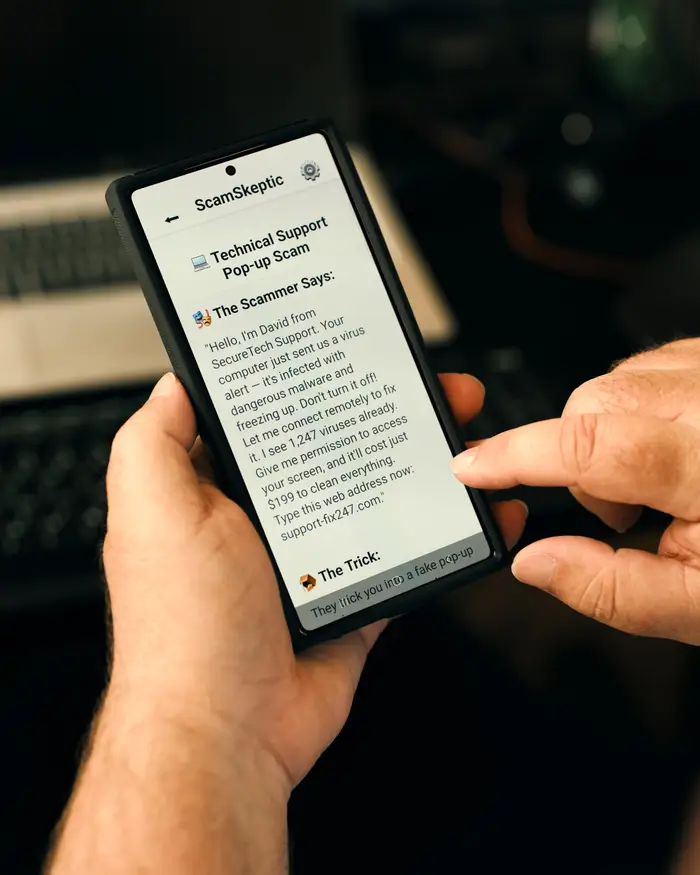
MATT: I went on Reddit to learn more about how to use these AI tools. Then I asked the AI tools to browse Reddit and grab the most common scams discussed in Subreddits. After that, I asked ChatGPT to put together red flags and guidelines for 25 types of scams.
I then vibe-coded a process where, without updating the app itself, I can update the lessons and quizzes by opening a webpage on my computer, editing something, and saving it back to the root file. This lets me push new content out quickly as I uncover new scams.
I also posted a beta version of the app on Reddit to help with my security audit and get feedback, because I’ve heard that one risk of vibe coding is getting something that works but has exposed API keys.
The app is designed around the central concept of helping people like my parents understand scam tactics, recognize red flags, and feel comfortable hanging up a call or deleting an email or text.
A new kind of caregiving
SUE: We were in the beta testing and gave our input. We appreciate the large fonts so we can see better, and the app helped us learn about a whole new list of possible scams. It then asks us questions to see whether we would really be vulnerable to this scam.
BOB: There’s an old sentence I used to use in management consulting that says, as professionals, we don’t need to be taught as much as we just need to be reminded. Very often, that’s the same as being an older person. We need to be reminded more than we need to be taught things. This app does a great job of reminding us of these things that can get us.
MATT: The app isn’t fancy, and I’m not looking to make this a business that can retire me. If an education software company becomes a competitor of mine, that’s great because it means more of this education is out there.
Honestly, the hardest part of this wasn’t the vibe coding but rather getting the product on the App Store and Google Play Store. I do suspect it would’ve been harder to vibe code something decent if I didn’t have any exposure to data principles.
I’ve definitely noticed this has impacted my parents. Now, my dad sends me every Facebook or Instagram reel about scams. He’s definitely more aware. They recently encountered a new scam about driver’s licenses, and sent it to me. It’s funny to see how it’s a way for them to connect with me.
Read the original article on Business Insider
The post My aging family kept falling for scams. For $20, I built a no-code app to protect them. appeared first on Business Insider.