The title The Last Days of Downtown, the third and final installment in Matthew Gasda’s Dimes Square play trilogy, lands strangely. While an ode to The Last Days of Disco, Whit Stillman’s nostalgic portrait of early 1980s New York club culture, “disco” evokes the image of a particular time and place—mirror balls and bell bottoms—“Downtown” conjures little. The word has meant so many different things across so many different versions of New York that it’s almost stopped meaning anything at all. For most now, it’s just geography—the skyscrapers and gentrified neighborhoods below 14th Street. Absent Armageddon, none of that is going away. What, then, is being mourned?
At the opening night’s afters, I asked Gasda to clarify what he meant. “Well,” the playwright replied, “it’s really more the last days of Dimes Square, and the first days of Downtown. The scene is over, our moment has passed, and now, we’re being folded back into the city itself.”
Dimes Square proclaimed dead yet again. At this point, its wake has lasted almost four years. When I first moved to New York that same amount of time ago, people were already calling it done, telling me I missed the party. You weren’t at China Chalet, Dove, you didn’t read The Drunken Canal. Sometimes it feels like the scene is as addicted to its self-implosion as it is its self-mythologization.
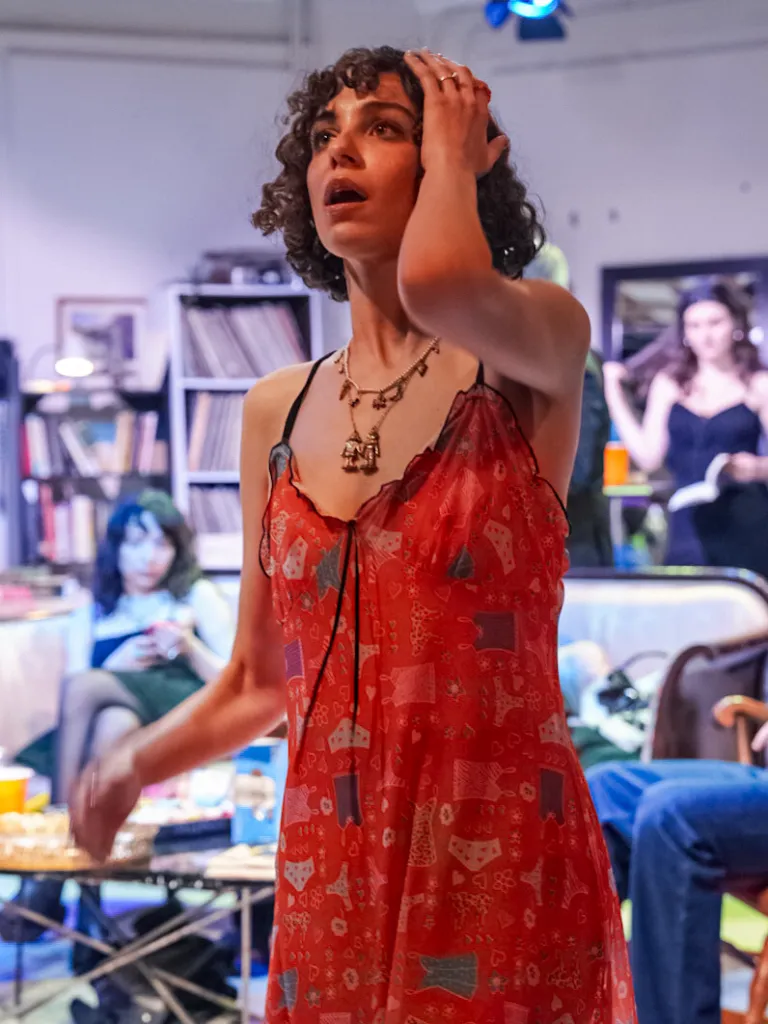
I wanted to press Gasda on why he thought so, but unfortunately, a group of beautiful women approached him before I had the chance. While he’s right in his diagnosis that the energy that existed back then has long since evaporated, the reasons why have never felt concrete, more vibes than verdict, a game of telephone spent dooming. To the extent the scene was ever actually real, and not just media-invented shorthand for a collection of overlapping groups and art projects, it has been the victim of a restless existentialism, its internal discontent as loud as its external criticism. Meg Spectre, the actress playing Mia, told me she thought Dimes Square was only ever relevant because there were a lot of journalists involved. “Like yeah, sure, I’ll write about my friends and call it a movement.” Seems believable enough. We’re occasionally prone to pitching ourselves to others.
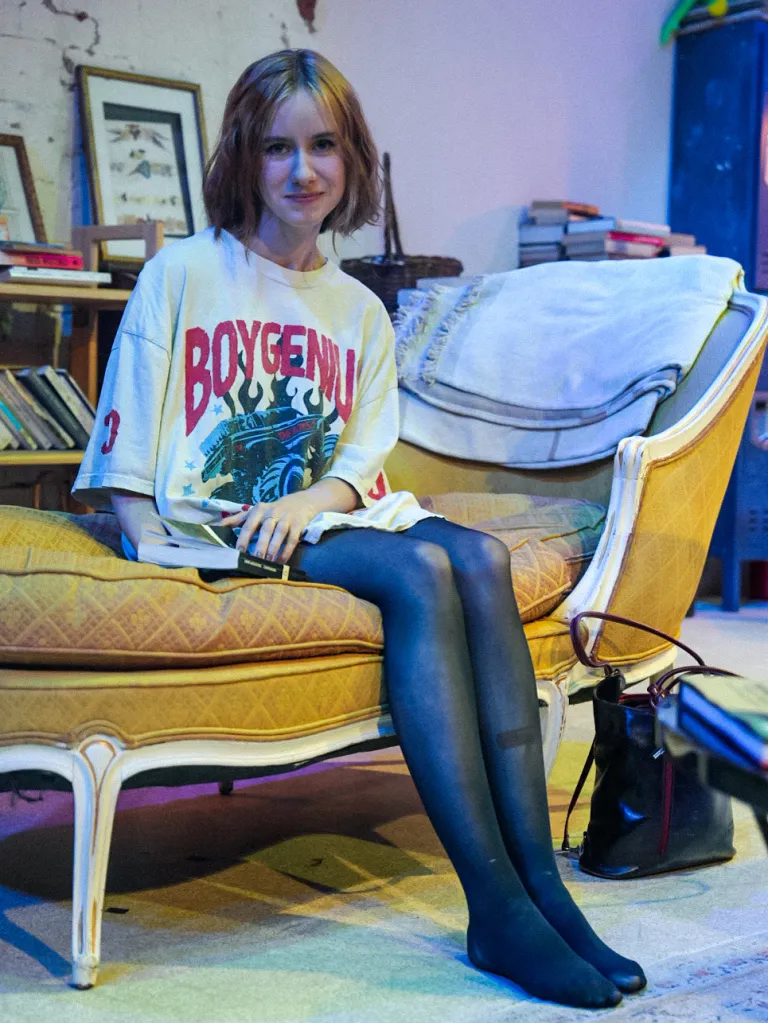
But many of the same scenesters who were around at its “beginning” are still here now, doing and making things, or talking about doing and making things, still collaborating with one another. And despite frequent accusations that Dimes Square never produced any exportable works, several have begun to find mainstream success—Downtown fixture Madeline Cash’s Lost Lambs was a critically acclaimed bestseller, and she got her start running scene staple Forever Magazine with her friend, Anika Jade Levy, whose own novel Flat Earth is being adapted into for TV. So what changed? And what really is, or was, Dimes Square anyway?
Despite endless editorials, Substacks, a (mostly forgotten) reality show, and even an H&M T-shirt, defining Dimes Square remains difficult, and even cringe to attempt (especially in 2026). There’s always questions asking why outsiders should care, usually phrased disparagingly, and truthfully no answer really suffices. But against my better judgement, I’ll try. Here’s some incredibly boring information about New York:
Physically, Dimes Square is a micro-neighborhood on the Lower East Side, a riff on Times Square named for the popular restaurant Dimes, a lockdown hotspot frequented by skateboarders and socialites. Ground zero for the city’s gentrification debate, for a time it was post-pandemic New York’s answer to Parisian cafe culture. The COVID-era makeshift dining sheds and street permits turned the sidewalks into salons, creating the closest thing in recent memory Manhattan has had to a genuine public square; a third space where crypto-rich indie sleaze douchebags and tweed-wearing “dark academic” pricks alike could chain smoke and talk Deleuze and drool over Clarice Lispector cosplayers.
Blaketheman1000 tracks boomed out from bars’ speakers, often the song “Dean Kissick,” a homage to the art critic and the budding scene’s most vocal proselytizer. After a year-plus isolated indoors, the city felt electric, its creatives horny for life, narrativizing themselves and LARPing like characters in an open-world RPG. Everyone you knew was a “niche internet microcelebrity,” even if they only had a few thousand followers. As Kissick wrote, it was “like a Broadway, or a Warhol’s Factory, for the 2020s performance of yourself as a new kind of Superstar.” It was, as the trend forecaster Sean Monahan predicted, a “vibe shift”—and frankly, it was pretty lit, if completely decadent.
All of that is over now, the roads cleared and shacks dismantled, a consequence of society’s “return to normal” and City Hall’s deference to noise-averse landlords.
But what captured the public’s attention (and ire) wasn’t the landscape. The scene quickly outgrew its namesake block, K-holing in woke Bushwick as readily as based Chinatown. Over time, a significant segment of Dimes Square became notorious for holding controversial cultural and political attitudes. These beliefs were never uniform; participants’ principles ranged from anti-identitarian leftism to outright fascism, a motley crew of outside dissenters to then-ascendant hyper-liberalism. Tradcaths drank with accelerationists and schizopoets snorted lines with Stoics, unified by aestheticism and the pursuit of “beauty,” whether of a romantic past or robotic future. Faceless meme accounts penned apocalyptic manifestos and attracted esoteric e-girls as willing disciples, the scene a fusion of the internet and IRL, its online performance determining its offline reality. Anons flocked to New York to become artists, or posters, or simply to say slurs, forming a new, chud Fiume off Canal Street, where aggrieved auteurs staged elaborate humiliation ritual struggle sessions for their “Maoist” critics. Racism and sexism were downplayed, if not celebrated, though mostly from a plausibly deniable, post-ironic veneer. Many practiced an antiquated libertinism, lionizing Henry Miller and Anaïs Nin and viewing wokeness as sexless, MeToo as sterilizing, polyamory as cringe, and adultery as chic; the negotiation of desire a greater evil than an excess of it.
That this debauchery, derided as anti-feminist, was shaped as much by women as imposed upon them was one of the scene’s most outwardly confounding qualities. Red Scare’s Anna Khachiyan and Dasha Nekrasova served as the crowd’s chief tastemakers, almost its royalty, their transformation from dirtbag-left darlings to New Right iconoclasts reflecting the scene’s own metamorphosis. For this, the pair were frequently dogged by rumors of accepting “Thielbucks,” or funding from the venture capitalist Peter Thiel, long reported as interested in financing a reactionary avant garde—though there was never credible evidence, just his guru Curtis Yarvin popping out for a few parties.
“Tradcaths drank with accelerationists and schizopoets snorted lines with Stoics”
In many ways, Dimes Square was unified less by ideology and more by allergy, a shared aversion to “cancel culture” and rejection of the activist left’s baroque institutional demands—its socialites considering the scene a refuge from what they perceived as pervasive and suffocating restrictions on self-expression. The clique were widely loathed, with each public mention of them met with scorn and accusations of elevating otherwise “irrelevant” right-wing trolls, or sating the egos of trust-fund assholes—especially since many didn’t really do anything besides hang out and talk about themselves. But even so, its detractors couldn’t stop talking about them either. Their spectacle was too addicting, and nearly monthly, a new exposé arrived in the press, to great exasperation but even greater readership, only deepening the madness.
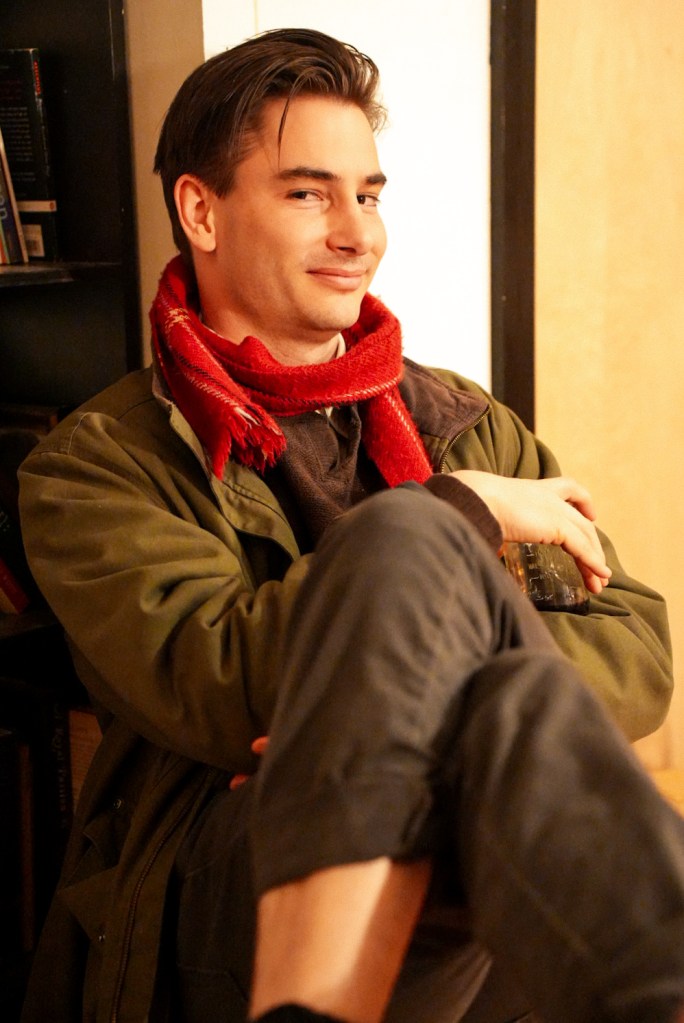
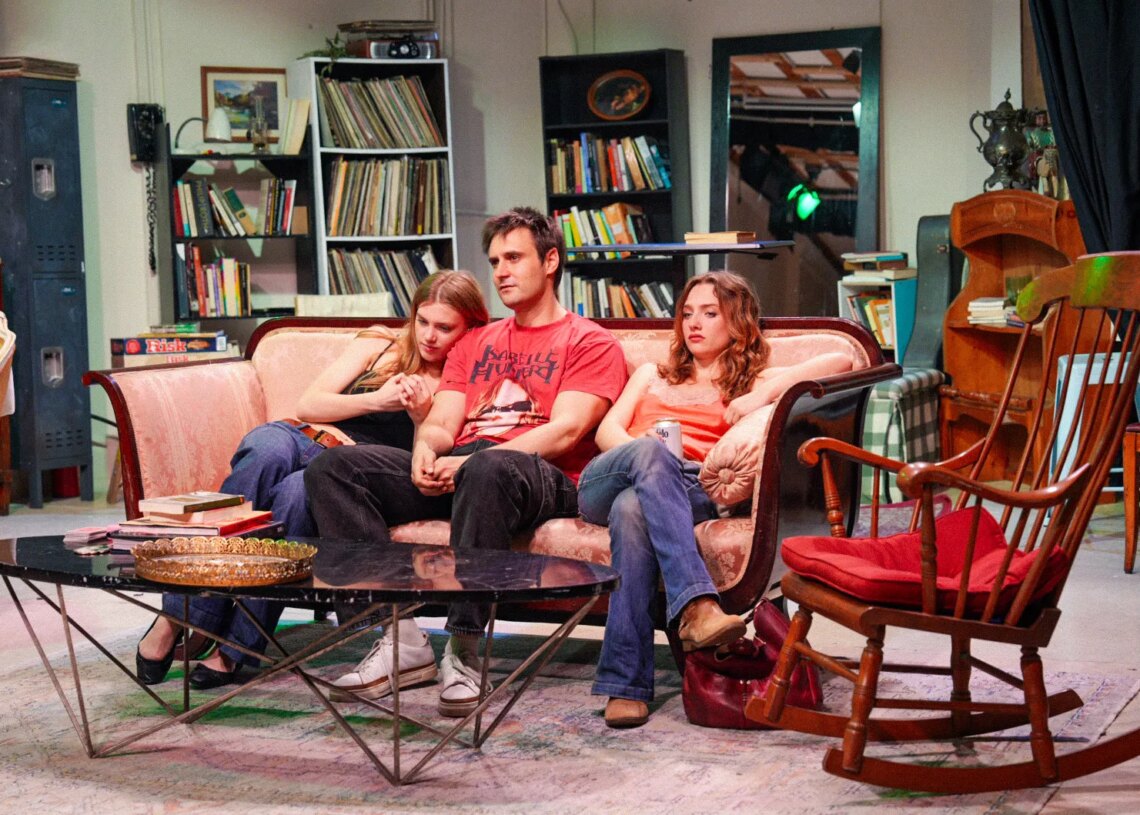
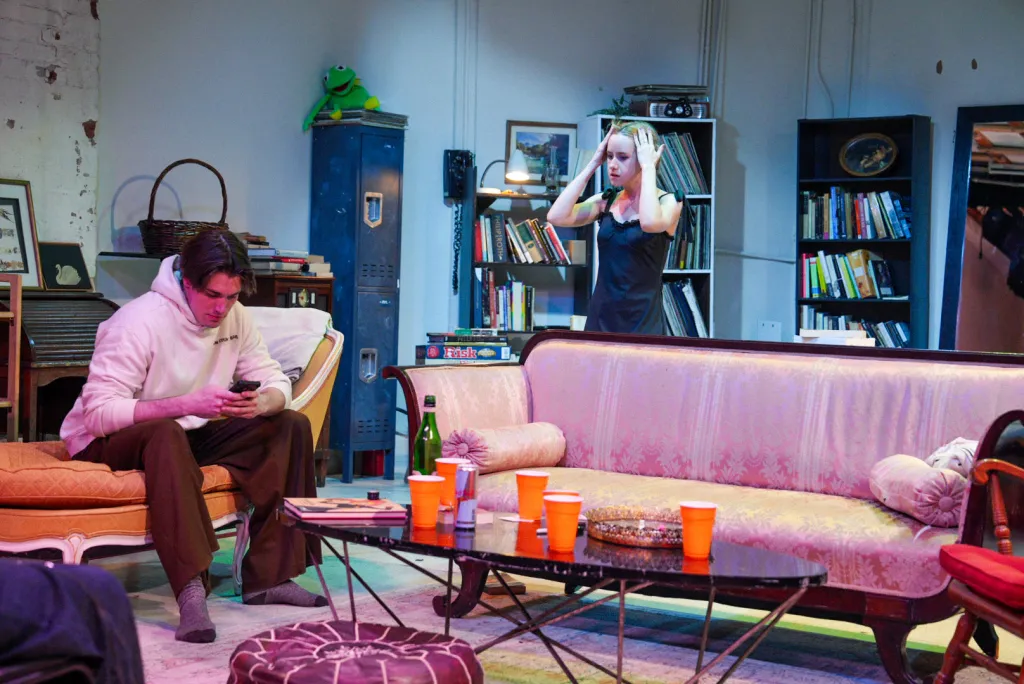
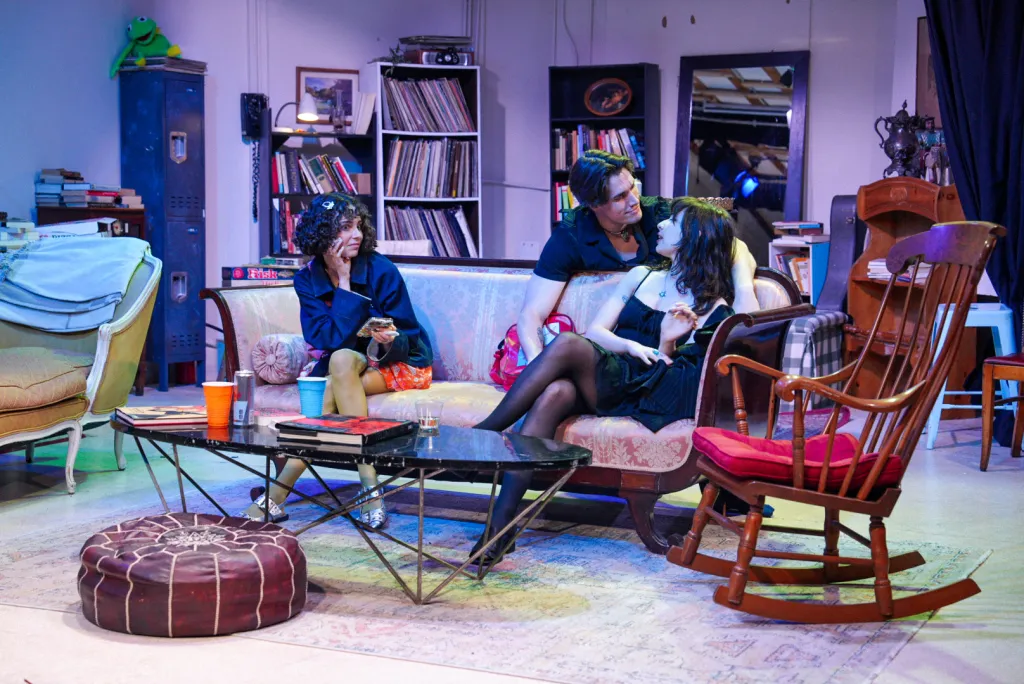
Matthew Gasda, a smartphone-abstaining, politically heterodox Tory with aspirations of becoming a 21st century Chekhov, is perhaps the definitive Dimes Square artist, and with dozens of plays and novels, undoubtedly its most prolific—though he and his company, The Center for Theater Research (formerly the Brooklyn Center for Theater Research, or BCTR) were never formally part of the reactionary group, just wary neighbors in the broader scene ecosystem. The CTR wasn’t even located in Manhattan then, but in a Greenpoint industrial loft, only moving earlier this year. The original 2022 Dimes Square, and its 2023 follow-up, Afters, depicted its first, more palatable definition, more about aloof artists than performative fascists, its coke binges not yet having borne The Thin White Duke. The Last Days of Downtown, co-directed with Sophia Whetstone, lives in the second meaning’s residue—the long hangover after the edgelords’ triumph, in culture as well as government, and their morphing the scene’s image. That drift might be what contributed most to Dimes Square’s collapse. When those provocations became passé, rather than fight to reclaim or salvage the brand—a label rarely embraced in the first place—non-rightist scenesters ran from it, now recognizing it as creatively constraining, if not completely radioactive.
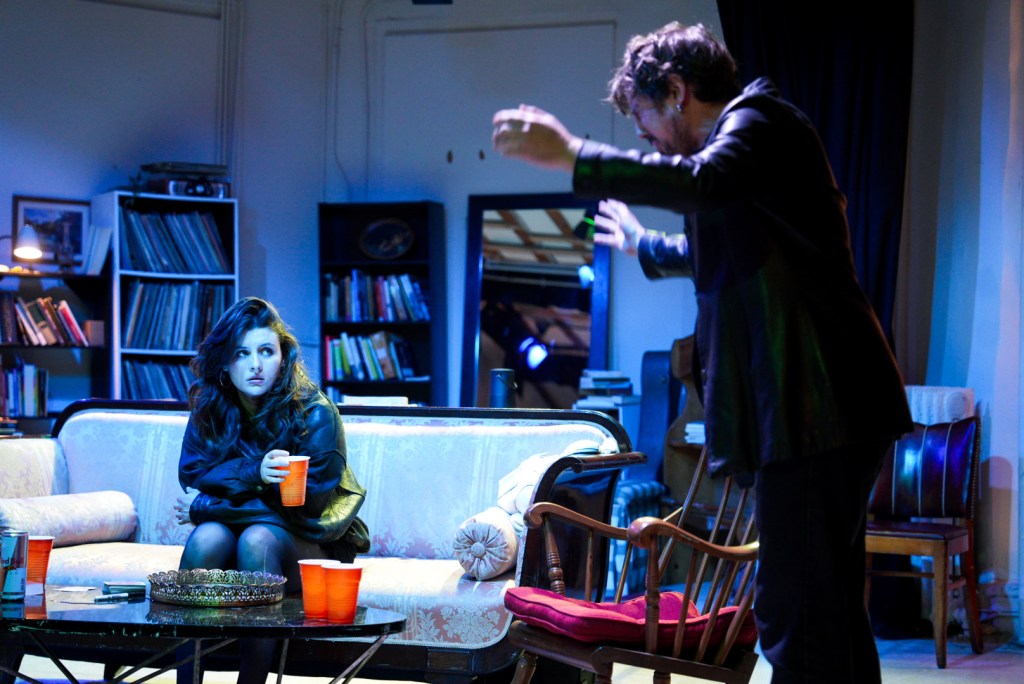
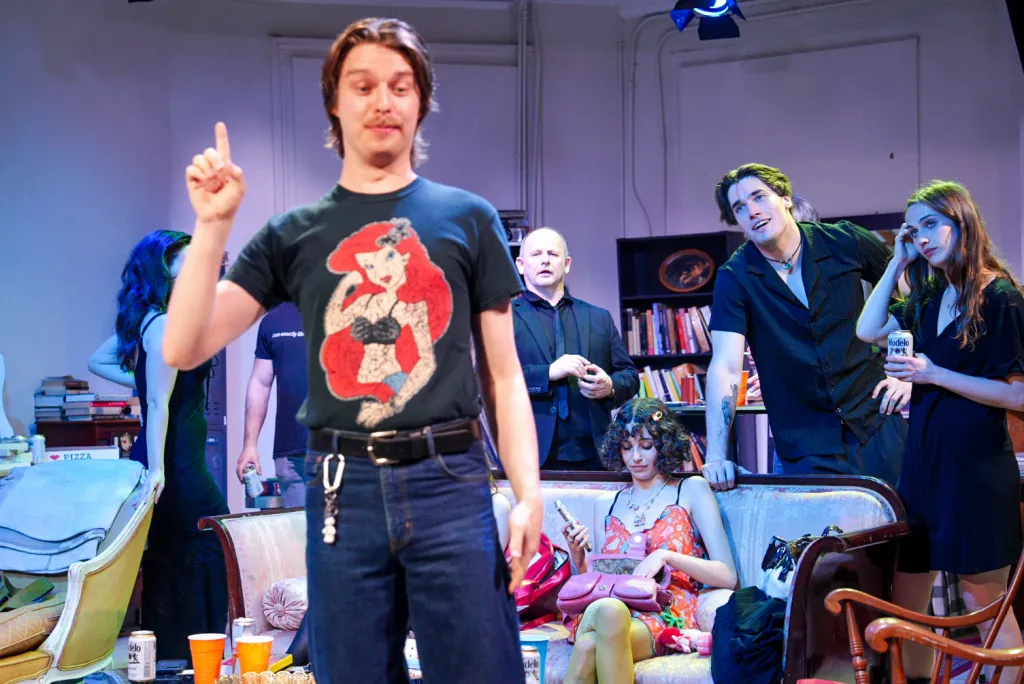
Terry, a depressive film director prominently featured in the first Dimes Square, and perhaps the closest thing its 27-person cast has to a main protagonist, chastises attendees of his 40th birthday party—a scene once defined by its youth and transgression now gathered around its avatar’s midlife reckoning—for suggesting they bail for the new Sovereign House, the downtown clubhouse for New Right hipsters. “I just want to go as like, a pure anthropologist,” his friend Ashley (Colette Gsell) insists, a common excuse for the scene’s engagement with its more inflammatory elements. Terry has none of it. Sean Lynch, his actor, says that his character is “trapped in a kind of reputational paralysis, hyper-aware of how he’s perceived, how he’s positioned within the scene, [leaving him] in a constant state of low-grade suffocation,” a common affliction of these downtown strivers, especially acute when these affiliations carry social costs.
It’s a predicament the play addresses directly. At one point, a partygoer mentions that someone was lauding Terry as “the only real filmmaker on the right.” Terry deflects, neither accepting nor rejecting the label, merely stating he believes that people are fallen and not perfectable, and to take that as they will. One wonders if he’s being earnest or merely evasive. In his review of the original Dimes Square, the leftist writer Mike Crumplar critiqued these noncommitments as being the scene’s central failure, alleging many involved didn’t believe in anything besides the erotic appeal of age-gap relationships or their inalienable right to say the word “retard”—nothing actually that shocking or subversive. They were “all socialists five years ago and now that socialism has gone mainstream, they’ve become Catholic.” In other words, just vapid dilettantes hopping on the latest trend.
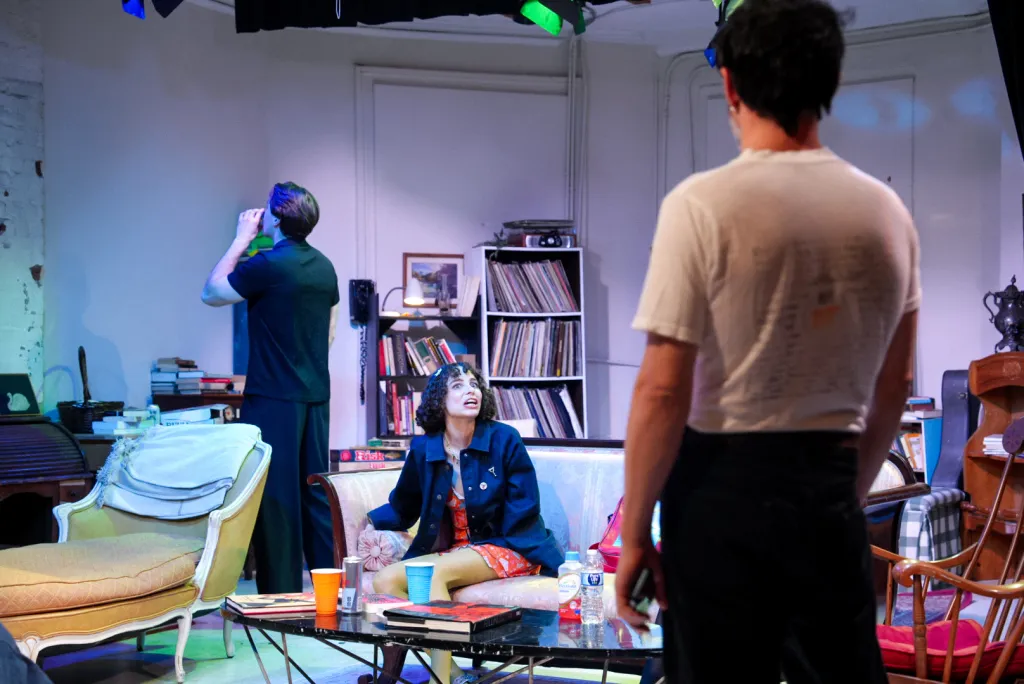
While Gasda wrote in his 2023 essay “Downtown Demons” that his plays are meant to be “critical and interrogative of the scene-world rather than laudatory or participatory,” the Dimes Square trilogy has always felt relatable for his main insider audience, so familiar that they might imagine themselves getting up and in on the action, doing bumps on the couch and gossiping about their toxic situationships. The hedonist strife is often inspired by events close to home, and on opening night, the crowd giddily whispered to one another wondering if they themselves had been the inspiration for particular characters. In Last Days’ seven acts, we’re guided through duplicitous cuckoldry, pseudo-intellectual pillow talk, and analyses of Berserk characters, its vignettes sprinkled with various in-jokes and references—the “infamous” Lisbon trip, fake scenesters hyperstitioned real, yearnings for Matt Weinberger grid posts, Clandestino, Funny Bar, KGB. While all that might seem like Greek for those out of the loop, it mostly reads as absurd texture.
Michael Berry, a “retired” scene group chat proprietor now playing a fictional version of himself in the character Salty, sees the play as asking whether or not it’s still feasible to create meaningful art, and to find purpose in doing so. Perhaps Last Days’ sharpest subject is its portrayal of artists’ status anxieties, about who ascended and achieved validation of their efforts, and who was left behind and still toiling away. One potential contributor to the scene’s decline: at the beginning, many believed in its possibility, their chance at riding its coattails to greatness—or at least a steady paycheck. The sense that they were “all gonna make it” was common, collectively getting high on their futures rather than staying focused on their presents, mistaking potential glory as inevitable destiny. Many in Dimes Square christened themselves as a countercultural vanguard, the heir to countless in the city before it, without ever figuring out exactly what they stood for. It was clout before creation, all backwards, and now that hype is gone. Many of those dreams have been deferred, if not revealed delusional.
Nowhere is this more evident than with George Olesky’s Victor, who despite holding an MFA, is reluctantly acting in a 19-year-old’s “clout play,” and involuntarily celibate for months. Eventually, his artistic failures and sexual frustrations boil over and erupt into a hilarious on-stage crashout. “Nobody fucking cares or knows my name except as that guy who bared his ass [at Beckett’s once],” he yells, despairing. “I coulda been… I mean I fucking am… this generation’s Spalding Gray and no one cares…”
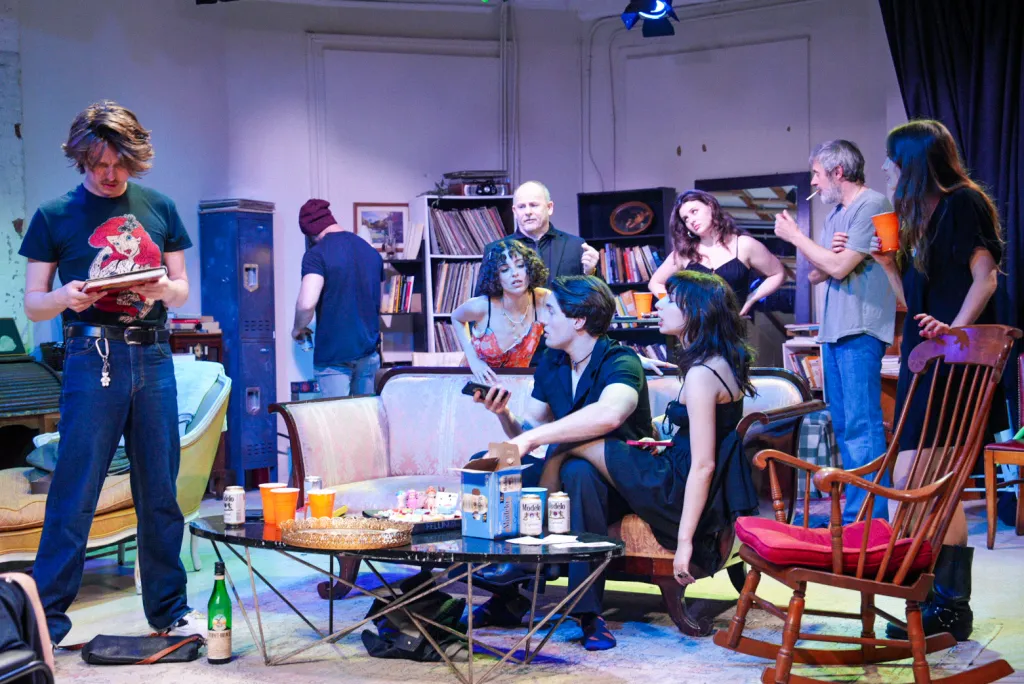
“It was clout before creation, all backwards, and now that hype is gone”
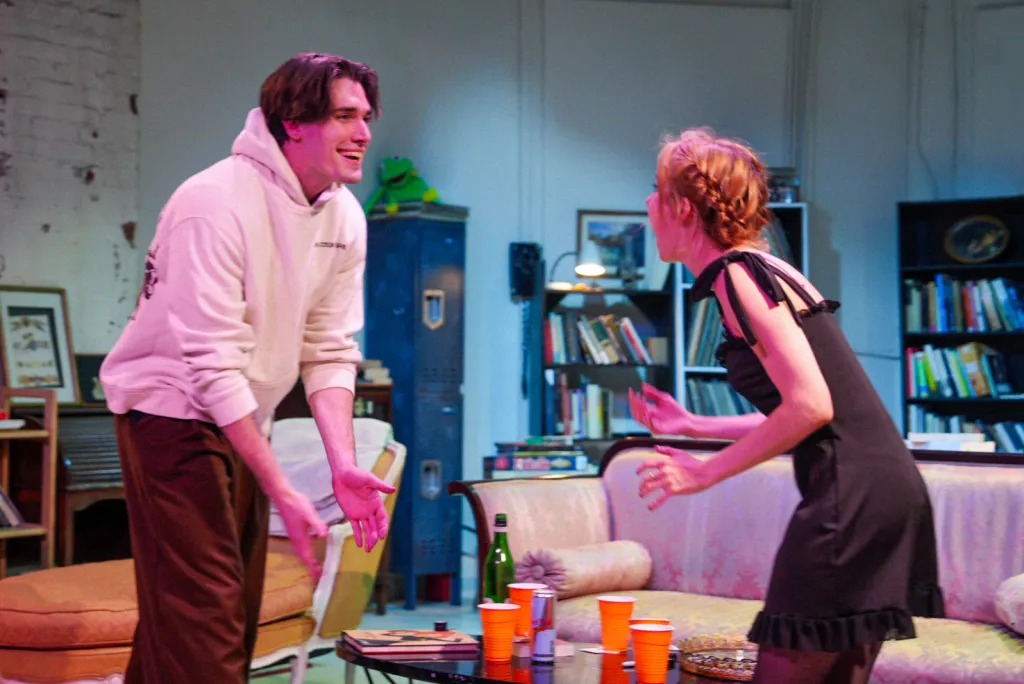
However, all of this handwringing is rendered pathetic by the second-half arrival of Dardan Nikolić (Uliks Fehmiu), a renowned Balkan autofiction author and the scene’s weightiest foil. Unexpectedly dropping in after his book release party, the literary giant is amused at the prospect of “doing blow with New York’s petty bourgeoisie.” When the conversation turns to his life, the party quiets. A Kosovar refugee who fled Serbian paramilitaries shooting people in his hometown’s streets, Dardan recounts having to carry his mother for miles to escape, then describes a dream from the night before their getaway—buses stopped at the Albanian border, passengers with Albanian names dragged out and executed, his mother lifting her jacket to reveal a suicide vest and nodding calmly: “Don’t worry, all is good.” Then detonation, flying through the air, waking alive in wet grass, the soldiers’ dogs and voices in the distance, and a copy of Dante’s Inferno in his pocket. “This life is hell more often than not,” he tells the room. “So you can relax.” In a play of constant motion, the scenesters get very still—until Mia, in full vocal fry, remarks that the only Albanians she knows are the ASU Frat Leader and Dua Lipa.
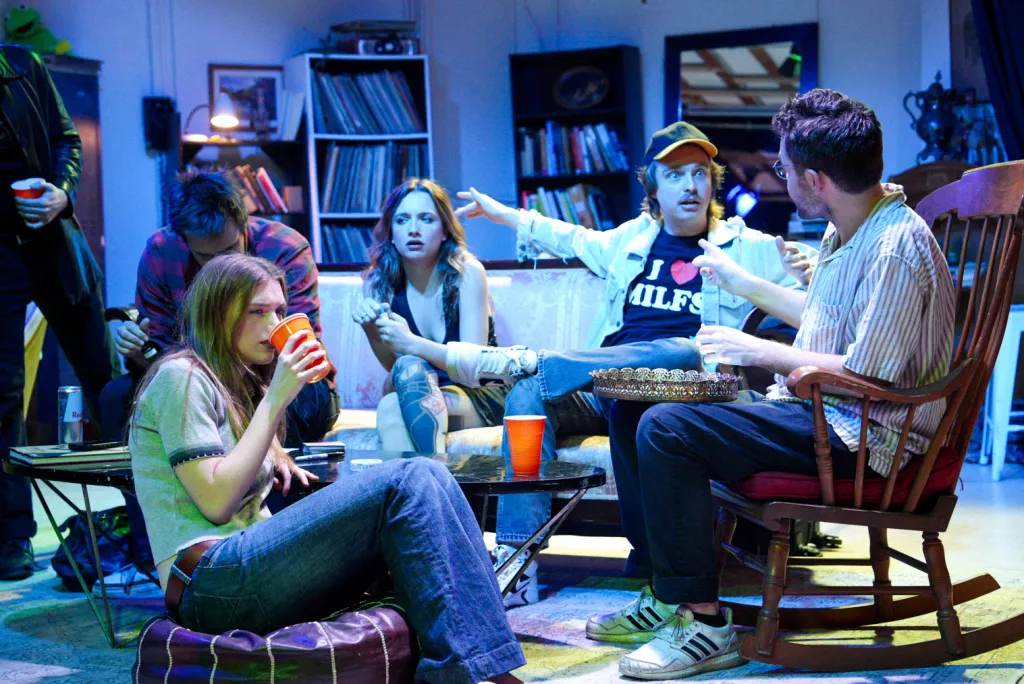
“We are living through the dumbest time in human history,” the original Dimes Square play proclaimed. Toward the end of The Last Days of Downtown, Ashley offers a tender addendum as music from Fellini’s 8½ plays. While the city is changing and their era is closing and it’s all ridiculous, they should enjoy the end, “because some of this shit is actually really special…”
Mourn it, mock it, toast fernet at its demise, but The Last Days of Downtown shows that whatever Dimes Square was, however one saw it, it was something—just maybe not as much as it thought.
Follow Nick on Instagram: @manabovetown
The post The Last Days of Dimes Square (For Real This Time) appeared first on VICE.