On December 1, 1936, a group of artists stormed the New York City office of the Works Progress Administration. They were protesting budget cuts to the Federal Art Project, a New Deal program that employed artists to create works for public spaces across the country. Of the 219 who were arrested, several gave fake names to the police, offering aliases such as Cézanne, Picasso, and Van Gogh—painters who had once staged their own kind of revolution.
Among the jailed protesters was the painter Lee Krasner, who in the subsequent decade would play a central role in the Abstract Expressionist movement (and also marry Jackson Pollock). When arrested, she too used a famous artist’s name in lieu of her own: Mary Cassatt.
Later, Krasner would joke that she “didn’t have a big selection, you know,” of women artists’ names from which to choose. But Krasner, who had pursued formal art training, knew the history of her craft. Although Cassatt is now most remembered for her sentimental-seeming images of mothers and children, she had also mounted a revolution.
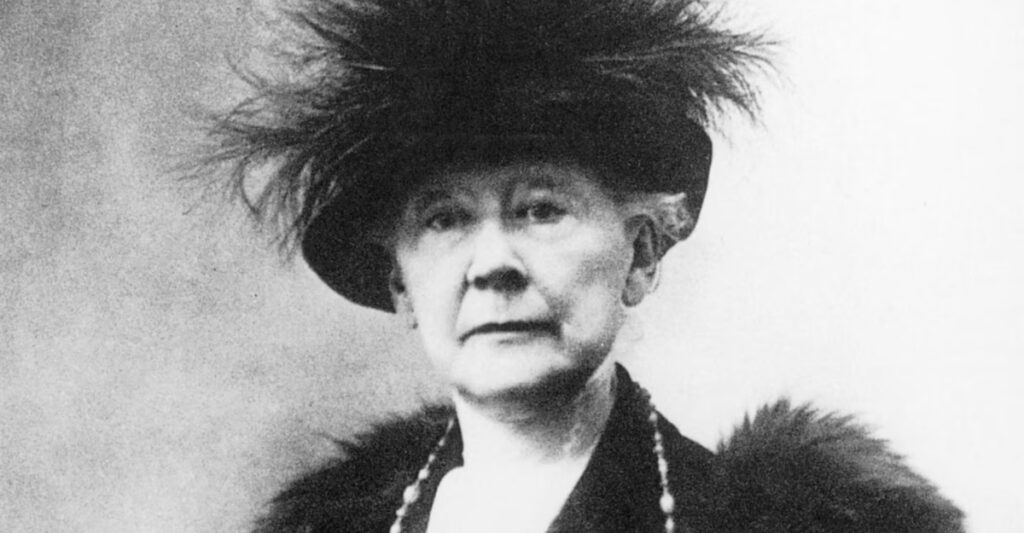
Cassatt’s contemporaries knew her as a visionary painter of daily life, one who confronted the enigmatic complexities of being a woman in the modern world. The only American to exhibit with the Impressionists, Cassatt astounded audiences with her radical compositions, bold color choices, and disregard for conventional standards of beauty. French critics regularly noted her virile (“manly”) technique and the deeply psychological nature of her art. As the Impressionists rose to prominence, so did she. Only later, in the 1890s, did Cassatt create her enduring maternal scenes—but those works, too, stressed not tender family ties but the hard work of child care.
Cassatt’s paintings, pastels, and prints adorn the knickknacks that fill shop displays in the days leading up to Mother’s Day. Owing to this association, and unlike most women artists who came before or after her, Cassatt has retained a rare degree of name recognition. But it has come at a price: The Cassatt on the postcards that I, too, once gave my mother has been sweetened and softened, packaged into an example of what women artists could, and could not, achieve. As a result, a full century after her death—marked this year with an exhibition of her works at the National Gallery of Art—Cassatt is both one of the most familiar and misunderstood artists of our time.
Cassatt was born in 1844, near Pittsburgh, to a prosperous family. From 1851 to 1855, as her family traveled to France and Germany, she obtained an informal artistic education by visiting museums and, likely, the 1855 Exposition Universelle in Paris. Early on, she told her parents that she wanted to be an artist. “I would almost rather see you dead,” her father replied, but Cassatt would not be discouraged.
Cassatt enrolled as a teenager at the Pennsylvania Academy of Fine Arts. As a woman, her options were limited. Although men could study from nude models—long hailed as a pillar of artistic education—women could not. Still, timing was on her side. In 1860, Cassatt and her peers formed their own life-drawing class, in which they posed (while clothed) for one another. That same year, Cassatt became part of the first wave of women allowed to attend the academy’s anatomy lectures.
After the end of the Civil War, American women sought out careers in the arts as never before. Thousands poured into art schools across the Eastern Seaboard, where female enrollment soon eclipsed that of men. Others ventured abroad. In the mid-1860s, accompanied by her mother, Cassatt became one of the hundreds of American women sailing to Paris annually to study art. She quickly secured lessons with a slew of established (male) painters in their private studios, harboring a new goal: to “paint better than the old masters.”
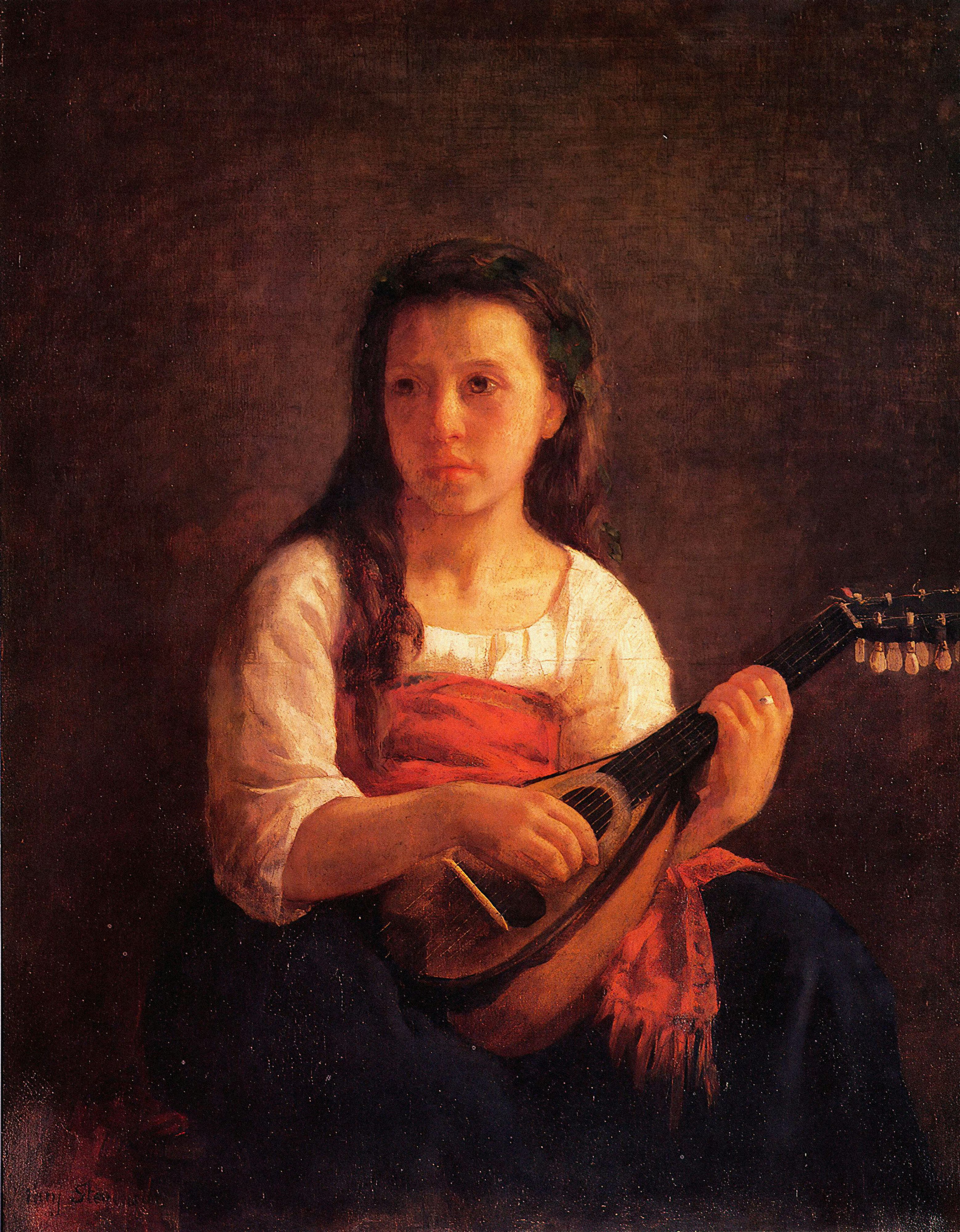
In 1868, Cassatt had a work, The Mandolin Player, accepted to the Paris Salon—Europe’s most prestigious juried show, and a lodestar for artists who came from abroad. On the surface, the canvas paid homage to a French and Dutch painting tradition showing well-off women with musical accoutrements. But Cassatt upended this convention by painting a subject who was clearly from the lower classes in an ambiguous setting, hardly performing for pleasure. Here, we see the seeds of what would become Cassatt’s signature approach: capturing moments rarely placed on display while refusing to cater to idealized notions of feminine beauty.
Soon, a new circle of artists came to Cassatt’s attention. In 1874, the group now known as the Impressionists held their first exhibition, rebelling against the perceived conservatism of the Salon and its jury’s repeated rejection of many of their works. They would hold eight shows through 1886, advancing an aesthetic prioritizing unblended colors and loose, visible brushstrokes that sought to capture the ephemerality of modern life.
Cassatt was especially captivated by the work of Edgar Degas. She advised her friend Louisine Elder (later Havemeyer) to purchase one of his works, Rehearsal of the Ballet. Elder became Degas’ first—and quickly his most influential—American patron; Rehearsal is said to have been the first Impressionist work exhibited in the United States, in 1878. Cassatt was already on Degas’ radar too. In 1874, on seeing her painting Ida at the Salon, he had marveled, “This is someone who feels as I do.”
The two artists finally met in 1877. Cassatt had recently faced Salon rejections herself and was eager to work more independently; Degas invited her to exhibit with the Impressionists. “I agreed gladly,” she recalled. “I hated conventional art. I was beginning to live.” Starting in 1879, Cassatt would participate in four of the Impressionists’ final five exhibitions—becoming, alongside the painters Berthe Morisot and Marie Bracquemond, one of a handful of women to be featured. Her approach fit well with the group. She shared their interest in capturing the effects of fleeting moments, yet set herself apart by focusing on the workings of the mind.
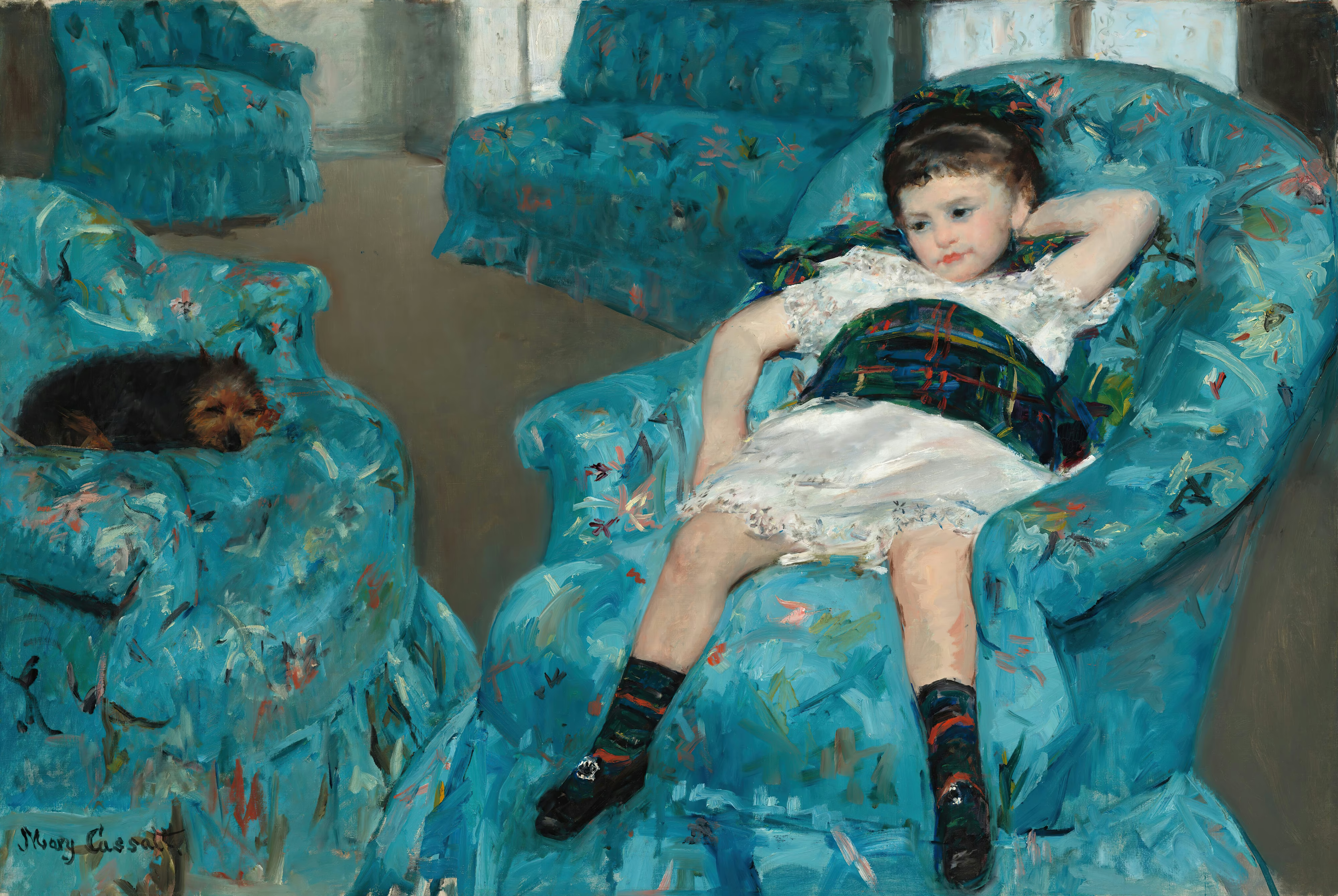
For her first Impressionist show, Cassatt chose several works that asked what it meant to be a woman at different stages of life, probing how real people felt. Take the most radical piece she showed that year, Little Girl in a Blue Armchair. A young girl reclines on an overstuffed chair, one of many pieces of furniture that crowd a room with no apparent order. A small Brussels griffon (likely Cassatt’s own pet) lounges to her side. By allowing us to view the girl from both below and above—an unusual painterly perspective, difficult to pull off—Cassatt has left unclear whether we are experiencing the scene as a child or an adult. The girl is meticulously dressed, the plaid scarf around her waist matching her socks and hair ribbon. But she herself does not seem to care. Nor does she pose. If anything, she appears bored. We see the malaise of childhood, a girl on the cusp of adolescence but not quite there, uninterested in whatever she is meant to be or do. Cassatt made this emotional state worthy of representation—worthy of art.
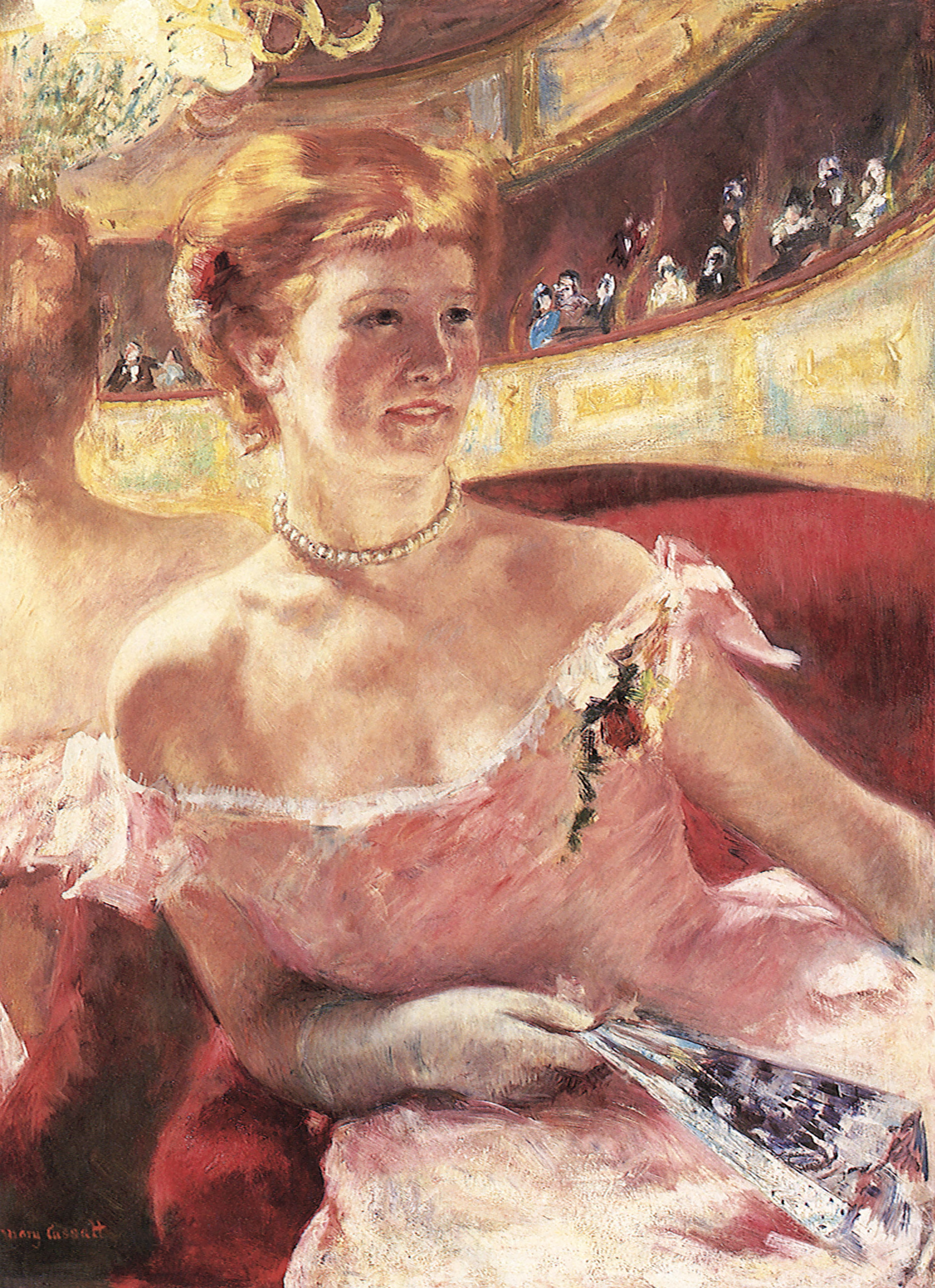
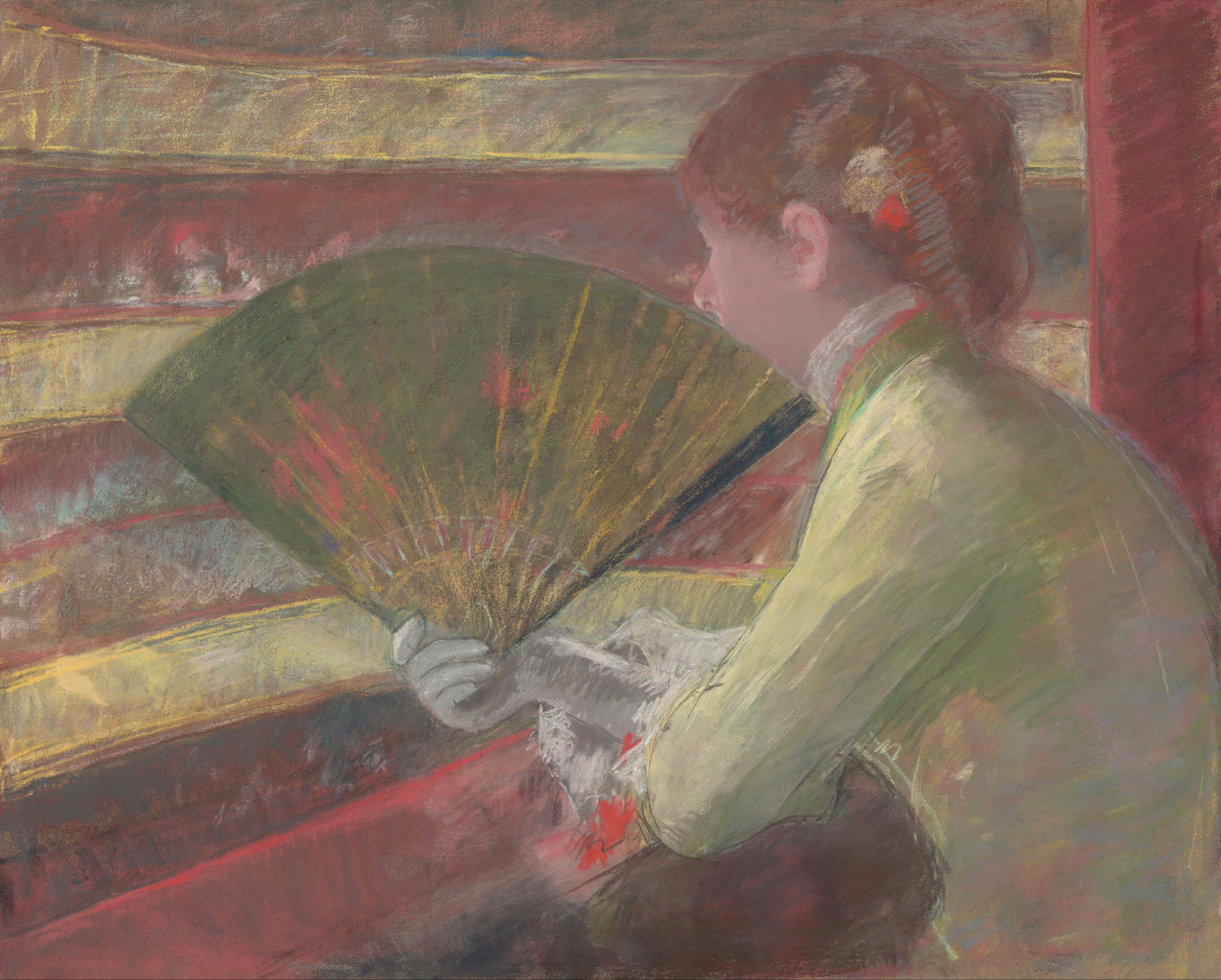
Unusual in a society that rewarded cultivated elegance, Cassatt emphasized that women did not always want to be on view. In two other works she exhibited in 1879, she depicted the theater, a favorite Impressionist locale. Unlike her peers, however, she stressed the fraught nature of being a woman in such a voyeuristic space, where audience members were part of the visual spectacle. In one of these works, an oil painting, a woman (likely her sister, Lydia) sits in a fashionable pink dress, allowing an admirer’s gaze. In the other, a pastel, Cassatt’s subject turns away from us, gripping a large fan that threatens to hide her features entirely. The prior year, yet another theater scene by her hand—In the Loge—had become the second Impressionist painting exhibited in the United States. In it, a woman peers at the stage through binoculars, resting her elbow on the balcony edge, intent on watching the performance. Mirroring her pose, a man raises his own binoculars to stare equally eagerly at her. One American critic wrote that the painting “surpassed the strength of most men.”
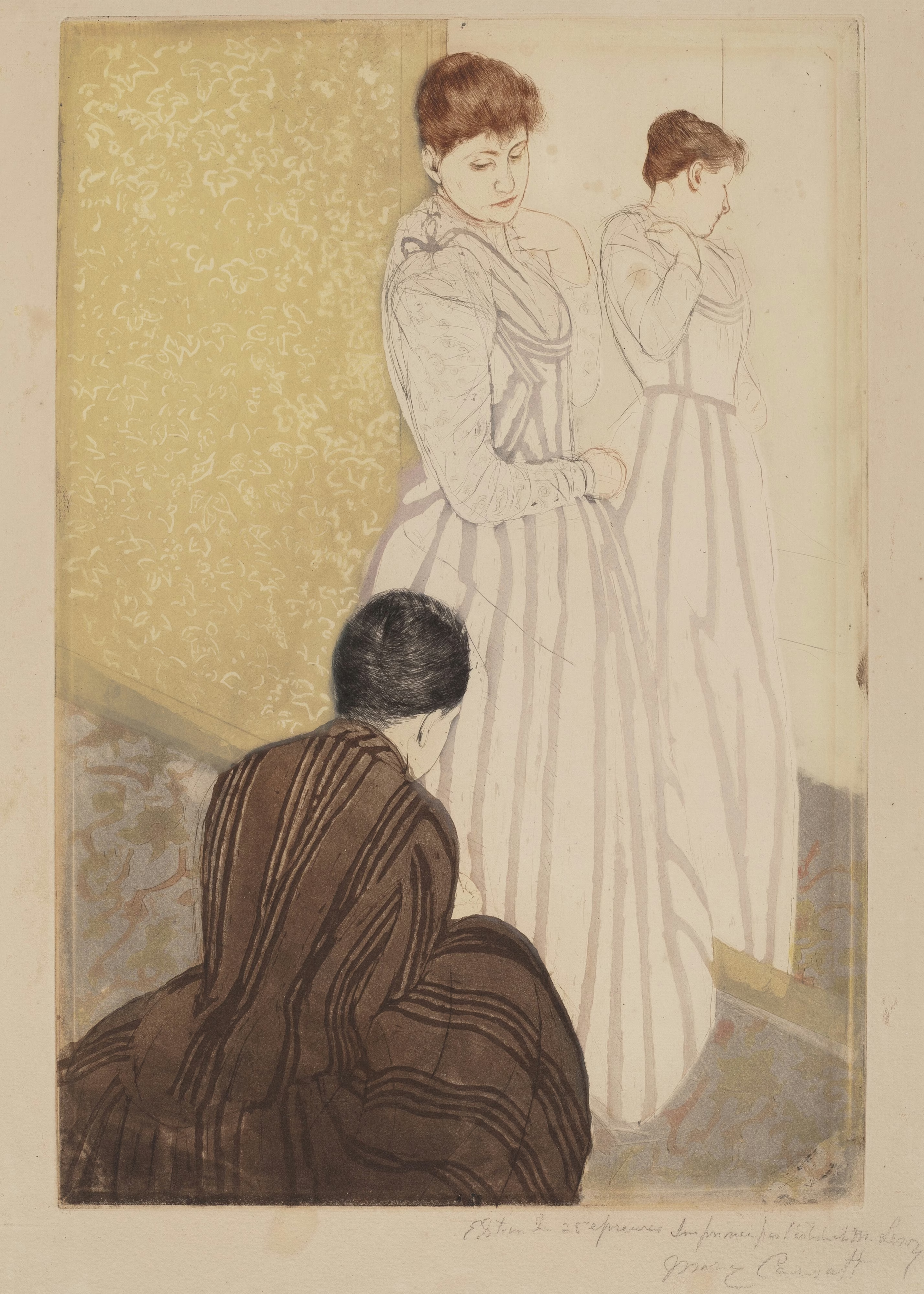
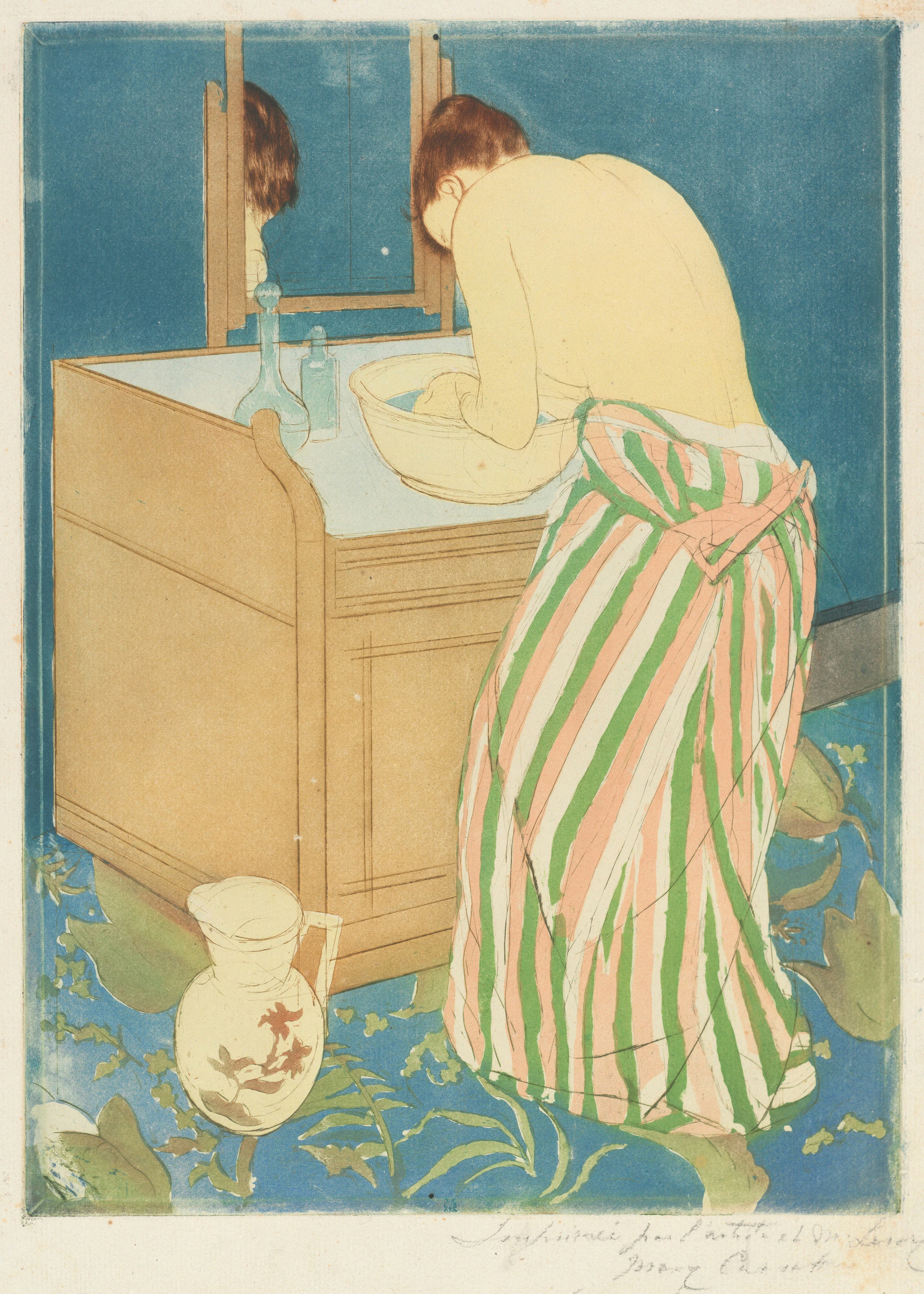
As her reputation grew, Cassatt foregrounded women’s labor in her art. In her Set of 10, created from 1890 to 1891, a group of multicolored prints—technological triumphs inspired by Japanese woodblocks—Cassatt portrayed women going about their daily routine. We find seamstresses and caregivers, mothers and paid helpers. None appears to pose or to be aware of any viewer, emphasizing Cassatt’s focus on their internal state. Soon after completing the series, Cassatt shifted scale, painting Modern Woman, a monumental three-panel mural for the Woman’s Building of the 1893 World’s Columbian Exposition in Chicago. It is now lost or destroyed, hints of its appearance preserved in a grainy photograph. If it had survived, many think it would be considered her greatest achievement.
Those were the same years when Cassatt—who, by choice, never married or had children—began producing most of the images of mothers and children for which she is now known. In the late 1880s, she had started painting maternal scenes more serially (much like Degas’ dancers and Claude Monet’s cathedrals). But few of these works actually showed mothers with their children. Their subject was the work of being a woman: Cassatt typically paired paid models with children she encountered in her neighborhood. Most of all, she relished the challenge of rendering bare flesh.
In 1891, for the first time, four of Cassatt’s maternal scenes (some in paint, others pastel) were displayed as a thematic group in Paris. Visitors were enthralled, and Paul Durand-Ruel—an early supporter and a leading dealer of the Impressionists, who ultimately bought about 400 of Cassatt’s works—began promoting her as a painter of motherhood. In 1892, even as Cassatt herself focused on other themes, a book on Durand-Ruel’s collection now presented her purely as a creator of maternal subjects.
By the early 20th century, this characterization had solidified: Dealers were regularly describing and selling Cassatt’s works as intimate family scenes. Several critics balked at the ordinariness of her subjects, a writer for The New York Times even branding her “the apostle of the ugly woman in art.” Yet by 1910, the Musée du Luxembourg, the Metropolitan Museum of Art, the Detroit Institute of Arts, the Pennsylvania Academy of Fine Arts, and the Art Institute of Chicago had all acquired tender “maternal” scenes by her hand. Although several still bear variations of the title Mother and Child, whether the models had any family ties is unclear. Cassatt staged these compositions to show the daily labor of child-rearing: bathing, entertaining, soothing, rousing from a nap.
Unintentionally, these museums helped boost a now-familiar narrative that hid the political activism underlying many of Cassatt’s artistic choices at the time. In 1915, once her failing eyesight had forced her to stop painting, Cassatt agreed to exhibit more than a dozen works at the Knoedler Gallery, in New York. Louisine Havemeyer, her lifelong friend, organized the event. The profits would support women’s suffrage, a cause that Cassatt championed with growing urgency as the horrors of World War I unfolded. In the lead-up to the exhibition, Cassatt wrote to Havemeyer, “If the world is to be saved, it will be the women who save it.”
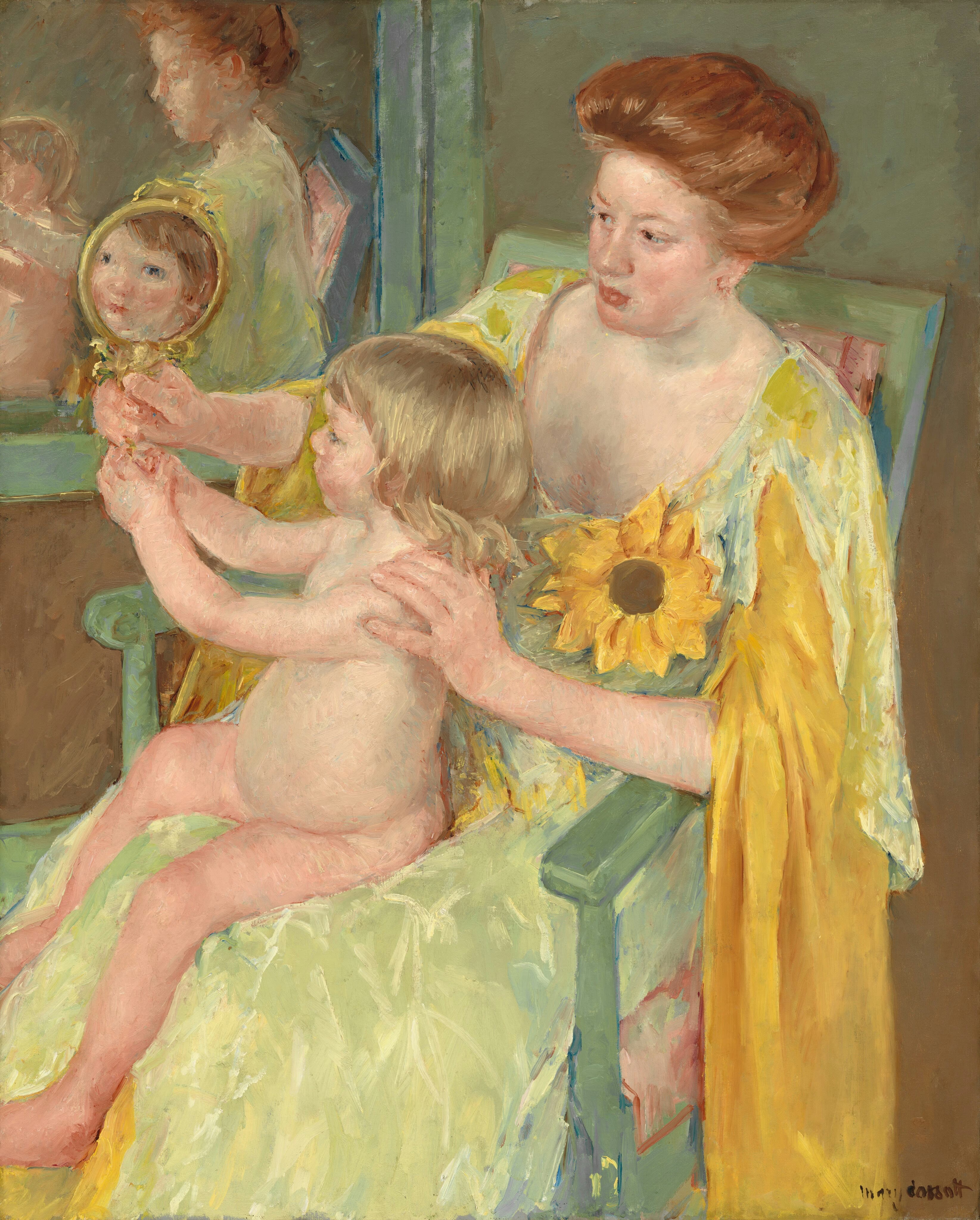
Woman With a Sunflower was one of the works featured in the show. It too pictures an unnamed woman with an unnamed child, models likely unrelated by blood. The young girl, naked, glances at us through a looking glass in her hands. Behind this mirror hangs another, larger mirror. This painting poses a challenge—Cassatt and her subjects dare us to consider what is at stake when we observe or inhabit the female body, on which so many expectations and restrictions are imposed. Cassatt’s unusual inclusion of a sunflower on the woman’s dressing gown makes this clear: It was a symbol of the National American Woman Suffrage Association. The bodies we see were expected to labor, but they could not vote. Until recently, this painting was dismissed as a banal example of Cassatt’s more saccharine works.
That this nuance was long lost, even in feminist takes on Cassatt’s work, shows the depth to which Cassatt’s messaging was obscured by the believability of the illusions she painted. Already in 1917, at the time of Degas’ death, Cassatt’s aggressively unsentimental Girl Arranging Her Hair, an exercise in painterly technique that had hung in Degas’ home for three decades, had been misattributed to Degas by his executors—despite having been exhibited in the final Impressionist show under Cassatt’s name. By this point, Cassatt seemed an unlikely candidate for such an unconventional canvas.
It is unclear exactly how, or when, knowledge of “Cassatt the radical” began to fade. Certainly, the dealers who retitled her works to emphasize maternal affection did not help. Nor did the fact that many of these works are truly exquisite. With her keen psychological insight, Cassatt conjured something rare and wondrous about the hard work of motherhood. It almost seems a cruel joke that the very success of her most sentimental scenes would eclipse the defiance at the core of her oeuvre.
Still, gender has played an outsize role. Cassatt did not suffer the destiny of most female artists from her time—she was not overlooked and, ultimately, erased. But her fate diverged markedly from that of her male peers, such as Pierre-Auguste Renoir and Monet, who also painted dreamy visions of mothers and children that now pepper museum merchandise. Such canvases do not dominate, or often even appear in, scholarly or popular discussions of either artist’s canonical works.
Nor are most people aware that Cassatt has helped shape the American public’s understanding of the Impressionist movement. Following the death of Havemeyer, in 1929, her trove of Impressionist works—collected under Cassatt’s guidance—began spreading to museums across the United States, with nearly 2,000 objects going to the Metropolitan Museum of Art alone.
Instead, in the first decades of the 20th century, Cassatt came to underlie a new, constricted mythology of what it meant to be a woman artist in America. She was celebrated as a pioneer who prevailed by creating soft, feminine subjects, opening the door for other artists who would go further, as professionals and radicals. Cassatt, of course, had already been both. Perhaps Krasner, facing arrest, perceived this side of Cassatt’s legacy—recognizing not just a forebear, but also a kindred spirit.
The post Mary Cassatt Was a Radical appeared first on The Atlantic.