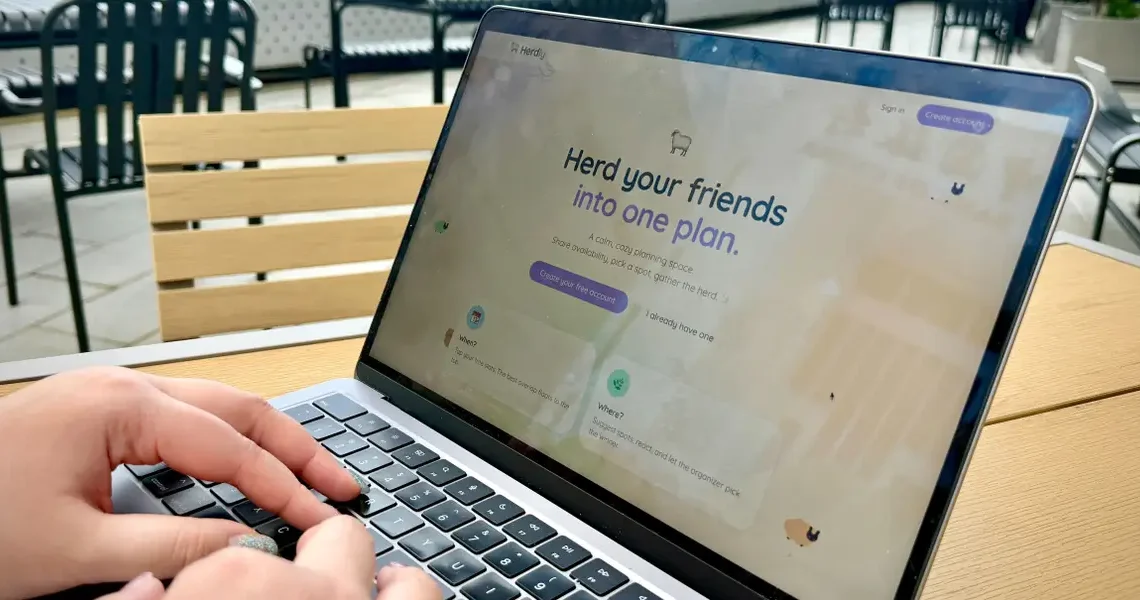

My friends and I have a serious scheduling problem — and you might relate.
If you’ve ever tried to plan a dinner over WhatsApp or Telegram, you know the pattern. Someone suggests a date. A few people respond. Then messages go unanswered, and the plans don’t happen.
I decided to rid my group chats of this scourge by building a scheduling app that would be fun to use — and using AI instead of writing my own code.
I’ve been experimenting with vibe coding, so I set myself a challenge. I would take a couple of minutes a day, over lunch, to see how far I’d get with building an app on the AI-coding platform Lovable. I wanted to see if I could make something that could replace some functions of my existing calendar, and what the end result would signal about fears that AI coding could threaten traditional software companies.
Herding cats
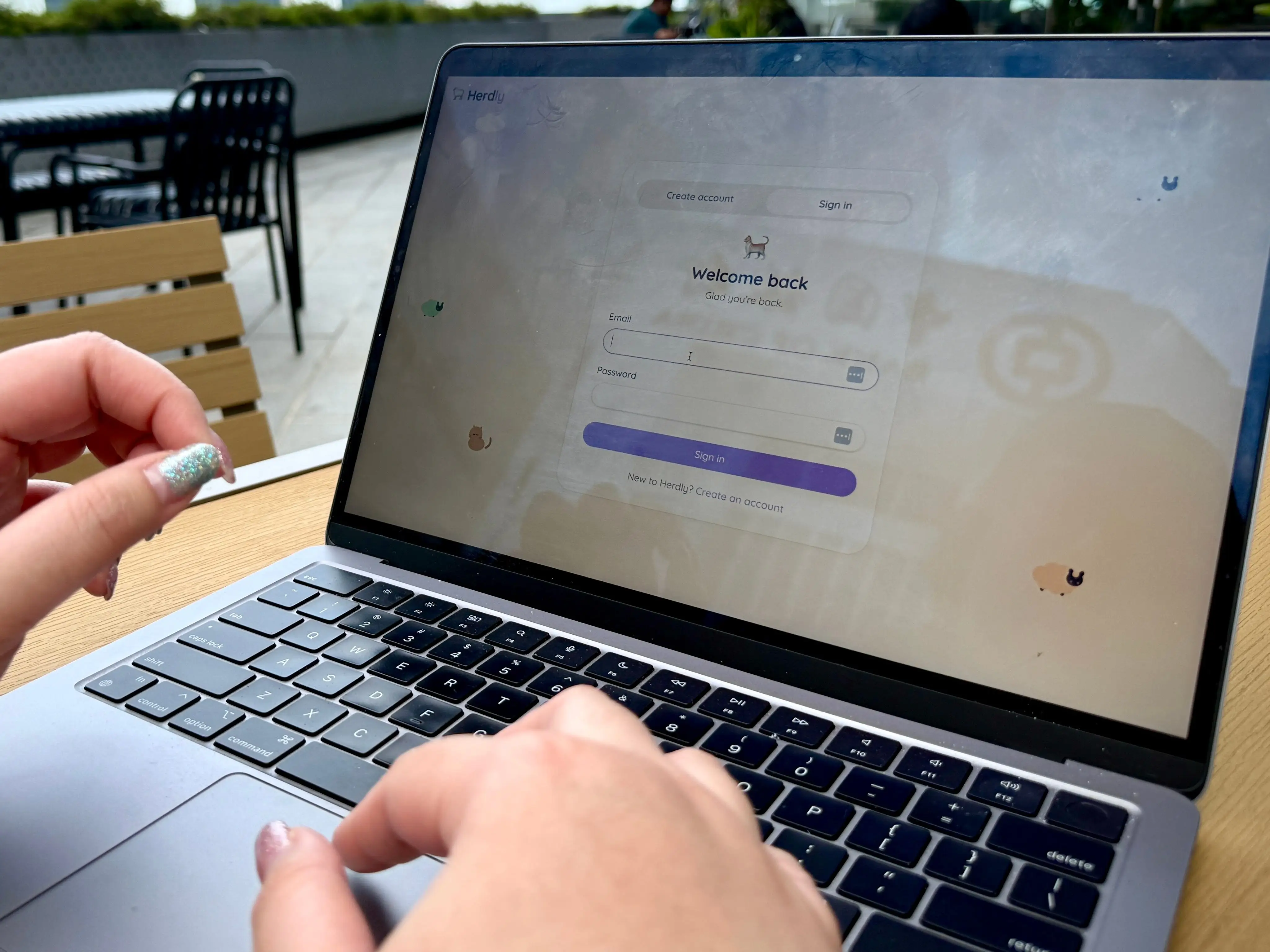
Before I started vibe coding, I sat down and planned out the basic idea and structure for my web app.
“Getting my friends together feels like herding cats,” I thought.
It was from there that the name “Herdly” was born — I decided I would build myself something sheep and cat-themed.
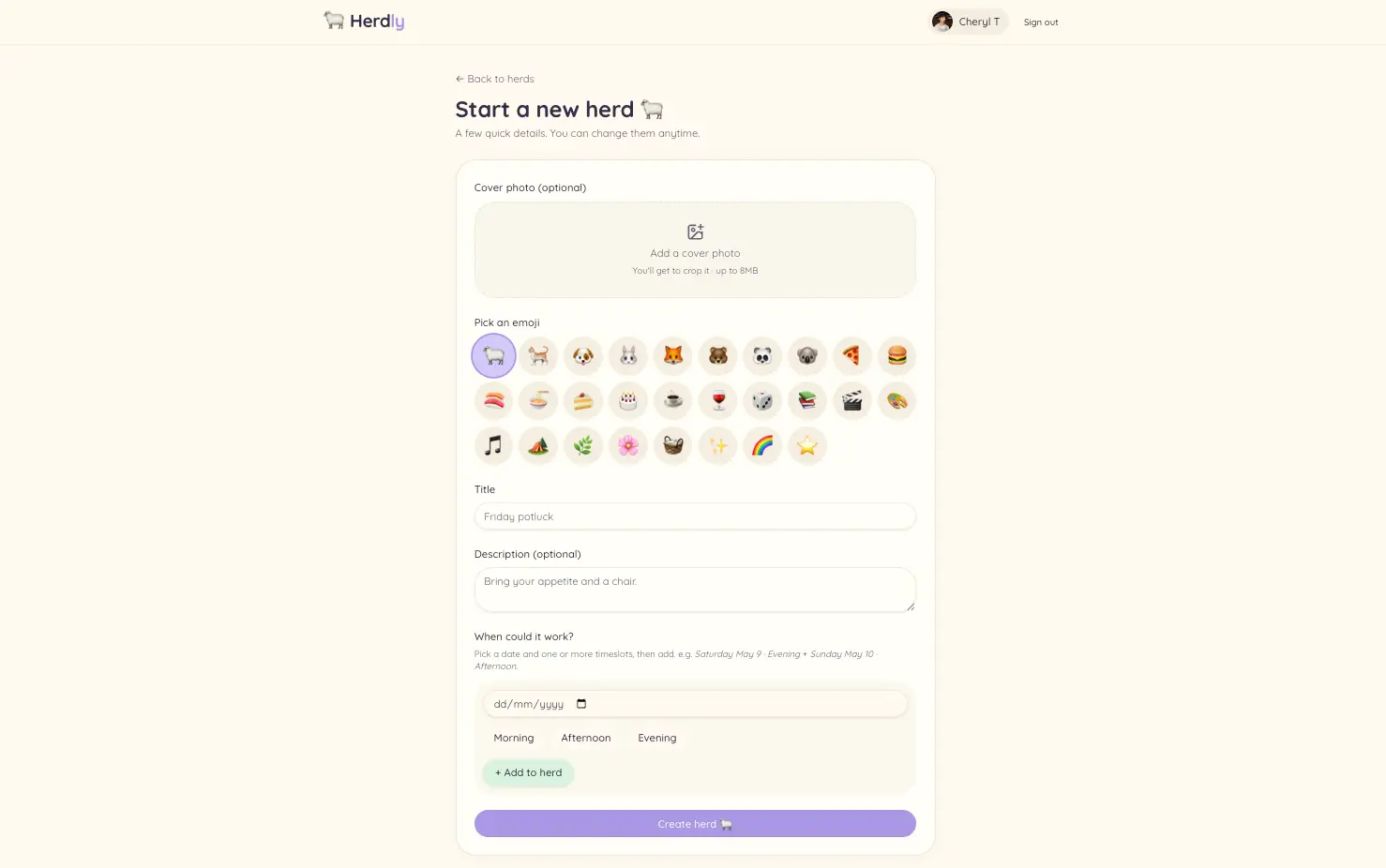
Each user should have the ability to, per the plan I sketched up for my app:
- Start their own party, affectionately named a “herd.”
-
Hosts must be able to:
- Select their preferred time slot and venue
- Change the cover photo of the event, a function inspired by Notion and other planning apps
- See how people are voting
- Lock in the finalized time
- Share invites with one click.
Let’s vibe code!
I don’t have an engineering or computer science background, and I only possess a rudimentary knowledge of coding languages. My first stop was to get ChatGPT to generate me a vibe coding-ready prompt I could use on Lovable.
My prompt to ChatGPT went like this:
- Build a cute, minimalist app, where a group of people can put in “dates that work for them” (and time slots) for potential meetings.
- Give each user the ability to start and share multiple “events.”
- Make it cute, emojis welcome. Pastel color themes preferred.
Over to Lovable
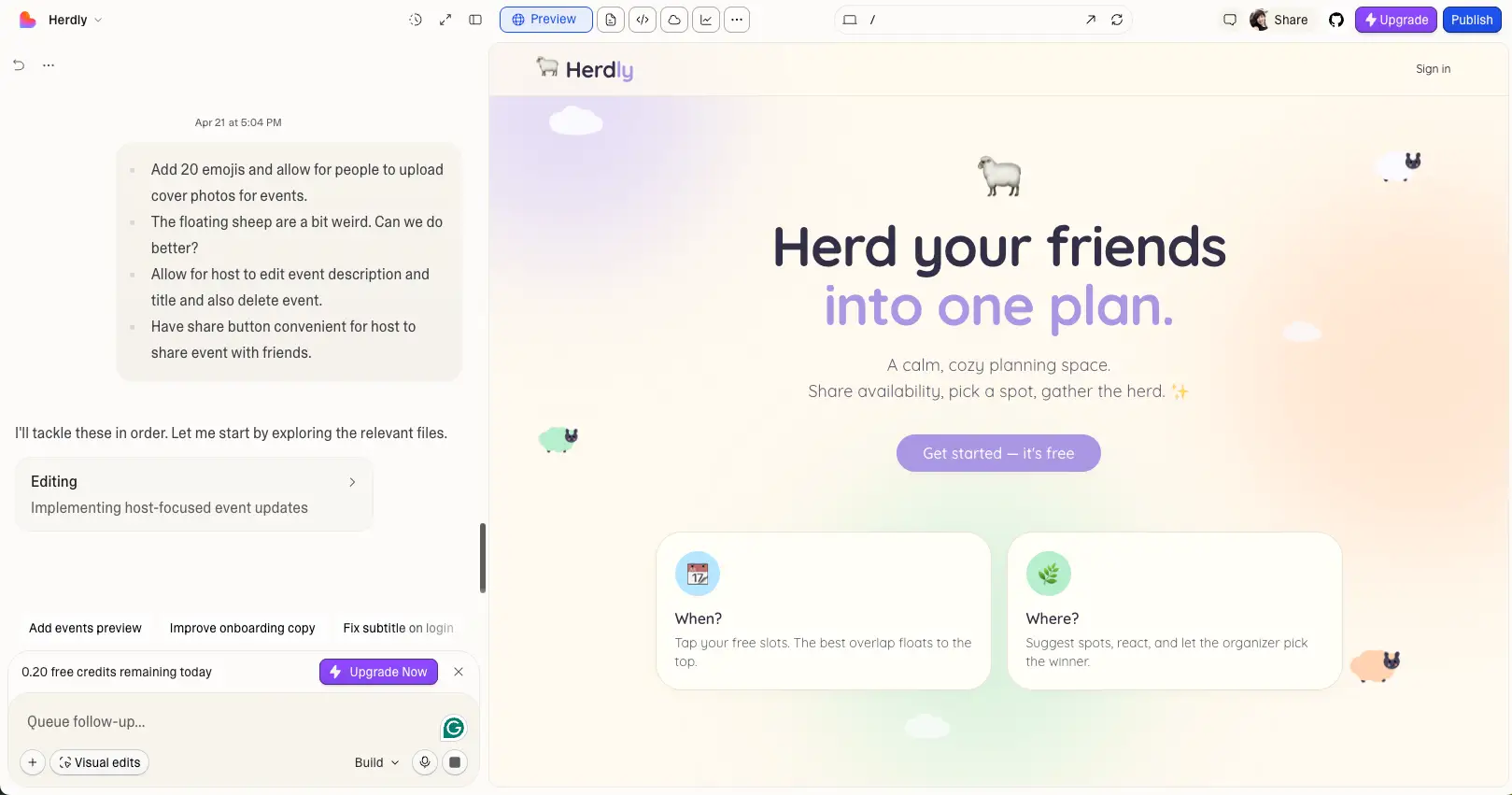
I gave myself the additional stipulation that I would finish coding only within Lovable’s free bandwidth. Platforms like this offer users a small number of credits that reset daily.
In four minutes, Lovable gave me a prototype for Herdly that met all my basic specifications.
However, there were things that needed ironing out. The share links weren’t working, there were permissions issues with accounts, and the host couldn’t select more than one time slot per day. I also wasn’t a huge fan of the bouncing sheep emojis that the AI builder had peppered all over the page.
It wasn’t hard to fix it, but I’d run out of credits for day one. I came back with a list of items to fix on day two, and within three minutes, Lovable had corrected the errors.
The rollout
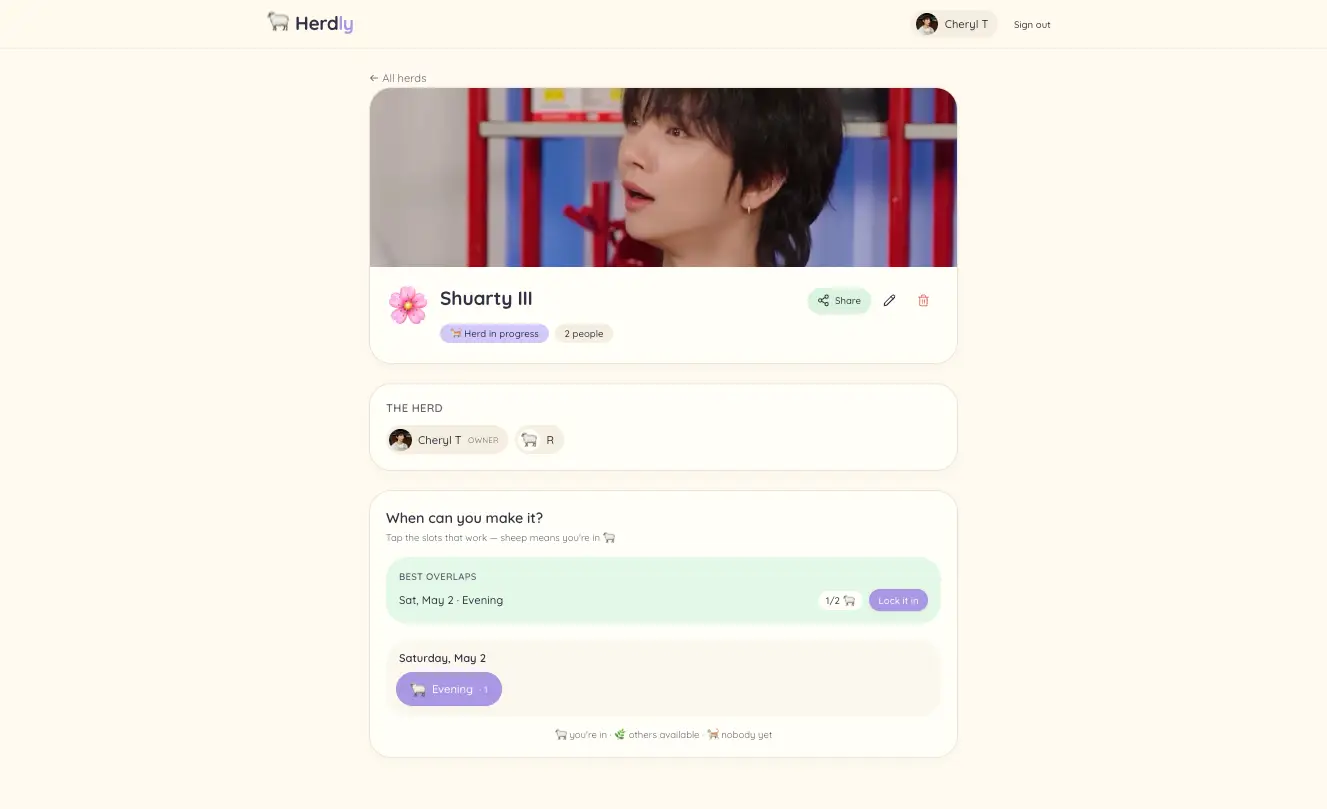
I’ve rolled out the calendar in my group chats. It got pushback at first because people wanted to stick with Telegram’s poll feature without having to click out and register their vote in a web app.
Some of my friends have been more amenable to the new scheduling app. It was the sheep and cat emojis that got one of them on board, and another was intrigued by the idea that I’d built it all in under 10 minutes.
My cute web app isn’t a threat to big software companies

The “SaaSpocalypse” saw software stocks nosedive earlier this year amid the rapid rise of vibe coding platforms.
But my web app isn’t going to replace Google Calendar or become the next Notion. Small web apps that users like me create and ship within the free bandwidth of these platforms will likely not have mass buy-in. They also won’t come with the plugged-in ecosystems that companies like Notion and Asana have, an obvious advantage and selling point for users.
The experiment showed me it is possible to solve some pain points in your life with AI-based coding. I’m satisfied with the product, too — it took minutes to build and ship, and is usable.
Read the original article on Business Insider
The post I used AI to code a scheduling app in minutes. It was easy, but it shouldn’t worry software companies. appeared first on Business Insider.