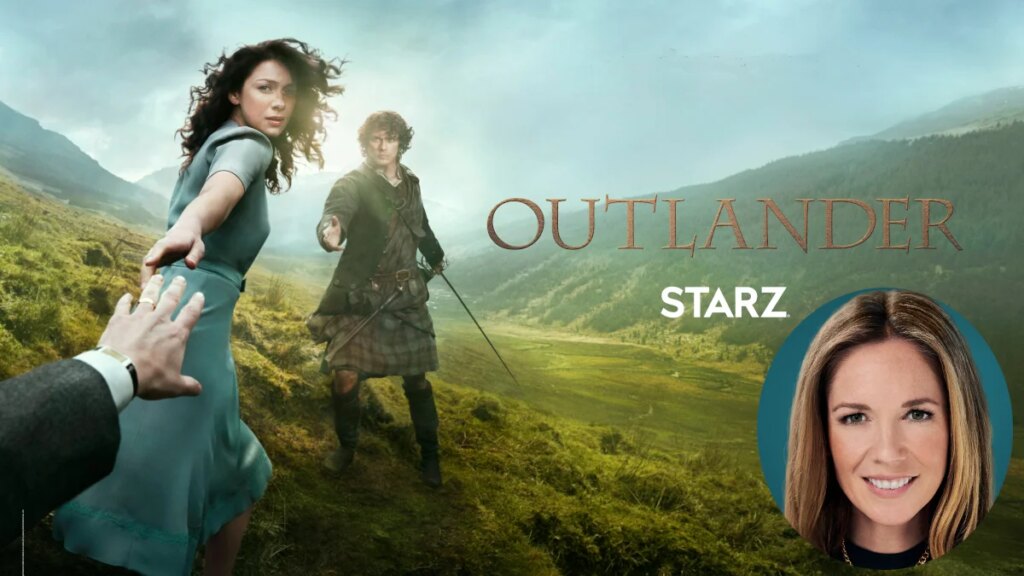
I launched “Outlander” as a marketer, standing guard over its earliest secrets. First, the casting of Sam Heughan. Then Caitríona Balfe. By the time we greenlit the series, the books already had tens of millions of devoted readers around the world, so every element — from the cast to the costumes to the campaign — was treated as sacred.
Landing the first season’s key art took months. We reviewed hundreds of comps before a concept was pitched that crystallized everything: transition, emotional conflict and longing. The idea felt timeless, archetypal even, as if the series somehow knew how long it would endure. For some, it evoked Persephone’s abduction. For others, it conjured Eurydice’s reach, grasping desperately and futilely for her lover.
We shot the hero image at “Rest and Be Thankful,” a breathtaking mountain pass in the Scottish Highlands. I remember the cold. Sam dressed in wool, but Caitríona wore only a thin blue dress and still hit every mark. The rest of us huddled at a monitor in heavy down puffers.
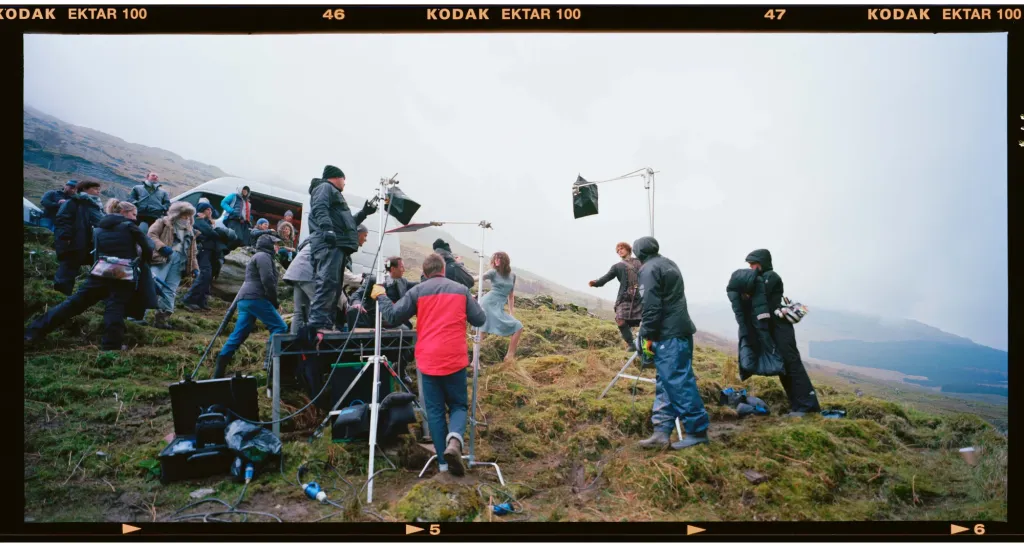
The producers, cast, and crew had obsessed over every detail, breaking in costumes and wearing them repeatedly so they felt lived in, relentlessly shooting on location so the world felt rugged and real. Expectations were high, so we went all in. The image was captured in camera, not cobbled in post. When Tobias Menzies offered to brave the frigid day so that the hand reaching into frame was truly Frank’s, we accepted. The smallest touches would matter if we were going to honor Diana Gabaldon’s books and the readers who loved them.
Our first-ever “Outlander” event was held at a theater in Los Angeles and pulsed as fans lined the block clutching dog-eared copies of her novels. Connected only by their shared love of a story, they greeted one another with the warmth and ease of old friends.
The response was immediate and overwhelming. Fans took to social media, sharing their reactions and affection. Over time, they formed friendships, traveled together, and supported one another’s lives and ambitions. They didn’t just watch the show; “Outlander” became entwined with who they were and who they were becoming. In the process, they radically reinvented what fandom looked like. Their commitment wasn’t merely about consumption; it played out off their screens, in their pilgrimages to Scotland, in causes they championed and in their very real connection to one another.
Critics were captivated, even as many struggled to succinctly categorize the series. One of our favorite reviews came from Ken Tucker who called it “a canny mixture of romance, fantasy, history, adventure, violence, sex, Druids, kilts, time travel, and unkempt hair.” “Outlander” was praised for its boldness and sensitivity, particularly in its exploration of female desire and male vulnerability. There was nothing else like it on television. And the audience kept growing.
As the seasons accumulated, what “Outlander” made possible for our network went far beyond its own success. On screen, Claire Fraser would be joined by Emma and Lyn Hernandez (“Vida”); Catherine de Medici (“The Serpent Queen”); Raq Thomas (“Power Book III: Raising Kanan”); Lina, Sloane, and Maggie (“Three Women”); Mercedes and Keyshawn (“P-Valley”), among many others.
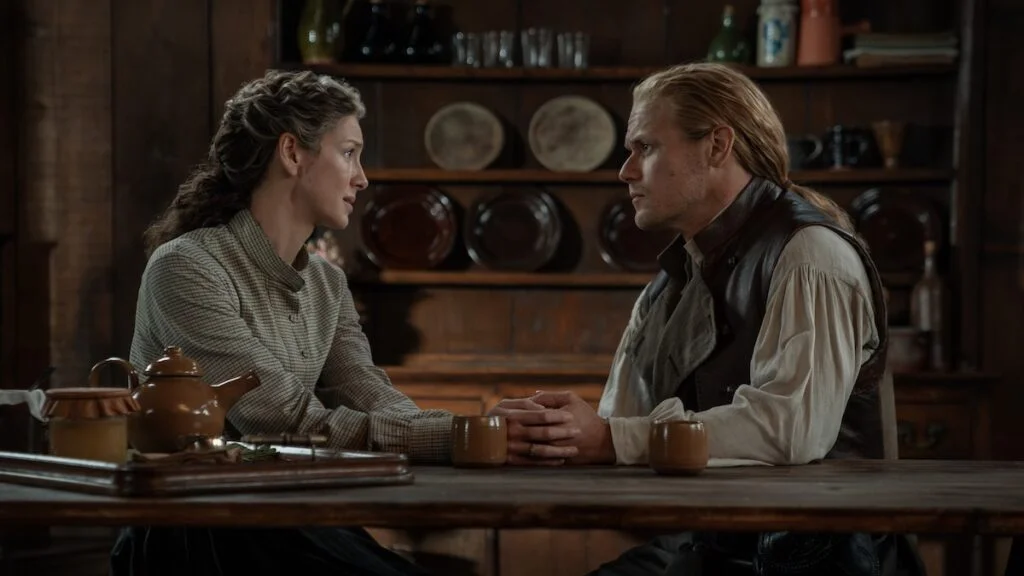
Women drove the narrative and our slate expanded to reflect their full humanity. Alongside Caitríona, STARZ would be shaped by actresses including Riley Keough, Mishel Prada, Melissa Barrera, Ella Purnell, Rebecca Ferguson, Jodie Comer, Monica Raymund, Patina Miller, Betty Gilpin, Shailene Woodley, Naturi Naughton, Courteney Cox, Julianne Moore, Samantha Morton, Julia Roberts and Mary J. Blige in defining leading roles. “Outlander” sent a clear signal that audiences would follow stories rooted in women’s interior lives. We listened and doubled down.
Twelve years after that inaugural screening, I attended our final “Outlander” event, this time on a wintry evening in New York City, with temperatures reminiscent of that first photo shoot in Scotland. Once again, hundreds of fans gathered. They shared stories of love found, friendships forged, families built, businesses launched. All because of this singular series. They raised a glass not just to a story, but to over a decade of shared memory.
As the opening notes of “The Skye Boat Song” began to play, I was grateful. For the fans who carried us, the creators who trusted us, the colleagues who believed in the vision and the privilege of growing alongside something so meaningful. The audience taught us how devotion, deeply felt and shared, can propel a story through time.
And now, we stand guard over one last secret: the final episode of “Outlander.” The ending is everything I hoped. It is true to what these characters mean to one another and to us. I watched it with a lump in my throat. Ultimately, “Outlander’s” story belongs to everyone who carried it.
Alison Hoffman is President, STARZ Networks. Hoffman is responsible for driving success at STARZ with a broad oversight that spans content-related responsibilities as well as business revenue and operational focuses for the company. She oversees all content acquisitions and key network operations including distribution, marketing, publicity, product development, analytics and program planning. The final season of “Outlander” airs Fridays only on STARZ, with the epic series finale premiering May 15.
The post A Series That Traveled Through Time: Starz Networks President Says Goodbye to ‘Outlander’ | Guest Column appeared first on TheWrap.